Iran War's Impact
Rising LPG costs push millions back to wood and charcoal.
Model Diplomat3 min readAfrica
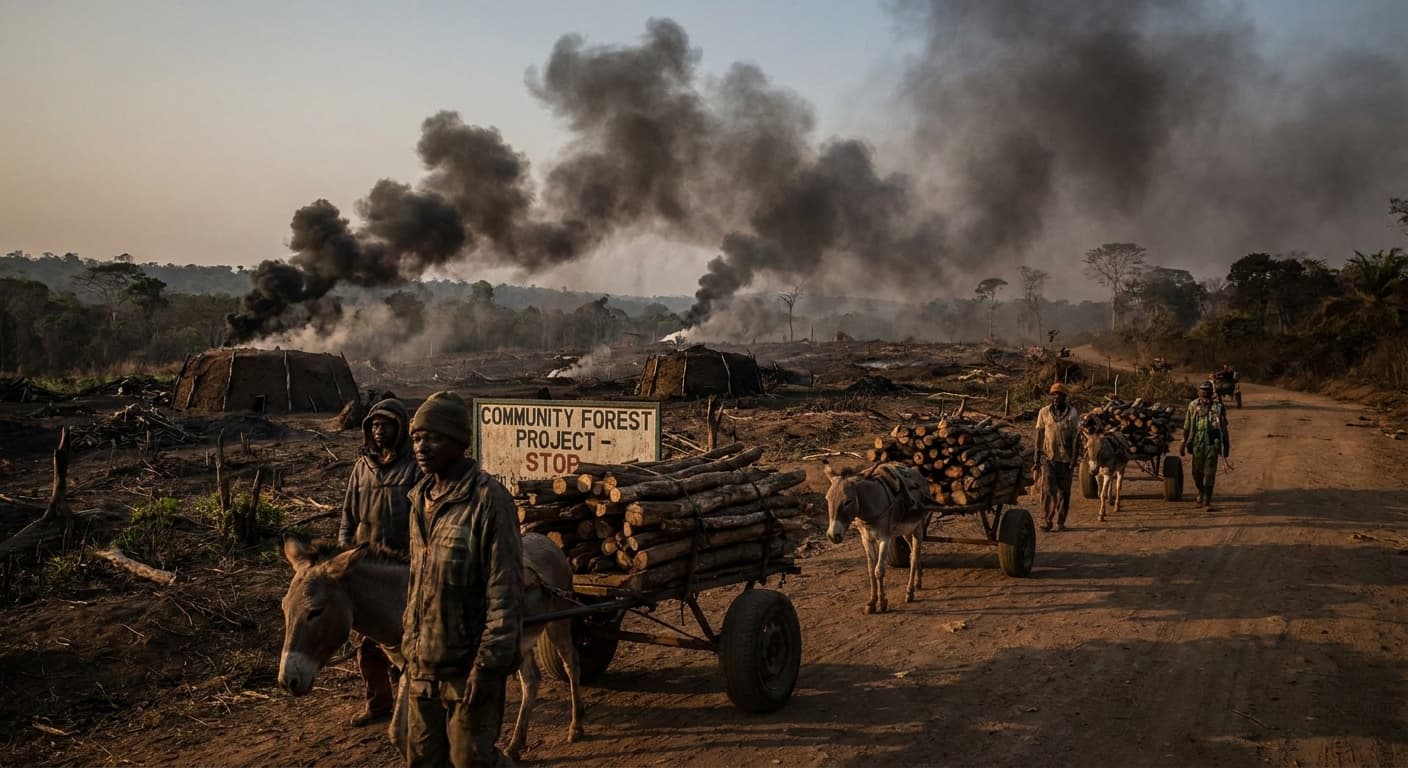
Iran War's Hidden Casualty: Africa's Forests Are Burning
As Brent crude hits ~$120/barrel, LPG costs spike across Africa and South Asia — and millions are turning back to wood and charcoal.
The Iran war's disruption of roughly 9 million barrels per day of Gulf output — choked by Iran's effective closure of the Strait of Hormuz — is doing more than rattling energy markets. In Africa and South Asia, the price spike is quietly reversing a decade of conservation progress. When cooking gas becomes unaffordable, families burn wood. And when families burn wood at scale, forests and the wildlife that depends on them pay the price.
Reuters documented a severe disconnect between physical crude prices — Dated Brent near $120/barrel, North Sea Forties touching $150 — and futures markets. That physical crunch hits LPG hardest in import-dependent regions. Sub-Saharan Africa and South Asia were already on the margins of cooking-fuel access before the war; the shock has pushed millions back across the line.
The Conservation Trap
This is a structural problem, not a humanitarian footnote. Donor-funded LPG rollout programs in Kenya, Uganda, Ethiopia, and parts of Bangladesh and Nepal spent years pulling rural households away from biomass. The logic was straightforward: cheaper clean fuel reduces deforestation pressure and protects wildlife corridors. That calculus has inverted overnight.
Kenya, Ethiopia, and Zambia are among the African nations most exposed to Hormuz-era supply bottlenecks, per Al Jazeera's analysis. Nigeria's Dangote refinery, now running at full capacity, cannot compensate for regional shortfalls. The result: LPG prices are spiking precisely in the countries that border critical ecosystems — the Mau Forest complex, the Ethiopian Highlands, the Terai Arc in South Asia.
Wildlife conservation NGOs operating in these zones — outfits like the African Wildlife Foundation and WWF — depend on stable energy economics to sustain community-based conservation incentives. When those incentives collapse, enforcement is next.
Who Benefits, Who Loses
Charcoal traders and illegal logging networks are the clear short-term beneficiaries. Demand surge with no supply-side constraint is their market. Conservation-dependent local economies — ecotourism operators, community forestry cooperatives — absorb the loss.
The IMF has already trimmed global growth to 3.1% for 2026 and flagged Sub-Saharan Africa as among the hardest-hit regions, with fuel and fertilizer affordability at acute risk. Governments in the region lack the fiscal headroom for LPG subsidies — and the international donors who might fill that gap are themselves managing energy-driven budget pressures.
The long-term pivot toward renewables and nuclear — now accelerating across Kenya, South Africa, and Rwanda — is real, but measured in decades, not quarters. It offers nothing to a household choosing between a gas cylinder it can't afford and the forest behind the village. Explore more on these cascading
international dynamics.
What to Watch Next
The decisive variable is LPG subsidy policy across Kenya, Ethiopia, Tanzania, and Bangladesh over the next 60–90 days. If governments absorb costs, conservation programs survive. If they don't — and most can't — deforestation data for Q3 2026 will be the first hard evidence of ecological blowback.
Watch also for emergency donor packages from the EU and World Bank targeting clean cooking access; both have existing frameworks and political incentive to act before the damage becomes irreversible. The African Union summit scheduled for mid-2026 is the next multilateral pressure point where this can move from data point to policy response.*
Discover more

Global Politics
US Seizes Iranian Ship, Tensions Surge
The US seizure of the Iranian ship Touska highlights a shift in control over the Strait of Hormuz, favoring Iran's strategic position.
Global Politics
Trump's Conflicting Messages on Iran War
Trump's mixed messages on Iran reflect a strategy of audience management, benefiting Tehran amid a complex geopolitical landscape.

Conflict & Security
Drone Warfare Killing Aid Workers at Unprec
Over 1,000 humanitarian workers killed in three years as cheap armed drones collapse legal protections. Gaza, Sudan, Ukraine, and DRC see deliberate targeting of aid convoys and hospitals with zero prosecutions.

Global
World Normalises Taliban as Afghan Women Eras
UN data shows Afghan women erased from public life as Russia recognises the Taliban, EU hosts officials in Brussels, and ICC warrants for gender persecution go unenforced.