Iran Demands US Blockade Lift Amid Tensions
Tehran insists US sanctions still amount to a blockade.
Model Diplomat8 min readMiddle East

Iran Demands US Blockade Lift Amid Tensions Over Hormuz
Tehran says Washington's naval presence and PGSA sanctions still amount to a siege — 20 days after the formal lift, and 10 days before the MoU deadline.
Iran spent July 6, 2026 telling the world the United States had not really lifted its blockade — 18 days after US Central Command said it had. Deputy Foreign Minister Kazem Gharibabadi's line coming out of the Doha technical talks was that Washington is in "material breach" of the June 17 Islamabad memorandum because the sanctioned Persian Gulf Strait Authority cannot legally take payment from a single shipowner, US warships remain "in the general area," and the promised release of $6 billion in frozen funds has not moved. The thesis is simple: Tehran is refusing to trade its only real leverage — a chokehold on the Strait of Hormuz — for a paper lift that leaves the coercive infrastructure of the blockade intact. That is why the story is not "blockade lifted." It is: the next 10 days decide whether the 14-point deal survives past the funeral of Ayatollah Ali Khamenei.
What Iran is actually demanding
Iran's public position hardened on the very day of the Doha talks. On July 2, Iran's joint military command warned that vessels straying from Tehran-approved corridors would face a "forceful response," per Euronews. Gharibabadi told Iranian state media the first session in Doha was devoted to what he called US "violations of its obligations" under the memorandum, and that both sides had agreed to open a dedicated "communication channel" to log breaches, according to
Al Jazeera.
The specific demands Tehran keeps returning to are older than the war. In May, Foreign Ministry spokesman Esmaeil Baghaei told reporters that Iran wanted "an end to the war, lifting of the blockade and piracy, and releasing Iranian assets," calling the position "generous and responsible," as Al Jazeera reported. At the UN, Ambassador Amir-Saeid Iravani laid the same argument out for the Security Council on April 27, calling the blockade "a material breach of the ceasefire, violation of the prohibition on the [use] of force, and serious infringement of freedom of navigation," according to a
UN press readout.
The primary document that anchors Iran's argument is the MoU itself. Its Point 4, read verbatim to reporters by a senior US official, commits Washington to "begin the removal of its naval blockade… immediately upon the signing of this MOU" and to "fully end the naval blockade within 30 days." That clock started on June 17. It runs out on July 17.
What Washington has actually done
CENTCOM announced on June 18 that "all blockade enforcement efforts have ceased… in accordance with the President's direction," while noting some US vessels would remain in the theater. NPR's account confirmed the same afternoon that ships were exiting Iranian ports for the first time since April 13. Iran's Supreme Leader Mojtaba Khamenei, in his first public statement after ratifying the deal, said Trump had "out of desperation, used all kinds of leverage" to force it, per
the BBC.
But the physical lift has not delivered a normalization. On July 6, Al Jazeera reported 38 confirmed transits of the strait on July 2, down from 48 the previous day and far short of the roughly 130 daily crossings that were routine before the war. Two commercial ships were attacked in the strait over the last weekend of June, attacks widely blamed on Iran, and traffic dropped sharply again. Brent crude — which had touched $126 in April — settled at $72 on July 6, essentially where it stood the day before the war began.
The gap between "blockade lifted" and "traffic restored" is where Iran's demand lives. Vice President JD Vance told CNBC on June 15 he expected the strait to be "opened in a toll-free way for the long term" — a direct reply to Tehran's toll regime. Days later, Iran's Persian Gulf Strait Authority (PGSA), created by the Supreme National Security Council in May, published a rule that "no vessel is permitted to pass through the Strait of Hormuz without a valid passage permit issued by the PGSA," as the BBC noted. The PGSA is a US-sanctioned entity linked to the Islamic Revolutionary Guard Corps. Paying it may put a shipowner in breach of US, UK and EU sanctions.
The angle: a lift without leverage relief
The non-obvious story here is that Iran is running the same play the United States ran on it for a decade: it has learned to weaponise the architecture of coercion, not the physical enforcement. Washington took the ships away on June 18. It did not take the PGSA off its sanctions list. It did not release the $6 billion parked in Qatar's central bank. It did not withdraw the JMIC advisory warning commercial captains that mines may still sit in the central corridor. Tehran's argument — that the siege has been re-badged rather than lifted — is legally weak under the MoU text but operationally accurate, and that is what matters at the negotiating table.
The Brookings assessment published in late June frames the second-order effect. Samantha Gross and Ryan Beane argue that Iran's toll regime — with fees the paper reports at up to $2 million per passage — and its documented practice of favouring Russian, Chinese, Pakistani and Indian-linked hulls, has already introduced a "potentially significant precedent: access to key maritime chokepoints may be conditioned on political relationships rather than established norms of open transit." Read against that, Tehran's demand is not really about the US Navy at all. It is about legitimising a permit-and-toll regime that lets Iran turn a UNCLOS international strait into a discretionary asset.
The expert consensus that Iran is negotiating from weakness is quietly wrong. Alex Vatanka of the Middle East Institute told Al Jazeera that Iranian hardliners are pushing back inside the regime — "This MoU sounds impressive on paper, but where is the action?" That pushback is why Foreign Minister Abbas Araghchi and Speaker Mohammad Bagher Ghalibaf, Iran's two highest-profile negotiators, stayed away from Doha and let Gharibabadi carry the technical file. It is not incapacity. It is a deliberate deniability structure: technical talks proceed, political capital does not get spent, and if the July 17 deadline slips, no senior Iranian face is attached to a failed compromise.
Who benefits, who loses
The clearest winner from the current impasse is Iran's new political leadership under Mojtaba Khamenei. Every day the blockade file stays live is a day the regime can point to an active US grievance while its founder's coffin travels from Tehran to Qom to Najaf to Karbala to Mashhad — a week-long, state-choreographed procession the BBC estimated drew millions on July 6 alone. The
BBC's Lyse Doucet reported chants of "our revenge is inevitable" during Monday's Tehran march. A hardened line on the blockade is domestic political oxygen.
The clearest loser is OPEC+ discipline. On July 6, seven producers agreed to add 188,000 barrels per day to their production quota for June, per Al Jazeera, a symbolic gesture papering over the fact that Saudi Arabia has more than doubled its shipping volume since June 17 and Iran has pushed almost 50 million barrels of crude to market since the lift. Sparta analyst June Goh told the outlet that pipeline evacuation routes — the Saudi East-West line, the UAE's Abu Dhabi Crude Oil Pipeline, the Iraq-Turkiye line — will attract sustained investment regardless of what happens next. That structurally erodes Hormuz-dependent producers' bargaining power over time.
The second-order loser is China. The Brookings analysis notes that the US read-out of the recent Trump–Xi meeting had Beijing opposing Iranian tolls; China's did not. Beijing is trapped between two positions it cannot reconcile: it depends on Hormuz for a large share of its crude imports, and it depends on Iran as a partner willing to keep selling under sanctions. A permanent Iranian permit regime lets Beijing pay a political price for guaranteed access — one Washington will find impossible to unwind.
What to watch
Three catalysts, in order.
- July 9, 2026 — Khamenei's burial in Mashhad ends the funeral cycle. Qatar's foreign ministry has said the next round of US–Iran talks will follow "at the earliest possible time" after that date. Watch whether Araghchi or Ghalibaf shows up. If they do, the MoU is alive. If Gharibabadi carries the file again, expect drift.
- July 17, 2026 — The 30-day deadline in Point 4 of the MoU for the "full" removal of the naval blockade. Iran has already signalled it will treat non-release of frozen assets, PGSA sanctions and residual US naval presence as violations. Expect a public Iranian claim of breach, whether or not it triggers escalation.
- August 16, 2026 — The 60-day MoU window for a "final deal" expires. Vance told the Michael Knowles podcast on July 1 that he "could not guarantee" the US would not return to combat before the deadline. Trump told Axios on July 4 that both sides had taken "a week off" from talks. That is the cliff.
Diplomat View
Iran's demand to "lift the blockade" is no longer about US Navy ships — those left on June 18. It is about the sanctioned Persian Gulf Strait Authority, the $6 billion in Qatar, and the residual US force posture around the strait. Tehran has correctly identified that the coercive architecture, not the fleet, is what keeps its economy squeezed, and it is pricing that into the negotiating position while its new leadership consolidates domestic authority around Khamenei's funeral. Our call: the MoU survives past July 17 in name only. Expect a partial release of the $6 billion in humanitarian tranches, a nominal delisting of one or two secondary PGSA-adjacent entities, and continued Iranian permit demands framed as coastal-state sovereignty. A final deal by August 16 is unlikely — probability under 30% — because neither side can concede on the strait's future administration without visible domestic loss. The forecast revises if Araghchi personally shows up to the next Doha round, if Iran releases a public transit tariff schedule, or if a third commercial vessel is attacked in the strait. Any one of those moves the trajectory. Two of them ends it.
The Bottom Line
The blockade Iran is demanding be lifted has already been formally lifted — and that is precisely the point. Tehran has redefined the term to mean the sanctions, the frozen billions, and the toll-regime legitimacy it needs to convert wartime leverage into a durable peacetime asset. If the July 17 deadline passes without movement on those, the Islamabad MoU becomes a paper truce rather than a roadmap, and Hormuz stays a politically-conditioned waterway for as long as the current Iranian leadership survives.
Discover more
Global
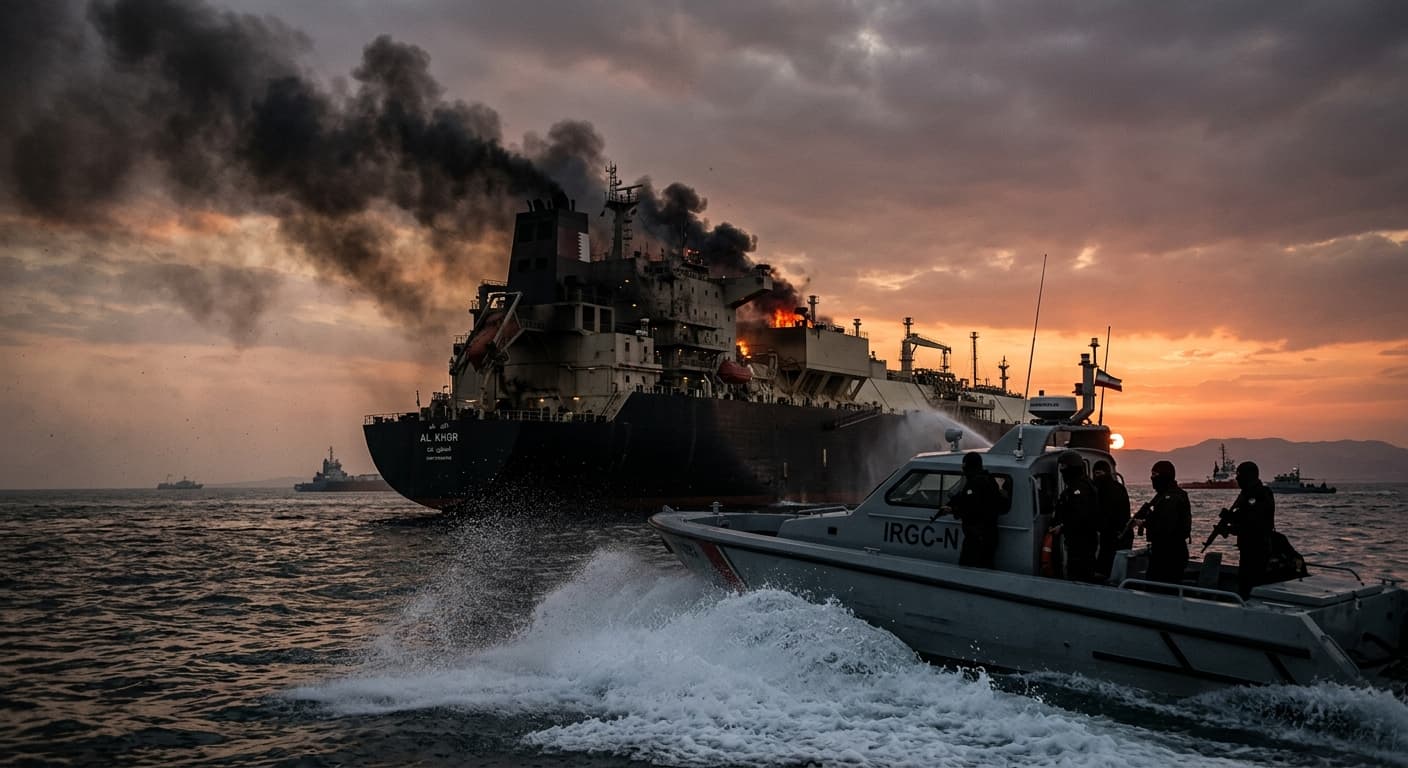
Qatari Tanker Strike Exposes Hormuz Tensions
A Qatari tanker was struck off Oman, revealing the fragility of the Hormuz ceasefire and Iran's influence over maritime security.
Global
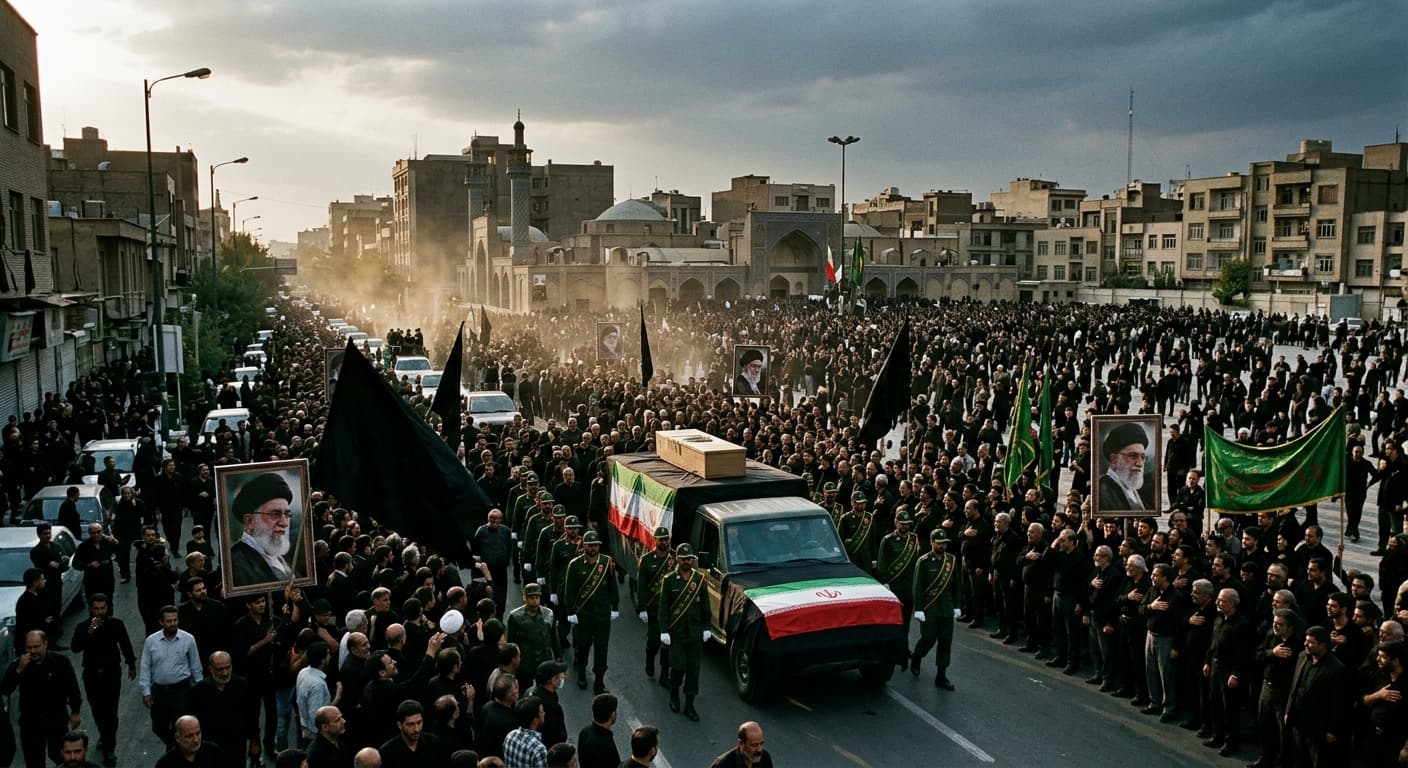
Khamenei's Funeral Signals Iran's Decline
The funeral of Ayatollah Khamenei highlights Iran's diminished influence in the Gulf, with regional powers now dictating terms.
Global
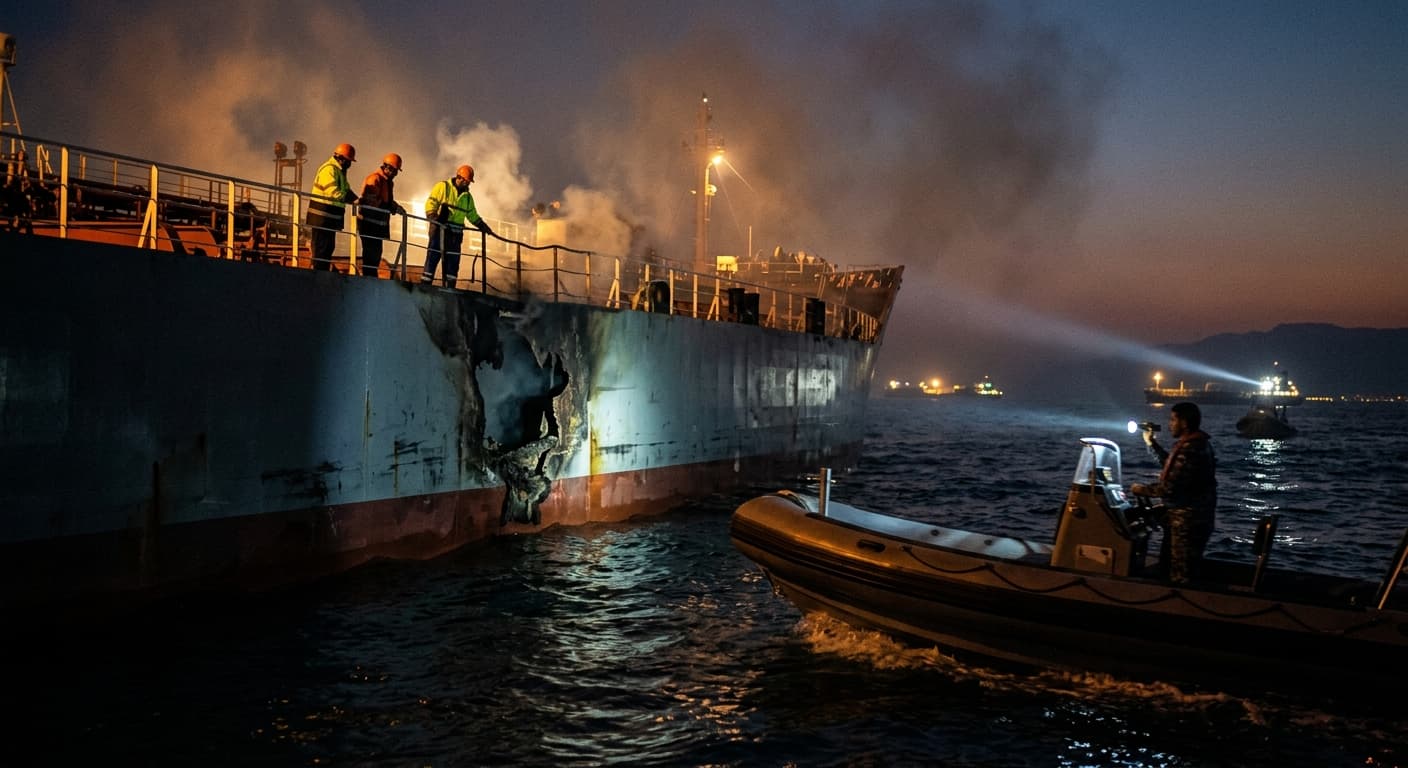
Iran's Hormuz Missile Strikes: A Toll Booth
Iran's missile attack on a Qatari-linked tanker highlights Tehran's strategy to control the Strait of Hormuz, impacting Gulf states and maritime law.

Tech Policy
Iran's Cavern Manticore Targets Israel's IT
Cavern Manticore, an Iran-linked hacking group, targets Israeli IT vendors, prompting a shift in Israel's cybersecurity policy and legislative efforts.