India's Twin Polls
Bengal's turnout and Vijay's debut shake up the political landscape.
Model Diplomat3 min readIndia

India's Twin Polls: Bengal's 79% Turnout Signals High-Stakes Battle
West Bengal and Tamil Nadu voted simultaneously on April 23 — one a test of Mamata's grip, the other a historic wildcard with actor-politician Vijay on the ballot.
79% voter turnout by 3 pm in West Bengal's Phase 1 is the headline number that should worry the BJP. High turnout in Bengal has historically favored the ruling TMC, whose ground mobilization machine has no peer in the state. Phase 1 covers 152 constituencies across 16 districts, with roughly 3.6 crore voters deciding among 1,452 candidates. Phase 2 follows on April 29, covering the remaining 142 seats.
Bengal: TMC's Ground Game vs. BJP's National Machinery
The central contest is unchanged from 2021: Mamata Banerjee's TMC versus Prime Minister Modi's BJP, though the terrain has shifted. The BJP's West Bengal unit, led by Samik Bhattacharya, is running on promises including a ₹3,000 monthly stipend for women under a renamed welfare scheme — a direct play on TMC's signature Lakshmir Bhandar program. Modi and Banerjee clashed repeatedly on the Uniform Civil Code during campaigning, with the UCC serving as BJP's national-level wedge issue against TMC's secular positioning.
The Election Commission deployed 2,450 central paramilitary forces for Phase 1 — a figure that signals ongoing concern about poll violence, a chronic feature of Bengal elections. The ECI also transferred 12 police officers in Kolkata ahead of voting, a pointed move against perceived partisan deployment of state machinery.
In 2021, TMC swept to 213 of 294 seats with a 47.9% vote share, its highest ever, while BJP won 77 seats with 38.1% — a strong opposition presence but a crushing defeat for the party that had targeted Kolkata's Writers' Building. The question for 2026 is whether anti-incumbency after five more years of TMC governance dents that margin, or whether BJP's inability to convert vote share into seats persists.
Tamil Nadu: Vijay's Debut Scrambles the Board
April 23 is also polling day across all 234 Tamil Nadu constituencies — a single-phase election where actor-turned-politician Vijay is contesting from two seats: Perambur and Tiruchirappalli East, fielding his two-year-old Tamilaga Vettri Kazhagam (TVK) across all 234 constituencies. That's an audacious first electoral outing for a party with no legislative history.
The structural challenge is familiar. Tamil Nadu has resisted celebrity-politician disruption before — Rajinikanth never ran, Kamal Haasan's MNM floundered, Vijayakanth's DMDK peaked and faded. Vijay is betting that sustained grassroots mobilization through his fan network differentiates TVK from these predecessors. He's explicitly secular, anti-BJP in positioning, and claims both the DMK-led Secular Progressive Alliance and the BJP-led NDA are in "shambles" due to coalition infighting — a pitch for voters disillusioned with both incumbents.
The real threat Vijay poses isn't winning outright; it's splitting the anti-AIADMK vote and handing DMK an easier path, or alternatively peeling enough DMK-leaning voters to tighten what polls suggest is M.K. Stalin's race to lose as the incumbent.
What to Watch
- Bengal's Phase 2 turnout on April 29 — if it matches or exceeds today's numbers, that's a strong indicator of wave-level mobilization rather than routine participation.
- Vijay's personal vote share in Perambur and Tiruchirappalli East — a credible 20%+ showing proves TVK has real electoral legs beyond fan club optics.
- Whether the UCC becomes a net liability for BJP in Bengal's Muslim-plurality northern districts, particularly Murshidabad, which voted today.
Results for both states will be counted after Phase 2 concludes. Track the full picture at India Politics.
Sources: The Hindu – WB Phase 1 campaigning |
The Hindu – TVK candidate list |
Frontline – Can TVK break the duopoly? |
The Hindu – 2021 WB final tally
Discover more
India
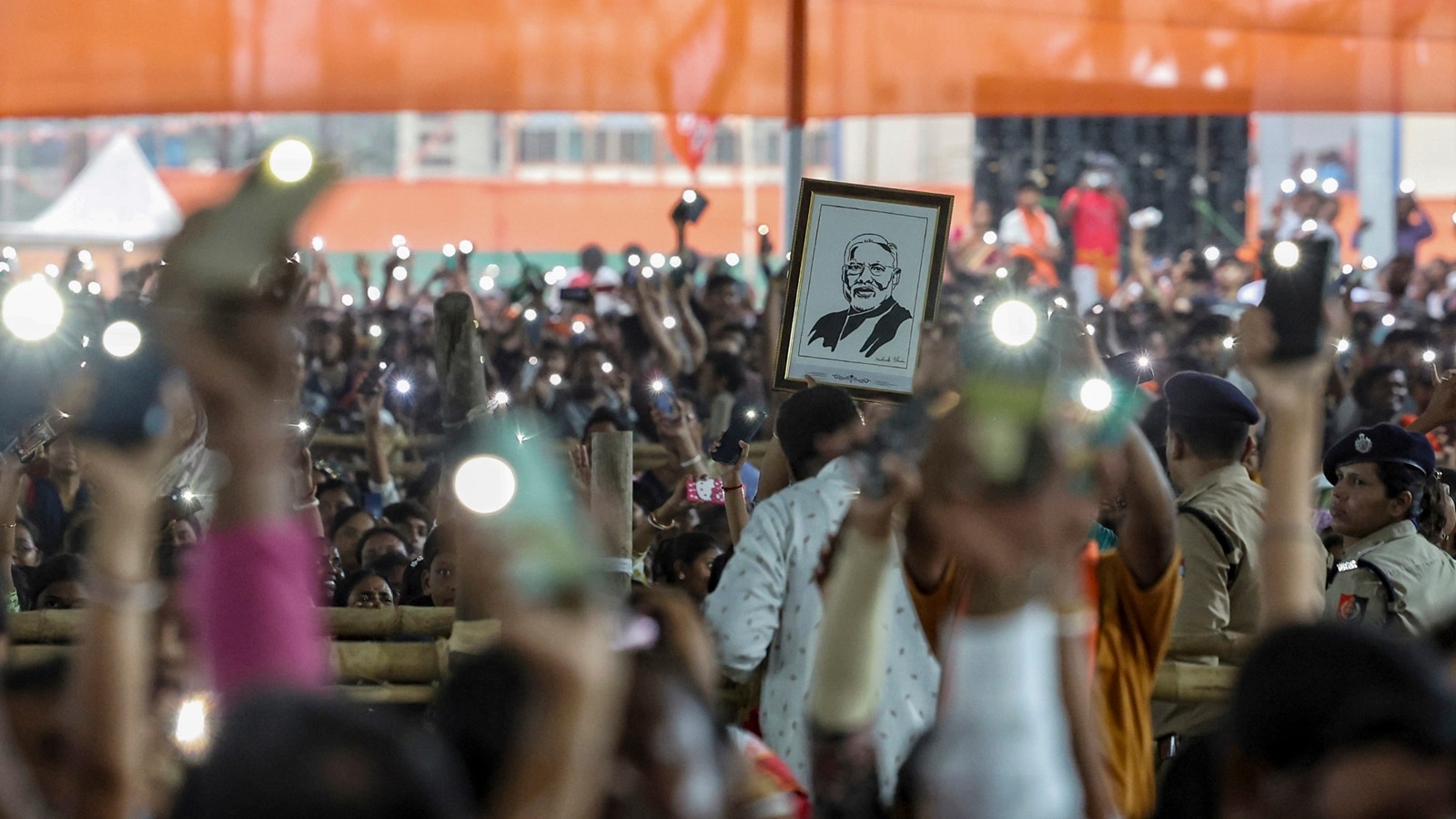
Modi's Women’s Convention in Varanasi
Modi's Varanasi rally frames women's reservation as a national mission, targeting the 2027 Uttar Pradesh elections with a strategic narrative.

Conflict & Security
Drone Warfare Killing Aid Workers at Unprec
Over 1,000 humanitarian workers killed in three years as cheap armed drones collapse legal protections. Gaza, Sudan, Ukraine, and DRC see deliberate targeting of aid convoys and hospitals with zero prosecutions.
Global
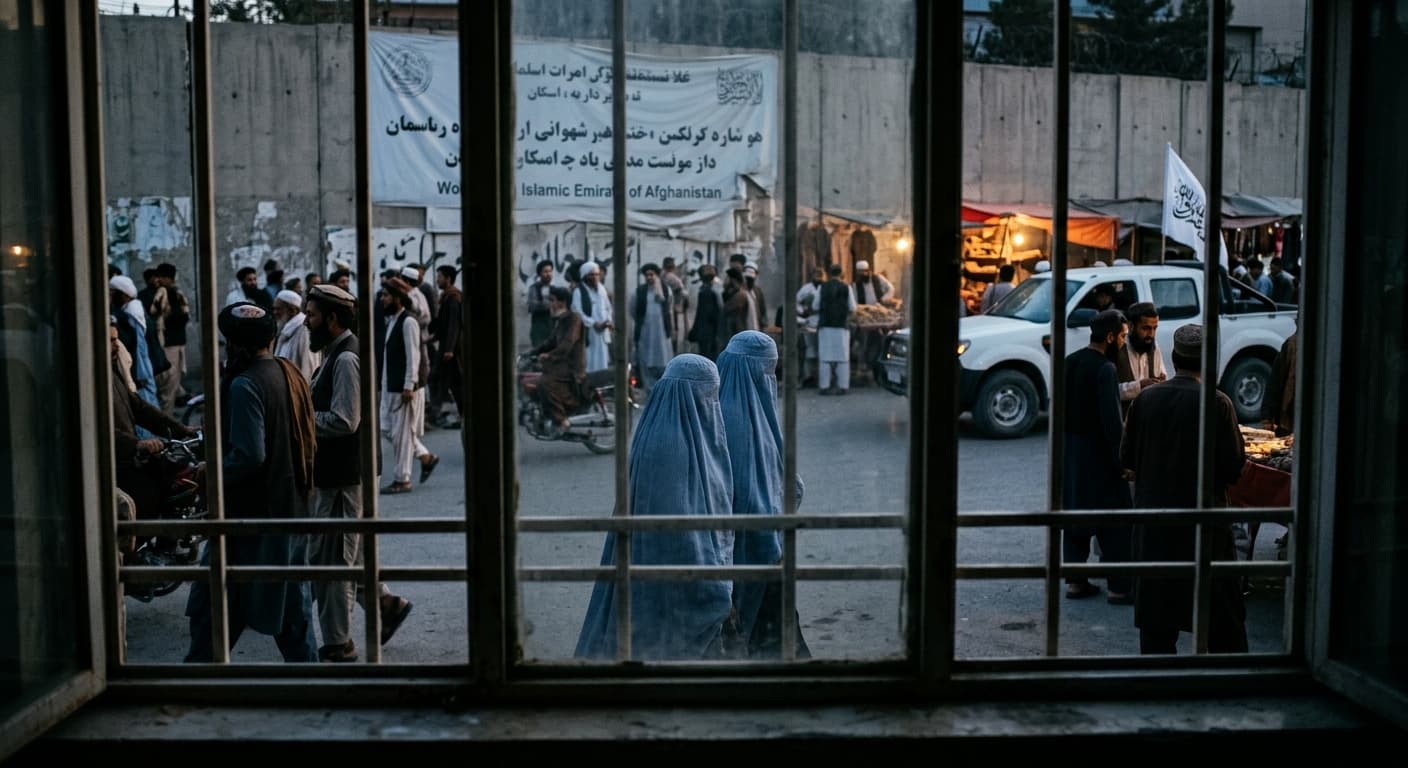
World Normalises Taliban as Afghan Women Eras
UN data shows Afghan women erased from public life as Russia recognises the Taliban, EU hosts officials in Brussels, and ICC warrants for gender persecution go unenforced.
Conflict & Security
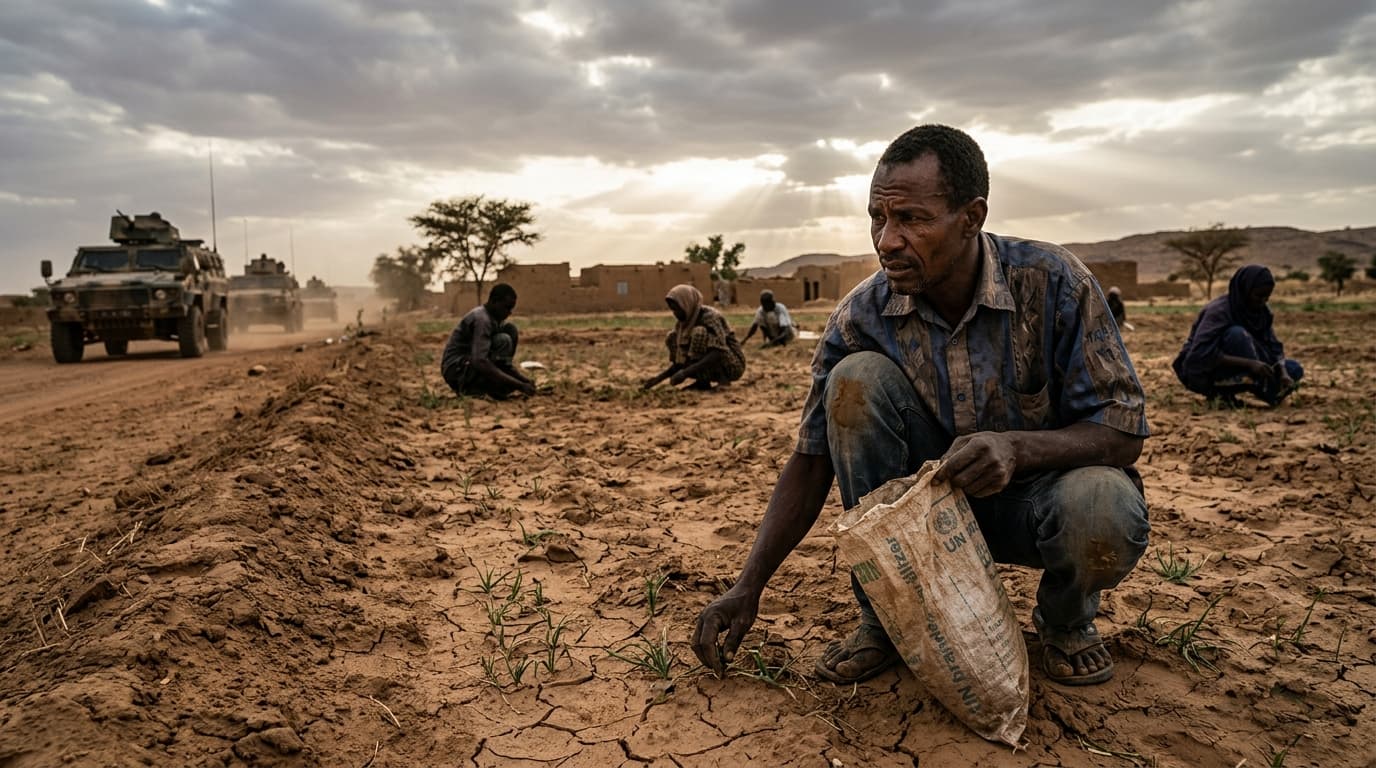
West Africa Food Crisis: Three Shocks in 2026
Conflict, climate extremes, and the Strait of Hormuz closure drive a severe food crisis in West and Central Africa, with fertilizer prices surging 80% and millions displaced.