India's Supreme Court Upholds Bar Autonomy
Court rules legal profession independence is vital for rule of law
Model Diplomat8 min readAsia
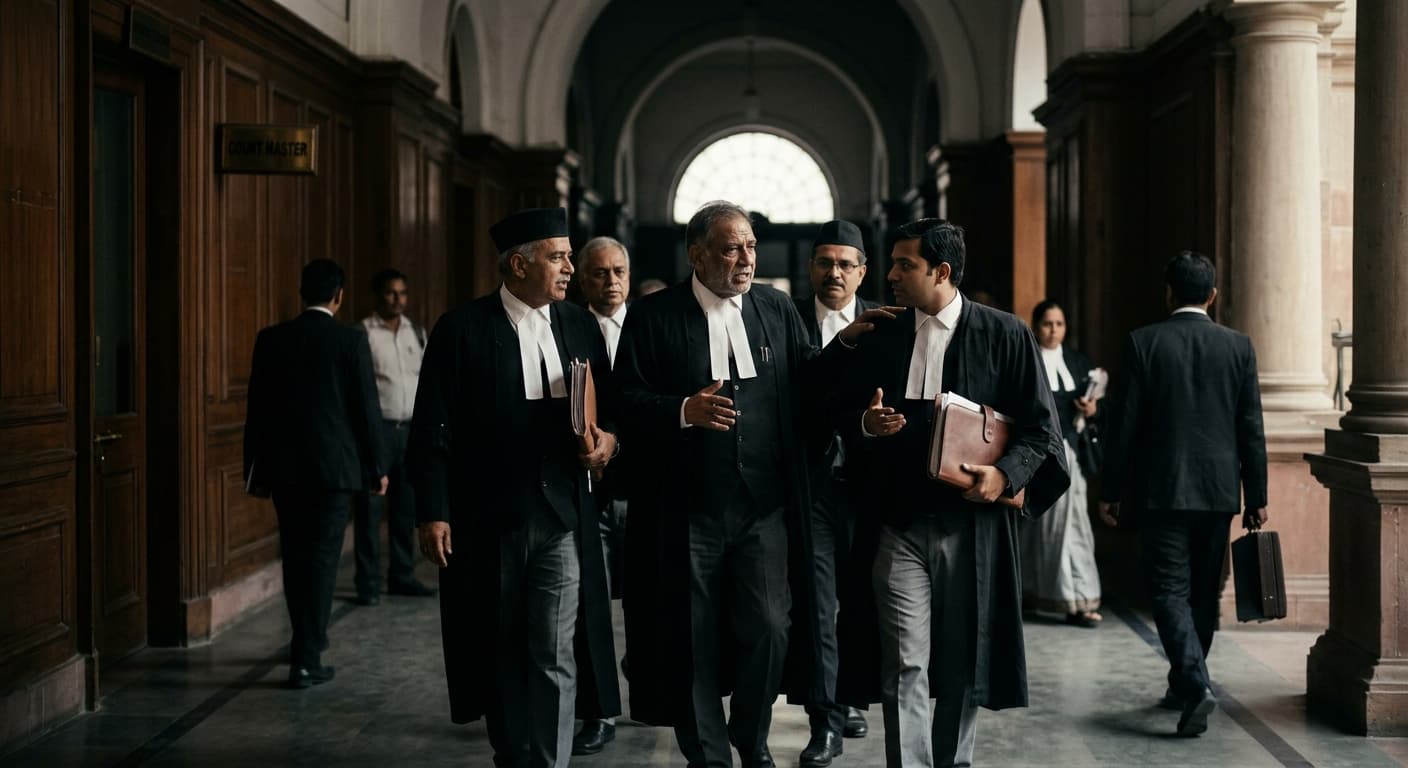
India's Supreme Court elevates Bar independence to a rule-of-law principle
The Supreme Court of India ruled on July 7, 2026 that the independence of the legal profession is as constitutionally indispensable as judicial independence — and struck down a bank-industry blacklist that had targeted a lawyer.
The Supreme Court of India held on July 7, 2026 that the independence of the legal profession is "an indispensable condition for the preservation of the rule of law" — placing it on the same constitutional footing as judicial independence, and quietly aligning Indian doctrine with the 1990 UN Basic Principles on the Role of Lawyers at a moment when bar associations from Istanbul to Ankara are under criminal investigation. The two-judge Bench led by Justice P.S. Narasimha struck down the Indian Banks' Association's practice of circulating a "caution list" of allegedly negligent advocates, and ordered the Bar Council of India to establish a full-time National Legal Academy and audit its disciplinary machinery. The ruling's most consequential move is not the relief granted to advocate Ajay Vijh — it is that the Court has, for the first time, read the independence of the Bar into the basic structure logic that protects judges, and extended that protection against private economic power, not just the executive.
The judgment: what the Court actually said
The Bench of Justice Narasimha and Justice Alok Aradhe was hearing Ajay Vijh v. Indian Banks Association (Diary No. 10787 of 2024), a challenge to the IBA's caution list dated February 5, 2020, which named Vijh — a former panel advocate for Syndicate Bank, now Canara Bank — over an allegedly deficient title-search report. According to CourtBook, the advocate had been listed without prior notice or a hearing, and several banks dropped him from their panels after circulation.
Reporting for The Hindu, Krishnadas Rajagopal quoted the Bench directly:
"The principle of self-regulation has historically been regarded as the defining feature of independence of the legal profession. The idea underlying such autonomy is that advocates, as officers of the court and participants in the administration of justice, must remain insulated from external pressures."
The Court then made the doctrinal move that will outlast this dispute: it treated the legal profession's autonomy as structurally linked to judicial independence, because "appointments to the Bench are made from the legal profession." The disciplinary jurisdiction over advocates, the Bench held, lies exclusively with the Bar Council of India and the State Bar Councils under the Advocates Act, 1961 — no bank, no regulator, no ministry can substitute a parallel sanctions regime.
Alongside the specific relief, the Court issued two structural directions. First, per India Legal, the BCI must set up a National Legal Academy on the model of the National Judicial Academy in Bhopal, to institutionalise continuing legal education. Second, the BCI and State Bar Councils must undertake a "comprehensive performance audit" of their disciplinary mechanisms — an implicit finding that self-regulation has been failing on its own terms.
The international frame: bringing India in from the cold
The ruling's significance for international law is that it domesticates, without saying so, the UN Basic Principles on the Role of Lawyers, adopted by the Eighth UN Congress on the Prevention of Crime in Havana in September 1990. Principle 16 obliges states to ensure lawyers can perform their functions "without intimidation, hindrance, harassment or improper interference"; Principles 24 and 28 require that professional associations be self-governing and disciplinary proceedings be handled by an independent body established by law. India voted for the instrument but has never enacted implementing legislation.
Justice Narasimha's language — "insulated from external pressures", "self-regulation as the defining feature" — tracks the Havana text almost point-for-point. That matters because the same principles are currently the operative international standard being invoked against member states that go after their bars.
On 21 March 2025, an Istanbul court ordered the dismissal of the entire executive board of the Istanbul Bar Association after prosecutors charged its leadership with "propaganda for a terrorist organisation" over a statement demanding an investigation into the deaths of two Kurdish journalists. Twelve international organisations — including Amnesty International and
Human Rights Watch — filed a joint intervention citing the same UN Principles the Indian Supreme Court has now incorporated into its own doctrine. Thierry Wickers, president of the Council of Bars and Law Societies of Europe, called the Istanbul case "an attack on the very idea of an independent legal profession".
The Indian ruling arrives against that global backdrop. According to Freedom House, lawyers, judges or prosecutors faced politicised detention, prosecution or imprisonment in at least 78 countries between 2014 and 2024, with lawyers targeted in 75 of them. India is not in that ledger — but the trajectory of contemporary rule-of-law backsliding suggests why the Court chose to constitutionalise the principle now, rather than treat Ajay Vijh as a narrow administrative-law matter.
The non-obvious angle: the threat came from the market, not the state
The comparative literature on lawyer independence is preoccupied with executive interference — prosecutions, disbarments, harassment of defence counsel. The Indian ruling opens a second front. The offending actor here is not the Union government, a police agency, or a ruling party. It is the Indian Banks' Association, a private industry body whose member banks act as gatekeepers of the largest single client base for solo advocates outside the criminal Bar.
By ruling that private economic coordination — an industry-wide blacklist — can constitute a threat to Bar independence as constitutionally cognisable as executive action, the Court has extended a doctrine originally built to defend judges against political capture into the terrain of market power. That extension is unusual in comparative practice. A 2019 study on Canadian doctrine, published on SSRN, notes that "Judicial and Bar independence are closely linked, but require clearer and more consistent theoretical guidelines"; most jurisdictions apply the market-power question through professional-conduct rules rather than constitutional principle. India has just done the reverse.
The immediate winners are two groups. The first is the layer of small-town and first-generation lawyers who depend on bank empanelment for a livelihood — the same cohort the Court has flagged elsewhere. In a suo motu proceeding reported by The Hindu, the Bench had already signalled that access-to-justice depends on the material conditions of the junior Bar;
The Leaflet reported the Court's proposal for a Young Lawyers' Professional Assistance Fund earlier in the same proceedings.
The second winner is the BCI itself — but with a fuse attached. The Court has reaffirmed the Bar Council's monopoly on discipline, but tied it to a compliance test: perform the audit, build the academy, or the argument for exclusive self-regulation weakens. That is the same conditional logic the Court used in Mahipal Singh Rana v. State of UP (2016), where, according to a Ministry of Law press note, the Bench directed the Law Commission to overhaul the Advocates Act. Report No. 266, submitted on 23 March 2017, has not been enacted. The July 7 ruling puts the same file back on the desk.
The pendency subtext: sharing the blame
The judgment's most politically pointed passage is on pendency. "Despite frequent references to the Bar and Bench as the 'two wheels of the chariot of justice', the Bar is seldom called upon to share responsibility for reducing delays and improving efficiency," Justice Narasimha wrote. "A fundamental reorientation is necessary."
The scale is unforgiving: India's Supreme Court alone carries roughly 70,000 pending matters across 34 sanctioned judges, per the Chandra–Kalantry–Hubbard Court on Trial dataset cited by the BBC; the high courts hold over 5.8 million cases; the country's courts as a whole crossed the five-crore mark, per the
PIB update on the e-Courts project issued on January 31, 2026. A 2021
Carnegie Endowment analysis concluded that "in most years, the number of cases disposed of is lower than the number of cases instituted, so the problem keeps getting worse."
The Court's framing shifts the political conversation. Every previous pendency intervention has focused on judicial vacancies, infrastructure, or procedure. By naming the Bar's role — adjournment culture, boycotts, poor drafting — the Bench has done something the Executive has been unable to do without triggering accusations of interference. The Bar's own institutions must now propose reforms, or accept that the Court will do it for them.
What to watch
- August 31, 2026 — the case is listed for further directions. Expect a compliance affidavit from the BCI on the National Legal Academy blueprint and the terms of reference for the disciplinary audit.
- The advocates' registry plea. Per
India Times Now, the Supreme Court on June 18, 2026 sought responses from the Centre, BCI, State Bar Councils and the University Grants Commission on a plea for a national database of advocates and a social-media code, after CJI Surya Kant flagged the proliferation of "dubious degrees". Read together with Ajay Vijh, the two proceedings pincer the BCI: greater autonomy, greater accountability.
- The Advocates (Amendment) Bill. Law Commission Report No. 266's draft bill, dormant since 2017, is the obvious legislative vehicle. Whether the Union Law Ministry now tables amendments — and how it defines the relationship between the BCI and any new registry — will determine whether the ruling becomes settled doctrine or the opening move in a fresh Bar-Bench-Executive triangulation.
- International citations. The Ajay Vijh reasoning is exportable. Bar associations under pressure in Türkiye, and litigators defending professional autonomy in jurisdictions where anti-money-laundering "gatekeeper" rules bleed into disciplinary sanction, will find the paragraph on self-regulation unusually citable.
For India, the significance of July 7, 2026 is not that the Supreme Court freed a single advocate from a bank blacklist. It is that a two-judge Bench, without fanfare, articulated a principle most constitutional systems only gesture at: that the lawyers who appear before the state's courts are as constitutive of judicial power as the judges themselves — and that the market can threaten that autonomy as effectively as the ministry.
The Bottom Line
India's Supreme Court has folded the 1990 UN Basic Principles on the Role of Lawyers into its own basic-structure jurisprudence, and done so in a case where the antagonist was a private banking cartel rather than the executive. That doubles the doctrine's reach: the independence of the Bar is now protected against economic coercion, not just political interference. The immediate loser is the Indian Banks' Association; the deeper loser will be the Bar Council of India itself if it fails the compliance test the same judgment quietly imposes.
Discover more
US Politics
SNAP Food Assistance Faces Legal Challenges
In 2026, SNAP faces stricter eligibility rules and mounting legal challenges, threatening food assistance for the millions of Americans who rely on the program.
Global Politics
Trump's Conflicting Messages on Iran War
Trump's mixed messages on Iran reflect a strategy of audience management, benefiting Tehran amid a complex geopolitical landscape.
US Politics
Congress Targets AI Chatbot Access for Terror
The House passed the Generative AI Terrorism Risk Assessment Act, focusing on AI's role in terrorism and potential surveillance implications.

Economics
Fed's Amex AML order puts correspondent banking on notice
Federal Reserve's Amex AML order requires board-level controls and a 90-day plan; OCC fined the bank $350 million over enterprise-wide deficiencies.