India's Rupee Stress
Rupee faces pressure from capital outflows and oil prices.
Model Diplomat3 min readAsia
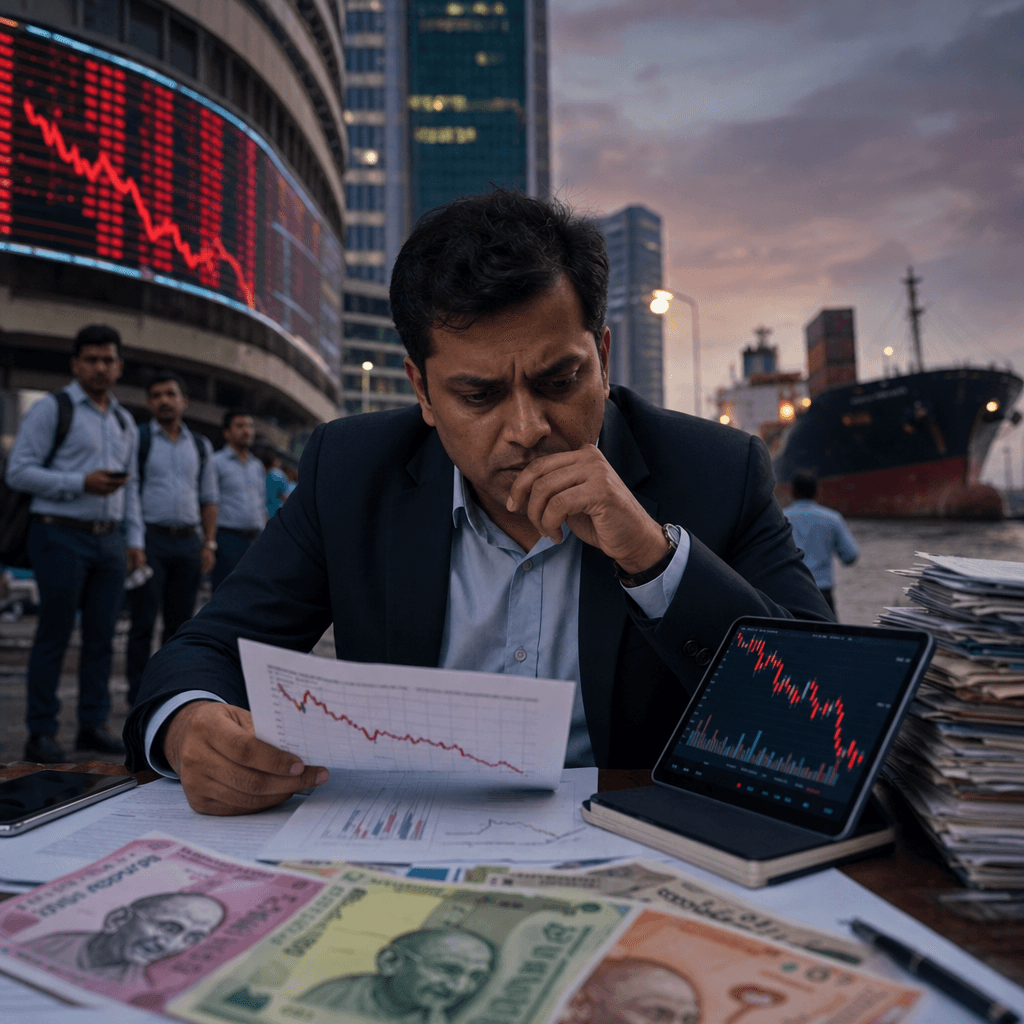
India’s Rupee Stress Is Now a Balance-of-Payments Test
Capital outflows, a wider trade gap and expensive oil are driving the rupee lower. The RBI can smooth volatility, but the fix now has to be structural.
The immediate power in this market sits outside South Block and Mint Street. Foreign dollar holders and oil prices are setting the rupee’s floor, while the Reserve Bank of India is reduced to managing the pace of decline, not reversing it. The Indian Express argues that this time the rupee problem is different because the usual response — reserve sales and moral suasion — cannot solve a wider external imbalance; the fix has to come from exports, investment and lower import dependence (The Indian Express).
Why this depreciation is more dangerous
The recent market move shows how quickly the external account can turn. Reuters reported that the rupee hit a record low of 95.39 to the dollar on May 5 after renewed Gulf conflict rattled markets and lifted concerns about India’s oil-import bill (Reuters). That matters because India still imports most of its crude, so every oil spike worsens the current account and adds pressure on the currency.
The bigger problem is that this is no longer just an energy shock. The Hindu warned that India’s merchandise trade deficit in 2025-26 had already hit a record $333 billion, while foreign exchange reserves had fallen by more than $21 billion since the end of February (The Hindu). That combination leaves the RBI with less room to defend the rupee aggressively without burning through buffers it may need later.
For the broader macro picture, see India and
Global Politics.
The RBI still has leverage — but only at the margin
This is where the policy trade-off gets sharper. The Hindu’s separate analysis of capital flight notes that the rupee weakened even though foreign central banks had not changed rates, underlining that portfolio outflows and risk aversion can hit India regardless of domestic monetary settings (The Hindu). In other words, the RBI can lean against panic, but it cannot force global investors to stay.
That shifts the burden onto the government. If the external account is the constraint, then short-term measures — higher gold duties, tighter import rules, reserve intervention, appeals to “Made in India” — only buy time. They do not change the underlying math unless they are paired with more competitive exports, steadier manufacturing investment, and lower dependence on imported energy and gold. The Indian Express’s point is essentially this: a weaker rupee is not just a price to be managed; it is a signal that India’s external balance is under strain (The Indian Express).
What to watch next
The next decision point is whether the RBI keeps defending the currency with reserves or lets more depreciation through to protect buffers. Watch the next RBI policy review, the upcoming trade numbers and any further move on gold, fuel or import restrictions. If oil stays firm and capital outflows continue, the rupee will keep telling policymakers the same thing: stabilization now requires a stronger external sector, not just a stronger defense.
Discover more

India
India-South Korea $50B Trade Expansion Plan
India and South Korea target $50 billion in bilateral trade by 2030, focusing on industrial cooperation and strategic alignment amid US pressures.

International Relations
Pakistan's Key Role in US-Israel-Iran Meddle
Pakistan is seeking to mediate the US-Israel-Iran conflict, balancing high-stakes diplomacy against severe economic pressures and steep regional challenges.

Economics
Fed's Amex AML order puts correspondent banking on notice
Federal Reserve's Amex AML order requires board-level controls and a 90-day plan; OCC fined the bank $350 million over enterprise-wide deficiencies.
Conflict & Security
Guatemala: El Niño 2026–27 becomes regional security test
UNICEF: 25.8M children face El Niño risks in Latin America; Guatemala maps 188 municipalities for drought and food insecurity amid regional security test.