India's Fuel Price Freeze Under Pressure
New Delhi's pricing strategy is tested by global oil volatility.
Model Diplomat3 min readAsia

India Holds the Fuel Price Line — But the Math Is Getting Ugly
With Brent above $110 and OMC earnings forecasts slashed by up to 47%, New Delhi's populist pricing freeze faces its stiffest test yet.
India's Oil Ministry has moved to squash speculation about an imminent petrol and diesel price hike, pointing to the country's status as one of the few major economies still holding retail fuel prices flat despite a volatile global crude market. The pushback came after Kotak Institutional Equities projected that state-run oil marketing companies (OMCs) — IOCL, BPCL, and HPCL — could post heavy losses if prices stay frozen at current crude levels.
The Numbers Behind the Denial
The ministry's confidence is harder to sustain on a spreadsheet. Brent crude has traded between $103 and $119/barrel in early 2026, driven largely by the regional fallout from the US-Israeli strikes on Iran and resulting Strait of Hormuz supply disruptions. Kotak has already cut FY2027 EBITDA forecasts by 45–47% for BPCL and HPCL and roughly 28% for IOCL, with analysts warning that further crude gains push all three into outright losses. HDFC Securities puts the sensitivity starkly: every ₹1/litre drop in marketing margin erases 20–24% of FY27 EPS for the major OMCs — The Hindu.
The government has already started working around the edges. In March 2026, OMCs began paying standalone refiners like MRPL and CPCL discounted rates of up to ₹60/litre below import cost — a quiet subsidy that papers over the price gap without touching the pump price. Meanwhile, premium petrol (XP-95) was nudged up ₹2/litre on March 20, a surgical move the government framed as irrelevant to the "common man" since premium variants cover only 2–4% of daily petrol volumes. On March 26, excise duties were also cut — petrol from ₹13 to ₹3/litre, diesel eliminated entirely — providing fiscal relief to OMCs without any visible change at the pump.
Why New Delhi Won't Move — Yet
The freeze is structurally political. State elections in Assam, Kerala, Tamil Nadu, West Bengal, and Puducherry are in the immediate frame, and India's history of election-aligned fuel pricing decisions is long. The government explicitly invoked the freeze as protective of consumers; the opposition, led by Congress, has called it narrative management given that falling crude benefits have never been fully passed through — a pattern well-documented since 2022.
There is also a broader geopolitical logic. With ~60% of India's LPG imported and roughly 90% of that from the Middle East, supply security — not just price — is now a live concern. The government has already invoked the Essential Commodities Act to direct PSU production priorities and implemented a 25-day gap between LPG cylinder bookings to curb hoarding.
What to Watch
Three triggers could force a rethink on India's fuel pricing:
- Crude sustaining above $120/barrel. At that level, even the discounted refiner-payment workaround becomes fiscally untenable and OMC balance sheets deteriorate fast enough to threaten credit ratings.
- Post-election calendar. If the current election cycle clears by mid-2026, the political calculus shifts and a managed hike — likely ₹2–5/litre — becomes the path of least resistance, as it was in March 2024.
- Rupee depreciation. Currency weakness amplifies crude costs in rupee terms, compressing margins even if dollar-price oil stabilises.
The ministry's "we are exceptional" framing is accurate — India is genuinely unusual in holding this line. Whether that's sustainable policy or deferred pain depends almost entirely on how long Hormuz-driven crude pressure persists. Follow developments on International Affairs for the broader energy market context.*
Discover more

Global Politics
US Seizes Iranian Ship, Tensions Surge
The US seizure of the Iranian ship Touska highlights a shift in control over the Strait of Hormuz, favoring Iran's strategic position.

Conflict & Security
Drone Warfare Killing Aid Workers at Unprec
Over 1,000 humanitarian workers killed in three years as cheap armed drones collapse legal protections. Gaza, Sudan, Ukraine, and DRC see deliberate targeting of aid convoys and hospitals with zero prosecutions.
Global
World Normalises Taliban as Afghan Women Eras
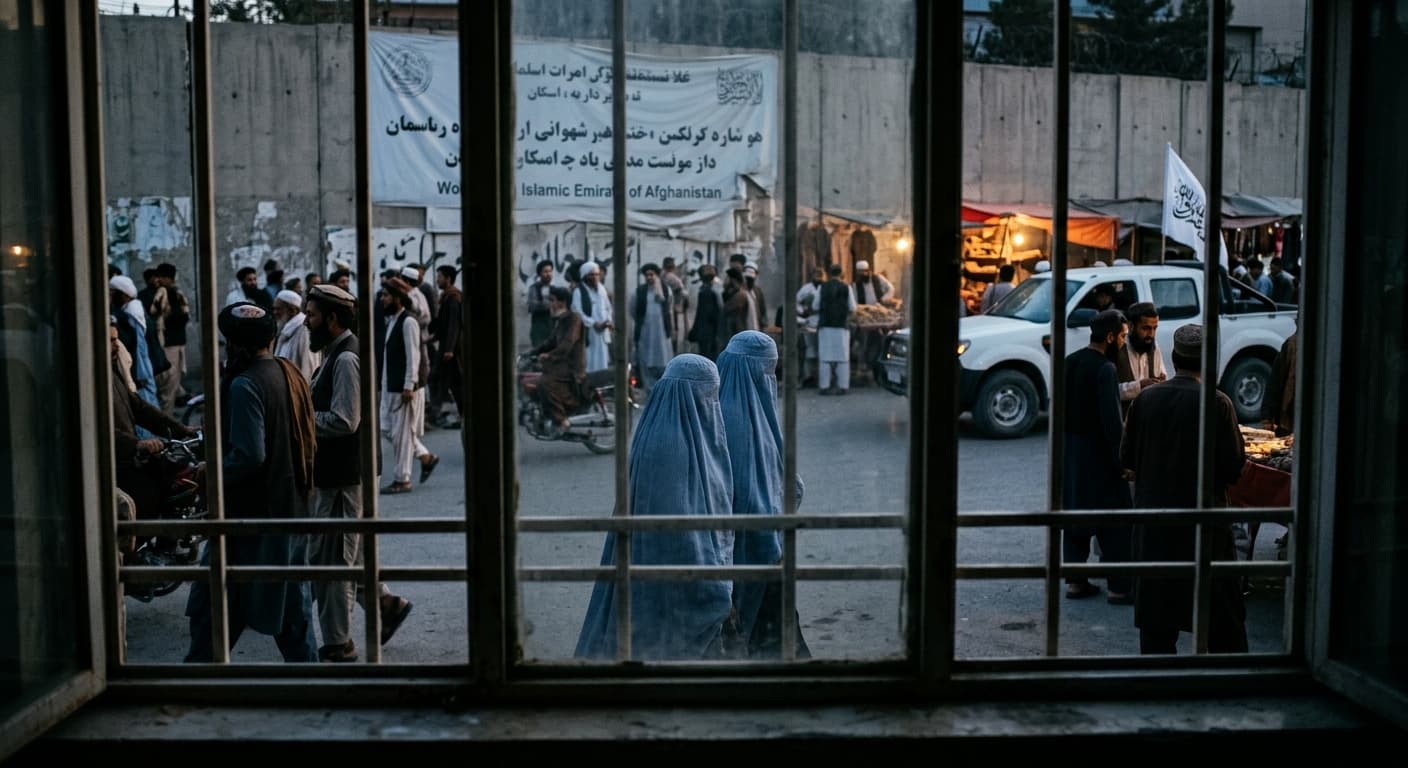
UN data shows Afghan women erased from public life as Russia recognises the Taliban, EU hosts officials in Brussels, and ICC warrants for gender persecution go unenforced.
Conflict & Security
West Africa Food Crisis: Three Shocks in 2026
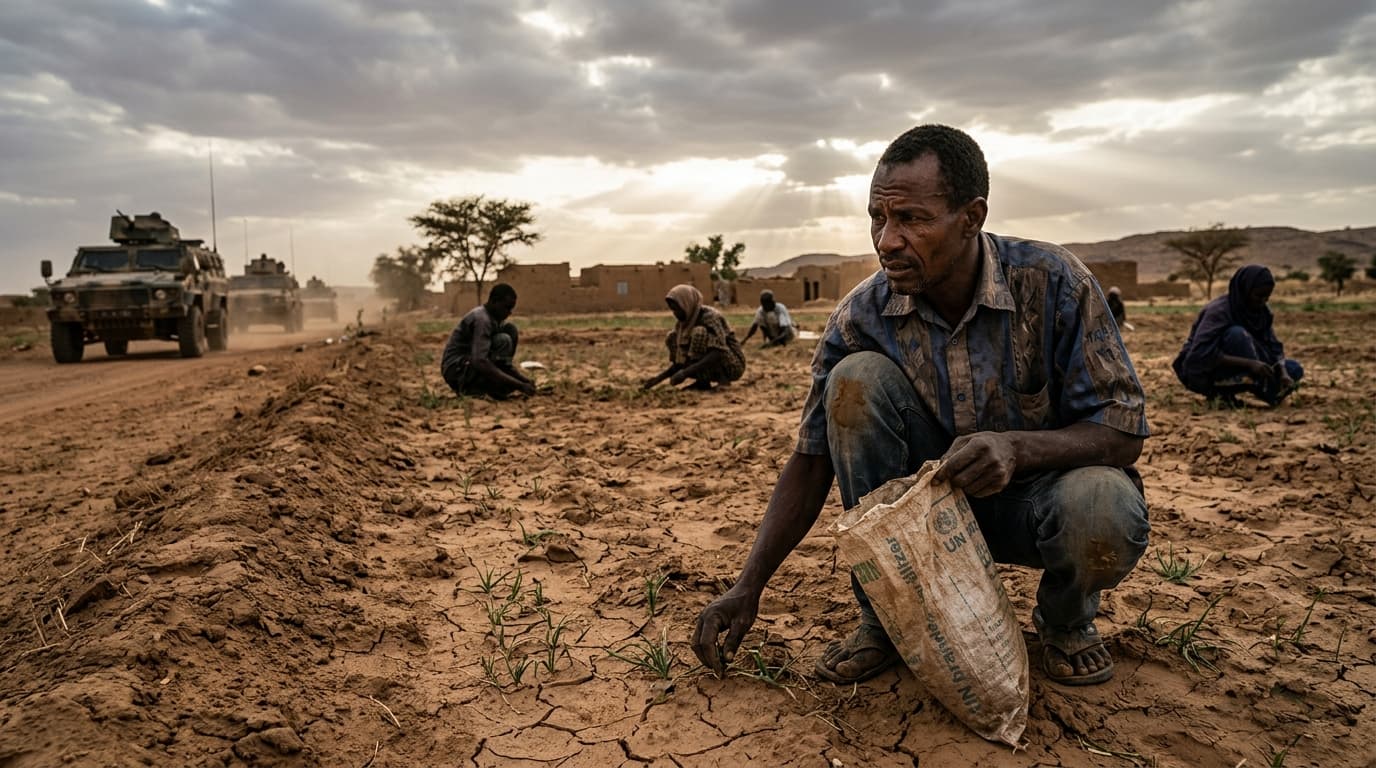
Conflict, climate extremes, and the Strait of Hormuz closure drive a severe food crisis in West and Central Africa, with fertilizer prices surging 80% and millions displaced.