India's Federal System: Quota and Delimiting
The impact of the 131st Amendment defeat on Indian federalism
Model Diplomat7 min readIndia

India's Federal System: Quota and Delimiting After the 131st Amendment Defeat
A women's quota bundled with a Lok Sabha expansion to 850 seats collapsed in Parliament on April 17, 2026 — freezing India's political map and reopening a north-south fight the constitution wrote in 1976.
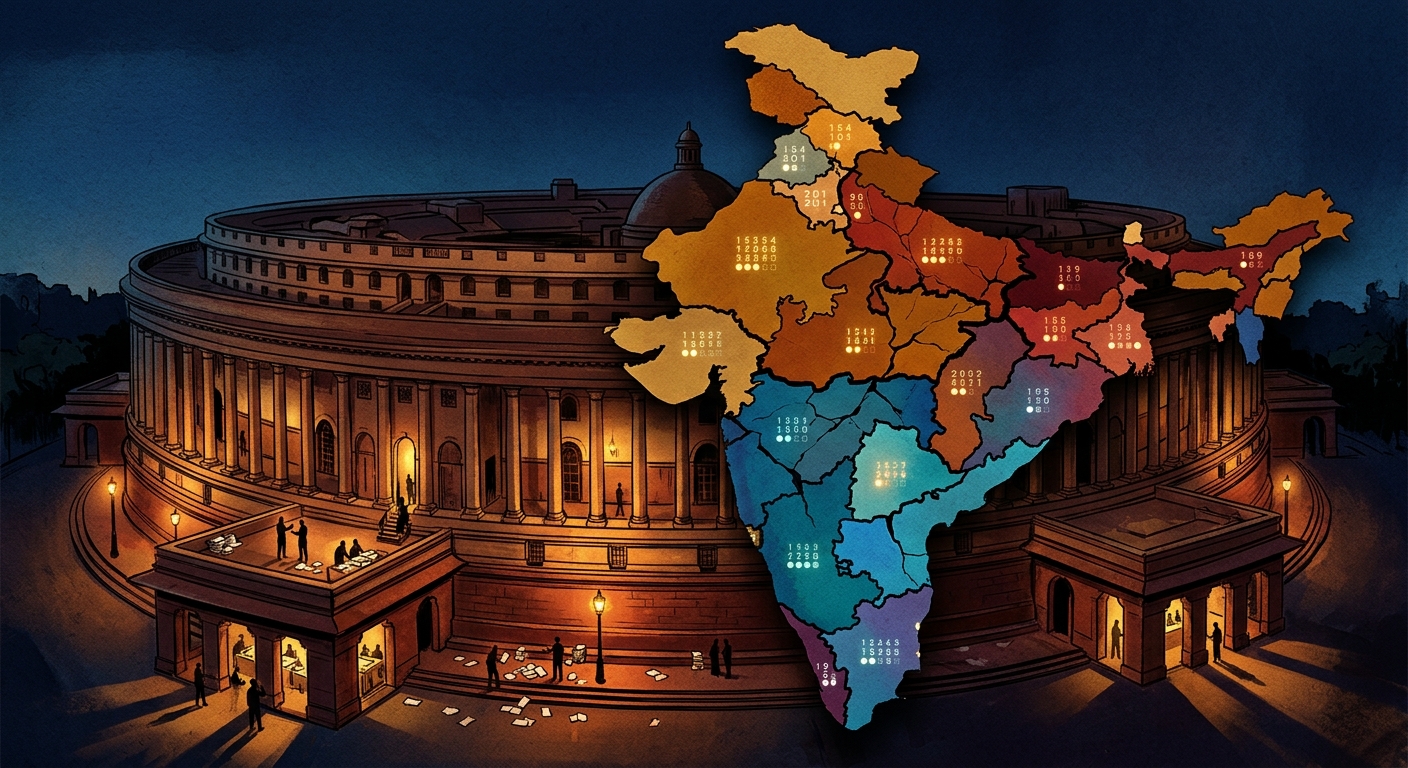
The Modi government's Constitution (131st Amendment) Bill, 2026 lost 298–230 in the Lok Sabha on April 17 — 62 votes short of the two-thirds majority needed to expand Parliament from 543 to 850 seats and finally activate the women's reservation passed in 2023. That defeat is not a pause; it is the load-bearing event of Indian federalism this decade. By tying a broadly popular gender quota to a population-based redraw that would shift up to 36 seats between states, the government made the price of women's representation a rebalancing of power from south to north — and the Parliament refused to pay. Everything that follows on fiscal transfers, the 16th Finance Commission, and the 2029 general election now flows from that arithmetic.
What actually failed on April 17
The three bills tabled at the mid-April special session were an integrated package, not parallel reforms. According to a Press Information Bureau release quoting Home Minister Amit Shah's reply in the Lok Sabha, the Delimitation Bill, the Constitution (131st Amendment) Bill and the Union Territories Laws (Amendment) Bill were meant to be enacted together — the amendment enabling seat expansion, the delimitation bill setting up the commission, and the third extending the framework to Delhi and Jammu & Kashmir. The
Carnegie Endowment notes the constitutional bill would have raised the Lok Sabha's maximum strength from 550 to 850 seats — 815 for states, 35 for union territories — and, critically, removed the requirement that reapportionment follow every census, letting Parliament decide which census to use.
The women's quota was the political sweetener. The 106th Amendment — the Nari Shakti Vandan Adhiniyam — was passed unanimously in September 2023, as the BBC reported at the time, but its own text conditions the one-third reservation on the completion of a fresh census and subsequent delimitation. Modi's government argued the April package was the only way to switch that reservation on in time for the 2029 election. The opposition read the sequencing in reverse: as
Al Jazeera documented, Rahul Gandhi called it "an attempt to seize power through delimitation and gerrymandering," and Tamil Nadu Chief Minister M.K. Stalin publicly burned a copy of the bill.
The bloc that killed the bill was not just Congress. DMK, CPI(M), TMC and enough regional MPs from the south and east denied the National Democratic Alliance its 360-vote threshold; the BBC reported the NDA holds 293 Lok Sabha seats and always needed opposition defectors to clear the constitutional bar.
Why the map matters more than the quota
Under the freeze imposed by the 42nd Amendment (1976) and extended by the 84th Amendment (2001) to the "first census after 2026," inter-state Lok Sabha shares have not moved since 1971. India's population has roughly tripled since — unevenly. An MP in Bihar today represents about 3.1 million citizens; in Kerala, about 1.75 million, according to the Takshashila Institution. Amit Shah told the Lok Sabha that 127 constituencies now exceed two million voters, calling the one-person-one-vote principle "completely violated."
The Carnegie analysis by Milan Vaishnav and Jamie Hintson quantifies the stakes. Using 2011 census figures to reallocate the existing 543 seats, about 26 seats would move: Uttar Pradesh, Bihar and Rajasthan would collectively gain 19; Tamil Nadu, Kerala and Andhra Pradesh would collectively lose 15. Applying the government's own 2026 population projections, the reallocation grows to 36 seats — the three northern states gaining 26, the three southern states losing 21. Only Assam and Maharashtra would be unaffected.
The Modi government's answer was a flat 50% expansion in which "no state loses seats," which Shah defended by claiming the five southern states' combined share would move only from 23.76% to 23.87% of an 816-seat house. That math is arithmetic sleight-of-hand: raw seat counts hold, but decisional weight — the ability to form a majority, to swing a coalition, to elect a prime minister — is fixed by proportional share, and any expansion that adds more seats where population has grown fastest tilts the median MP northward.
The fiscal shadow the bill did not touch
The delimitation fight is now inseparable from the money fight. India's 16th Finance Commission, constituted for the 2026–2031 award period, is due to report by October 31, 2026. Its formula — dominated by population, per-capita income and "income distance" — already redistributes from the south to the north. Analysis by the Observer Research Foundation traces how population and income-distance criteria route the divisible pool toward poorer, more populous states. Karnataka's finance department, in a paper for the
Takshashila Institution, documented that the 15th Finance Commission made it the biggest relative loser among major states in vertical devolution.
Southern chief ministers see the two exercises as one squeeze. As economist Shruti Rajagopalan argued on the Carnegie Grand Tamasha podcast, the states' share of the divisible pool is roughly 41%, and its horizontal split runs on population and poverty weights — meaning any delimitation that adds northern seats compounds a fiscal formula already stacked against high-GSDP southern states that funded their own welfare architecture.
That is the Carnegie report's most important claim, buried under the seat tables: the 1971 freeze has functioned as an implicit federal bargain. Wealthier, lower-fertility southern states accepted an unfavourable fiscal formula in exchange for over-representation in the Lok Sabha; wealthier, populous northern states accepted under-representation in exchange for out-sized fiscal transfers. Delimitation without a parallel fiscal renegotiation is not a technical adjustment — it is a unilateral rewrite of the deal that has held India's federation together for fifty years.
The census as the real deadline
Article 82 of the Constitution requires reapportionment after every census, and Article 81 requires that "as far as practicable" state shares reflect population. Neither can operate without a census result on the record. The first phase of India's delayed decennial census began April 1, 2026, Al Jazeera reported, with caste enumeration reinstated after a 2025 government reversal. Field enumeration will run into 2027; usable state-level data will not be published before late 2027 or 2028.
Until that publication, the freeze holds by force of the 84th Amendment. The Carnegie assessment is blunt: "no fresh delimitation exercise can be undertaken until the results of the next census — currently underway — are officially published." So too the women's reservation. The BBC noted in 2023 that the Nari Shakti Vandan Adhiniyam explicitly binds its trigger to a completed census and a subsequent delimitation. That linkage — designed by Modi's own government — is now the reason 33% reservation cannot come into force before roughly 2029.
The Takshashila Institution's post-mortem of the failed bills makes a different, quieter argument. Expanding to 850 seats would not solve the Lok Sabha's core dysfunction: average sitting days have fallen since Independence, oral-question opportunities are rarer than in the UK or Australia, and adding 300 MPs to a house that meets on fewer days risks making Parliament less deliberative, not more representative. The federal fight has crowded out the institutional one.
Diplomat View
The 131st Amendment's defeat is a defensible verdict on process, not a solution. Our forecast: the government will not attempt a second version of the same package before the census data lands in 2027–2028. When it returns, the price of southern acquiescence will not be a seat guarantee — it will be structural: a higher vertical devolution share (the 16th Finance Commission is the obvious vehicle), a revised Rajya Sabha weighting that gives southern states genuine veto capacity in the upper house, and possibly a shift to a degressively proportional Lok Sabha formula on the European Parliament model, as flagged by Carnegie and by
Paladugula Dhanraj's peer-reviewed analysis. What would change the forecast: a Supreme Court reference — plausible if the DMK-led state governments challenge any executive order to begin delimitation using pre-census projections — or a BJP loss in Bihar's late-2026 assembly election that weakens the Centre's northern coalition leverage. Absent those, expect the women's quota to remain hostage to the seat map through 2028.
What to watch:
- October 31, 2026 — 16th Finance Commission report due; the horizontal-devolution formula will signal whether the Centre is offering a fiscal counterweight to any future delimitation deal.
- Bihar assembly elections, October–November 2026 — a BJP-JD(U) reverse would strip Modi of the northern majority the delimitation math assumes.
- Q3 2027 — first phase of census population totals expected; the constitutional freeze on inter-state reapportionment formally ends the moment those numbers are gazetted.
The Bottom Line
India's federal system now runs on a 50-year-old political map, and the April 17 defeat of the 131st Amendment guarantees it will run on that map through at least the 2029 election. The Modi government's mistake was strategic, not tactical: by bundling a broadly-supported women's quota with a delimitation that would shift up to 36 seats northward, it forced the south to vote against gender reform to defend federal balance — and it lost. The next delimitation will not be won or lost on seat arithmetic; it will be settled at the Finance Commission and in the Rajya Sabha, or not settled at all.
Discover more
India
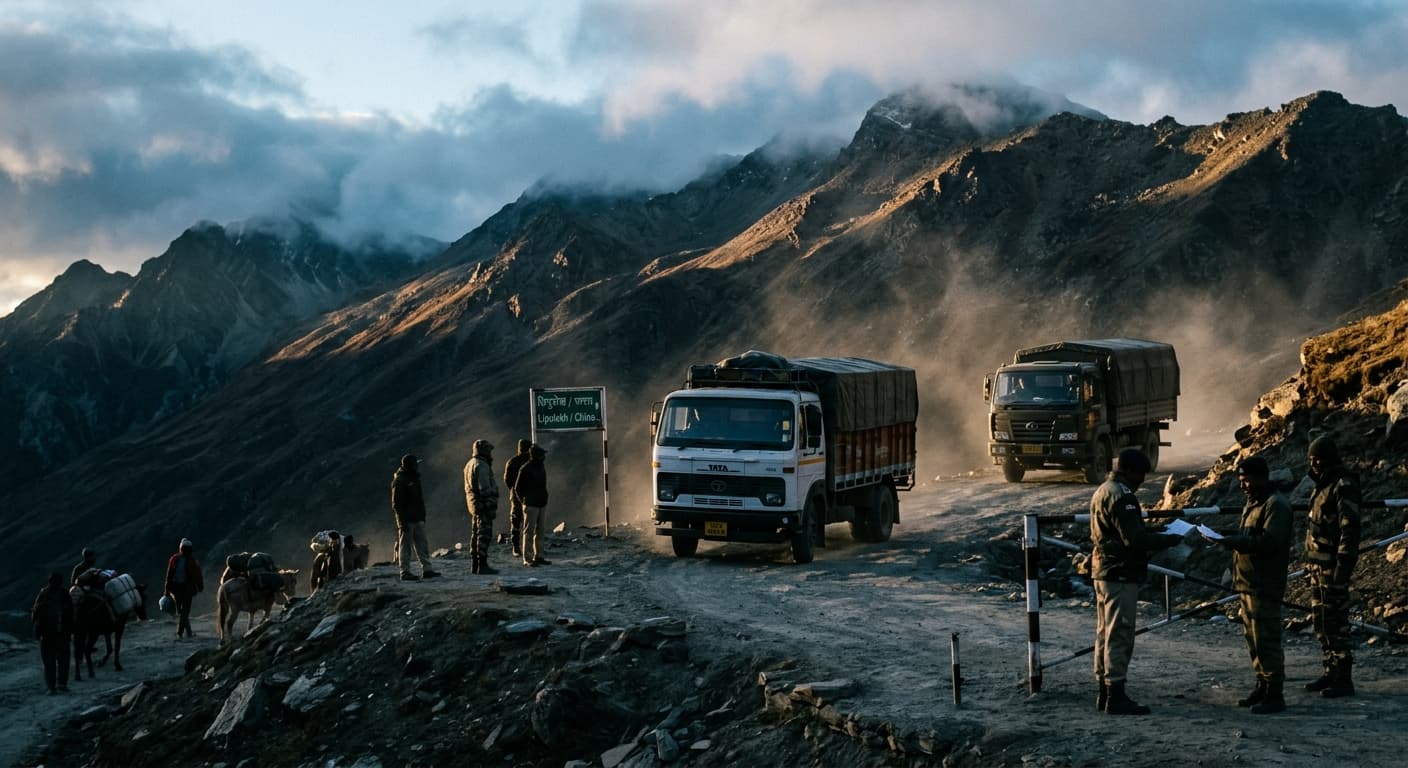
Lipulekh Pass Reopens: India-China Trade
India and China reopen the Lipulekh Pass for cross-border trade, signaling a cautious thaw in relations after years of frozen frontier and diplomatic tensions.

India
India, South Korea Forge Five-Year Plan
India and South Korea have agreed on a five-year partnership plan to deepen trade and defense cooperation, strengthening strategic and economic regional ties.

India
India Rebukes Pakistan at UNSC on Kashmir
India's UN envoy sharply rebuked Pakistan for politicizing a UN Security Council meeting on Kashmir, accusing Islamabad of diverting attention with rhetoric.
India
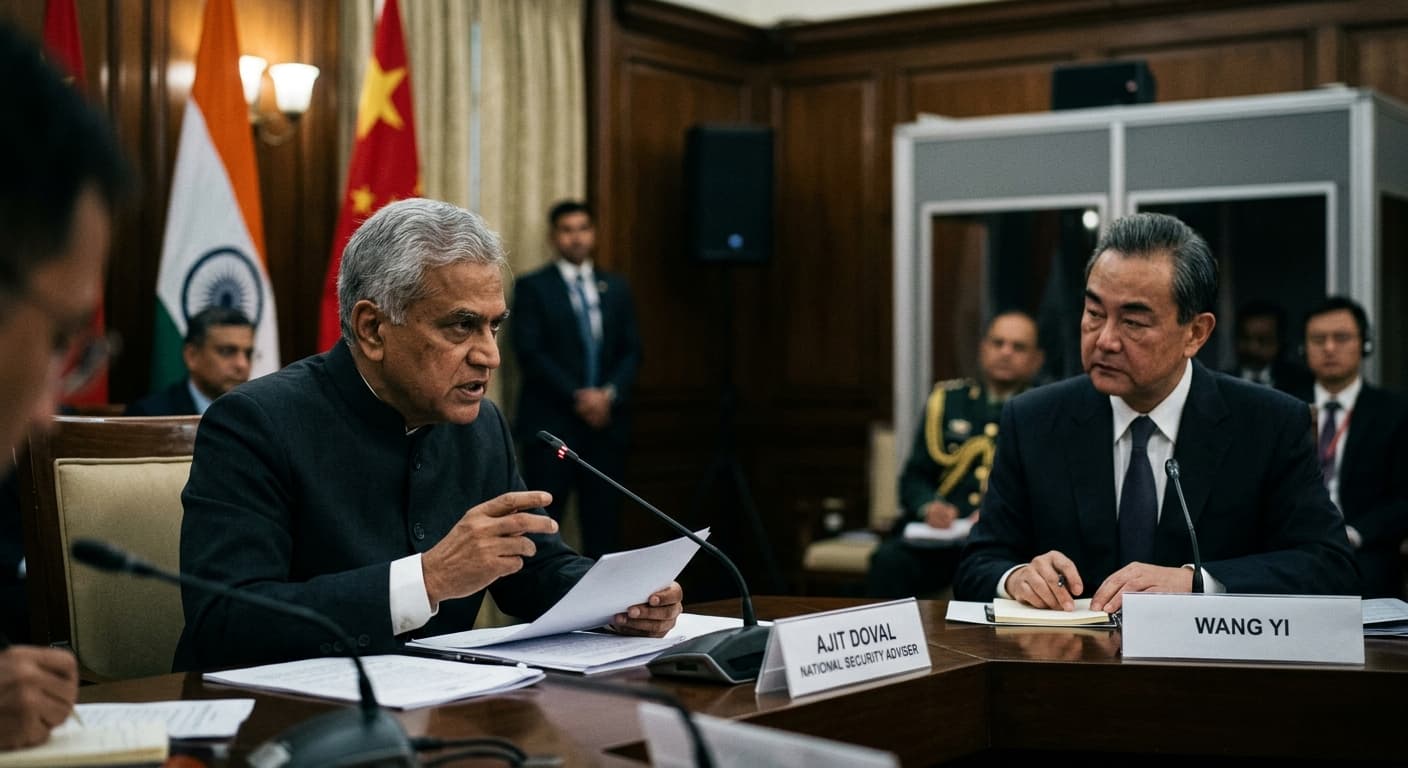
Doval's Message: India Signals Sensitivity
India's Doval signals sensitivity to core national interests in talks with China, stressing mutual respect on border tensions to steady the wider relationship.