India-US Minerals Deal: A Strategic Hedge
New framework aims to diversify critical mineral supply chains.
Model Diplomat3 min readAsia
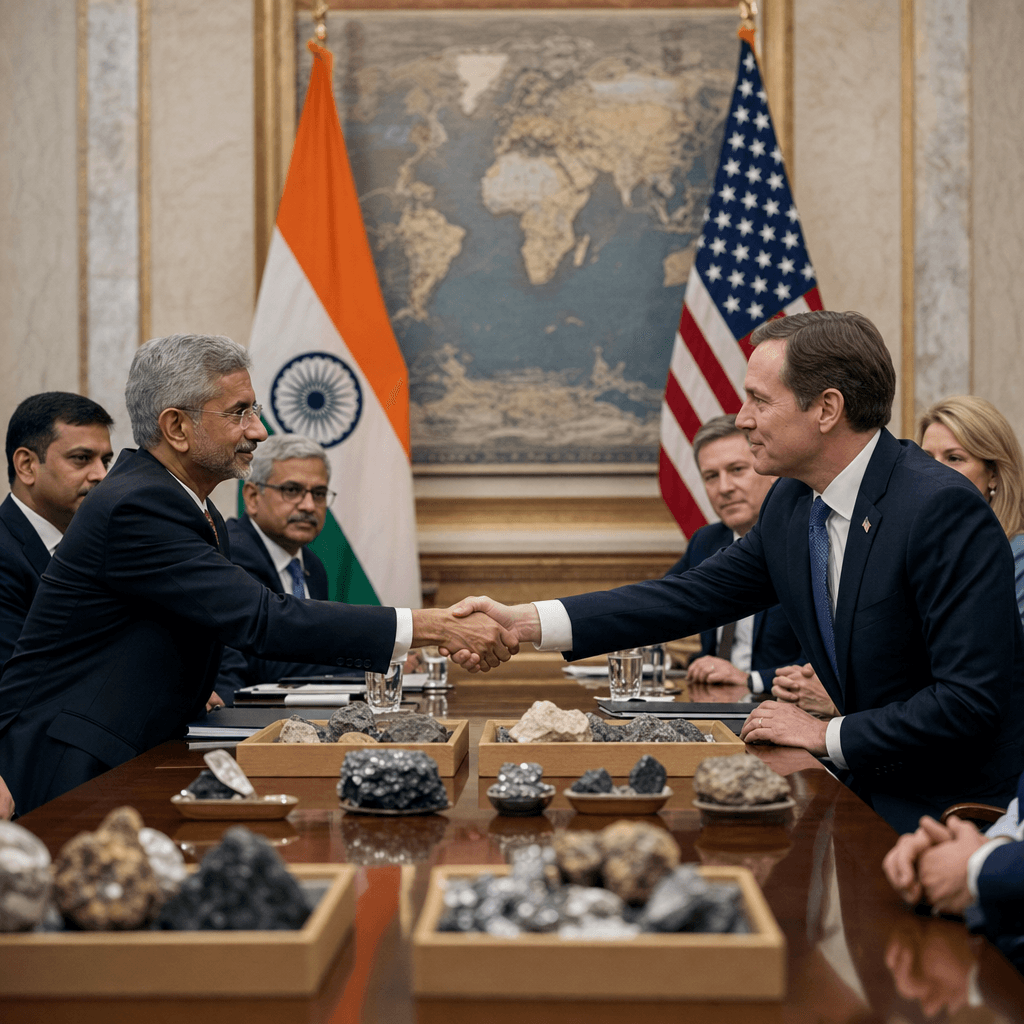
India-US minerals deal is a China hedge, not a supply fix
Washington and New Delhi have a framework to diversify critical-mineral supply chains. The leverage is political; the test is whether capital follows.
India and the United States have signed a framework to cooperate on critical minerals and rare earths — including mining, processing, recycling and related investment — in a move announced by the Indian foreign ministry and the U.S. embassy in New Delhi on Tuesday, according to Al Jazeera. The deal was finalized by External Affairs Minister Subrahmanyam Jaishankar and Secretary of State Marco Rubio during Rubio’s visit to India, and it lands just as the Quad foreign ministers meet in New Delhi.
The real logic is de-risking from China
This is not a mining deal in the narrow commercial sense; it is a supply-chain hedge. Critical minerals sit underneath batteries, semiconductors, electric motors, weapons systems and AI hardware, and the U.S. has spent years trying to reduce exposure to a single-country choke point, especially China. As Al Jazeera notes, Washington says it relies entirely on imports for 12 critical minerals and gets at least half its needs from imports for 29 more.
That is why the language matters. The U.S. embassy said the two countries will work to protect sensitive supply chains from “coercive market practices” and reduce vulnerability to “single-source monopolies,” Al Jazeera reported. In plain terms, Washington wants redundancy; India wants access to technology, financing and a bigger role in a strategic industry that can attract industrial policy money.
The Quad adds the geopolitical frame. CNA reported that the New Delhi ministerial is meant to reaffirm the bloc’s relevance and deepen cooperation on economic resilience, maritime security and critical minerals. That matters because the minerals agenda is now being folded into a wider Indo-Pacific competition over industrial capacity, not just raw materials.
India gains leverage, but the deal is still mostly aspirational
For New Delhi, the win is less immediate supply and more diplomatic weight. India gets to present itself as a manufacturing and processing hub inside a U.S.-backed diversification strategy. That is useful in Global Politics, where states are increasingly turning resource policy into coalition-building.
But the limitations are obvious. The statements released by both governments, as Al Jazeera notes, do not spell out binding purchase commitments, project pipelines or financing schedules. Without those, this is still a framework — a signal of intent, not a guaranteed supply chain.
There is also a harder second-order effect: the U.S. and India are trying to build alternatives to Chinese dominance, but the market already exists on China’s terms. Beijing retains scale in processing, refining and magnet production. Unless the Quad can move money into actual mines, refineries and recycling facilities, China still sets the pace.
What to watch next is financing, not rhetoric
The next decision point is whether Tuesday’s Quad meeting produces concrete working groups, project lists or public financing commitments. Al Jazeera says the Quad countries are separately considering a framework that could mobilize up to $20 billion through loans, guarantees, subsidies and long-term purchase agreements. If that money is real and deployable, the partnership becomes operational. If not, it remains strategic theater.
Also watch whether this minerals deal is linked to broader U.S.-India trade talks. Rubio’s visit was not only about supply chains; it was part of a wider effort to reset bilateral ties after tariff and trade friction, CNA reported. That gives India bargaining power: it can offer strategic cooperation in minerals, energy and technology, but it will expect market access and investment terms in return.
For now, the balance is clear. The United States gets a China hedge; India gets strategic relevance. The question is whether either side can turn a framework into factories.
Discover more

India
India-South Korea $50B Trade Expansion Plan
India and South Korea target $50 billion in bilateral trade by 2030, focusing on industrial cooperation and strategic alignment amid US pressures.

Conflict & Security
Drone Warfare Killing Aid Workers at Unprec
Over 1,000 humanitarian workers killed in three years as cheap armed drones collapse legal protections. Gaza, Sudan, Ukraine, and DRC see deliberate targeting of aid convoys and hospitals with zero prosecutions.

Global
World Normalises Taliban as Afghan Women Eras
UN data shows Afghan women erased from public life as Russia recognises the Taliban, EU hosts officials in Brussels, and ICC warrants for gender persecution go unenforced.
Conflict & Security
West Africa Food Crisis: Three Shocks in 2026
Conflict, climate extremes, and the Strait of Hormuz closure drive a severe food crisis in West and Central Africa, with fertilizer prices surging 80% and millions displaced.