India-UK Trade Pact Removes Tariffs on 99%
India gains zero-duty access to UK markets.
Model Diplomat3 min readAsia
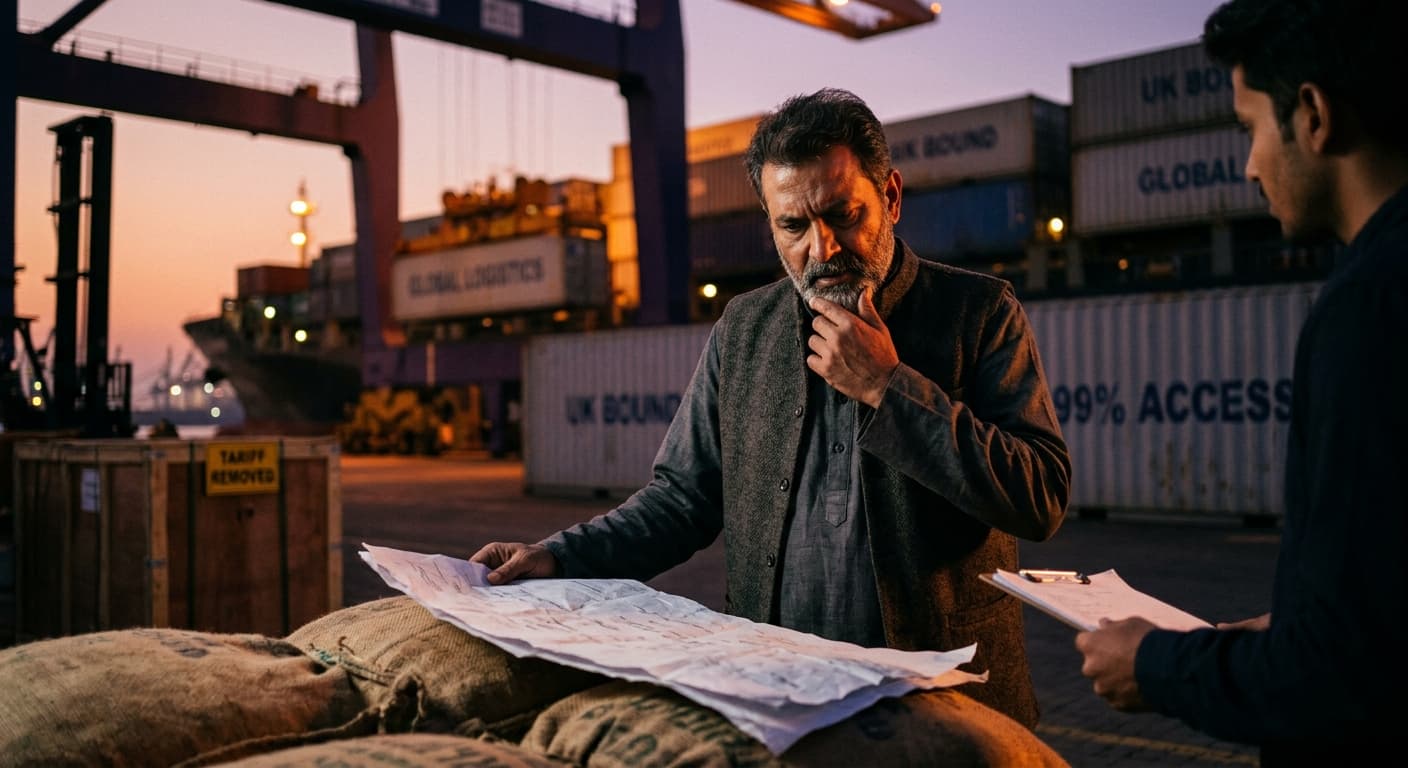
India-UK Trade Pact Removes Tariffs on 99% of Exports—Now Comes Execution Risk
India unlocks premium UK market with zero-duty access on textiles and manufacturing. The real test: whether exporters can actually scale production in time.
The Indian Express reports that India's Comprehensive Economic and Trade Agreement (CETA) with the UK comes into force on July 15, 2026—less than a year after being signed. The pact grants duty-free access to nearly 99% of Indian exports to Britain, eliminating tariffs on textiles, leather goods, processed foods, and auto components that previously faced duties as high as 70%. The deal also protects India's sensitive sectors—no concessions on dairy, cereals, or apples—while opening 137 services sub-sectors for Indian companies, from IT to healthcare and finance.
This is not a symbolic victory for India. The tariff arithmetic is material. Times Now notes that duties on textiles will drop from 12% to zero, on leather from 16% to zero, and on processed foods from as high as 70% to zero.
Devdiscourse forecasts the deal will add £5.1 billion to India's annual GDP. Leather and footwear exports alone are projected to nearly double from $494 million in 2024 to $1 billion within three years. India also secured a win on steel: 85% of its steel exports will escape the UK's new steel safeguard measures that impose a 50% tariff on excess shipments. This required hardball negotiation—India had threatened to walk away on tariff concessions if the restrictions stuck.
What matters now is implementation speed and business readiness. Global Biznow frames the real constraint sharply: "CETA gives India an opening. It does not give India victory."
The Daily Pioneer reports that experts are flagging a structural risk—Indian exporters must upgrade product standards and regulatory compliance to become reliable supply chain partners, not one-off suppliers. The UK's Department for Business and Trade has launched a roadshow in six British cities; India has announced no comparable outreach programme yet. Trade lawyer Rudra Kumar Pandey warned that "CETA-specific export-readiness programmes in manufacturing clusters across the country" are essential to convert market access into actual commercial activity.
The secondary angle is strategic leverage. Channel News Asia reports that the India-UK deal is Modi's template for future negotiations with the EU and US. But the US poses a harder test: President Trump is pressing India for agricultural and dairy market access—sectors India has made no concessions on. Former trade negotiator Ajay Srivastava told Reuters this UK deal signals a "policy shift" away from India's historical protectionism. That shift is real, but calibrated: auto tariffs drop gradually over 15 years under a quota system, and critical sectors remain closed.
The social security agreement is a separate win. Indian professionals working in the UK will no longer pay dual social security contributions for up to five years. Devdiscourse notes this exemption applies to over 75,000 Indian professionals and 900 companies already operating there.
What to watch: July 1 is the hard deadline—the UK will publish the revised agreement details then. Whether India's government launches an export-readiness roadshow for small and medium enterprises is the first signal of commitment to uptake. The real indicator will come in Q4 2026: whether Indian shipments to the UK actually spike, or whether compliance and logistics barriers keep new exports bottlenecked. A $100 billion bilateral trade target by 2030 is the goal both sides have stated. Actual growth depends on whether India's exporters can move faster than competitors can copy.
Discover more

India
India-South Korea $50B Trade Expansion Plan
India and South Korea target $50 billion in bilateral trade by 2030, focusing on industrial cooperation and strategic alignment amid US pressures.
India
CPI(M) Calls to Decouple Quota from Delimita
CPI(M) advocates for a 33% women's quota in Lok Sabha by 2029, removing the need for delimitation and census linkage.
India
UN Expert Albanese: India Violates Law
UN Rapporteur Francesca Albanese accuses India of breaching international law, spotlighting human rights concerns in Kashmir and prompting diplomatic pushback.

Conflict & Security
Drone Warfare Killing Aid Workers at Unprec
Over 1,000 humanitarian workers killed in three years as cheap armed drones collapse legal protections. Gaza, Sudan, Ukraine, and DRC see deliberate targeting of aid convoys and hospitals with zero prosecutions.