India Expands Education with 15 New Campuses
Delhi aims to attract foreign universities to boost local education.
Model Diplomat2 min readAsia
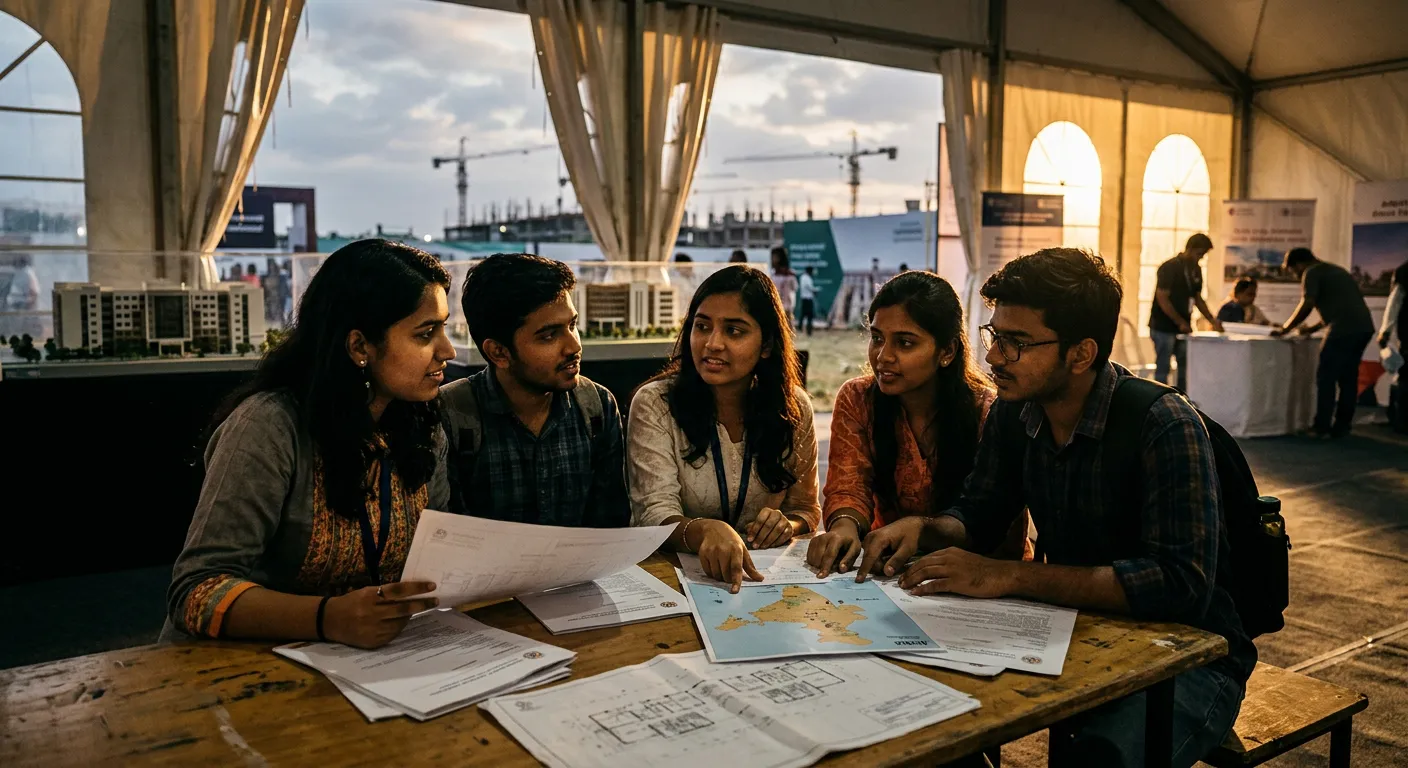
India Courts Global Universities With 15-Campus Expansion Plan
Delhi aims to become an education hub and stem student brain drain by hosting top-tier foreign institutions offering degrees at one-third the overseas cost.
India's government has secured Letters of Intent from 15 foreign universities to establish campuses in the country, with Union Education Minister Dharmendra Pradhan announcing that around 19 institutions are now preparing to enter by the current academic year.
The Ministry of Education confirmed the development on June 19, 2026, marking the fastest expansion of international branch campuses in India since the regulatory framework opened in 2023.
The play is straightforward: retention. India loses roughly 750,000 higher education students annually to overseas universities; foreign campuses operating locally can recapture tuition, talent, and research footprint without students boarding planes. Degrees awarded at these Indian campuses cost 60–70% less than relocating overseas, and
the government-credited fee reduction ranges from 18% to 74% depending on the program. Three universities have already cleared final approval:
the University of Bristol and University of York will launch in Mumbai, while UNSW Sydney opens in Bengaluru in August 2026.
The Regulatory Playbook
India's framework—the UGC Regulations 2023—requires foreign universities to rank in the top 500 globally and maintain student-to-faculty ratios between 12:1 and 25:1. Licenses run for 10 years with mandatory renewal. The design is permissive on operations—universities set their own fees, hire their own faculty, and retain full academic control—but restrictive on pedagogy: no fully online degrees, blended learning capped at 10%.
The UGC issues a Letter of Intent first, then Letters of Approval after readiness checks.
For Delhi, the arithmetic is strategic. Pradhan emphasized that India's institutional collaborations now target semiconductors, AI, biotechnology, and critical minerals—sectors where India lacks research depth. Foreign campuses become research nodes in India's innovation agenda, not just teaching arms.
Mumbai and Bengaluru are the primary target cities, reflecting their existing tech and financial ecosystems.
The Competitive Reckoning
India is moving fast but from behind. Globally, China hosts 60 international branch campuses and Dubai hosts 39; India has approved 20 to date. The window to attract top-tier institutions shrinks as other destinations mature.
University of Southampton already began operations in 2025–26, and Deakin, Wollongong, and Queen's Belfast are operational in GIFT City, proving the model works.
But affordability remains contested. While tuition drops sharply, fees remain high enough to exclude the middle and lower-middle classes, narrowing the constituency that actually benefits.
What to Watch
August 2026: UNSW, Bristol, and York begin admissions. Graduate outcomes—placement rates, startup formation, industry uptake—will determine whether the rest of the pipeline fills. A robust first cohort accelerates the 2027–28 wave; weak employment data freezes approvals. Watch enrollment numbers and fee pressure in Q4 2026.
Discover more

India
India-South Korea $50B Trade Expansion Plan
India and South Korea target $50 billion in bilateral trade by 2030, focusing on industrial cooperation and strategic alignment amid US pressures.
India
CPI(M) Calls to Decouple Quota from Delimita
CPI(M) advocates for a 33% women's quota in Lok Sabha by 2029, removing the need for delimitation and census linkage.
India
Modi's Women’s Convention in Varanasi
Modi's Varanasi rally frames women's reservation as a national mission, targeting the 2027 Uttar Pradesh elections with a strategic narrative.

Conflict & Security
Drone Warfare Killing Aid Workers at Unprec
Over 1,000 humanitarian workers killed in three years as cheap armed drones collapse legal protections. Gaza, Sudan, Ukraine, and DRC see deliberate targeting of aid convoys and hospitals with zero prosecutions.