India Strengthens Caribbean Ties via Ancestry
Archival pact with Trinidad and Tobago enhances diaspora connections.
Model Diplomat3 min readCaribbean
India Uses Ancestry to Deepen Caribbean Reach
An archival pact with Trinidad and Tobago gives India leverage over memory, paperwork and diaspora identity — and turns heritage into foreign policy.
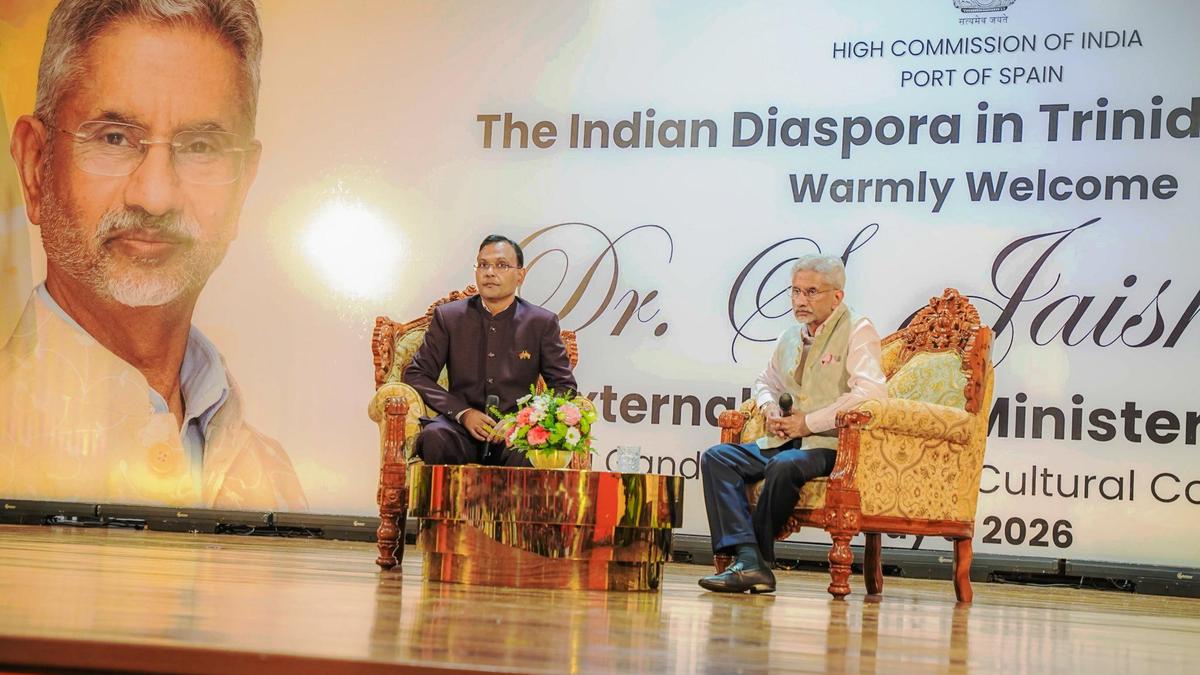
External Affairs Minister S. Jaishankar said an archival cooperation agreement between India and Trinidad and Tobago will help Indo-Trinidadians trace ancestral roots and reconnect with families in India, framing the deal as part of New Delhi’s effort to preserve the legacy of the Girmitya community, according to The Hindu. The agreement was announced at Nelson Island in Port of Spain, where Jaishankar also joined the launch of a India-funded quick impact project to upgrade cultural heritage facilities, including a memorial monument and a digital hub of historical records,
The Economic Times reported.
Who holds the leverage
India is turning archival access into influence. The practical value of the pact is not symbolic alone: it gives Indian officials and archivists a role in helping descendants locate records that can establish lineage, support family reconnection and, in some cases, unlock OCI eligibility, The Economic Times said. Jaishankar noted that applications for Overseas Citizenship of India cards are rising in Trinidad and Tobago after Prime Minister Narendra Modi extended OCI eligibility up to the sixth generation, and said New Delhi would try to help those who lack complete paperwork,
The Hindu reported.
That matters because the Caribbean Indian-origin population is not marginal. About 143,000 indentured workers from the Indian subcontinent migrated to Trinidad between 1845 and 1917, mostly from northern India and Bihar, and their descendants now make up roughly 40% to 45% of Trinidad and Tobago’s 1.36 million people, according to the Indian High Commission as cited by The Economic Times. In plain terms, New Delhi is consolidating a relationship with a community that is large, politically relevant and deeply rooted in the state’s national story.
Why this matters now
This is not just cultural diplomacy; it is diaspora statecraft. By linking archives, heritage sites and OCI facilitation, India is building a service model that makes it easier for overseas Indians to see New Delhi as the manager of identity, not just the flag-carrier of a distant homeland. That helps India in Trinidad and Tobago, and by extension across International Politics, because it converts historical grievance and family research into durable diplomatic capital.
The Trinidad side also benefits. The archival pact and Nelson Island project bring digitization, preservation funding and a higher-profile place in the national story for a community that has long been central to Trinidad and Tobago’s society, The Economic Times reported. That is a useful bargain for Port of Spain: cultural tourism, heritage infrastructure and a stronger line to India without paying the full political cost of a harder bilateral ask.
What to watch next
The key test is implementation. Watch for three things: whether the National Archives of India and Trinidad and Tobago actually digitize usable records, whether India follows through on the promised Girmitya Studies Centre, and whether OCI processing gets faster for Trinidadians who can now document their lineage, The Hindu and
The Economic Times said. If the paperwork bottleneck eases, India will have turned ancestral memory into a working diplomatic channel.
Discover more

India
India-South Korea $50B Trade Expansion Plan
India and South Korea target $50 billion in bilateral trade by 2030, focusing on industrial cooperation and strategic alignment amid US pressures.
India
CPI(M) Calls to Decouple Quota from Delimita
CPI(M) advocates for a 33% women's quota in Lok Sabha by 2029, removing the need for delimitation and census linkage.

Conflict & Security
Drone Warfare Killing Aid Workers at Unprec
Over 1,000 humanitarian workers killed in three years as cheap armed drones collapse legal protections. Gaza, Sudan, Ukraine, and DRC see deliberate targeting of aid convoys and hospitals with zero prosecutions.

Global
World Normalises Taliban as Afghan Women Eras
UN data shows Afghan women erased from public life as Russia recognises the Taliban, EU hosts officials in Brussels, and ICC warrants for gender persecution go unenforced.