ICC's Darfur Breakthrough: RSF Warrants
New evidence links RSF leaders to Darfur atrocities.
Model Diplomat6 min readAfrica
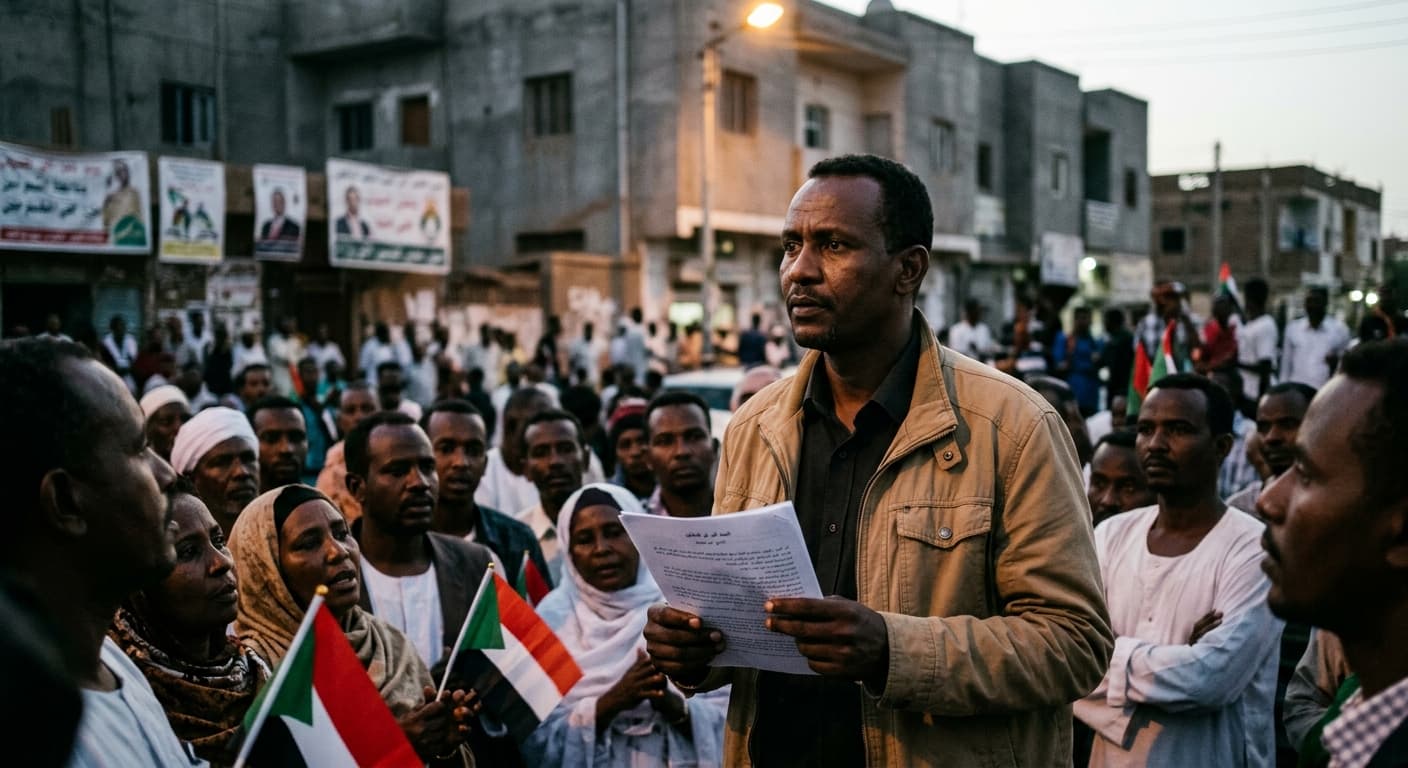
Sudan war: ICC's Darfur "breakthrough" points to first RSF warrants
The ICC says it has "linkage evidence" tying RSF commanders to the el-Fasher and el-Geneina massacres — the doctrinal test for command responsibility, and the last step before arrest warrants.
The International Criminal Court has crossed the evidentiary threshold that separates atrocity documentation from prosecutable cases. Deputy Prosecutor Nazhat Shameem Khan told the BBC on July 8, 2026 that investigators now hold "concrete evidence that links what is happening on the ground through linkage evidence to specific persons in leadership mode" of the Rapid Support Forces (RSF). That phrase — "linkage evidence" — is the load-bearing legal term. It is what Article 28 of the Rome Statute requires to convict a commander for the acts of subordinates. The breakthrough is not that the ICC believes crimes occurred in Darfur — that has been the Court's stated position since 2007 — but that it now believes it can name and convict the men who ordered them.
The implication is narrower and heavier than the headline suggests: after 21 years, one conviction, and an unenforced warrant against a former head of state, the ICC is signalling that the next Darfur case will target sitting RSF leadership — and it is signalling this three months after the UN Fact-Finding Mission concluded that the campaign in el-Fasher bore "the defining characteristics of genocide," per Al Jazeera.
What "linkage evidence" actually means
Prosecutions of leaders who did not personally pull triggers turn on two elements: proof of the underlying crime, and proof that a specific commander knew and either ordered, enabled, or failed to prevent it. The second element — "linkage" — is the one that collapses most atrocity cases. In her January 19, 2026 statement to the UN Security Council, Khan described "organised, widespread mass criminality" used "to assert control" of el-Fasher — language that maps directly onto the crimes-against-humanity chapeau.
The Office of the Prosecutor's 40th report to the Security Council, filed in January 2025, committed the OTP to a specific deliverable in the following reporting period:
Submit multiple applications for warrants of arrest regarding 2023 and ongoing [crimes]... On the basis of the ongoing drafting work and the additional evidence anticipated to be collected in the coming months, the Office will seek to submit multiple applications for arrest warrants to the Pre-Trial Chamber of the ICC.
The 41st report, filed in July 2025, described continued deployments to Chad and the collection of evidence on "killings, pillaging, attacks against internally displaced persons camps, indiscriminate targeting of civilian populations, gender-based crimes, and crimes against and affecting children." Khan's July 8 BBC interview is the first public confirmation that the drafting objective has been substantively met.
Who the evidence is pointing at
The public record narrows the pool. In January 2025, the outgoing US administration formally designated the RSF's conduct against non-Arab groups in Darfur a genocide and imposed personal sanctions on RSF commander General Mohamed Hamdan "Hemedti" Dagalo, as reported by Al Jazeera. In February 2026, the US Treasury sanctioned three named RSF commanders following the el-Fasher assault, including a brigadier general who
filmed himself killing unarmed civilians.
The UN's Independent International Fact-Finding Mission, in its February 2026 report Sudan: Hallmarks of Genocide in El-Fasher, went further than any prior UN body, concluding that the operation was "planned and organised" and "publicly endorsed by senior RSF leadership." That phrasing — public endorsement, planning, coordination — is the vocabulary of command responsibility.
Mission chair Mohamed Chande Othman was explicit: "The scale, coordination, and public endorsement of the operation by senior RSF leadership demonstrate that the crimes committed in and around el-Fasher were not random excesses of war."
The ICC has now, in effect, told the BBC that it agrees — and that it can prove it.
The 21-year enforcement problem
The breakthrough matters only if it produces custody. Here the record is bleak. Since UN Security Council Resolution 1593 referred Darfur to the Court in March 2005, the ICC has issued seven warrants and secured exactly one conviction: Ali Muhammad Ali Abd-Al-Rahman, the Janjaweed commander known as Ali Kushayb, sentenced to 20 years on December 9, 2025 for crimes committed between 2003 and 2004. He is in custody only because he surrendered voluntarily in 2020, fearing for his life.
Former President Omar al-Bashir, indicted in 2009 for genocide, remains in a military hospital in Sudan. Ahmed Haroun broke out of prison in April 2023. As Human Rights Watch documented, Bashir travelled openly to Jordan, South Africa, Chad, Uganda, Malawi, and Djibouti while under warrant — the ICC found each state in breach, and the Security Council imposed no consequences.
The International Crisis Group noted years ago that "without its own police force, the ICC relies on cooperation to execute warrants." That structural fact has not changed. Sudan is not a state party. The United Arab Emirates — accused by the UN, UK lawmakers, and multiple monitoring groups of arming the RSF — is not a state party. Chad, where Khan conducted the refugee-camp interviews that anchor the new evidence, is a state party but has previously hosted Bashir.
The practical enforcement question is therefore not whether the ICC will name Hemedti or his lieutenants. It is whether any of them will ever board a flight through a jurisdiction willing to detain them.
What the timing tells you
Khan's public statement breaks prosecutorial convention. Prosecutors typically decline to characterise the state of their evidence before filing warrant applications; premature signalling gives suspects time to consolidate, move assets, or negotiate protection. That she did so from Chad, immediately after refugee-camp visits and on the same day the UN Fact-Finding Mission released its follow-up report warning that El Obeid "must not become the next crime scene", suggests coordination between the ICC's investigative arm and the broader UN protection architecture.
The OHCHR report issued in June 2026 documented arbitrary detention, torture and enforced disappearances by both parties, deepening the evidentiary base against SAF leadership as well. Khan told the Security Council in July 2025 that the Kushayb trial "represents only the first of many," according to
Al Jazeera. One year on, "many" is being operationalised.
The narrower audience for this message is Sudan's neighbours. If warrants issue against Hemedti and one or more RSF field commanders, states parties in the region — Chad, the Central African Republic, Kenya, Uganda — inherit the legal obligation to arrest. The ICC has been laying the groundwork for that argument for two decades; the Kushayb precedent, achieved via voluntary surrender, is not a template it can rely on again.
The counter-pressure
The RSF has adjusted its messaging rather than its behaviour. Hemedti publicly promised an internal investigation into el-Fasher and told refugees some perpetrators had been "arrested" — a claim
dismissed by activists on the ground. The group insists the atrocities are exaggerated and denies ethnic motivation, but the UN mission's finding that RSF fighters used "ethnic slurs translated as 'slave'" during the attacks, as reported by
BBC, sits uneasily with that defence.
The SAF, meanwhile, is not exempt. Khan's UNSC statements and the OHCHR June 2026 press release name both parties. The UN Human Rights Council mandated a separate probe into el-Fasher whose findings will feed the ICC file. Any warrant package that names only RSF figures will invite the accusation that the Court is prosecuting the losing side; a package that names SAF figures alongside them will invite non-cooperation from Port Sudan.
What to watch
- The next OTP report to the Security Council, due in the second half of 2026 under Resolution 1593's biannual cycle. Watch for the phrase "applications submitted to the Pre-Trial Chamber."
- Any sealed warrant leaks or Pre-Trial Chamber activity notices from The Hague. Under Rome Statute practice, warrants can issue under seal; the first public indicator is typically a travel-related arrest attempt.
- Chad's posture. Khan conducted her interviews in eastern Chad. If warrants issue against RSF figures who transit N'Djamena, Chad's willingness to detain — after having previously failed to arrest Bashir — will be the first real test.
- The El Obeid siege. The Fact-Finding Mission's July 8 warning that RSF is deploying "the tactics used in El Fasher" around El Obeid means the evidentiary base is still expanding. A second mass-atrocity site would broaden any indictment.
The Bottom Line
The ICC's "breakthrough" is a legal-doctrinal claim, not a political one: prosecutors say they now have the command-responsibility evidence needed to charge named RSF leaders for el-Fasher and el-Geneina. If warrants follow, the Darfur file will contain, for the first time, indictments issued while the crimes were still being committed — and the enforcement question will shift from The Hague to Hemedti's next border crossing. Twenty-one years of ICC Darfur work has produced one prisoner; whether that number changes now depends less on the strength of Khan's evidence than on the political geography of the states her suspects choose to enter.
Discover more

India
Rajnath Singh's Durga Squad for 2026 Polls
Rajnath Singh's Durga Squad promised women's safety in Bengal but has since disappeared from the agenda, revealing BJP's true priorities.
US Politics
SNAP Food Assistance Faces Legal Challenges
In 2026, SNAP faces stricter eligibility rules and mounting legal challenges, threatening food assistance for the millions of Americans who rely on the program.
US Politics
House Ethics Committee Pushes Sexual Miscond.
The House Ethics Committee has shifted responsibility for sexual harassment settlement records to the Office of Congressional Workplace Rights, complicating disclosure efforts.

Economics
Fed's Amex AML order puts correspondent banking on notice
Federal Reserve's Amex AML order requires board-level controls and a 90-day plan; OCC fined the bank $350 million over enterprise-wide deficiencies.