ICC Suspends Prosecutor Karim Khan Amid Cont争
Karim Khan faces suspension for alleged misconduct.
Model Diplomat7 min readInternational
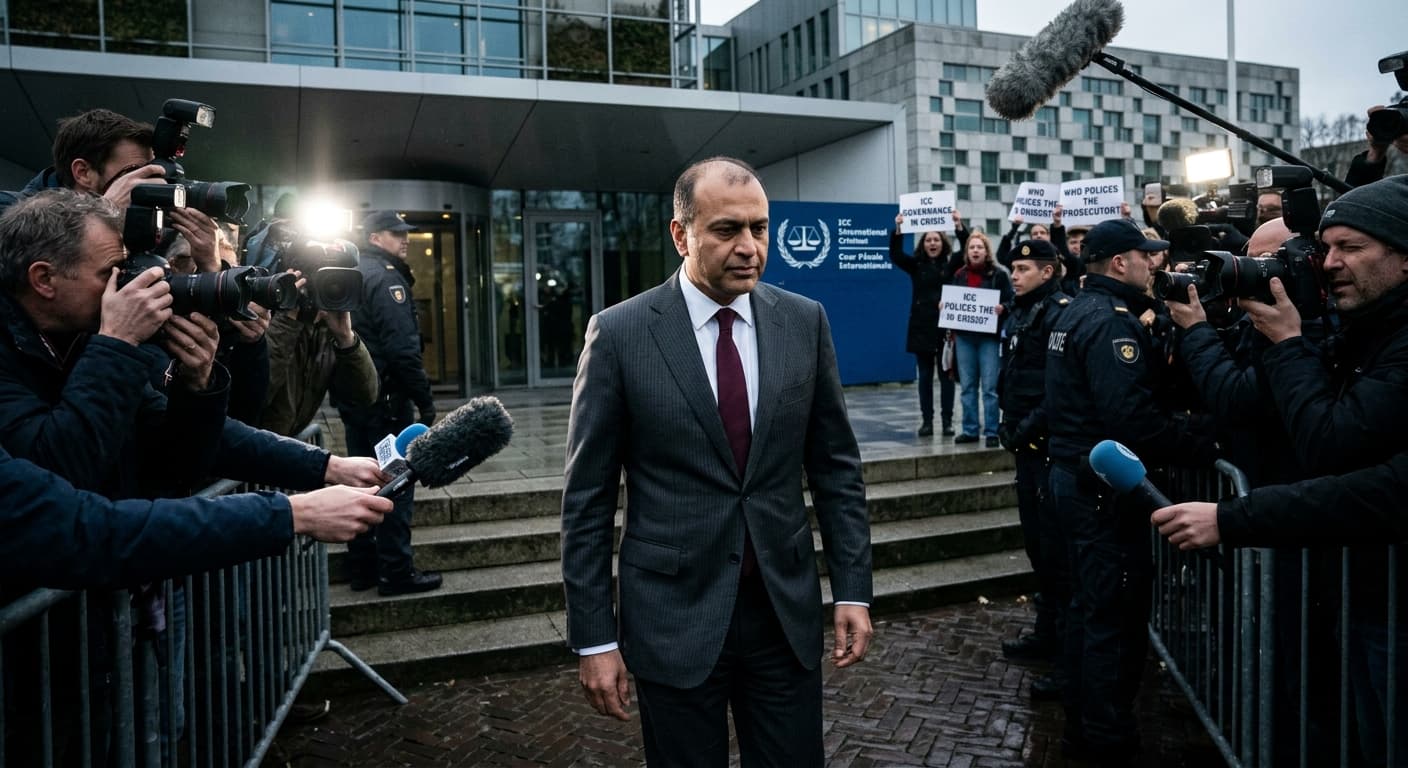
ICC suspends Prosecutor Karim Khan, overriding expert panel
The Assembly of States Parties Bureau suspended chief prosecutor Karim Khan on 8 June 2026 for "serious misconduct," setting up a 24 July vote that could reshape the court.
The Bureau of the Assembly of States Parties suspended International Criminal Court chief prosecutor Karim Khan on 8 June 2026 by qualified majority — a decision that overrides the unanimous finding of the court's own hand-picked judicial expert panel three months earlier that no misconduct had been established. The Bureau's press release frames the move as a routine referral to the 125 states parties, who will vote on removal in a special session reportedly scheduled for 24 July. It is nothing of the kind. The suspension is the first time a political organ of the ICC has substituted its own judgement for that of an independent legal panel it commissioned — and the precedent, not the misconduct claim, is what will define the damage to the court.
The break with the panel
The procedural rupture is the story. In November 2024, ASP President Päivi Kaukoranta asked the UN Office of Internal Oversight Services (OIOS) to investigate allegations by a female aide that Khan engaged in unwanted sexual contact and abuse of authority, according to the ASP statement issuing the referral. OIOS delivered its report on 11 December 2025. The Bureau then created a bespoke mechanism — a three-judge external panel — to legally characterise the OIOS findings, as
confirmed by the Presidency in March 2026.
That panel reported to the Bureau on 9 March 2026. Its conclusion, according to sources cited by Al Jazeera, was categorical: "The Panel is unanimously of the opinion that the factual findings by [OIOS] do not establish misconduct or breach of duty under the relevant framework."
Three months later, the Bureau ruled the opposite way. Documents seen by the Associated Press and reviewed in 24 Seven show it found Khan had committed "serious misconduct" and a "serious breach of duty." The Bureau's own press release does not disclose that reasoning; it simply records the vote and the referral.
Who wanted this outcome, and why
Two former ICC judges — Cuno Tarfusser and Sergey Vasiliev — warned in an Al Jazeera commentary in late March that a minority of Bureau members were pushing to set aside the panel's conclusions. They named the risk plainly: "Dismissing the judicial expert report and substituting the bureau's own judgement would be deleterious to the rule of law, due process, and the integrity of the legal determination." Sareta Ashraph, Khan's defence counsel on the gender analysis of the OIOS evidence, wrote in
Al Jazeera that the Bureau was on course to reach a "nonevidence-based" conclusion.
Both were correct. The Bureau went ahead. Khan's lawyers, quoted by Al Jazeera, rejected the decision "in the strongest terms." Khan told Al Arabiya in his first public remarks that the suspension "broke court rules and was unfair," according to
Sri Lankan News. Britain's Bar Standards Board followed on 19 June with its own interim suspension of Khan's practising certificate — a domestic UK regulatory action, distinct from the ICC process but consequential for his ability to litigate.
What this does to live cases — very little, and that is the point
The immediate operational impact is minor. Khan has not led the Office of the Prosecutor since 16 May 2025, when he took voluntary leave. His deputies — Nazhat Shameem Khan of Fiji and Mame Mandiaye Niang of Senegal — assumed leadership on that date, per the OTP statement. They have run every high-profile file since.
The record under their stewardship is not thin. Deputy Prosecutor Nazhat Shameem Khan presented the Darfur situation to the UN Security Council on 10 July 2025, telling the Council there were "reasonable grounds to believe" war crimes and crimes against humanity were continuing, per Al Jazeera. Deputy Prosecutor Niang signed a complementarity Memorandum of Understanding with Nigeria on 26 March 2026, per an ICC
readout. And most consequentially, Pre-Trial Chamber I unanimously confirmed all three counts of crimes against humanity against former Philippine president Rodrigo Duterte on 23 April 2026, per the
ICC ruling — the first Asian former head of state to be committed to trial in The Hague.
Khan had already been walled off from the Duterte matter. A defence filing dated 6 August 2025 sought his disqualification for allegedly failing to disclose earlier representation of a related party, and on 1 August 2025 the Appeals Chamber found, in a separate
Venezuela ruling, that there was "reason to believe that a ground for the disqualification of the Prosecutor exists" arising from a close family relationship with government counsel. Both decisions predate the suspension. As Al Jazeera reported, Khan's absence "will have little practical impact on the functioning of the court."
The Netanyahu and Gallant arrest warrants issued in November 2024, and the March 2023 warrant against Vladimir Putin over the alleged deportation of Ukrainian children, remain in force. They are judicial acts of Pre-Trial Chambers, not prosecutorial instruments — a distinction that will matter when Israeli and Russian officials argue, as they will, that the warrants are contaminated by Khan's downfall.

The US sanctions problem, unsolved
The suspension does nothing to resolve the deeper crisis. President Donald Trump's Executive Order 14203 of 6 February 2025 imposed asset freezes and visa bans on ICC officials engaged in investigations of US personnel or non-consenting allies. Khan was the first person named in the annex, per
Human Rights Watch. The list has since expanded to two deputy prosecutors, eight judges, the UN Special Rapporteur on the Occupied Palestinian Territories, and Palestinian organisations that provided evidence to the court, per the
BBC.
ICC President Judge Tomoko Akane's February 2025 statement called the order the "latest in a series of unprecedented and escalatory attacks aiming to undermine the Court's ability to administer justice." Seventy-nine states signed a joint statement backing the court, though Australia, the Czech Republic, Hungary and Italy were absent from the signatories, per the
BBC.
Removing Khan does not remove the sanctions on his deputies or on the judges. It does, however, hand Israeli and American critics a rhetorical prize: the ICC's own oversight body has now certified that its prosecutor engaged in "serious misconduct." Netanyahu's office and the US State Department will treat that finding as evidence the Gaza warrants were the product of a compromised office, whatever the panel of judges concluded.
Where the argument goes next
Two vulnerabilities now define the court's position. First, if the Assembly of States Parties removes Khan on 24 July, he can appeal to the Administrative Tribunal of the International Labour Organization, which hears employment disputes involving ICC staff, per the BBC. A finding that the disciplinary process was flawed — particularly the departure from the panel's conclusions — could order reinstatement or substantial compensation. That litigation would run for years.
Second, and more damaging in the long run, the Bureau has now created a precedent: a political organ of the states parties can override a quasi-judicial finding that it itself commissioned. Future prosecutors will know this. Future targets of ICC investigations — Israeli, Russian, American, Chinese — will use it. The IFHR and Women's Initiatives for Gender Justice warned in a joint 2025 explainer, quoted by Al Jazeera, that "the legal assessment must be conducted by experts and cannot be undertaken by a political body." The Bureau's 8 June decision did exactly what that warning cautioned against.
What to watch
- 24 July 2026: The special ASP session on Khan's removal, reported by the Wall Street Journal and cited by
Al Jazeera. Sixty-three of 125 states parties must vote yes in a secret ballot for removal to succeed. Watch how the African bloc, the Latin American members, and the EU split — and whether Hungary, which declined to sign the February 2025 solidarity statement, breaks with EU consensus.
- Election of a new prosecutor: If Khan is removed, the ASP triggers a nomination and election process under Article 42 of the Rome Statute. A shortlist could take a year or more. In the interim, Deputies Nazhat Shameem Khan and Mame Mandiaye Niang continue to lead.
- Duterte trial commencement: The Trial Chamber will set a date following the 23 April 2026 confirmation of charges. Any trial before mid-2027 is unlikely, but the schedule will be the first public test of the deputies' independent capacity to prosecute a former head of state.
- UK Bar Standards Board hearing: An interim suspension panel is required to convene within four weeks of the 19 June action. A finding against Khan in London would foreclose his return to English practice even if the ILO tribunal reinstated him at the ICC.
The Bottom Line
The bottom line: Karim Khan's suspension is not primarily a #MeToo story or a sanctions story — it is a governance story about a court that asked judges what the law required, was told, and then had its political organ vote the other way. The Netanyahu and Putin warrants survive; the doctrine that a quasi-judicial finding at the ICC can be overridden by a qualified majority of diplomats does not, and every future defendant will cite it. If the 24 July vote removes Khan without addressing that break, the ICC's enemies will not need to destroy the court — its own oversight body will have shown them how.
For deeper context on the political pressures shaping the court, see International.
Discover more
International Relations
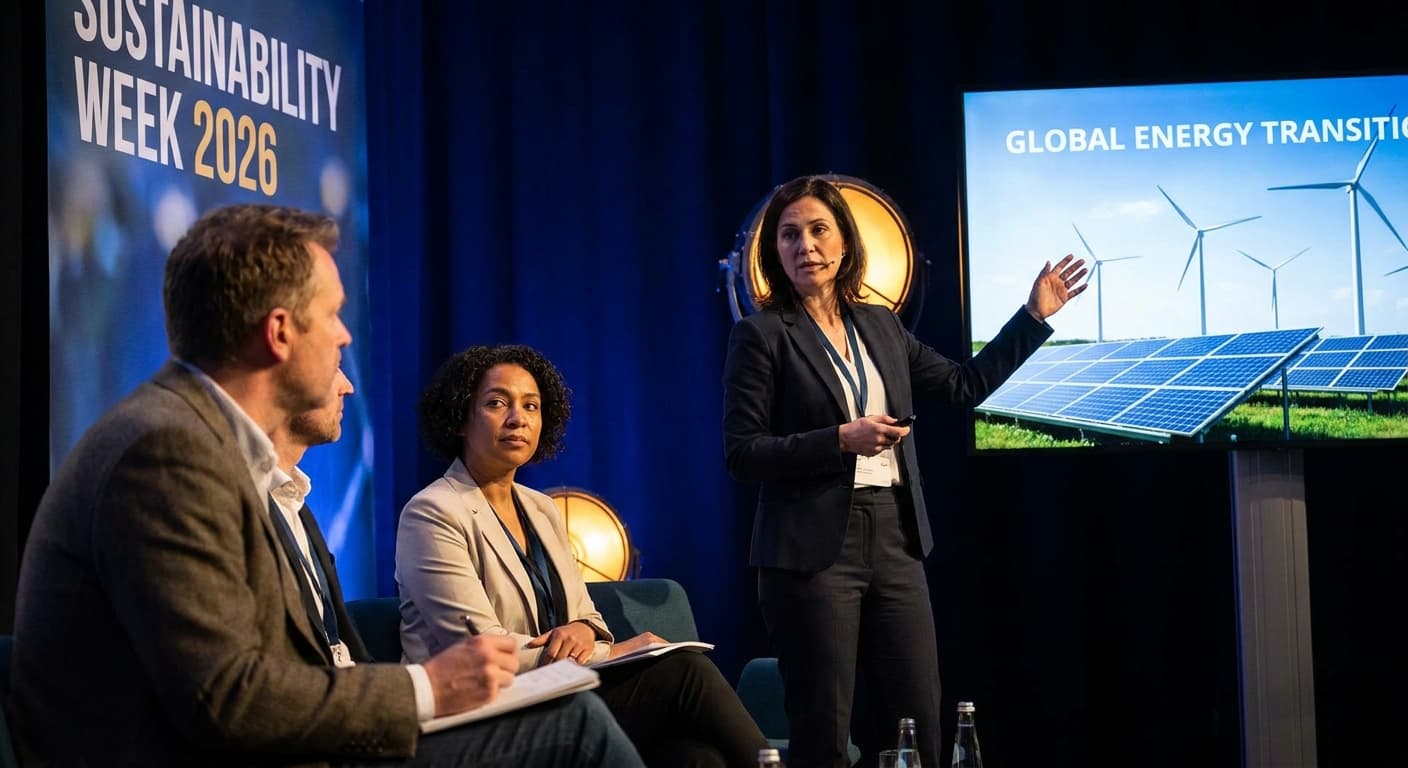
Economist Impact Sustainability Week 2026
Economist Impact Sustainability Week 2026 spotlights the energy transition, AI in clean technology, and supply chain resilience as themes for global leaders.
India
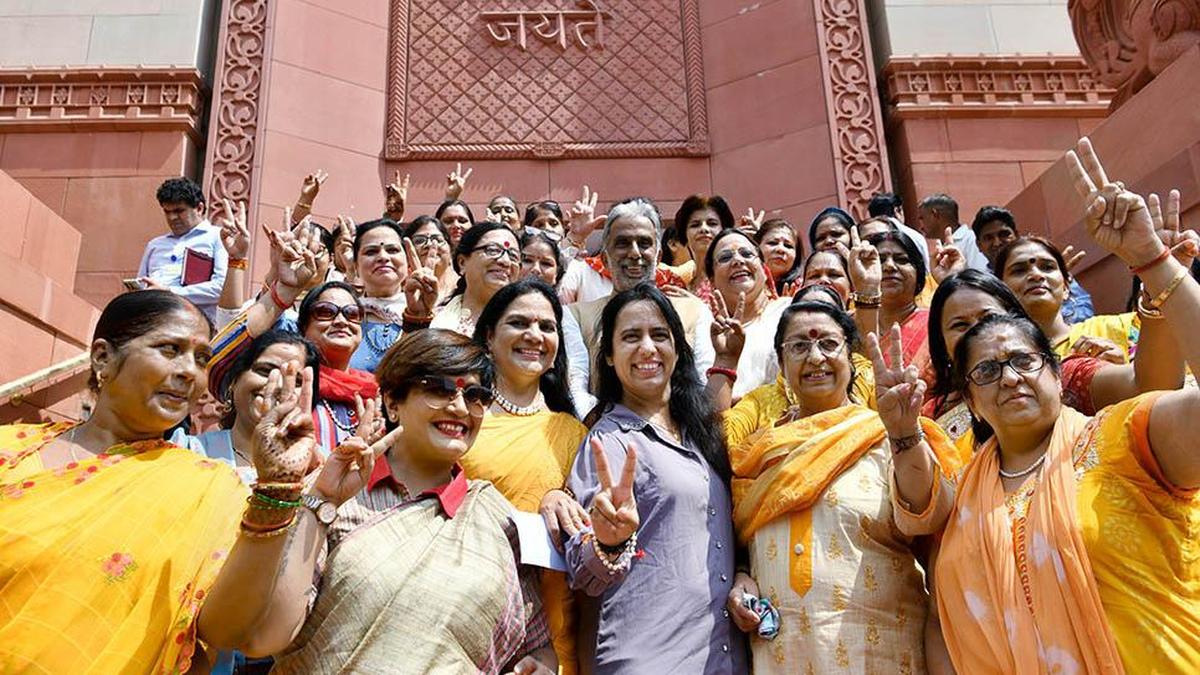
Women’s Reservation in India
India's 33% women's reservation law is enacted but won't take effect until after 2029 due to political setbacks and census delays.
India
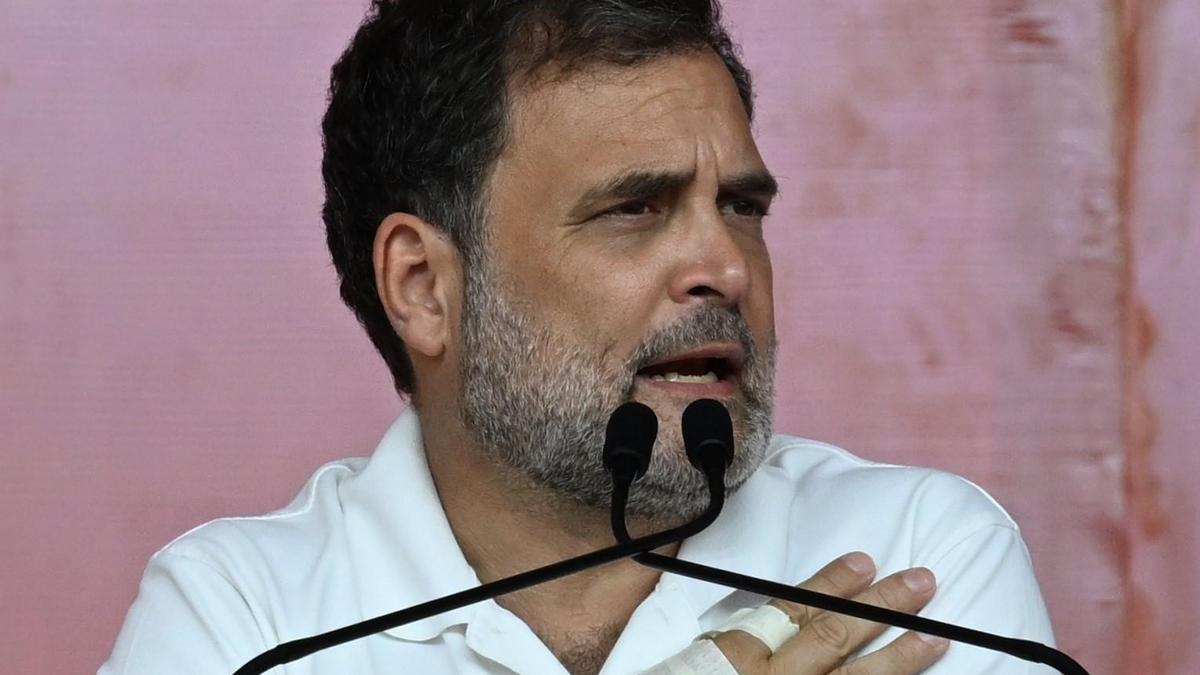
Rajnath Singh's Durga Squad for 2026 Polls
Rajnath Singh's Durga Squad promised women's safety in Bengal but has since disappeared from the agenda, revealing BJP's true priorities.

Economics
Fed's Amex AML order puts correspondent banking on notice
Federal Reserve's Amex AML order requires board-level controls and a 90-day plan; OCC fined the bank $350 million over enterprise-wide deficiencies.