ICC Suspends Karim Khan: Key Vote Ahead
Khan's suspension raises questions on ICC's future.
Model Diplomat8 min readInternational
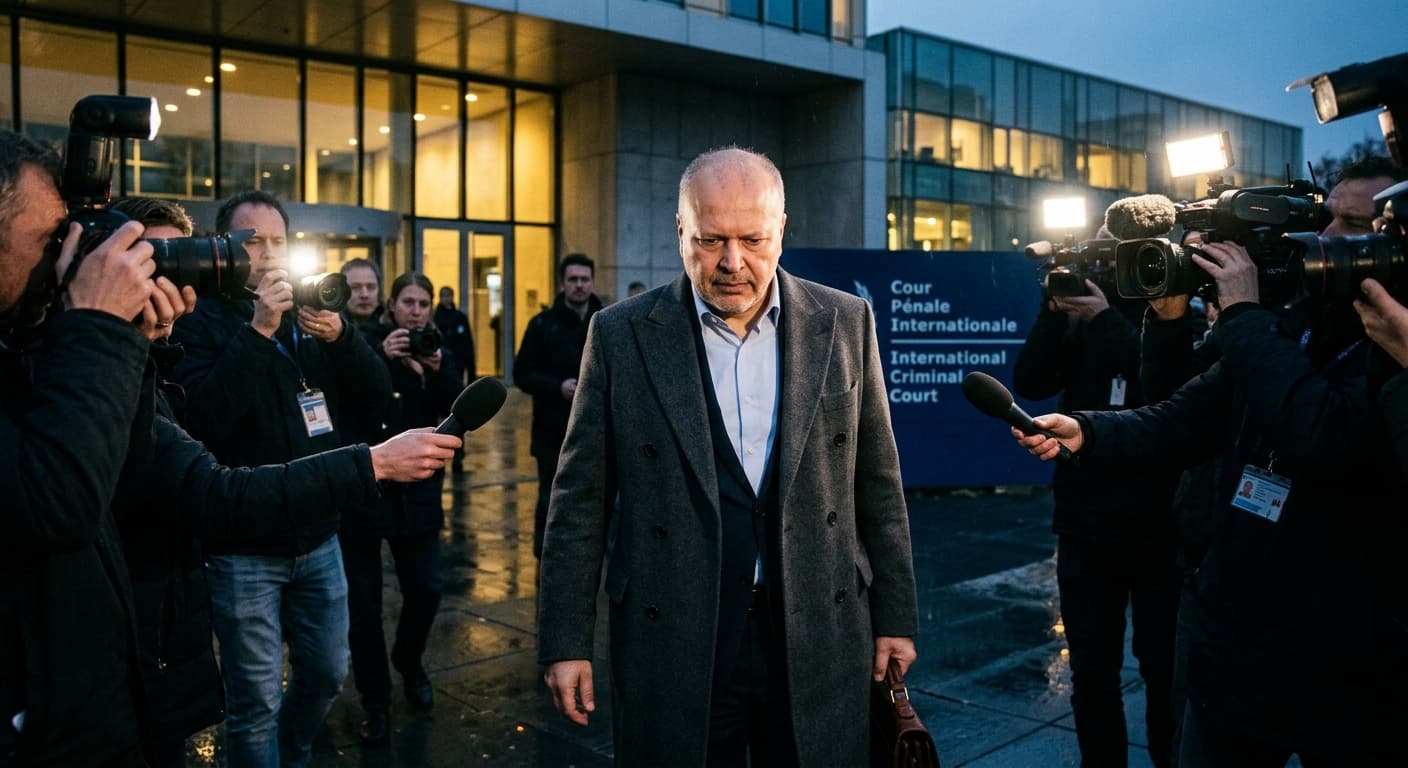
ICC suspends Karim Khan: what the vote on July 24 will decide
The ICC's June 8 suspension of chief prosecutor Karim Khan hits a court already battered by US sanctions, three Sahel withdrawals, and the Netanyahu warrants. Here's the leverage map.
The International Criminal Court's suspension of Karim Khan on June 8, 2026 is not, on its own, the crisis. The crisis is that the Assembly of States Parties Bureau overruled its own judicial expert panel to do it — and it did so while the United States sanctions eleven ICC officials, three Sahel states walk out of the Rome Statute, and Khan's signature warrants against Benjamin Netanyahu and Rodrigo Duterte proceed without him. The suspension will be tested by a full ASP vote reported for July 24, 2026. The deeper test is whether a court whose prosecutor was chosen by a knife-edge 72-vote ballot in 2021 can survive removing him under a legal cloud its own experts said did not exist.
What the Bureau actually did — and why the paperwork matters
The formal act was narrow. On June 8 the Bureau of the Assembly of States Parties (ASP), the ICC's 21-member executive committee, invoked Rule 28 of the Rules of Procedure and Evidence to suspend the prosecutor from duty with immediate effect and refer disciplinary proceedings to the full Assembly. According to the ICC's press release, the Bureau acted "by qualified majority" and emphasised that "this suspension is not an indication of the final outcome." The
ICC Presidency — the court's judges — issued an unusually sharp appeal the next day, asking the Assembly "to conclude the process with the highest priority."
The controversy is what preceded that decision. The 15-month investigation by the UN Office of Internal Oversight Services (OIOS), which ran from November 2024 to December 2025 and generated over 5,000 pages of testimony, established a "factual basis" for allegations by a female aide that Khan engaged in non-consensual contact at his residence and on mission. But an ad hoc panel of three judicial experts, tasked with the legal characterisation, delivered its confidential report on March 9, 2026. According to Al Jazeera, citing Middle East Eye's reporting on the confidential document, the panel was "unanimously of the opinion that the factual findings by OIOS do not establish misconduct or breach of duty under the relevant framework."
The Bureau went the other way. Documents seen by the Associated Press concluded Khan engaged in "serious misconduct" and "serious breach of duty." That gap — between the panel's exoneration and the Bureau's condemnation — is the fault line Khan's lawyers are already exploiting. In a statement carried by
Al Jazeera, his counsel called the decision "unlawful, procedurally unfair and unsupported by evidence."

The vote no one wants to lose
The Assembly is expected to convene a special session — the Wall Street Journal reports July 24, 2026, though the ICC has not confirmed the date publicly. Under Article 46 of the Rome Statute, removal requires a two-thirds majority of the 125 states parties — a threshold of 84 votes — first to uphold the misconduct finding, then a separate ballot on removal itself.
Three constituencies now hold the leverage. European ICC funders — led by Germany, France, and the Netherlands — want the affair closed before the annual Assembly session in December. African states, still smarting at what they perceive as selective prosecution, want the process to look clean; the Institute for Security Studies notes that African signatories remain 33 of the 125 states parties — the single largest regional bloc. Latin American states, whose votes carried Khan to office in 2021, are the swing bloc; they backed him then by narrow margins, and several have publicly defended the Duterte prosecution.
Even if two-thirds vote to remove, Khan has a second track. As the BBC notes, he can challenge dismissal before the Administrative Tribunal of the International Labour Organization (ILOAT), which has repeatedly ordered reinstatement and compensation where UN-system employers cut procedural corners. Britain's Bar Standards Board separately suspended Khan on June 19, 2026, per
Al Jazeera — a parallel professional track that constrains him regardless of the Hague outcome.
The cases keep moving — that is the point
Practically, Khan's suspension changes little in courtrooms. He took voluntary leave on May 16, 2025; his deputies have run the Office of the Prosecutor since. The Presidency of the Assembly confirmed at the time that the deputies would manage operations "without any interruptions."
That structural continuity is now the ICC's insurance policy. Deputy Prosecutor Mame Mandiaye Niang of Senegal signed the February 2026 filing opposing Duterte's attempt to skip his confirmation hearing, and the
May 8 filing arguing against interim release. On April 22, 2026, the Appeals Chamber
confirmed jurisdiction over the Philippines drug-war case, and the Pre-Trial Chamber unanimously confirmed all charges against the former Philippine president the next day. The Netanyahu track is similarly intact. In a
December 1, 2025 filing, the Office of the Prosecutor asked the Appeals Chamber to dismiss Israel's request to disqualify Khan and to invalidate the warrants — arguing Israel lacked standing and that Pre-Trial Chamber I had independently assessed the evidence when it issued them on November 21, 2024.
The court has also referred Hungary to the Assembly for failing to arrest Netanyahu during his April 2025 visit — a referral the Pre-Trial Chamber issued on July 24, 2025, arguing that Hungary's own withdrawal from the Rome Statute, which took effect June 2, 2026, "cannot be ignored just because it has decided to leave the Rome Statute system."
The pressure map: Washington, the Sahel, and Khan's own record
The suspension arrives at the worst possible political moment. In February 2025, President Donald Trump's executive order 14203 named Khan personally. In August 2025, the
State Department expanded designations to both deputy prosecutors and judges Kimberly Prost and Nicolas Guillou. In December 2025,
two more judges — Gocha Lordkipanidze of Georgia and Erdenebalsuren Damdin of Mongolia — were added after voting to reject Israel's December 15 appeal against the Netanyahu warrants.
At the other geographic pole, Burkina Faso, Mali, and Niger deposited formal withdrawal notifications with the UN between June 18 and June 24, 2026 — the same fortnight the Bureau suspended Khan. Their instruments call the ICC a "selective and politicized tool." Withdrawal takes effect in one year.
And Khan's own record was already exposed. On August 1, 2025, the ICC Appeals Chamber found "reason to believe that a ground for disqualification of the Prosecutor exists" in the Venezuela I situation because of his family relationship with government counsel Venkateswari Alagendra. He was formally excused from the Venezuela file on September 2, 2025. Duterte's defence separately
sought his disqualification for failing to disclose he had personally submitted the Article 15 communication that opened the Philippines investigation years earlier — placing Duterte "at the top of a list of persons worthy of prosecution."
"The disqualification of the Prosecutor is not a step to be undertaken lightly and a high threshold must be satisfied in order to rebut the presumption of impartiality." — Victims' Response,
ICC-01/21-01/25, 26 August 2025
Even in mounting that defence, the victims' representatives conceded that Khan's leave was "functionally comparable to being absent after the end of the Prosecutor's term in office." The court, in other words, has been rehearsing his departure for a year.
Who benefits, who loses
Israeli Prime Minister Benjamin Netanyahu benefits at the margins, not the core. His warrants remain, and the Office of the Prosecutor is fighting to keep them, but the political case that the ICC is a captured institution grows easier to make when its prosecutor is being removed for serious misconduct that his own expert panel disputes. The Trump administration's sanctions regime — designed, as Secretary of State Marco Rubio put it, against "lawfare" — now has a compromised counter-party to point at.
Rodrigo Duterte loses. His defence tried to weaponise Khan's misconduct into a disqualification claim; the Pre-Trial Chamber declined to entertain it, and charges were confirmed on April 23, 2026. Neither the Duterte team nor the Sahel governments can slow the machinery once deputies are running it.
The court itself is the ambiguous case. If the Assembly votes to remove Khan on July 24, it demonstrates that the Rome Statute's accountability mechanisms function even against the institution's most powerful officeholder — a talking point ICC diplomats will use for years. If the vote fails to reach two-thirds, or if ILOAT later orders reinstatement, the Finnish Institute of International Affairs warning about "lowered expectations of global justice" will look prescient. Either way, the
Human Rights Watch briefing note to the 23rd ASP session captured the bind: states parties must "shield the court and its officials from external pressure" while simultaneously exercising oversight — a contradiction the Khan file makes acute.
What to watch
- July 24, 2026 — reported date of the ASP special session vote on Khan's removal. Watch the tally against the 84-vote threshold, and whether the vote is held by secret ballot as the 2021 election was.
- Bar Standards Board interim panel — required to convene within four weeks of the June 19 suspension, so by July 17, 2026. A separate finding on Khan's practising certificate would compound the ICC track.
- The Duterte confirmation-of-charges appeal window and any Netanyahu appeals ruling — both cases now firmly with Deputy Prosecutor Niang. Movement on either would show the court operating normally regardless of Khan's fate.
- Successor mechanics — under Article 42(4) of the Rome Statute, the Assembly elects a new prosecutor by absolute majority in secret ballot. If Khan is removed, expect an interim by one of the deputies and a fraught election campaign that will double as a referendum on the Gaza and Ukraine dockets.
The Bottom Line
Karim Khan's suspension is not a governance triumph — it is the ICC's oversight body overriding its own judicial panel to fire the prosecutor who indicted Vladimir Putin, Benjamin Netanyahu, and Rodrigo Duterte, in the same month three states walked out and Washington sanctioned eleven of the court's officials. If the July 24 vote clears him, the credibility hit is fatal; if it removes him, the ILOAT appeal keeps the wound open for years. The court's real argument is that its deputies have quietly run every major case since May 2025 — proving the Rome Statute system can outlast its most famous prosecutor, but not that it can outlast losing him this way.
Discover more
International Relations
Economist Impact Sustainability Week 2026
Economist Impact Sustainability Week 2026 spotlights the energy transition, AI in clean technology, and supply chain resilience as themes for global leaders.

US Politics
US Launches $166B Tariff Refund Portal
The US is launching a $166 billion tariff refund portal to aid importers hit by Trump-era tariffs, with major implications for trade and supply costs.
US Politics
Virginia's Redistricting Referendum
Virginia's redistricting referendum is drawing a flood of dark money, shaping future elections and the fight for congressional control amid party stakes.

Economics
Fed's Amex AML order puts correspondent banking on notice
Federal Reserve's Amex AML order requires board-level controls and a 90-day plan; OCC fined the bank $350 million over enterprise-wide deficiencies.