House Rebels: Trump's Iran War Faces Pushback
Congress challenges Trump's war powers on Iran.
Model Diplomat3 min readNorth America
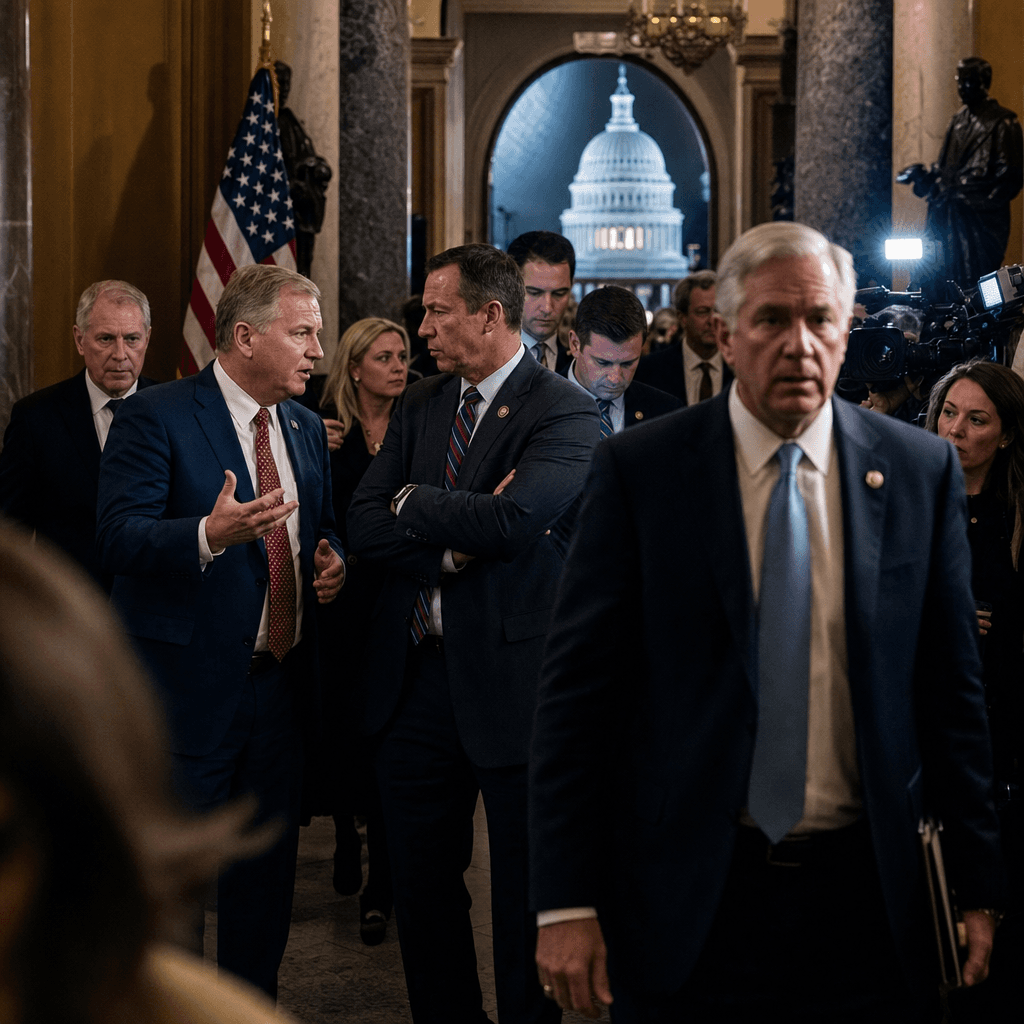
House Rebels: Trump's Iran War Faces Bipartisan Pushback
A bipartisan House vote to curb Donald Trump's unilateral attacks on Iran exposes a growing congressional rift over executive war powers and midterms.
On Thursday, June 4, United States President Donald Trump lashed out at lawmakers—specifically four dissenting members of his own party—following a historic House vote to constrain his authority to wage war against Iran. The House of Representatives voted 215 to 208 on Wednesday to invoke the War Powers Act of 1973, ordering the withdrawal of American forces unless Congress formally approves the military campaign (Al Jazeera). Trump decried the four Republican defectors on Truth Social as "unpatriotic" and "GRANDSTANDERS," claiming the vote disrupted his administration’s "final negotiations" to end the conflict (
Al Jazeera).
This bipartisan rebellion marks the first time since the war began on February 28 that either chamber of Congress has successfully passed a resolution limiting executive military action. While standard war powers resolutions require joint approval, this vote exposes a widening executive-legislative fracture over foreign policy in the United States. To pass the resolution, Republican Representatives Thomas Massie of Kentucky, Tom Barrett of Michigan, Warren Davidson of Ohio, and Brian Fitzpatrick of Pennsylvania broke from the party establishment to align with a unified Democratic minority (
Al Jazeera).
Cracks in the Coalition
For Trump, the primary threat is not immediate legal constraint, but cracks in Republican party discipline ahead of the November midterm elections. Structurally, the resolution remains largely symbolic; it must still pass the Senate—where Republicans hold a 53-seat majority—and would face an inevitable presidential veto that Congress lacks the two-thirds majority to override (The Daily Beast). However, the political leverage has subtly shifted. The vote indicates that swing-district Republicans are feeling intense heat from constituents weary of a three-month-old
conflict that has disrupted global shipping and spiked inflation (
Al Jazeera).
Furthermore, the administration's legal argument for bypassing Congress is wearing thin. Under the War Powers Act, a president cannot sustain unapproved active hostilities beyond 60 days—a deadline that passed in early May. While Defense Secretary Pete Hegseth argued that an April 8 ceasefire "reset" the clock, a major military escalation on Wednesday, including U.S. strikes on Iranian military sites on Qeshm Island and Iranian drone barrages targeting Kuwait and Bahrain, has shattered the illusion of a finished war, forcing lawmakers to reassert their constitutional oversight (The Daily Beast).
What to Watch Next
The immediate next battleground will be the Senate. Though previous efforts to advance war powers restrictions have failed, the most recent Senate vote on May 13 garnered a high-water mark of 49 votes, with three Republicans—Lisa Murkowski, Susan Collins, and Rand Paul—crossing the aisle (Al Jazeera). The key legislative threshold is now whether one more Senate Republican will defect, which would deadlock the upper chamber 50-50. Analysts should watch whether Senator Susan Collins—who faces a tight re-election race in Maine—and her colleagues face pressure to side with the House. Additionally, watch for the joint Pentagon-State Department inspector general investigation’s report, which will determine whether the administration has formally crossed the legal 60-day limit, potentially triggering institutional gridlock over defense appropriations.
Discover more
Global Politics
Trump's Conflicting Messages on Iran War
Trump's mixed messages on Iran reflect a strategy of audience management, benefiting Tehran amid a complex geopolitical landscape.

Conflict & Security
Drone Warfare Killing Aid Workers at Unprec
Over 1,000 humanitarian workers killed in three years as cheap armed drones collapse legal protections. Gaza, Sudan, Ukraine, and DRC see deliberate targeting of aid convoys and hospitals with zero prosecutions.

Global
World Normalises Taliban as Afghan Women Eras
UN data shows Afghan women erased from public life as Russia recognises the Taliban, EU hosts officials in Brussels, and ICC warrants for gender persecution go unenforced.
Conflict & Security
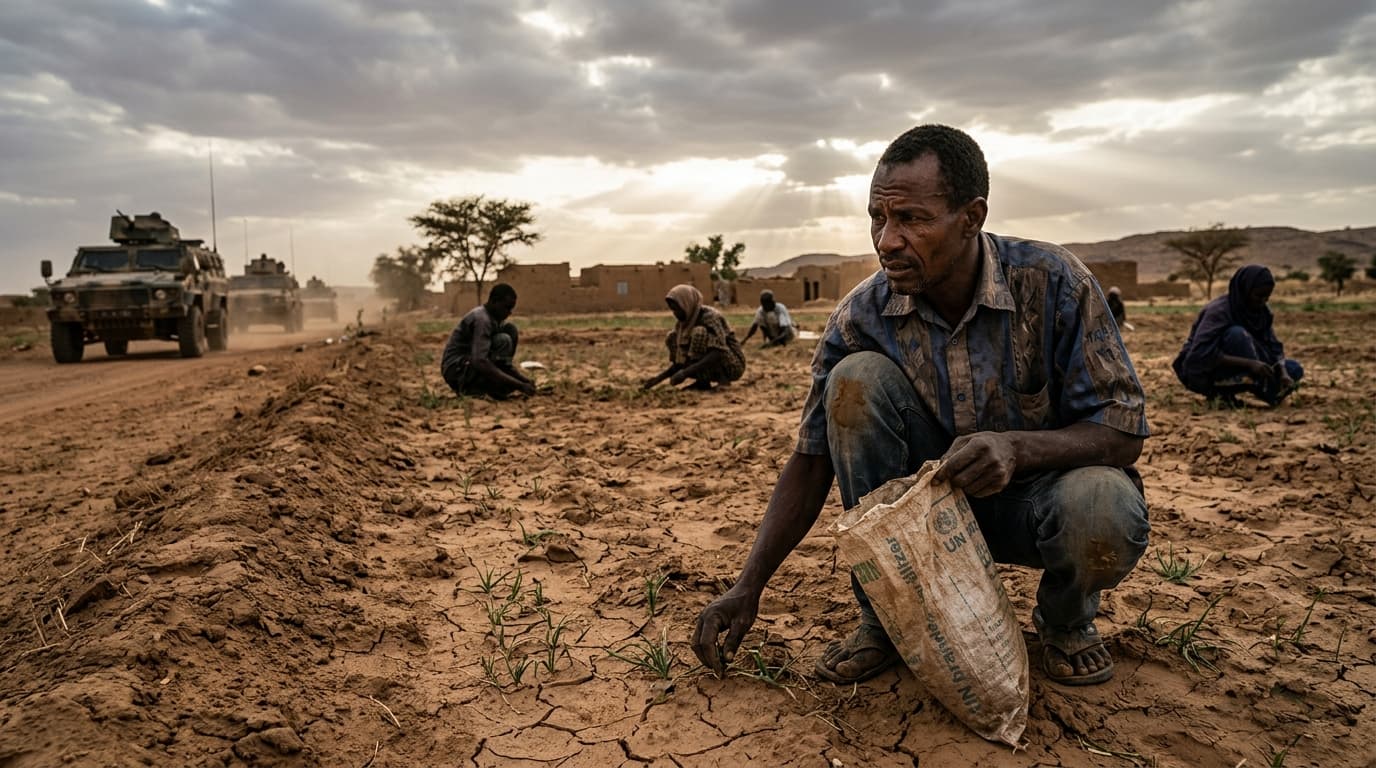
West Africa Food Crisis: Three Shocks in 2026
Conflict, climate extremes, and the Strait of Hormuz closure drive a severe food crisis in West and Central Africa, with fertilizer prices surging 80% and millions displaced.