House Defense Bill Seeks to Box In Trump
GOP defense bill aims to control troop cuts in Europe.
Model Diplomat3 min readNorth America
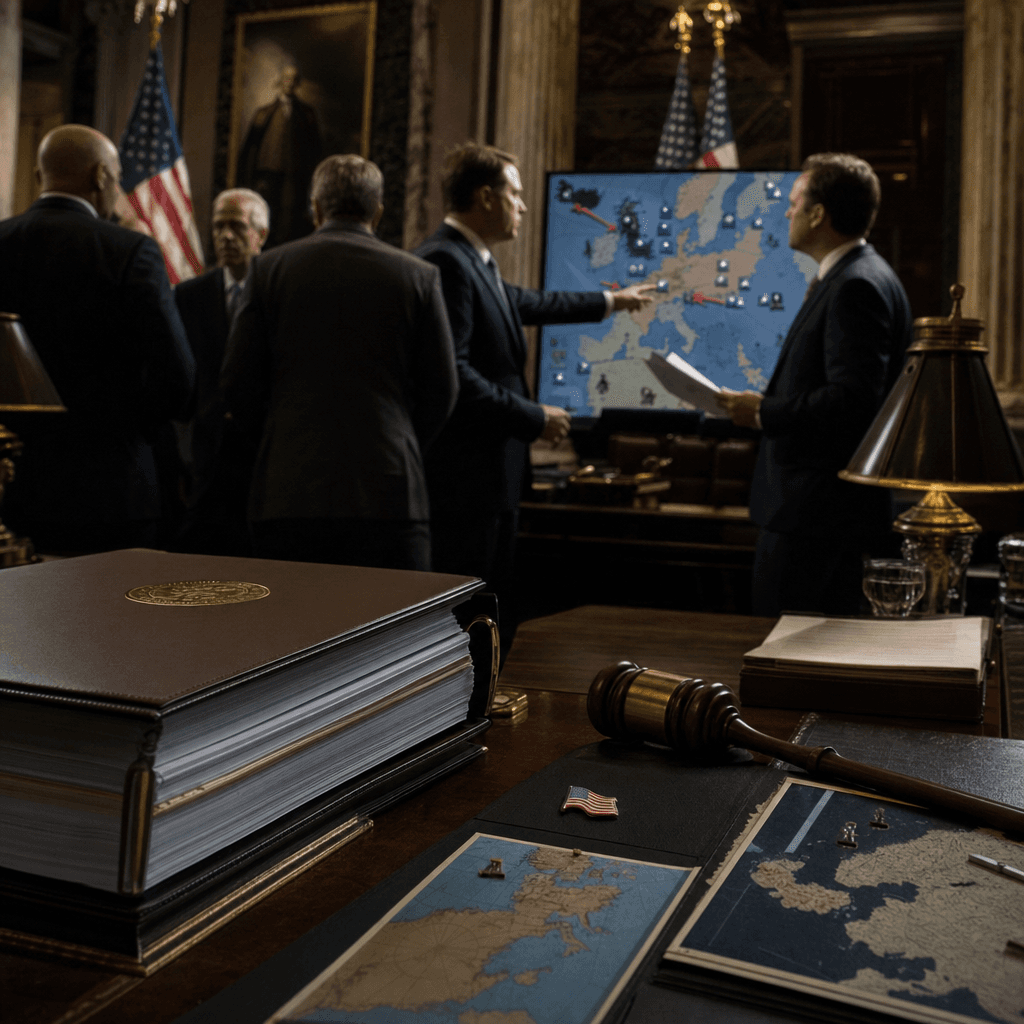
House Defense Bill Seeks to Box In Trump on Europe
A record NDAA gives House Republicans leverage over troop cuts in Europe and a bigger say in Pentagon posture decisions.
The Republican-led House Armed Services Committee has rolled out a record $1.14 trillion defense authorization bill, and the politics are blunt: Chair Mike Rogers is using the measure to tell the White House that Congress intends to keep a hand on force posture, not just funding, according to The Washington Post and
Politico. Politico reports the draft would renew a 76,000-troop floor in Europe and force the Pentagon to justify any further drawdown, putting the House directly on a collision course with President Donald Trump’s push to move U.S. forces out of the region.
Congress is fighting for leverage, not just money
This is about control more than top-line spending. The NDAA is where lawmakers write the operating rules for the Pentagon, and this draft shows House Republicans trying to reassert that power after months of complaints that the Pentagon has moved troops without enough consultation. On May 15, Rep. Don Bacon said the abrupt cancellation of a Poland deployment sent “a terrible message to Russia and our allies,” while Chairman Rogers said the committee had not gotten the consultation the statute requires, according to Defense News.
That makes the bill a signal to the administration as much as a policy document. If Rogers keeps the Europe restrictions intact, Republicans are telling Trump they will not give him blank-check flexibility to thin out NATO posture while he is still pressuring allies on burden-sharing. That is a significant constraint at a moment when the White House has been treating troop levels as a bargaining chip in wider negotiations.
Europe is the leverage point
The Europe language matters because it turns an internal Pentagon fight into a strategic one. Reuters reported in April that Trump was weighing additional troop withdrawals from Europe, and the Pentagon later said it would pull 5,000 troops from Germany over six to 12 months, underscoring how far the administration is prepared to move on its own Reuters
Reuters. Politico’s description of a renewed 76,000-troop floor gives congressional hawks a statutory anchor to slow or block deeper cuts.
The beneficiaries are easy to identify: Rogers and like-minded Republicans, allied governments that want a predictable U.S. footprint, and the defense bureaucracy that prefers clear congressional guardrails over ad hoc White House decisions. The losers are the administration’s maneuver space and any effort to trade forward presence for diplomatic leverage. For a defense bill, this one is unusually explicit about whose hands it wants tied.
What to watch next
The first test comes on June 4, when the Armed Services Committee debates the measure, according to Politico. If the Europe restrictions survive markup, the fight moves to the House floor and then to House-Senate negotiations, where the real question is whether a larger Pentagon topline will come with real congressional control over where U.S. troops sit. For the broader domestic and alliance implications, track this through
U.S. Politics and
International.
Discover more
Global
India Accepts Quasi-Alliance with Australia
India and Australia finalize uranium exports and defense pact with ANZUS-style clause, marking strategic acceptance of quasi-alliance obligations.

Global
Taiwan's Drone Gap: The 435-Ship Problem
Taiwan's coast guard struggles against China's growing navy, as drone funding cuts threaten its defense strategy amid rising tensions.

Global
Taiwan's Drone Doctrine Against China
Taiwan adopts a drone-first strategy with 1,320 uncrewed vessels to counter China's maritime threats, focusing on detection and enforcement.
Climate & Energy
Pentagon's $300M Lithium Buy Signals Cold War
The Pentagon's $300 million lithium buy aims to secure U.S. supply chains against China's refining dominance, marking a strategic shift in mineral policy.