Hormuz Deal Unravels: Oil Jumps as US Strikes
US airstrikes on Iran end Hormuz truce, oil prices surge.
Model Diplomat7 min readMiddle East
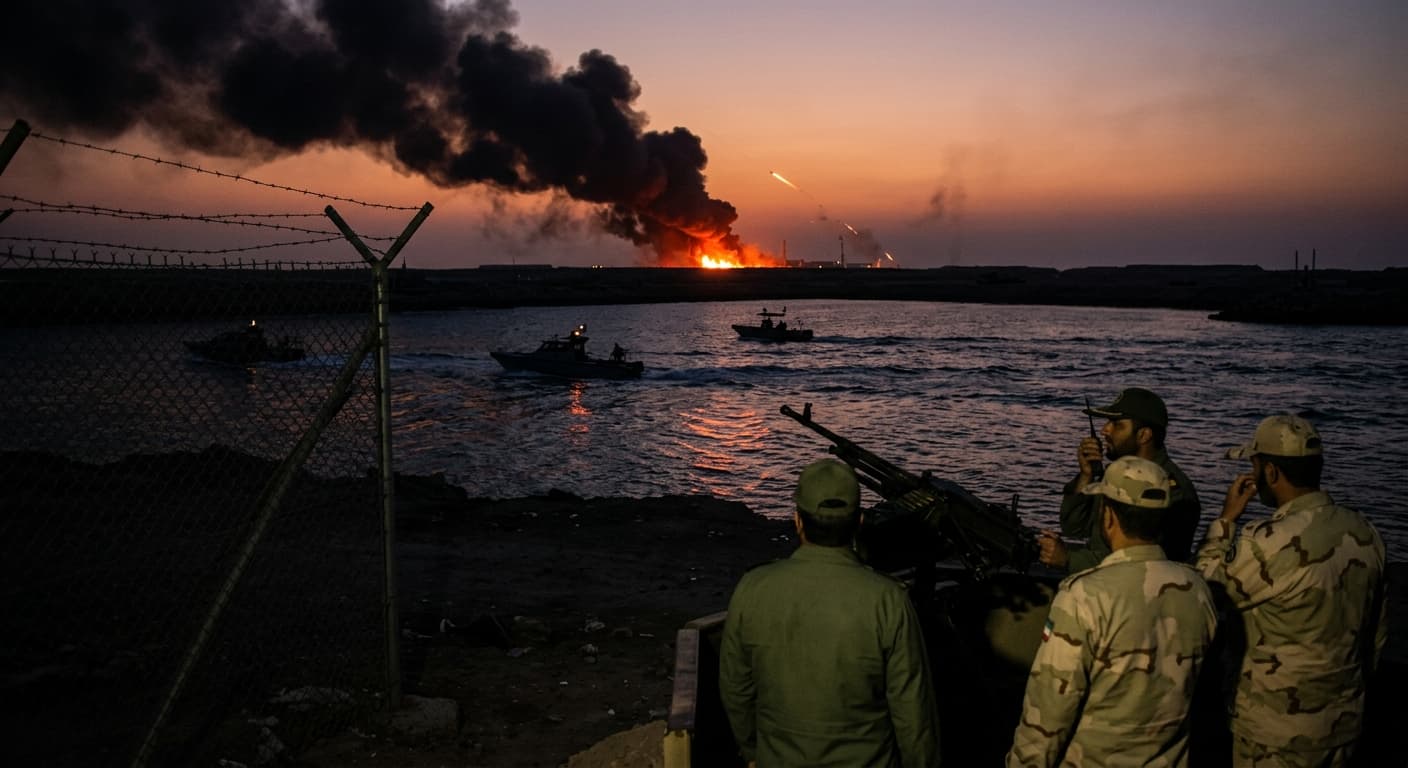
Hormuz Deal Unravels: Oil Jumps as US Strikes Iran Again
Brent crude hit $78.80 on July 9, 2026 after US strikes on Iran and a revoked oil-sanctions waiver killed the 22-day Hormuz truce. Here is what changes now.
Brent crude closed above $78 a barrel on July 9, 2026, a 6% weekly gain, after a second consecutive night of US airstrikes on Iran and Washington's revocation of a June sanctions waiver that had kept Iranian oil legally flowing. The move ended a 22-day truce built almost entirely on one bargain — Iran allows shipping through the Strait of Hormuz, the US allows Iran to sell oil. That bargain is now dead, and the market is pricing something narrower and more dangerous than a return to war: a permanent, semi-militarised toll regime over the world's most important oil chokepoint, in which Tehran, not Washington, sets the rules of passage.
The price move is modest by wartime standards — Brent traded near $120 during the March–May closure — because roughly 20% of the world's seaborne oil still moves through Hormuz on paper. The point of the July strikes is that in practice, it does not. Bloomberg vessel-tracking data cited by OilPrice.com showed that on July 9, exactly one tanker — a sanctioned Iranian-controlled VLCC — transited the strait, against 59 crossings on June 24 and an average of 34 during the truce.
What the strikes actually did
US Central Command said it hit "over 80 targets" in the first wave on July 7 and "approximately 90 targets" the following night, according to Al Jazeera's reconstruction. Targets clustered around Bandar Abbas, Bushehr, Chabahar, Konarak and Iranshahr — coastal radar, air defence, IRGC small-boat pens and "military logistics infrastructure along Iran's coastline". The
BBC reported that Iran's military said eight soldiers were killed. Tehran retaliated by firing drones and missiles at US bases in Bahrain, Kuwait and Qatar; Manama reported explosions in the capital, Kuwait intercepted incoming projectiles, and Qatar issued a security alert.
Speaking at the NATO summit in Ankara, US President Donald Trump declared the June 17 Memorandum of Understanding "over," called Iranian leaders "scum" and "cuckoo," and told reporters, per the BBC, that US forces "hit them very hard last night" and would "probably hit them hard again tonight." NATO Secretary General Mark Rutte publicly endorsed the strikes as "absolutely necessary." Iran's parliamentary speaker and chief negotiator Mohammad Bagher Ghalibaf countered that the Strait of Hormuz "will only open with 'Iranian arrangements', not American threats."
The economic trigger came hours before the bombs. On July 7 the US Treasury's Office of Foreign Assets Control revoked General License X, the June waiver that had authorised production and sale of Iranian crude through August 21. OFAC's own general-licenses page now lists "Iran General License X1 — Revocation and Wind Down of June 21, 2026 Authorization for the Production, Delivery and Sale of Crude Oil." New transactions were barred from midnight EDT on July 17, with proceeds from in-transit cargoes to be parked in blocked interest-bearing accounts. That is the primary document underneath the price move: the paperwork of a broken deal.
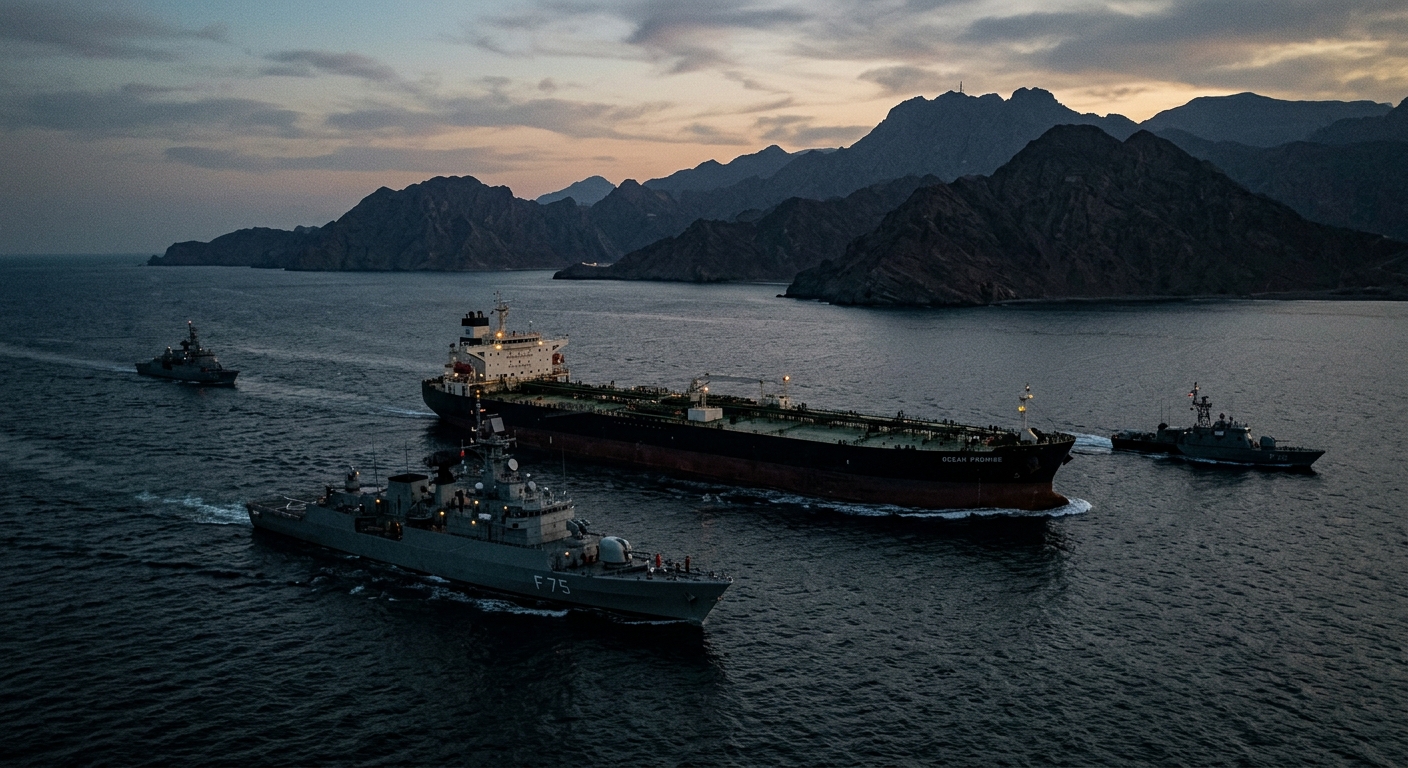
The clause that killed the ceasefire
The Council on Foreign Relations reads the June MoU plainly: it "is best understood less as a deal that addresses Iran's nuclear ambitions or military capabilities than as a Hormuz deal." The United States lifted its naval blockade and waived oil sanctions; Iran committed to safe passage. The nuclear file, frozen assets and the strait's long-term administration were kicked into a 60-day negotiation.
The fight is over Clause 5. Iran agreed to arrange "safe passage of commercial vessels, with no charge for 60 days only" — language Tehran now reads as recognition of its regulatory authority over the waterway. Foreign Ministry spokesman Esmaeil Baghaei told reporters this week that Iran has sole "responsibility in determining arrangements for the safe passage of ships." In practice, that has meant forcing traffic onto a northern route close to the Iranian coast, striking vessels that stray toward the US-preferred southern corridor near Oman, and floating a "Persian Gulf Strait Authority" that could levy "service fees" — tolls by another name. Iran's Fars news agency, cited by the BBC, has reported the strait would ultimately be managed by Iran in coordination with Oman.
That is the structural problem. Trump chose the MoU because, as CFR notes, "there was no easy, low-cost military option to reopen the Strait of Hormuz." Two rounds of strikes since have not changed that calculus. What they have done is make clear that neither side can accept the other's reading of Clause 5 — and that the toll regime Iran wants to build is now the axis on which the entire war-and-peace question turns.
Who wins the "new Hormuz"
The market response is smaller than the geopolitics because Gulf producers have spent four months rewiring around the strait. Saudi Arabia has moved 34 million barrels through Hormuz since June 17 using state-backed fleets under sovereign insurance, while independent operators pay war-risk premiums roughly eight times pre-war levels, per Bloomberg data cited by OilPrice. Commercial transits sit at about one-third of the pre-war baseline of 84 vessels per day.
The winners of the new equilibrium are legible.
The United Arab Emirates is the clearest structural beneficiary. Abu Dhabi formally quit OPEC in April 2026, in a decision Al Jazeera reported as a bet on national interest over cartel discipline. Its Habshan–Fujairah pipeline lands crude on the Gulf of Oman, outside the strait. Fujairah already handles about a third of UAE exports, and Chatham House's
May analysis identifies Hormuz-bypass expansion as a top ADNOC priority. Saudi Arabia can reroute perhaps half its 5.4 mb/d Gulf exports via the East–West pipeline to Yanbu, according to
CSIS. Kuwait and Qatar can reroute effectively none: Doha's roughly 77 mtpa of LNG has no exit but Hormuz, which is why three empty LNG carriers bound for Ras Laffan U-turned on Tuesday.
The second winner is the United States as an LNG swing supplier. As Al Jazeera reported on July 1, the war has already redirected long-term contracting toward suppliers with "exportable surplus and stable supply guarantees" — a category that is now shorthand for the US Gulf Coast and, uncomfortably for buyers, Qatar itself.
The loser hidden in plain sight is China. Roughly 90% of Iranian crude flows to Chinese teapot refineries. OFAC's April 28 alert on teapot refinery sanctions risk, combined with the July 7 revocation, restores the legal architecture of maximum pressure. Beijing has more Gulf crude exposure through Hormuz than any other importer; a Tehran-run toll regime would, as one Argus interview put it bluntly, mean "basically taxing China."
The FX and macro spillover
The oil move is not happening in isolation. Al Jazeera's markets coverage recorded European equities down 1.6%, the dollar stronger, and government bond yields climbing as investors repriced inflation risk.
NPR noted the Federal Reserve now confronts a fresh energy shock at exactly the moment it had begun signalling cuts. A sustained Brent move to $90 would add roughly 0.4 percentage points to US headline CPI within a quarter on standard pass-through — enough to delay easing that markets had already priced in.
For Gulf sovereigns, the picture is uneven. Saudi Arabia needs Brent above roughly $90 to balance its 2026 budget, per IMF Article IV estimates. The UAE breaks even in the low $60s. Every week the strait operates below capacity widens the fiscal gap between Riyadh and Abu Dhabi — a gap that already drove the UAE's OPEC exit and is now being institutionalised by the geography of the workaround pipelines.
What to watch
- July 17, 2026 — the OFAC wind-down deadline. After midnight EDT that day, any new lifting of Iranian crude is a sanctions violation. This is the point at which Chinese teapots either accept legal exposure or pull back — and the point at which Iran's revenue lifeline is genuinely severed rather than rhetorically threatened.
- August 16, 2026 — expiry of the MoU's 60-day free-passage window. Even if diplomacy revives, this is when Iran is contractually free to begin charging "service fees." Watch for the first published fee schedule from the Persian Gulf Strait Authority.
- Next CENTCOM statement — a third round of strikes, or any move toward reinstating the naval blockade or targeting Kharg Island (which Trump raised at the NATO summit), would take Brent above $90 within hours. Kharg handles roughly 90% of Iranian crude exports; hitting it removes Iran's incentive to keep the strait open at all.
Diplomat View
The evidence points to a new, worse equilibrium — not a return to war, and not a return to the pre-February status quo. Tehran has proven it can raise the cost of every tanker crossing without formally closing the strait; Washington has proven it can bomb Iran's coastline without reopening it. That mutual demonstration produces a de facto Iranian toll regime enforced by intermittent US strikes and prohibitive insurance costs — the "functionally contested" strait maritime intelligence firm Windward described this week.
The falsifiable call: Brent settles in a $75–$90 band through Q3 2026, Hormuz commercial traffic stabilises at 40–60% of pre-war levels, and the UAE's post-OPEC market share grows faster than Saudi Arabia's for the third consecutive quarter. The forecast breaks if either (a) US forces strike Kharg Island or reinstate the naval blockade, which would push Brent above $100 and trigger a full Iranian counter-closure, or (b) Steve Witkoff and Jared Kushner — whom Trump named on Wednesday as his back-channel negotiators — secure a Clause 5 clarification that separates the toll question from the ceasefire. Absent one of those two moves, the market has now correctly priced the Middle East as a place where the Strait of Hormuz works most days, at a premium, on Iran's terms.
For the geopolitics behind this shift, see our conflict coverage.
*
Discover more
US Politics
House Ethics Committee Pushes Sexual Miscond.
The House Ethics Committee has shifted responsibility for sexual harassment settlement records to the Office of Congressional Workplace Rights, complicating disclosure efforts.
India
Romanian Coalition Party Demands PM Resign
Romania's Social Democrats withdrew from coalition, joining far-right AUR to topple PM Bolojan, risking €10 billion in EU funds by August 2026.
US Politics
SNAP Food Assistance Faces Legal Challenges
In 2026, SNAP faces stricter eligibility rules and mounting legal challenges, threatening food assistance for the millions of Americans who rely on the program.

Conflict & Security
Drone Warfare Killing Aid Workers at Unprec
Over 1,000 humanitarian workers killed in three years as cheap armed drones collapse legal protections. Gaza, Sudan, Ukraine, and DRC see deliberate targeting of aid convoys and hospitals with zero prosecutions.