Haryana’s Water Release Buys Delhi Time
Emergency water release eases Delhi's shortage temporarily.
Model Diplomat3 min readAsia
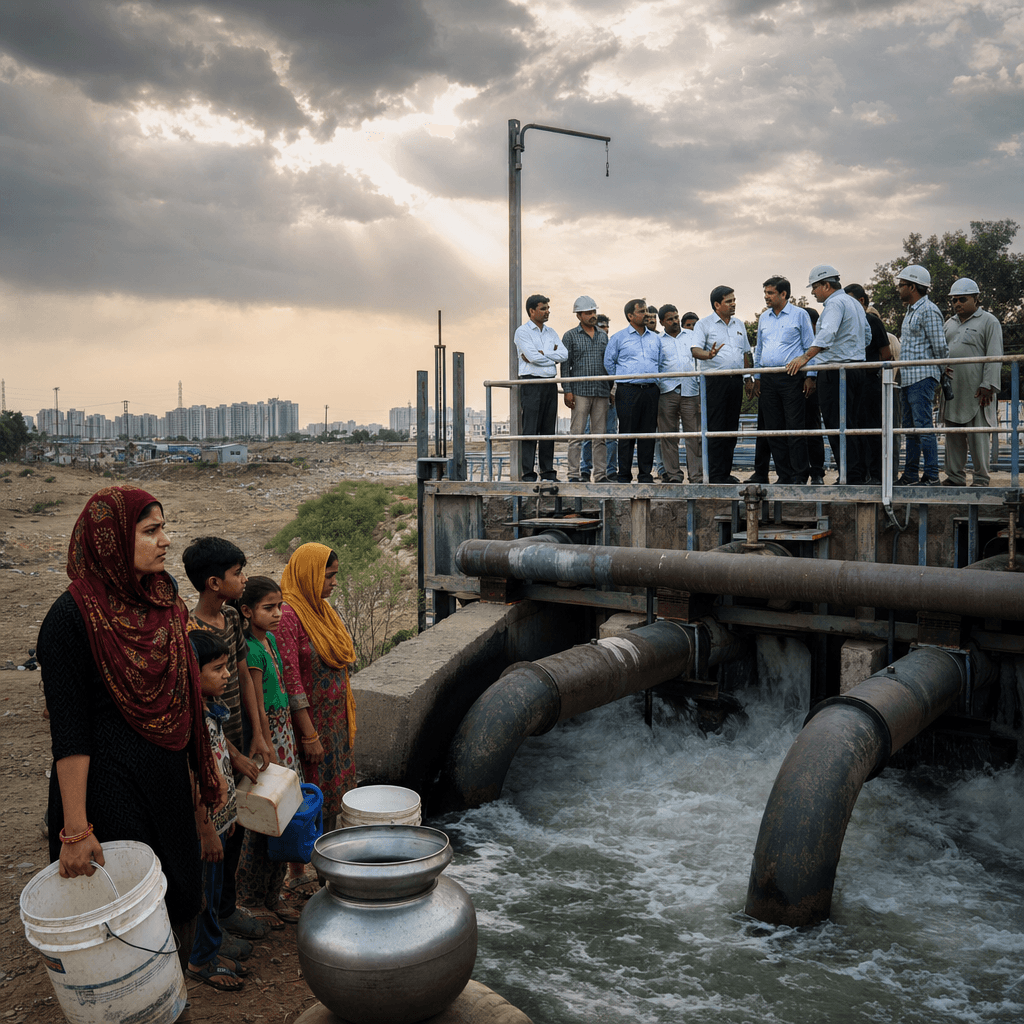
Haryana’s Water Release Buys Delhi Time, Not Security
Haryana’s emergency release of 979.5 cusecs eases Delhi’s immediate shortage, but the real leverage still sits upstream at Hathnikund.
Haryana moved first because it controls the valve that Delhi cannot open itself: on Tuesday, it released 979.5 cusecs of additional Yamuna water for the Capital after Delhi asked for emergency relief amid a supply squeeze, the Indian Express reported. By 8 pm, Delhi officials said 442.94 cusecs had arrived through the Carrier Lined Channel and another 536 cusecs through the Delhi Sub Branch system, a temporary boost but not a structural fix (
Indian Express).
The bottleneck is physical, not rhetorical
Delhi’s problem is that raw water in the Yamuna has fallen below the level needed to keep the system running normally. The Wazirabad pond, the main reservoir before treatment, slipped to 668.7 feet on Monday, below the 674.5 feet operational level required for the city’s treatment plants, according to Delhi Jal Board officials cited by the Indian Express. That is why the release matters: it is not a political favor in the abstract, but an attempt to keep pumps drawing water and treatment plants operating.
The wider pressure is seasonal and predictable. Delhi needs nearly 1,250 million gallons per day in peak summer, and even officials cited by the Indian Express said an extra 250 cusecs could meaningfully reduce the strain. Hindustan Times reported the same demand gap — roughly 1,250 MGD needed versus about 1,000 MGD supplied — while also noting that Delhi has already leaned on tankers and more than 1,000 tanker deployments to cover shortfalls (
Hindustan Times).
Haryana keeps the upper hand
What makes this episode politically important is that Haryana is not conceding a durable entitlement; it is granting an exception. A senior Haryana water official told the Indian Express the release was treated as a “humanitarian need,” language that preserves room to stop again later. Delhi, by contrast, is exposed: it depends on upstream flows, loses an estimated 800 cusecs in transmission, and still lacks the parallel carrier system between Jagadhri and Munak that officials say has been delayed for years (
Indian Express).
That makes this less a water story than a federal bargaining story. The immediate winners are Delhi households in the worst-hit neighborhoods, which may see some relief if the extra flow stabilizes treatment output. The losers are the Delhi administration and the city’s water utility, which must still ration supply, deploy tankers, and manage anger without solving the infrastructure gap. For the bigger picture on India’s inter-state resource politics, see India and
Global Politics.
What to watch next
The next test is whether the extra water holds for long enough to prevent further cuts over the next four weeks — the period Delhi reportedly sought from Haryana (Indian Express). Watch the Wazirabad level, tanker deployment, and whether Delhi turns this emergency arrangement into a formal demand for a longer-standing allocation. The date that matters is the next few days: if pond levels do not recover, this “temporary” release will look less like relief and more like a pause before the next dispute.
Discover more

India
India-South Korea $50B Trade Expansion Plan
India and South Korea target $50 billion in bilateral trade by 2030, focusing on industrial cooperation and strategic alignment amid US pressures.
India
CPI(M) Calls to Decouple Quota from Delimita
CPI(M) advocates for a 33% women's quota in Lok Sabha by 2029, removing the need for delimitation and census linkage.

Conflict & Security
Drone Warfare Killing Aid Workers at Unprec
Over 1,000 humanitarian workers killed in three years as cheap armed drones collapse legal protections. Gaza, Sudan, Ukraine, and DRC see deliberate targeting of aid convoys and hospitals with zero prosecutions.

Global
World Normalises Taliban as Afghan Women Eras
UN data shows Afghan women erased from public life as Russia recognises the Taliban, EU hosts officials in Brussels, and ICC warrants for gender persecution go unenforced.