Gunfire Near White House: Secret Service on T
Incident raises questions about security response effectiveness.
Model Diplomat3 min readNorth America
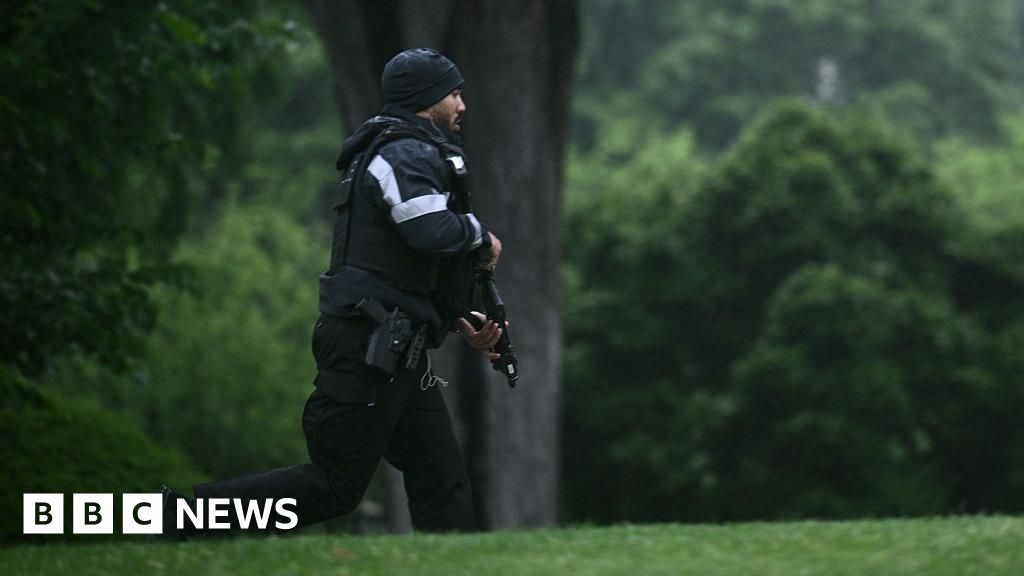
Gunfire Near White House Tests Secret Service Control
Reporters were rushed indoors after shots were reported near 17th and Pennsylvania, while the Secret Service worked to verify what happened and contain the scene.
Several journalists on the White House grounds were told to run for shelter after hearing a volley of bangs near the north lawn, with ABC News correspondent Selina Wang posting that staff were ordered to sprint to the press briefing room, according to the BBC. The Secret Service said it was aware of “reports of shots fired near 17th Street and Pennsylvania Avenue NW” and was working to corroborate them with personnel on the ground,
Reuters reported. The power dynamic is simple: the Secret Service controls the perimeter and the first narrative, and everyone else is forced to wait.
What the incident tells us
If later reporting holds, this was not a mystery “noise” event but a real security response. Bloomberg said a man opened fire near the White House and was shot by Secret Service agents, with bystanders also hit. That matters because it turns the episode from a media scare into a test of how quickly the protective apparatus can identify a threat, return fire, and protect the president while dozens of journalists are in the line of sight. President Donald Trump was in the White House at the time, according to multiple reports, which raises the stakes even if no protectee was physically affected.
For Washington, the location is the message. 17th Street and Pennsylvania Avenue sits just outside the White House’s secure core but close enough that the response has to be immediate and visible. That is why the press was ushered into the briefing room almost at once: the government needed to clear sightlines, control movement, and reduce the risk of a second incident while it sorted out whether there was an active shooter or a contained confrontation. For readers tracking the broader U.S. political environment, this belongs on the Global Politics and
United States radar not because it is necessarily political, but because it is a stress test of state capacity at the symbolic center of it.
Why the information fight matters
The bigger issue is not just gunfire; it is who gets to define what happened in the first 10 minutes. The Secret Service initially spoke only of corroborating “reports,” Reuters noted, while journalists and broadcasters on site were already publishing videos and describing duck-and-cover moments,
BBC reported. That gap is where confusion, rumor, and political spin usually enter.
This also comes against a backdrop of recent security pressure around federal landmarks in Washington. Bloomberg reported an earlier shooting near the Washington Monument this month, reinforcing that the Secret Service is operating in a threat environment where isolated incidents can quickly become national headlines.
What to watch next
The next decision point is the formal law-enforcement timeline: whether the FBI and Secret Service identify a suspect, specify whether the incident was a targeted attack or a lone-wolf episode, and confirm whether any bystanders were wounded. Watch for a White House or Secret Service briefing, plus any court filing or police statement that pins down the sequence and motive. That is the detail that will determine whether this is treated as a brief perimeter breach or a broader security warning.
Discover more
US Politics
Trump's AI Order Delay Reveals White House Rr
Trump's delay on a major AI executive order exposes a White House split over tech policy, pitting deregulation hawks against cautious regulation voices.
US Politics
White House Prepares for 2026 Democratic Win
The White House is bracing for aggressive oversight and investigation battles should Democrats flip the House in the 2026 midterms, reshaping its strategy.

US Politics
Trump's Ballroom Poll Problem
Despite broad public opposition, Trump's White House ballroom project still hinges on legal rulings and donor support, leaving courts and Congress in control.

US Politics
Trump's $400M Ballroom Plan
Republicans are using a shooting to revive Trump's $400M White House ballroom plan, but Democrats reject the security argument and call it a vanity project.