White House Prepares for 2026 Democratic Win
Legal strategies emerge as Democrats eye House control in 2026.
Model Diplomat3 min readNorth America
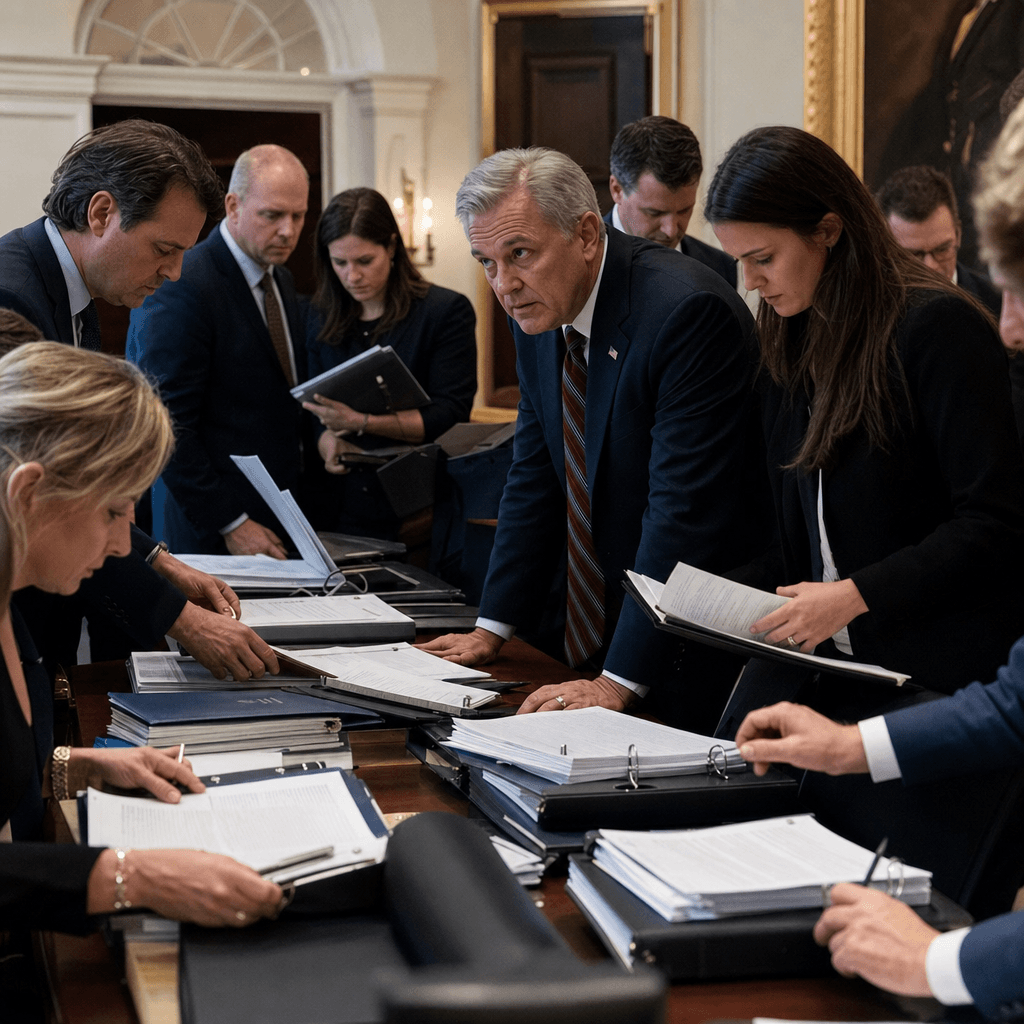
Why the White House Is Lawyering Up for a Democratic House
Counsel’s briefings show the White House expects oversight risk, not just electoral risk, if Democrats take the House in 2026.
The White House Counsel’s Office is privately briefing political appointees on how to prepare for congressional oversight as staff brace for the possibility that Democrats win Congress in the 2026 midterms, according to the Washington Post.White House lawyers prep staff for dealing with a Democratic Congress That matters because the first penalty for losing the House is usually not legislative gridlock; it is loss of control over the investigative calendar, the document trail, and the daily tempo of the presidency.
Why the lawyers are moving now
The math is what is driving this. Democrats need only a net gain of three House seats to retake the chamber, but the map is tighter than in past wave years because redistricting and polarization have reduced the number of competitive districts.These are the districts that will decide House control That leaves the administration in an awkward position: the odds of a huge Democratic blowout may be limited, but the margin for a House flip is still very small.
These are the districts that will decide House control
Historically, the precaution is rational. Since World War II, the president’s party has lost about 26 House seats on average in midterms, and House gains for the president’s party have been rare enough to be memorable exceptions.Democrats Unlikely to Regain House in 2014 The Washington Post’s long-run midterm data shows the same pattern: presidents almost always lose House seats, with 2002 the standout exception in the modern era.
How presidents have fared in the midterms
Who benefits — and who loses
The immediate winners are West Wing lawyers and senior appointees, who get time to standardize how they handle future requests before any opposition-led committee can exploit confusion. The likely losers are lower-level political staff and agencies that become pressure points once oversight begins; early legal guidance reduces the chance that one sloppy response turns into a broader political problem.
This also fits a wider pattern of defensive legal positioning. In April, the Washington Post reported that the White House loosened internal rules for preserving presidential records after the Justice Department deemed a longstanding records law unconstitutional, moving to more discretionary guidance.White House loosens rules for preserving presidential records Read together, the message is clear: the administration is preparing for a period in which procedural discipline may matter more than policy messaging.
For readers tracking the broader US Politics fight, this is the legal front of the midterm campaign. In the
United States, divided government often starts as an oversight story before it becomes a governing one.
What to watch next
Watch for two signals. First, whether these private briefings turn into formal written guidance across agencies; that would show the White House sees a House loss as plausible, not hypothetical. Second, watch Democratic committee planning after the summer. If the opposition starts recruiting investigative staff and signaling target areas early, the confrontation is already being sequenced. The decisive threshold is simple: if Democrats find those three seats, today’s legal prep becomes the operating manual for the rest of the term.These are the districts that will decide House control
Discover more
US Politics
House Ethics Committee Pushes Sexual Miscond.
The House Ethics Committee has shifted responsibility for sexual harassment settlement records to the Office of Congressional Workplace Rights, complicating disclosure efforts.

Conflict & Security
Drone Warfare Killing Aid Workers at Unprec
Over 1,000 humanitarian workers killed in three years as cheap armed drones collapse legal protections. Gaza, Sudan, Ukraine, and DRC see deliberate targeting of aid convoys and hospitals with zero prosecutions.
Global
World Normalises Taliban as Afghan Women Eras
UN data shows Afghan women erased from public life as Russia recognises the Taliban, EU hosts officials in Brussels, and ICC warrants for gender persecution go unenforced.
Conflict & Security
West Africa Food Crisis: Three Shocks in 2026
Conflict, climate extremes, and the Strait of Hormuz closure drive a severe food crisis in West and Central Africa, with fertilizer prices surging 80% and millions displaced.