Guernsey Unveils Stolpersteine for Occupation
New memorial stones honor victims of Nazi-era deportations.
Model Diplomat3 min readEurope
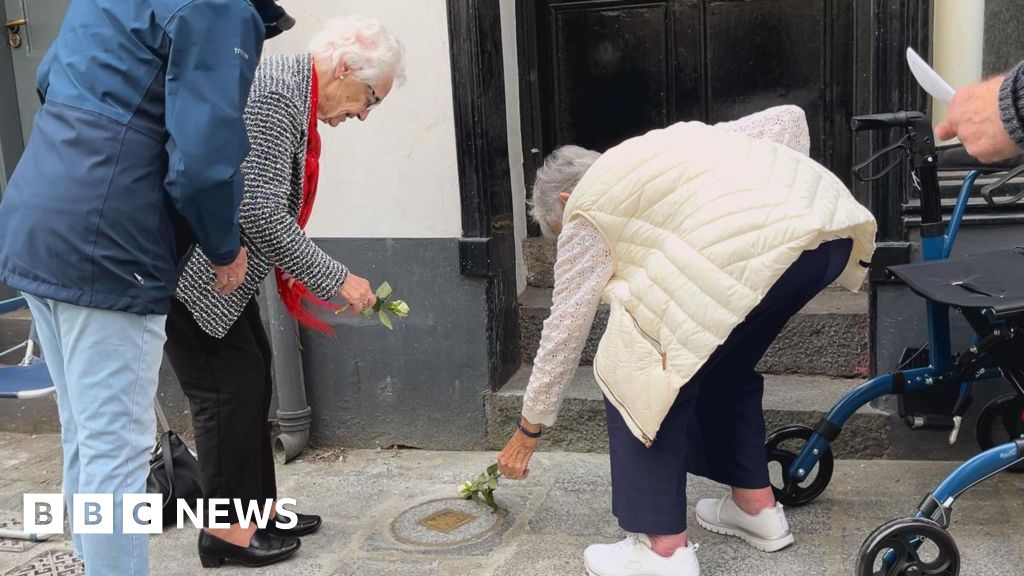
Guernsey turns occupation memory into street-level politics
New Stolpersteine make Nazi-era deportations visible in daily life, forcing Guernsey to remember victims, resistors and survivors beyond Liberation Day ritual.
Guernsey has added 13 new commemorative stones to remember islanders who suffered under the Nazi Occupation, with one stone for Ernest Stanley Legg unveiled outside the Bordage house where he lived, the BBC reported. Legg co-founded the Guernsey Underground News Service, which secretly listened to and shared BBC updates under German rule; his great-niece, Amanda Hibbs, said the stone helps with “keeping the memory alive” and gives families a place to remember him. (BBC)
Why this memorial matters
This is not just heritage work; it is a claim over the public meaning of the occupation. The Stolpersteine project, started by German artist Gunter Demnig in 1992, has spread to more than 100,000 stones across Europe, and the Channel Islands version was first announced in 2024 as a joint Guernsey-Jersey effort. Guernsey’s earlier set remembered 11 people who died and four who survived Nazi persecution, including deportees, resistance figures and people whose wartime experience was flattened into a single island story. (BBC,
States of Guernsey,
Jewish News)
That matters because the island’s wartime memory has long been organized around endurance and liberation, not around the full catalogue of persecution. By placing names in the pavement, Guernsey is shifting remembrance from ceremony to routine: passersby encounter the occupation on the school run, not just at a memorial service. In Global Politics, this is the local version of a broader European trend: smaller communities using micro-memorials to resist forgetting where official narratives tend to simplify. The power here sits with heritage officials and descendants, who have turned family history into public record. (
BBC,
States of Guernsey)
Who gains from this kind of remembrance
The immediate winners are the families and researchers who pushed for individual names rather than a generic occupation memorial. Helen Glencross, Guernsey’s head of heritage services, said the stones are “very much a physical presence” that remember people who suffered under the Nazi regime, and that the families’ stories make the work worthwhile. That is the real political function of the stones: they convert private grief into durable public evidence. (BBC)
The project also benefits the island’s institutions. It lets Guernsey acknowledge occupation trauma without abandoning the broader story of Liberation Day, and it gives museum and heritage officials a visible, credible response to the demand for more specific remembrance. But it also creates a higher standard: once names are in the street, the island cannot treat occupation as a single chapter of resilience. It has to keep telling the harder story of deportation, prison, forced labor and postwar injury. (BBC,
BBC)
What to watch next
The next test is whether these stones become part of Guernsey’s official Liberation Day script on 9 May, and whether Jersey follows through with its own 20-stone rollout from the same Channel Islands project. If schoolchildren, families and tourists start stopping at the stones as part of daily life, the memorial will have done more than remember the dead: it will have changed what the island thinks its occupation history is for. (BBC,
BBC)
Discover more
US Politics
Congress Targets AI Chatbot Access for Terror
House Chair Andrew Garbarino proposes government access to AI chatbot queries to combat terrorism, igniting privacy debates.

Global Politics
US Seizes Iranian Ship, Tensions Surge
The US seizes the Iranian ship Touska near the Strait of Hormuz, escalating tensions and risking wider conflict in the region.
India
Modi's Women’s Convention in Varanasi
PM Modi's upcoming women’s convention in Varanasi aims to boost support ahead of West Bengal elections, highlighting women's empowerment initiatives.
India
India Rejects Zardari's Mosque Comments
India's MEA rebukes Zardari's mosque comments, citing Pakistan's human rights record.