Goyal Shields Farmers From Trade Deal Risks
India's commerce chief reassures farmers amid US trade deal concerns.
Model Diplomat3 min readAsia
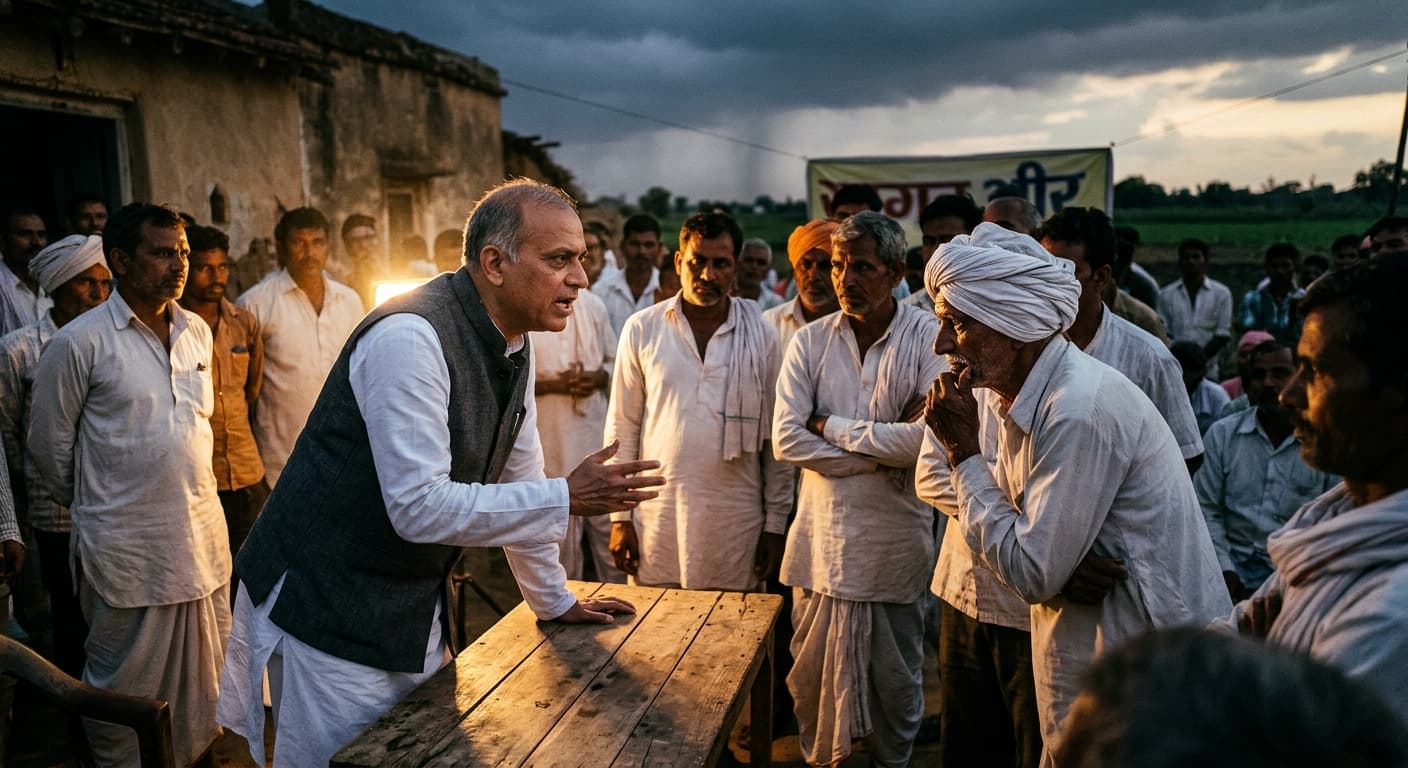
Goyal Shields Farmers From Trade Deal Exposure
India's commerce chief insists agriculture is protected in US pact as tariffs fall to 18 percent amid concerns about market access.
India's Commerce Minister Piyush Goyal moved swiftly to contain domestic political fallout from the US-India trade deal, asserting that Indian farmers remain "fully protected" even as Washington secures significant new market access to New Delhi's agricultural sector. The reassurance came after months of negotiations that dramatically cooled tensions following Trump's initial 50 percent tariff threat in mid-2025. The framework, finalized in early February 2026, cuts US duties on Indian textiles, chemicals, and machinery to
18 percent — a dramatic improvement that brought relief to manufacturers — but extracts real concessions on a sector where Indian farmers expect political protection.
The deal structure reveals the precise leverage both sides exploited. US Trade Representative Jamieson Greer stated that the pact eliminates duties on American tree nuts, fruits, vegetables, wine and spirits, while India maintained what it calls "key protections" — notably exclusions on rice, beef, soybeans, sugar, and dairy, the same commodities India shielded in its EU trade deal. Goyal's attempt to frame this as a farmer victory hinges on one element:
Indian agricultural exports will enter the US market at zero duty, potentially worth hundreds of millions in the medium term.
What India Gave Up
The asymmetry is clearer than Goyal's framing suggests. India accepted US tariff elimination on tree nuts, fresh produce, wine, and spirits — politically tolerable because India has no significant domestic lobby in those categories — while protecting its own farmers in sectors where domestic producers dominate and command electoral weight. This mirrors tactics New Delhi used with the EU, where agriculture remained a redline even after 18 years of negotiation. Greer acknowledged the trade-off explicitly, calling the produce and spirits access a "big win" for US farmers while noting Washington would continue pushing on the protected categories in future rounds.
The broader deal, announced in early February after months of tense back-and-forth, commits India to $500 billion in purchases of US goods over five years — energy, aircraft, defense systems, technology — in exchange for the tariff reduction. Prime Minister Modi called the shift from 50 percent tariffs a "wonderful announcement," and Goyal hailed it as "
historic," but that language masked the calculation: India bought time and market-friendly manufacturing tariffs in exchange for gradual agricultural opening and a massive arms and energy procurement pipeline that tilts the bilateral balance.
The Political Calculation
Goyal's farmer messaging is necessary because Modi's government faces a legitimacy test with rural constituencies that have mobilized before over trade agreements. The public assertion that agriculture remains sacrosanct is a political insurance policy. Farmers' organizations had already signaled concern; Modi himself pledged months earlier not to compromise on farmers' interests. By announcing zero-duty access for Indian agricultural exports while maintaining tariff walls on sensitive imports, Goyal can claim a net gain for producers — particularly exporters of spices, processed foods, and specialty crops that benefit from US market entry.
The calculus holds only if volumes materialize. US demand for Indian agricultural goods depends on pricing, quality, and whether exporters can penetrate distribution chains dominated by competitors like Mexico, Southeast Asia, and Brazil. The tariff concession is real but passive; access without active demand is an empty win. Goyal's reassurance amounts to betting that the zero-duty signal will drive volumes fast enough to satisfy farm-state political pressure before the next electoral cycle.
What to Watch
Monitor Indian agricultural export volumes to the US over the next 12 months — a doubling would validate Goyal's message; stagnation would expose it as cover. The interim agreement still requires finalization of written terms; officials said that work was ongoing in early February. A second signal: whether India faces renewed US pressure on rice, sugar, and dairy in the next negotiating round, set to begin once the interim pact is implemented, likely in April 2026. That will test whether the "full protection" claim holds or was a temporary political fiction to sell a deal that trades agricultural exposure for manufacturing gains.
Discover more

India
India-South Korea $50B Trade Expansion Plan
India and South Korea target $50 billion in bilateral trade by 2030, focusing on industrial cooperation and strategic alignment amid US pressures.

Global Politics
US Seizes Iranian Ship, Tensions Surge
The US seizure of the Iranian ship Touska highlights a shift in control over the Strait of Hormuz, favoring Iran's strategic position.
India
Congress Accuses Modi of Stalling Women's Law
Congress accuses Modi of stalling women's reservation law by linking it to delimitation, revealing a deeper electoral strategy.

Conflict & Security
Drone Warfare Killing Aid Workers at Unprec
Over 1,000 humanitarian workers killed in three years as cheap armed drones collapse legal protections. Gaza, Sudan, Ukraine, and DRC see deliberate targeting of aid convoys and hospitals with zero prosecutions.