GOP Senate Majority at Risk
Republicans face tough battles in key Senate races ahead.
Model Diplomat3 min readUnited States

GOP's Senate Majority Faces Its Riskiest Map Since 2018
Republicans must defend five vulnerable seats while Democrats hold cash leads in key states — and a war, gas prices, and base fatigue are all moving against them.
The Senate math is tightening fast. With the 2026 midterms closing in, Republicans are now playing defense across five incumbent-held seats — Ohio, North Carolina, Maine, Iowa, and Alaska — while simultaneously pouring resources into offensive plays in Michigan, Georgia, and New Hampshire. That's an expensive, difficult two-front fight, and the national environment is turning hostile.
The structural problem for the GOP is straightforward: midterms punish the party in power, and the signals compounding that base dynamic are unusually severe. A CNN poll from mid-April shows 66% of Americans disapproving of the administration's handling of the Iran conflict, while gas prices have climbed to $4.16 per gallon — a politically toxic combination of foreign policy anxiety and kitchen-table pain. GOP strategist Annalyse Keller said publicly that "Republicans should be worried", citing base voters souring on the presidency and a turnout environment with no Trump on the ballot to drive enthusiasm.
The Money Gap and the Map
The Senate Leadership Fund has committed roughly $342 million across eight states — $236 million defensive, $106 million offensive. That's a significant war chest, but it signals nervousness, not confidence. Meanwhile, MAGA Inc. holds over $300 million in reserve, adding a wildcard of independent spending that the party cannot fully coordinate. On the Democratic side, the Senate Majority PAC entered the cycle with just $36 million — a fraction of GOP outside spending — but Democrats are betting on a favorable environment doing the heavy lifting. CNN's nine most competitive races breakdown shows the battlefield has widened well beyond what Republicans budgeted for two years ago.
Michigan Is the Hinge
The single race that could determine chamber control is Michigan's open seat. Democrats need it to hold a credible path to a majority. But the primary has turned messy: Abdul El-Sayed (Sanders-aligned) versus Rep. Haley Stevens (establishment) is a familiar electability-versus-ideology split that Republicans are actively working to exploit. GOP groups have already committed roughly $45 million to elevate former Rep. Mike Rogers as a general election candidate. If Democrats nominate the weaker general-election candidate in August, Republicans flip the Michigan burden back onto them.
Why This Matters Now
For US Politics watchers, the core dynamic is this: Republican incumbents in purple and lean-red states are running in a worsening environment with no presidential coattails and a two-front spending commitment. History is unambiguous — the president's party loses an average of four Senate seats in second-term midterms. Whether the structural headwinds are severe enough to hand Democrats the four net seats needed for a majority remains genuinely open.
What to Watch Next
Three dates define the next phase:
- August 2026 primaries in Michigan and Georgia — candidate quality will either stabilize or accelerate Republican exposure
- September FEC fundraising reports — if the Democratic Senate Majority PAC closes the money gap, the map expands further
- October polling in Maine and Ohio — if both move into toss-up territory simultaneously, GOP Senate control is in structural jeopardy
The warning signs are flashing. Whether they become a verdict depends on who walks out of the primaries.
Discover more

US Politics
Next Generation Republicans
A leaked survey shows 39% of Republicans under 30 do not identify as MAGA, revealing a split in the GOP's future leadership.

Conflict & Security
Drone Warfare Killing Aid Workers at Unprec
Over 1,000 humanitarian workers killed in three years as cheap armed drones collapse legal protections. Gaza, Sudan, Ukraine, and DRC see deliberate targeting of aid convoys and hospitals with zero prosecutions.

Global
World Normalises Taliban as Afghan Women Eras
UN data shows Afghan women erased from public life as Russia recognises the Taliban, EU hosts officials in Brussels, and ICC warrants for gender persecution go unenforced.
Conflict & Security
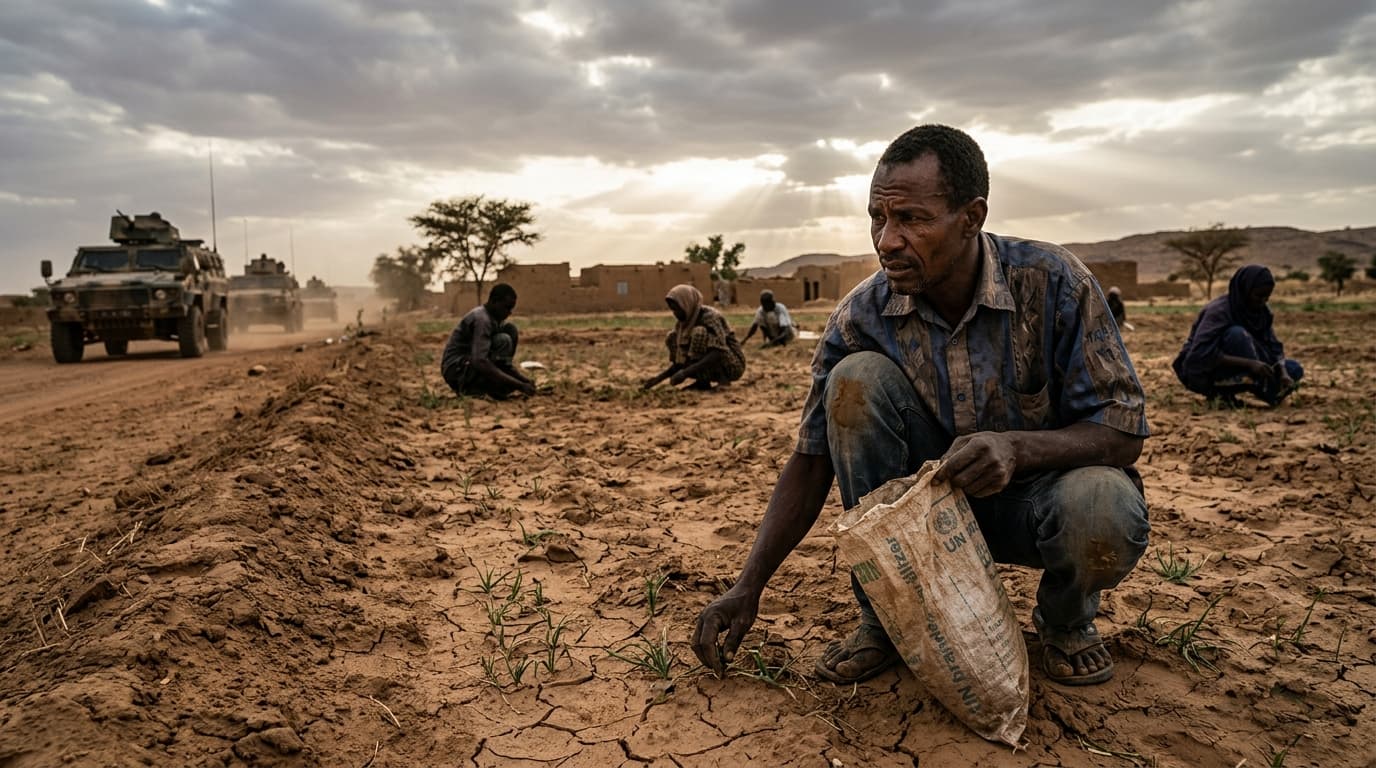
West Africa Food Crisis: Three Shocks in 2026
Conflict, climate extremes, and the Strait of Hormuz closure drive a severe food crisis in West and Central Africa, with fertilizer prices surging 80% and millions displaced.