Ghana Pre-Pays $700m Eurobond Early
Ghana's early Eurobond repayment reshapes Africa's credit landscape.
Model Diplomat7 min readSub-Saharan Africa
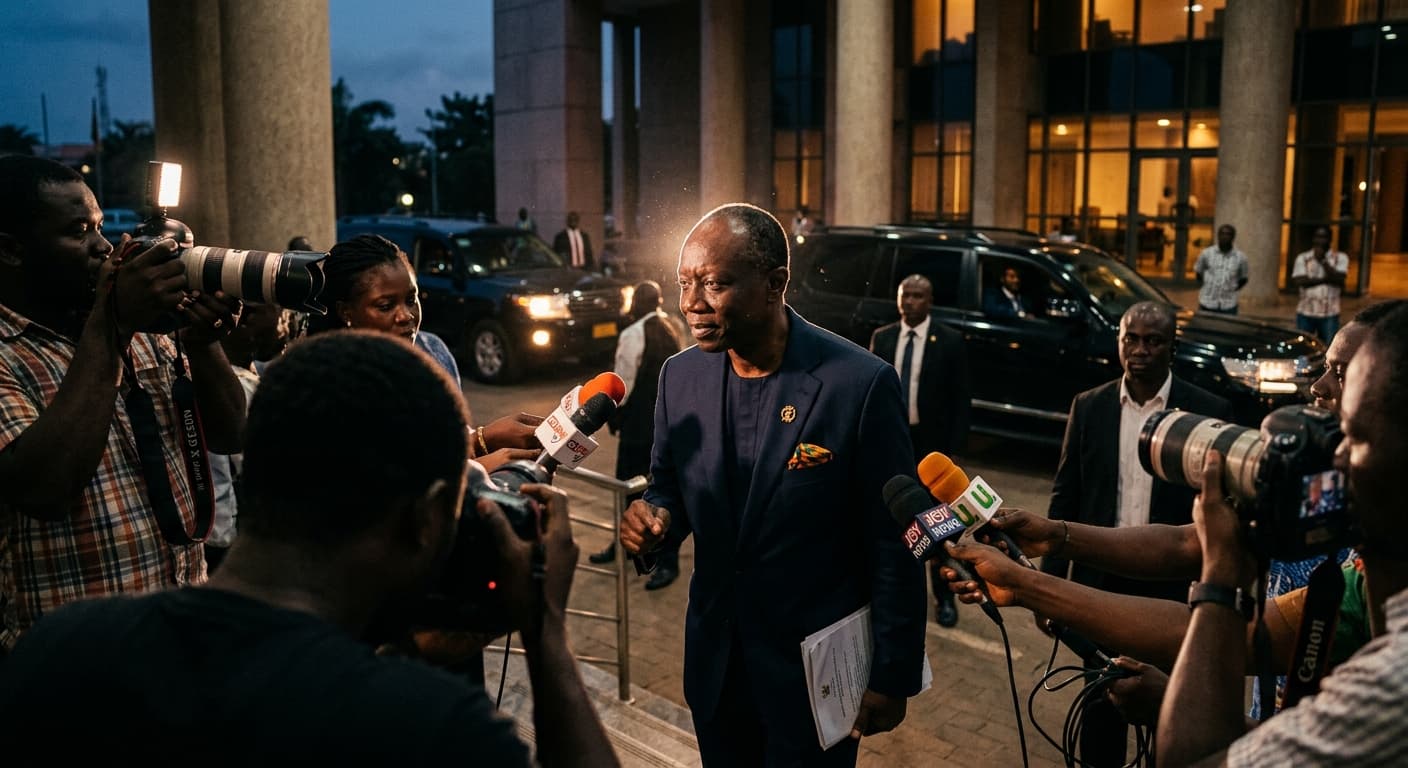
Ghana Pre-Pays $700m Eurobond, Reopens Africa's Credit Playbook
Ghana's July 2, 2026 early repayment of a $700 million Eurobond signals sub-Saharan Africa's fastest post-default rehabilitation and reshapes investor pricing across the region.
Ghana settled a $700 million Eurobond obligation five days ahead of its scheduled repayment on July 2, 2026 — and in doing so became the first African defaulter of the current cycle to service restructured commercial debt early, a milestone that will quietly reprice risk for every neighbour still queuing at the G20 Common Framework. The payment, broken down by Ghana's Ministry of Finance as $525.2 million in principal and $174.8 million in interest, lifts total post-default servicing to $2.1 billion since January 2025, according to Nairametrics. The signal matters more than the sum: three years after suspending payments in December 2022,
Ghana is telling the market that Common Framework restructurings can produce a genuinely creditworthy sovereign — not just a rehabilitated defaulter kept alive by the IMF.
The mechanics of a signal
The transaction is small next to Ghana's roughly $13 billion Eurobond stock, but the choreography is what investors read. The Ministry of Finance emphasised that the settlement was "executed through the government's planned financing arrangements without placing undue pressure on Ghana's foreign exchange reserves," according to reporting by Businessfront and
Southern African Times. That is the operative claim. Ghana's 2024 Eurobond exchange, described by the IMF as "completed…at conditions consistent with program parameters" in its
November 2024 staff report, had front-loaded some cash service to bondholders through PDI (past-due-interest) instruments and stepped-up coupons. Servicing those coupons early — rather than negotiating extensions — collapses the tail risk bondholders had priced into Ghana's new curve.
The 2026 debt-service calendar had already been the heaviest since the 2022 default. Ghana faces $1.409 billion in Eurobond debt service this year, its largest external bond bill since the restructuring, according to The High Street Journal. Getting the July tranche out early — with reserves at roughly 3.5 months of import cover as of October 2025, per the
IMF's fifth ECF review documents — buys headroom for the next coupon cycle and, more importantly, buys narrative.
What actually turned the economy
The pre-payment is a political artifact of a very specific macro tailwind. Real GDP grew 5.7 percent in 2024 — above the 5 percent program potential — and accelerated further through the first three quarters of 2025 on services, agriculture and a gold windfall, according to the IMF Executive Board statement of December 17, 2025. Inflation collapsed from 23.8 percent in December 2024 to 9.4 percent by late 2025, back inside the Bank of Ghana's 8±2 percent target band. The cedi appreciated 36 percent year-to-date against the dollar through end-October 2025, aided by roughly $9 billion of FX sales and by GoldBod — a state gold-buying facility launched in March 2025 that Governor Johnson Asiama says has generated about $8 billion in export receipts, according to
IMF Country Focus.
None of this would have been possible without the debt exchange itself. The Eurobond swap completed in October 2024 delivered roughly 37 percent nominal-value reduction on eligible bonds and pushed the earliest large maturity into the 2030s. The domestic debt exchange settled in February 2023 wiped out about 30 percent of the net present value of institutional holdings and produced GHS 50 billion of cash relief in 2023 alone, per the IMF's May 2023 staff report. The pain, in other words, was already booked; what markets are now pricing is the recovery.
The IMF sees that recovery consolidating. On May 15, 2026, staff reached agreement on the sixth and final review of the ECF and on a 36-month, non-financing Policy Coordination Instrument (PCI), noting that "the public debt ratio declined sharply" and that "sovereign rating upgrades" have followed in Ghana, South Africa and Zambia, according to the IMF's press release. The Fund's April 2026
Regional Economic Outlook records $14 billion of sub-Saharan African Eurobond issuance in 2025 and $5.5 billion in the first two months of 2026 — a market that had been frozen shut between spring 2022 and January 2024.
The regional read-across
This is the part policymakers in Lusaka, Addis Ababa and Nairobi will study. Only four countries — Chad, Zambia, Ghana and Ethiopia — have applied under the G20 Common Framework since its 2020 launch, and each has produced a case study in what the mechanism can and cannot do, according to the Observer Research Foundation. Zambia's process ran more than three years and, as
ISPI's Rafiq Raji has argued, ended in a deal that effectively immunised bondholders from copper-price downside. Ethiopia's negotiations are still open. Chad's 2022 arrangement involved no bondholder haircut at all.
Ghana is now the demonstration case for the sceptics. The Atlantic Council in June 2026 flagged that the G20's newly released illustrative template MoU formalises the sequential, official-then-commercial ordering that has slowed every previous case; critics on the
SAIIA side of the debate call the framework "cumbersome, slow and unduly favourable to creditors." Ghana's early repayment does not solve any of those design flaws. But it gives Common Framework advocates a first, cleanly-quotable success — a country that defaulted, restructured, stabilised inflation, rebuilt reserves and started pre-paying restructured commercial paper inside 43 months.
The pricing implications are already visible. Africa's median sovereign spread is "well below the levels seen in April 2025," per the IMF's April 2026 Regional Economic Outlook, and Nigeria issued a $2.3 billion Eurobond in 2025 while preparing another sale for late 2026, according to its
2026 Article IV staff report. Kenya, Côte d'Ivoire and Benin all re-accessed markets in 2024–25. The critical academic finding — that SSA sovereigns pay roughly 155 basis points more than emerging-market peers with the same rating, per an
IMF working paper by Gbohoui, Ouédraogo and Somé — is precisely the mispricing Ghana's pre-payment attacks. If bondholders are being told, in cash, that restructured African credits can service ahead of schedule, the "Africa premium" gets harder to justify.
Who wins, who pays
The direct winners are the funds holding Ghana's post-exchange paper — Amundi, Abrdn, BlackRock and the ad-hoc committee that negotiated the 2024 swap. They took nominal haircuts in 2024 and are now recouping cash faster than modelled. Ghana's Ministry of Finance under Minister Cassiel Ato Forson, in place since January 2025 under President John Mahama's new administration, gets a political win — and, more importantly, a claim on the argument that its "24-hour economy" fiscal programme is compatible with debt discipline.
The losers, or at least those forced to reprice, are two-fold. First, Ghanaian pensioners and domestic bondholders who took the deepest pain in the 2023 domestic debt exchange — an episode former Chief Justice Sophia Akuffo publicly called "wicked, disrespectful, unlawful and totally wrong," per an academic account in Development and Change. They financed the stabilisation that Eurobond holders are now cashing out of. Second, the credit rating agencies whose downgrade cascade in 2022 the
UN Office of the Special Adviser on Africa argued was based on "technical inaccuracies and omissions." Ghana's rebound gives African finance ministers ammunition to challenge sovereign methodology at the AU-led debate on ratings reform.
The risk that changes this forecast is not fiscal — it is monetary and geological. Ghana's current account surplus (3 percent of GDP at end-June 2025) rests almost entirely on gold prices and remittances. The IMF flags that Ghana still faces "sizable amortizations" as part of the region-wide picture, and the fifth review calendar shows large domestic-debt-exchange maturities landing in 2027–28. The government has created two sinking funds to smooth those bumps, and the ECF-successor PCI is designed to anchor the rollover strategy through then. If gold corrects sharply or if the cedi's 36 percent 2025 appreciation reverses — both plausible — the mismatch between dollar-denominated Eurobond service and cedi tax revenue reasserts itself fast.
What to watch
- September 2026: Next scheduled Eurobond coupon under the restructured curve. A second early or on-time settlement locks in the signal.
- End-2026: IMF Executive Board approval of the sixth ECF review and formal launch of the 36-month PCI — the anchor for Ghana's 2027–28 rollover strategy.
- 2027–28 maturity wall: Roughly $2 billion in Domestic Debt Exchange bonds coming due; sinking-fund adequacy will be tested here first, not on the external side.
- AU/G20 debt-architecture reports due in the first half of 2026 to South Africa's president under the Africa Expert Panel process — Ghana's data will now be Exhibit A for reformers on both sides.
Diplomat View
Ghana's $700 million pre-payment is not a debt story — it is a market-access story dressed as one. The country needed to demonstrate, in cash rather than communiqué, that a G20 Common Framework restructuring can produce a re-issuable credit. It has now done so, and the second-order effect is that every other African sovereign considering Common Framework treatment can point to Accra rather than Lusaka when negotiating with reluctant bondholders. Our call: Ghana returns to the Eurobond primary market with a benchmark issue before end-2027, at a spread inside 500 basis points over US Treasuries — a level that would have been unthinkable in mid-2023. What would falsify this forecast is a sustained gold price fall below $2,800/oz or a cedi depreciation exceeding 20 percent, either of which would expose the same FX-mismatch dynamic that produced the December 2022 default in the first place. The Common Framework has, at last, a poster child. Whether it also has a template depends on whether Accra's discipline survives its own political cycle.
Read today's full |
Discover more
International Relations
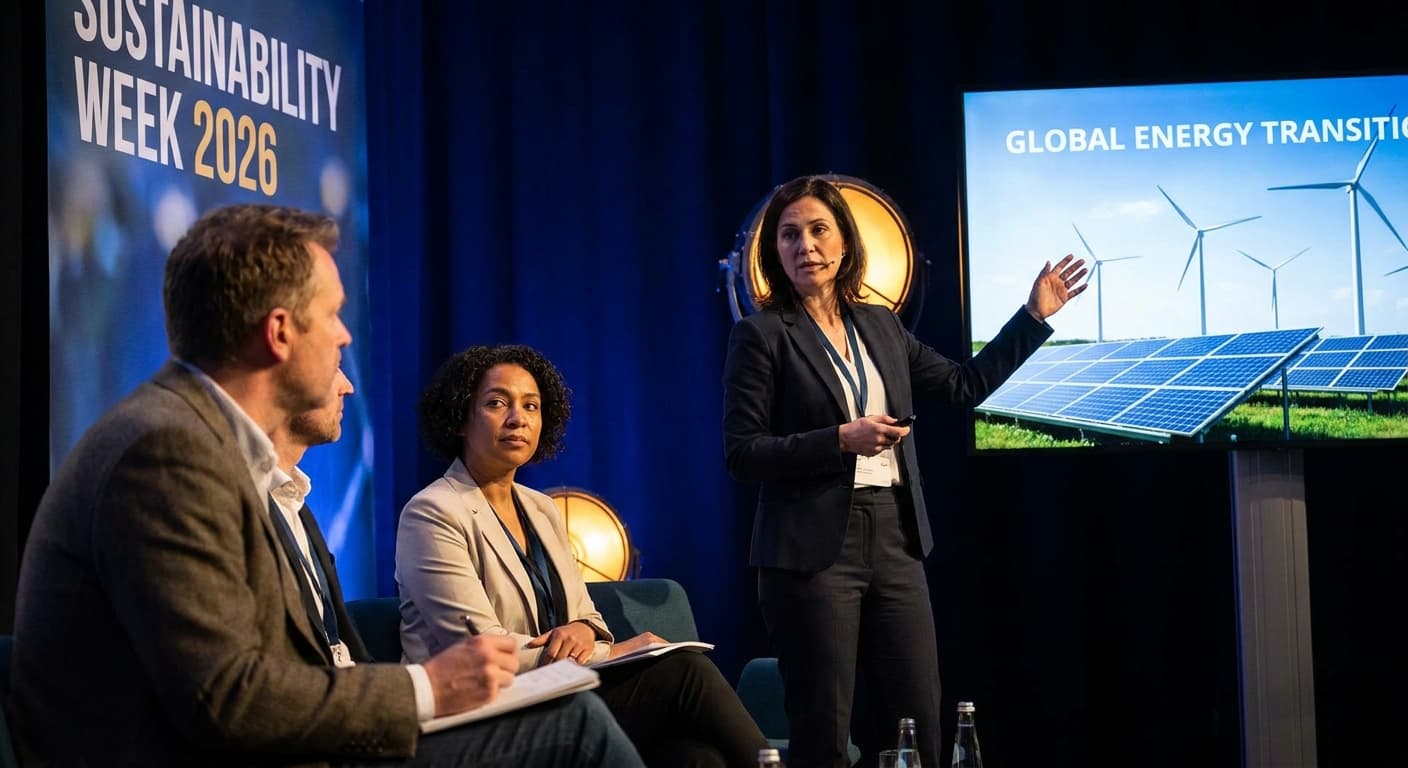
Economist Impact Sustainability Week 2026
Economist Impact Sustainability Week 2026 spotlights the energy transition, AI in clean technology, and supply chain resilience as themes for global leaders.
Global Politics
Trump's Conflicting Messages on Iran War
Trump's mixed messages on Iran reflect a strategy of audience management, benefiting Tehran amid a complex geopolitical landscape.

Global Politics
US Seizes Iranian Ship, Tensions Surge
The US seizure of the Iranian ship Touska highlights a shift in control over the Strait of Hormuz, favoring Iran's strategic position.

Conflict & Security
Drone Warfare Killing Aid Workers at Unprec
Over 1,000 humanitarian workers killed in three years as cheap armed drones collapse legal protections. Gaza, Sudan, Ukraine, and DRC see deliberate targeting of aid convoys and hospitals with zero prosecutions.