Gandhi Takes Stand Against Modi's Nicobar Meg
Rahul Gandhi confronts government over tribal rights in Nicobar Islands
Model Diplomat3 min readAsia
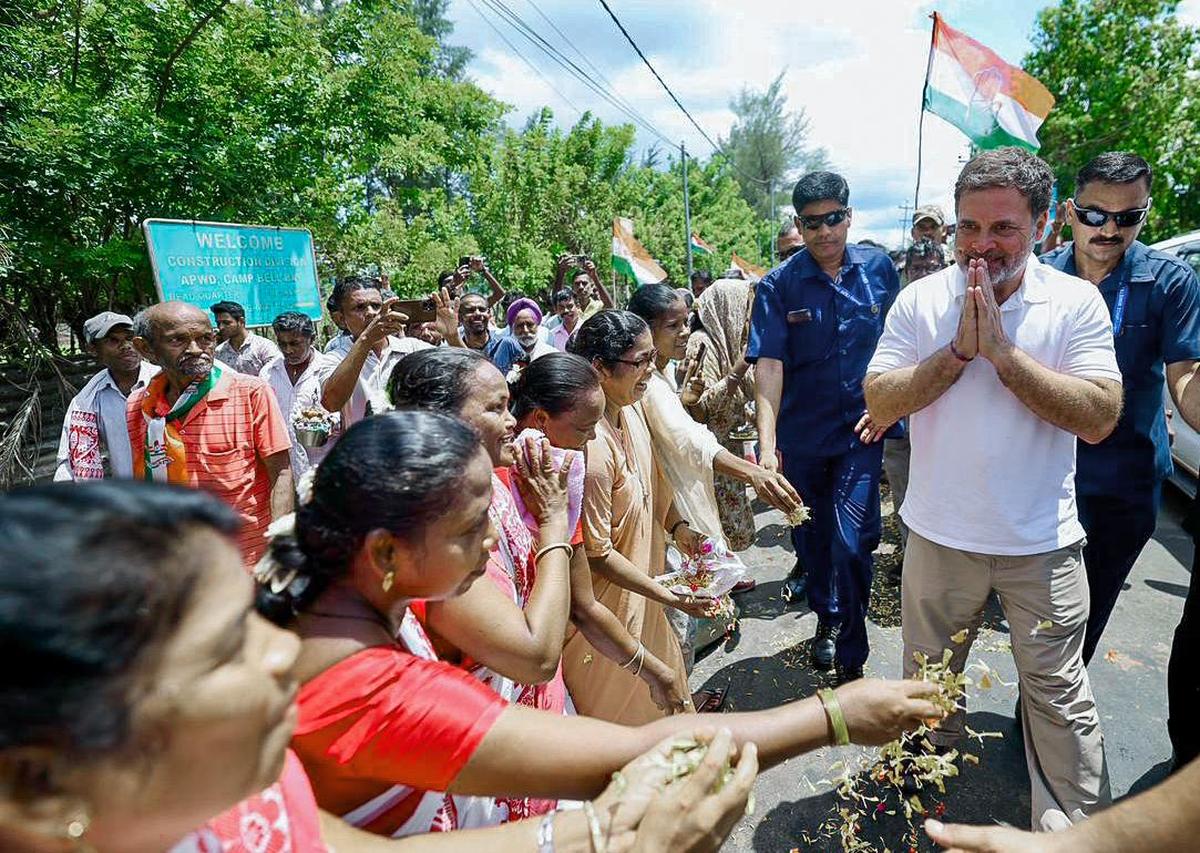
Gandhi Forces His Way Into the Great Nicobar Fault Line
India's Leader of Opposition landed in Campbell Bay on April 28 despite reported administrative obstruction — turning a ₹92,000 crore project dispute into a national political flashpoint.
Rahul Gandhi arrived in Great Nicobar Island on April 28, 2026, meeting Nicobarese community leaders in Campbell Bay who are resisting the Union government's ₹92,000 crore ($11 bn) "holistic development" mega-project — a transshipment port, airport, power plant, and township complex set to transform one of India's most ecologically and strategically sensitive territories. Gandhi said he reached the island despite efforts by the local administration to block him, framing the visit as a direct confrontation with Modi government policy on tribal rights.
The Project and Its Fault Lines
The Great Nicobar Island (GNI) project cleared its first environmental hurdle in 2022. The National Green Tribunal gave a further green light in early 2026, citing "strategic importance" — India's calculation being straightforward: the island sits astride one of the world's busiest shipping lanes, roughly 90 nautical miles from the Malacca Strait, with obvious value as both a commercial hub and a military forward position.
But the project's social foundation is crumbling. The Nicobarese community withdrew consent in 2022, citing unsettled forest rights and the destruction of ancestral villages by the 2004 tsunami. A March 13, 2026 draft "Comprehensive Tribal Welfare Plan" — obtained by The Hindu — proposed relocating 62 households (218 persons) to sites at Rajiv Nagar and New Chingenh at a cost of ₹42.52 crore over 24 months. The document directly contradicts repeated government assurances that no displacement would occur. The Tribal Council of Great and Little Nicobar only received the draft on March 28, requested a Hindi translation, and asked for at least a month to review it — suggesting the consultation process is, at minimum, severely rushed.
The Calcutta High Court is now adjudicating a challenge to the project's clearances over alleged violations of consent procedures and forest rights. As of March 30, the government's lawyers told the bench they needed 15 days to demonstrate tribal consent — a deadline that has now passed without a visible resolution.
Who Holds the Leverage
The Modi government controls the administrative machinery, environmental clearances, and the NGT ruling — and is pressing ahead. Congress and Gandhi hold the opposition megaphone and the tribal community's political credibility, with Gandhi's visit designed to turn a bureaucratic and legal dispute into a live campaign issue ahead of any future electoral cycle. Jairam Ramesh, Congress's point person on the issue, has already branded the relocation plan "a lie" by the Centre.
The Nicobarese themselves hold the moral and legal trump card — their consent is legally required under forest rights law — but limited political power to enforce it without sustained external pressure. That is precisely what Gandhi's landing provides.
What to Watch
Three near-term tripwires matter. First, the Calcutta High Court's ruling on tribal consent: a finding against the government would force a fundamental renegotiation of the project's clearances. Second, whether the Tribal Council formally rejects the draft relocation plan before the consultation window closes — a rejection would collapse the government's consent narrative in court and in public. Third, watch for BJP's response to Gandhi's visit: if Delhi escalates administrative restrictions on political access to the Andaman and Nicobar Union Territory, it hands Congress a durable story about democratic access to a strategically sensitive region.
The GNI project is a test of how far India's infrastructure ambitions can override international norms on indigenous consent — and Gandhi just made sure the answer won't be decided quietly.
Discover more
India
Rajnath Singh's Durga Squad for 2026 Polls
Rajnath Singh's Durga Squad promised women's safety in Bengal but has since disappeared from the agenda, revealing BJP's true priorities.
India
BJP Congress Clash Over MP Bill Defeat
The BJP's defeat of the women's quota amendment sparks a political narrative war with Congress, impacting future elections.
India
CPI MP Accuses PM Modi of MCC Violations
CPI MP P Sandosh Kumar alleges PM Modi breached the Model Code of Conduct in Tamil Nadu, raising election integrity concerns before the 2026 Assembly polls.

Conflict & Security
Drone Warfare Killing Aid Workers at Unprec
Over 1,000 humanitarian workers killed in three years as cheap armed drones collapse legal protections. Gaza, Sudan, Ukraine, and DRC see deliberate targeting of aid convoys and hospitals with zero prosecutions.