France Freezes €3bn Amid Iran War Impact
France's credit freeze aims to meet deficit targets amid external pressures.
Model Diplomat5 min readEurope
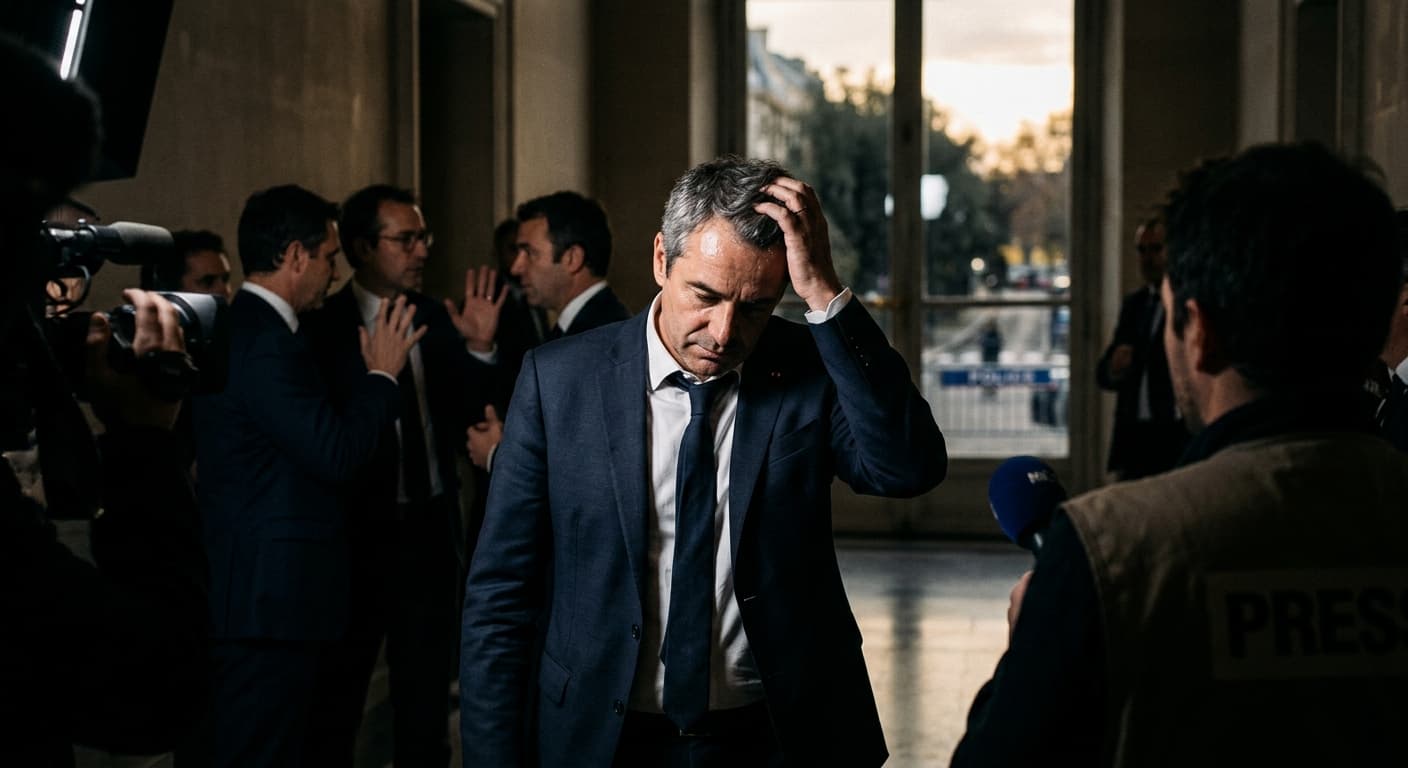
France Freezes Another €3bn to Chase 5% Deficit as Iran War Bites
France added €3 billion to April's €6 billion credit freeze on July 7, 2026, defending a 5% deficit target the IMF, the Senate rapporteur and three rating agencies now openly doubt.
On July 7, 2026, Finance Minister David Amiel emerged from the second budget alert committee of the year at Bercy and announced €3 billion in additional credit freezes — €2 billion on the state, €1 billion on social security — on top of the €6 billion frozen in April. The move is not a structural adjustment. It is a defensive signal to three audiences that have stopped believing the trajectory: the European Commission's Excessive Deficit Procedure desk, the rating agencies that downgraded France three times in about a month, and the bond investors who have pushed the 10-year OAT above 3.78%, well over the German Bund. The war in Iran, not French politics, is what broke the arithmetic — and Paris no longer controls the variable that decides whether the 5% target holds.
What Bercy actually put on the table
Amiel's language was unusually precise about what the freeze is not. "We identify €3 billion in risks concerning the state and social security," he told reporters, according to Boursorama — €2 billion of it "largely tied to the aid measures deployed since last April," a direct reference to the €1.4 billion spent capping motor-fuel prices during the Iran shock. A further €2 billion of local-authority risk was flagged but not decided.
The Senate's general budget rapporteur, LR senator Jean-François Husson, immediately noted that the €3 billion figure came "without any detail" being provided. Denis Gravouil of the CGT confirmed the same to AFP via Boursorama: "€3 billion, but undocumented." That matters, because a credit freeze — gel de crédits — is not a spending cut. It is an administrative freeze on unspent appropriations that can later be lifted, cancelled, or spent through. It buys time and a headline.
The stack now looks like this: €6 billion announced by Prime Minister Sébastien Lecornu in April (€4 billion state, €2 billion social), €3 billion added on July 7 (€2 billion state, €1 billion social), and a further €2 billion of local-authority "risk" identified but not yet locked in. Total: €9 billion committed, €11 billion signalled, against a fiscal hole that the same committee just admitted is deeper. The government simultaneously lowered its 2026 growth forecast to 0.7%, according to Challenges, from the 1.0% baked into the February finance law — and conceded that hitting 5% "will be difficult."
The Iran war is the shock, not the story
The trigger is external. The February 28 US–Israel strikes on Iran and Tehran's effective closure of the Strait of Hormuz — through which roughly 20% of global oil transits — sent Brent as high as $119 a barrel and pushed European pump prices up sharply, according to the BBC. France responded with a €1.4 billion motor-fuel aid package, precisely the kind of untargeted, temporary measure the European Commission had explicitly warned Paris against. That €1.4 billion is now what the July freeze is designed to offset, according to
BFMTV.
The June 30 Council recommendation on France, published as ST-11122-2026-INIT, states plainly that measures taken to mitigate energy-price shocks must be "temporary, targeted at protecting vulnerable households or at addressing the needs of energy-intensive firms" and compatible with EU fiscal commitments. Bercy's April aid was broad and price-based — a political concession, not an EU-compliant instrument. The July 7 freeze is, in effect, France paying back Brussels for the April improvisation, exactly a month after the Commission agreed on June 3 to hold France's Excessive Deficit Procedure "in abeyance" on the assessment that Paris was taking "effective action."
That abeyance is the piece of paper the government is fighting to keep. Under the Council Recommendation of January 21, 2025, France committed to net expenditure growth capped at 1.2% in 2026, on a corrective path to below 3% of GDP by 2029. Slipping visibly through the 5% ceiling this year would force the Commission to reactivate the EDP — with a formal deadline for corrective action and a real threat of financial sanctions under the reformed Stability and Growth Pact.
Growth has taken the second hit. In its concluding Article IV statement on May 21, the IMF warned that "new headwinds from the war in the Middle East are starting to weigh on activity" and stated bluntly that "absent further measures, the current pace of adjustment would be insufficient" to exit the EDP by 2029. Every 0.1 point of growth lost is worth roughly €3 billion in receipts. The €3 billion freeze plugs one such hole. It does not plug the next.
The market has already voted
Sovereign spreads tell the analytical story more honestly than Bercy does. The IMF's 2025 Article IV report noted that the 10-year OAT–Bund spread peaked at 88 basis points in December 2024 ahead of the Barnier government's collapse, and that Moody's had already downgraded France to Aa3 that month. Since then, S&P became the third agency in about a month to cut France, according to the
Financial Times — following Fitch and Moody's — citing a higher projected debt pile.
France's 10-year now trades at 3.78%, versus 2.98% for the Bund, per FT Markets — an 80 basis-point gap that has, at moments this year, crossed above the Italian spread. That is the parallel that reframes everything: for the first time since the euro was created, France borrows on worse terms than a country the eurozone once had to bail out. Italy's deficit fell below 3.4% in 2025 while France's stayed at 5.1%, according to the
Haut Conseil des finances publiques — €152.5 billion in absolute terms.
Debt service is now the second-largest line in the state budget. The BBC put this year's cost at €67 billion, forecast to reach €100 billion by decade's end — more than France spends on defence or education. Institut Montaigne's Nicolas Laine, in a
joint interview with Terra Nova's Guillaume Hannezo, confirmed the €100 billion trajectory within three years and estimated €140 billion in savings needed by 2029 just to stabilise debt. Terra Nova's parallel number is €120 billion; the Conseil d'analyse économique arrived at €148 billion in October 2025.
Against those figures, a €3 billion administrative freeze is not consolidation. It is the price of not being downgraded a fourth time before the autumn budget round.
Discover more
US Politics
House Ethics Committee Pushes Sexual Miscond.
The House Ethics Committee has shifted responsibility for sexual harassment settlement records to the Office of Congressional Workplace Rights, complicating disclosure efforts.

Global Politics
Xi Jinping Calls China-Russia Ties 'Precious'
Xi Jinping's description of China-Russia ties as 'precious' reflects a strategic imbalance, with Beijing dictating terms in the partnership.

Global Politics
US-Iran Tensions Rise
Tensions escalate in the Strait of Hormuz as Iran and the US clash over maritime control, with a ceasefire hinging on a contested MoU paragraph.

Conflict & Security
Drone Warfare Killing Aid Workers at Unprec
Over 1,000 humanitarian workers killed in three years as cheap armed drones collapse legal protections. Gaza, Sudan, Ukraine, and DRC see deliberate targeting of aid convoys and hospitals with zero prosecutions.