Federal Court Halts Trump’s $1.8B ‘Anti-Weaponization’ Slush Fund
A federal judge’s temporary injunction freezes the administration’s controversial taxpayer-funded payout scheme for political allies, setting up a high-stakes constitutional showdown.
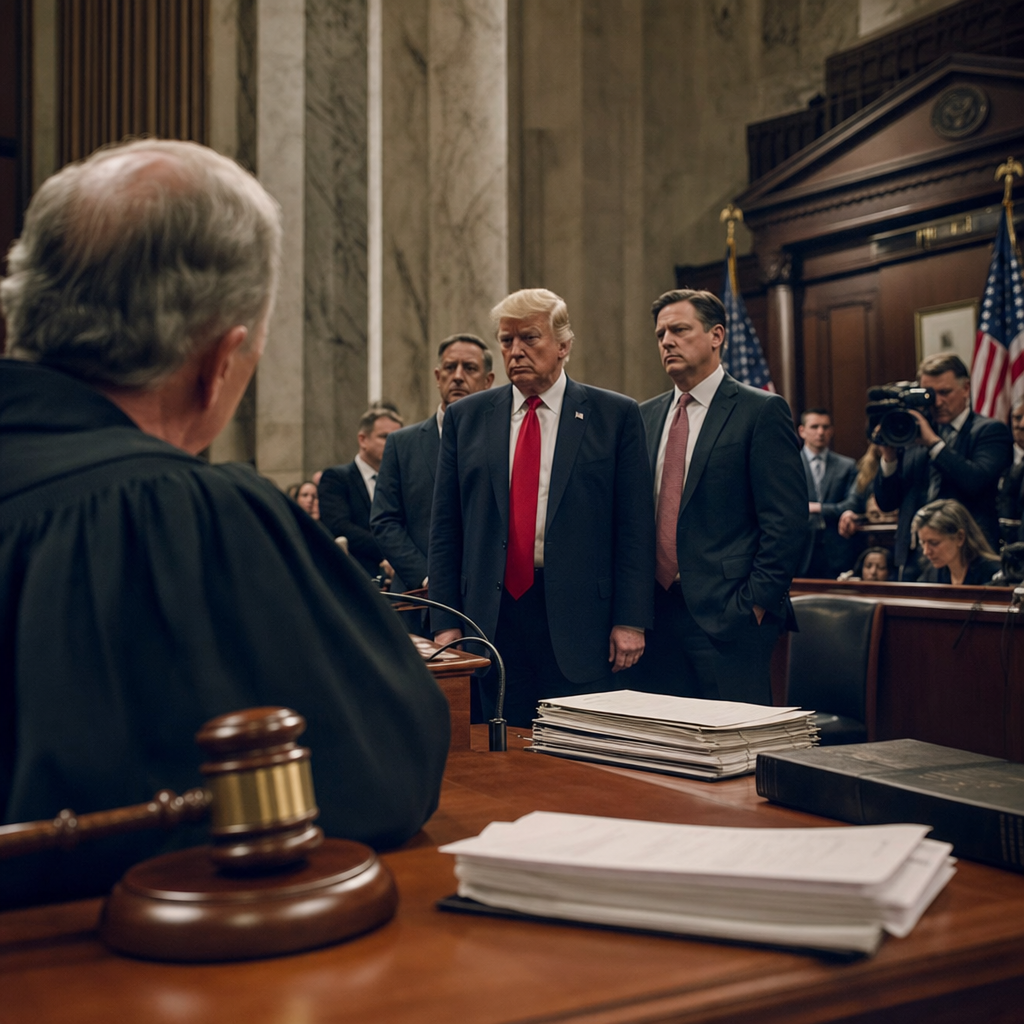
US District Judge Leonie Brinkema of the Eastern District of Virginia issued a temporary order on Friday blocking the Trump administration from launching its planned $1.776 billion "anti-weaponization fund"  BBC News. The two-page injunction bars the Justice Department (DOJ) from processing claims, setting up the framework, or dispersing funds until a preliminary hearing scheduled for June 12
  Al Jazeera. This ruling represents the first successful judicial check on a controversial executive program introduced just last week to reimburse individuals who claim they were targeted by previous presidential administrations.
The leverage behind the fund’s creation stems from an unusual legal bargain between Donald Trump, acting in his personal capacity, and his own executive branch. Instead of pushing forward with a personal $10 billion lawsuit against the Internal Revenue Service (IRS) over leaked tax records, Trump agreed to drop the suit Al Jazeera. In exchange, DOJ leadership agreed to create the $1.776 billion payout commission and, critically, exempt Trump's past personal and business tax filings from future IRS audits BBC News. This settlement effectively redirected a private legal dispute into a state-funded program, giving the White House an unprecedented tool to reward political supporters.
The immediate beneficiaries of the fund are meant to be Trump-aligned figures, including those prosecuted for the January 6, 2021 Capitol riot, many of whom have already received presidential pardons Al Jazeera. Under acting Attorney General Todd Blanche’s structure, a five-member commission would evaluate payouts for anyone subjected to "lawfare" BBC News. Conversely, the primary losers are Congressional lawmakers whose power of the purse was circumvented. The Virginia lawsuit—brought by a group led by former Capitol riot prosecutor Andrew Floyd—argues that the fund was explicitly designed to discriminate against Trump's political opponents who also claim political persecution but are barred from filing claims Al Jazeera.
Internal institutional resistance to the deal is widening rapidly. A bipartisan coalition of 35 former federal judges, led by prominent conservative legal official J. Michael Luttig, has petitioned a Miami federal court to reopen Trump’s initial IRS lawsuit and void the settlement  The Guardian. The judges claim the administration committed a "fraud on the court" by orchestrating a private dismissal to loot the federal treasury without legislative authorization. Even Senate Republican Leader John Thune has expressed skepticism, highlighting widening divisions within the Republican Party over the bypass of normal fiscal controls BBC News.
The fight is tracking toward an existential battle over executive authority in the  United States. The crucial date to watch next is June 12, when Judge Brinkema will hear arguments on whether to extend the freeze into a fuller preliminary injunction Al Jazeera. If the courts block the fund permanently, it will dismantle Trump's core strategy for financial patronage and force his administration to seek alternative, likely legislative, avenues to satisfy its base.