Europe Prepares for Trump's NATO Demands
E5 powers unite on Ukraine amid defense spending tensions.
Model Diplomat3 min readEurope
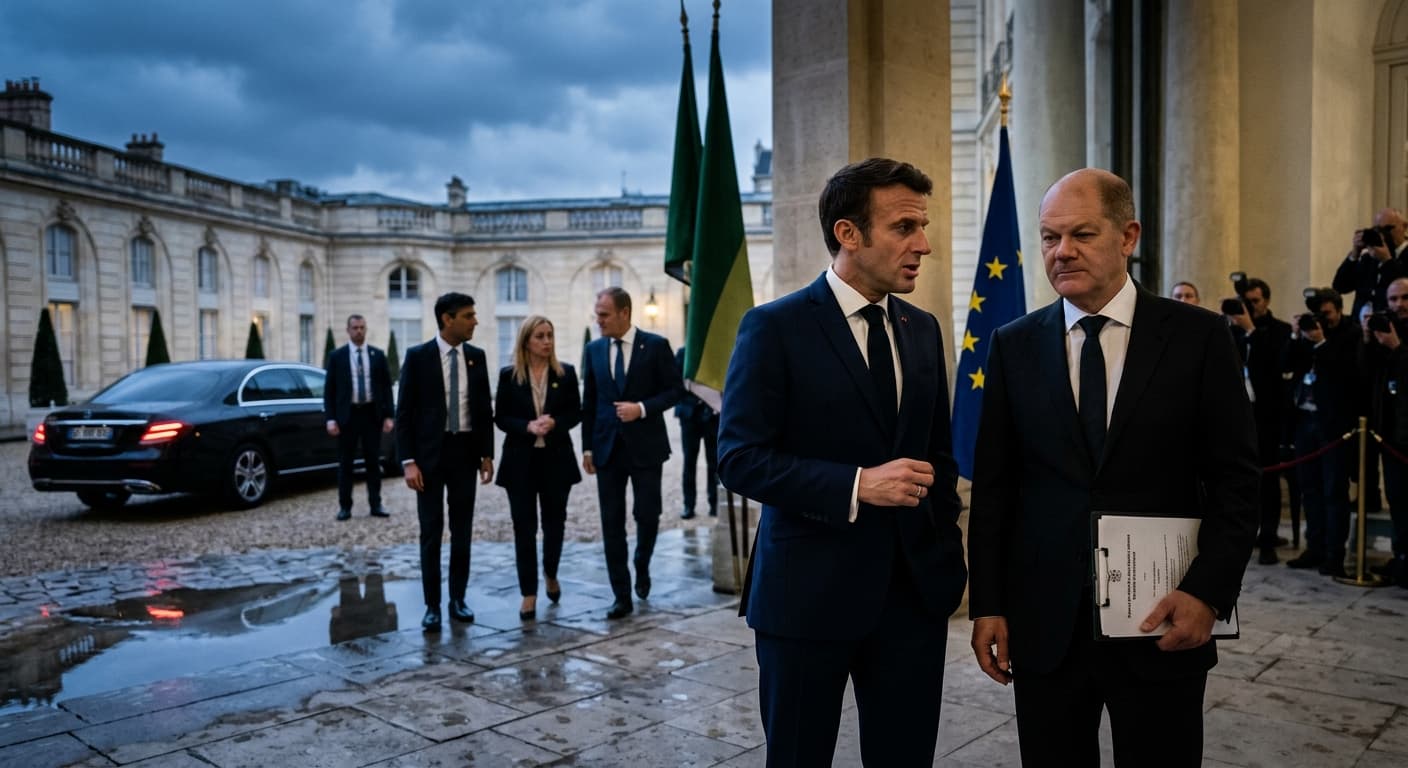
Europe Braces for Trump's NATO Reckoning
The E5 powers craft a unified front on Ukraine before July summit—but Trump's defense-spending demands expose deep rifts over who pays what.
Al Jazeera reported Wednesday that Europe's five largest military powers—Germany, France, Britain, Italy, and Poland—met in Berlin to forge a joint position on Ukraine before the NATO summit in Ankara on July 7–8. The message was coordinated: sustained military and financial support for Kyiv, tighter sanctions on Russia, and a stronger European defense pillar. But the timing reveals what the meeting was really about: managing Trump.
The E5 pledge to "substantially support Ukraine in its defence against Russian aggression" carries no new commitments. It anchors existing ones—G7 alignment on Ukraine forged at Evian last week, European Council pledges made days earlier. What matters is the signal: Europe is showing up coordinated, not fractured, as Trump enters the summit with a threat to impose "NATO 3.0," which Defense Secretary Pete Hegseth translated into a unilateral six-month review of U.S. force deployments in Europe, contingent on European defense spending hitting 5 percent of GDP by 2035.
The leverage is asymmetric. The U.S. has already begun unilaterally cutting capabilities—150 fighter jets reduced to 100, 26 maritime surveillance aircraft down to 15, entire refueling squadrons withdrawn. The BBC reported that Hegseth made plain: "NATO's annual dues would be contingent on other countries meeting their defence spending targets; where other allies do not spend with urgency, our dues contributions will go down." Europe cannot negotiate lower demands; it can only scramble to meet them faster.
The Berlin summit exposed why that scramble is uneven. Euronews noted that earlier E3 meetings between Germany, France, and Britain—excluding Italy and Poland—sparked resentment. Italian Foreign Minister Antonio Tajani called for a single European negotiator on Ukraine. Poland's Tusk insisted his country was "absolutely indispensable" to the discussion. The E5 format itself is a patch on a deeper wound: Europe has no unified voice, no single budget to pool, no way to coordinate procurement that avoids the North-South industrial divide widening across the continent.
Merz and Macron framed Berlin as laying groundwork for Trump to see a coherent European pillar emerging. The French president emphasized the sequence: G7 unity, EU Council alignment, now NATO harmonization, then a "Coalition of the Willing" meeting July 13 on security guarantees for Ukraine. The choreography is designed to show Trump that Europe is stepping up—that NATO doesn't need U.S. subsidy, merely U.S. commitment.
But money tells a different story. Il Sole 24 ORE reported that Italy, already at 2.8 percent of GDP on defense, is proceeding "with extreme caution," while France, Germany, and Poland are structuring SAFE fund commitments to consolidate European industrial leadership—widening the gap between flexible-budget leaders and those constrained by EU fiscal rules. The $15 billion reallocation from Rome to Paris, Berlin, and Warsaw signals that Europe is not pooling; it is stratifying.
Watch the Ankara summit itself. Trump arrives with reduced skin in the game—already shedding assets, already threatening bases in allied countries that denied him Iran war support. If he reads E5 unity as a reset, fine. If he reads it as Europe trying to manage him without materially increasing burden-share, he will use the summit to force speed on spending timelines and to separate eager allies from foot-draggers—and use those wedges to reshape his bilateral NATO relationships. Merz is betting on the first reading. History suggests Trump favors the second.
Discover more
India
Romanian Coalition Party Demands PM Resign
Romania's PSD demanded Prime Minister Ciolacu's resignation, threatening a political crisis and economic instability as the fragile coalition risks collapse.
Global Politics
Trump's Conflicting Messages on Iran War
Trump's contradictory statements on the Iran war are fueling strategic uncertainty, complicating US policy and reshaping volatile Middle East dynamics.

Global Politics
US Seizes Iranian Ship, Tensions Surge
The U.S. seized the Iranian ship Touska near the Strait of Hormuz, sharply escalating tensions and raising the risk of wider conflict in a vital oil corridor.
Global
Will Kurti's 4th victory reshape Kosovo's foreign relations?
- Episode focus: A Balkans Debrief conversation with Yll Sadiku about Albin Kurti’s fourth consecutive electoral victory in Kosovo and what it could mean for Kosovo’s foreign relations. - Key questions addressed: - How Vetëvendosje’s victory ended months of political