EU Enlargement Plan Puts New Members on a Le
Brussels seeks faster enlargement without veto power.
Model Diplomat3 min readEurope
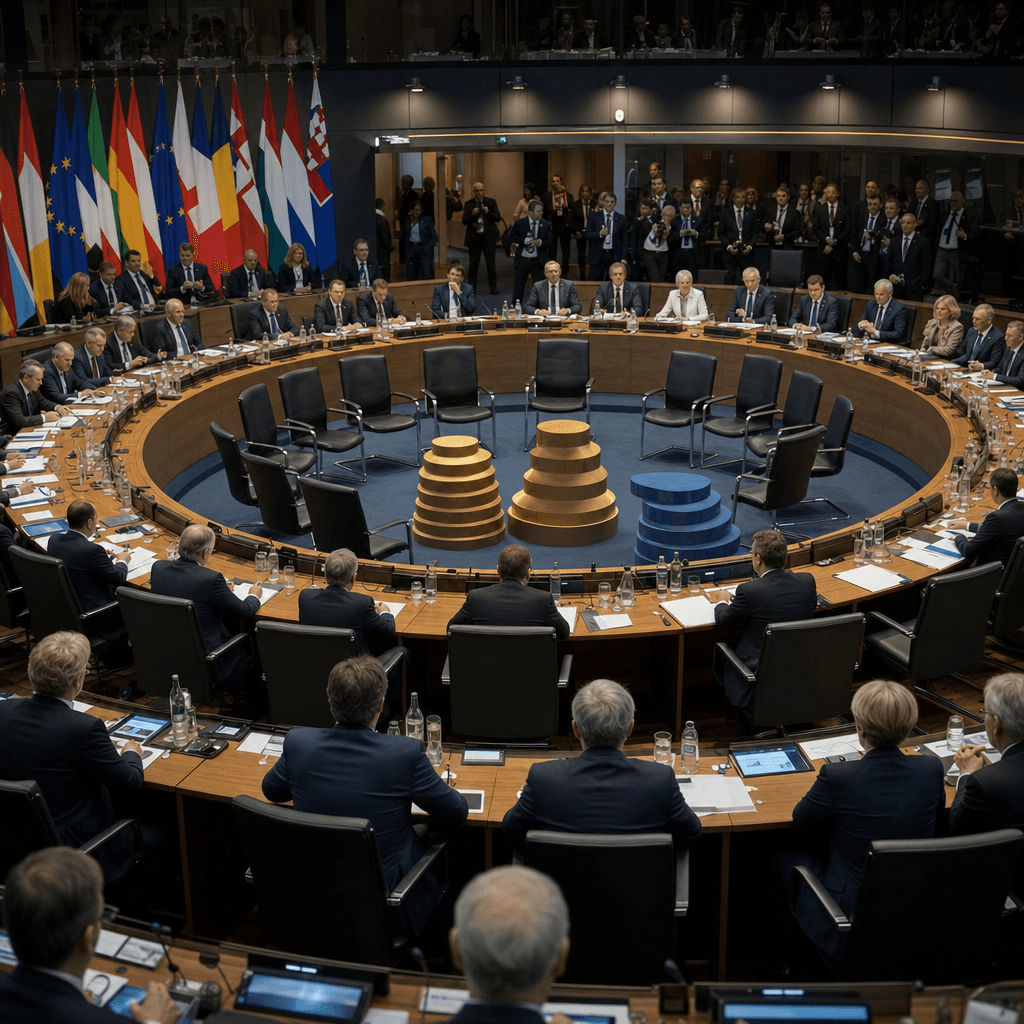
EU Enlargement Plan Puts New Members on a Short Leash
Brussels wants faster enlargement without importing instant veto power, a move that shields the bloc from paralysis but weakens new members at the start.
The European Commission is testing a blunt trade-off: new members may be admitted without immediate veto rights in foreign policy. According to the Guardian, Brussels is considering whether future accession treaties should withhold that power for several years, while also adding stronger safeguards to enforce rule-of-law commitments after entry (The Guardian). That would let the EU expand without handing fresh members the same blocking tools that Hungary has used to stall sanctions and Ukraine aid.
Why Brussels is moving now
The leverage sits with the current 27. Enlargement is back on the agenda because the war in Ukraine turned it from a technocratic project into a security one: Brussels now frames bigger membership as a strategic response to Russian aggression, and the Commission says accession for Ukraine and Moldova is a realistic near-term goal (BTA). At the same time, the same unanimity rule that gives each member state a veto over accession also gives small states and recalcitrant governments a permanent hostage-taking tool once new members join.
That is why the Commission is trying to separate entry from full institutional equality. Enlargement chief Marta Kos has already argued that only the opening and closing of accession talks should require unanimity, with more room for qualified-majority voting in the middle stages (BTA). The new proposal goes further: it suggests that even after entry, fresh members could be kept out of foreign-policy vetoes for a transitional period.
Who wins, who loses
The immediate winners are the big member states and the Commission. Germany and France have long wanted a more agile EU that can move on sanctions, defense and Ukraine without a single government freezing the room. The losers are the candidate countries, especially Ukraine and Moldova, which are being told the price of entry may include delayed equality. That is politically awkward: these governments are already being asked to accept years of reform, judicial tightening and budget discipline, and now face the prospect of entering as junior partners.
Kaja Kallas made the strategic logic explicit in April, saying the bloc was discussing how to accelerate Ukraine’s path and move on issues that had been “red-lined or blocked before” (EFE). In other words, the Commission is not just speeding up enlargement; it is redesigning the bargain so the EU can absorb more states without becoming easier to paralyze.
For Global Politics, this is the real story: enlargement is no longer only about who gets in, but about what powers they get on day one. That will matter most for smaller applicants in the Balkans, where accession remains tied to sensitive bilateral disputes and where the loss of a veto would be seen as a hard concession for membership.
What to watch next
The next test is whether this idea hardens into formal treaty language before the June EU meetings. If it does, the fight will move from principle to precedent: candidate states will have to decide whether faster accession is worth accepting a delayed veto, and current members will have to decide whether they want a bigger EU that is genuinely more functional—or just more unequal.
Discover more
Global Politics
EU Engages Taliban on Deportations
The EU's direct engagement with the Taliban over deportations marks a notable shift in diplomatic strategy, linking migration policy to Afghanistan's rulers.
International Relations
Saar Cuts EU Ties Over Kallas' Remarks
Israel's Gideon Saar severs ties with EU foreign policy chief Kaja Kallas over apartheid remarks, exposing widening fractures in Europe's stance toward Israel.
Conflict & Security
EU Sanctions Target West Bank Financials
The EU rolls out sanctions targeting the financial networks behind Israeli West Bank settlements, aiming to disrupt the money flows that sustain expansion.

International Relations
Kyrgyzstan's Sanctions Crackdown Explained
Kyrgyzstan's crackdown on some 50 companies signals a bid to avoid EU sanctions while preserving its delicate trade balance between Russia and Europe.