EU Sanctions Target West Bank Financials
Brussels blacklists key organizations in West Bank expansion.
Model Diplomat2 min readEurope

EU Sanctions Target Central West Bank Financial Networks
By blacklisting heavyweights like Amana and Regavim, Brussels moves past individual actors to choke the financial engines of West Bank expansion.
On May 28, 2026, the European Union formally blacklisted four organizations and three individuals spearheading the expansion of Israeli outposts in the occupied West Bank, as reported by Al Jazeera. This round of penalties marks a major turning point: Brussels is moving past fringe, violent actors to target the institutional and financial backbone of the settlement movement. Among the sanctioned entities are Amana, the primary financial and developmental cooperative of the settlement enterprise, and Regavim, an influential NGO that lobbies for the demolition of Palestinian properties.
Breaking the Hungarian Shield
The package’s completion was made possible by a seismic political shift in Central Europe. For years, Hungary’s longtime Prime Minister Viktor Orbán had unilaterally shielded Israeli settler networks by vetoing human rights sanctions in Brussels. However, the political transition in Budapest that brought new Prime Minister Péter Magyar to power in April 2026 instantly dissolved Israel's protective shield, allowing the EU's 27 foreign ministers to achieve the crucial unanimity required for the package (The Washington Post). Without Hungary to absorb the diplomatic friction, EU Foreign Policy Chief Kaja Kallas swiftly ushered the measures into law.
Striking the Financial Core
This structural offensive hits directly at the corporate and logistical heart of West Bank expansion. The blacklisting of the Amana cooperative association is particularly devastating; the BBC reports that the entity is responsible for financing, initiating, and assisting at least 30 unauthorized outposts. By freezing these organizations' European assets and banning their leaders—such as Nachala's Daniella Weiss and Regavim's Meir Deutsch—the EU is severing the connection between settler entities and Western capital. This forces Israeli banks, which rely on seamless integration with European and global financial systems, to choose between domestic political compliance and international isolation.
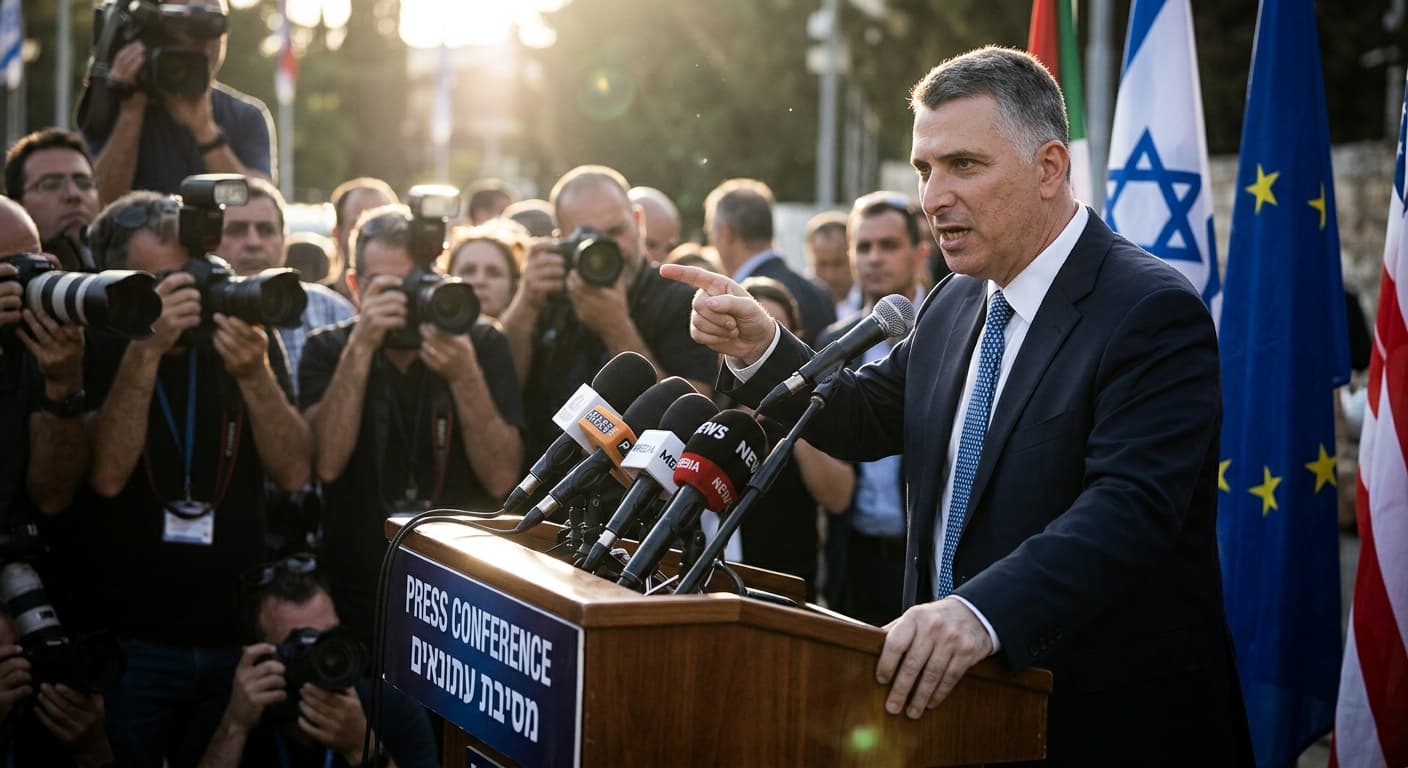
Israeli Foreign Minister Gideon Sa'ar responded aggressively, characterizing the sanctions as "arbitrary and political" and holding no legal basis (BBC). Yet, the diplomatic damage is already compounding. While the United States has previously leveled individual sanctions, the EU’s block-wide institutional ban sets a precedent that could accelerate similar regulatory pressures among other Western nations, raising the financial risks of the broader
conflict.
What to Watch Next
The next critical decision point will center on proposals to ban settlement-produced imports entering the EU market. Although historically deadlocked, Italy's Foreign Minister Antonio Tajani indicated that the European Commission is actively drawing up proposals for a bloc-wide ban (Al Jazeera). With Budapest no longer acting as a reliable spoiler for Prime Minister Benjamin Netanyahu’s coalition, other moderately pro-Israel states like Austria and the Czech Republic will face intense pressure to either align with a total trade ban or defend the settlements unilaterally in the arena of
Global Politics.
Discover more

Global Politics
EU Engages Taliban on Deportations
The EU's direct engagement with the Taliban over deportations marks a notable shift in diplomatic strategy, linking migration policy to Afghanistan's rulers.
International Relations
Saar Cuts EU Ties Over Kallas' Remarks
Israel's Gideon Saar severs ties with EU foreign policy chief Kaja Kallas over apartheid remarks, exposing widening fractures in Europe's stance toward Israel.

International Relations
Kyrgyzstan's Sanctions Crackdown Explained
Kyrgyzstan's crackdown on some 50 companies signals a bid to avoid EU sanctions while preserving its delicate trade balance between Russia and Europe.

Global Politics
Iceland’s EU Referendum Could Echo Brexit’s
Iceland's upcoming EU membership referendum risks becoming a Brexit-style protest vote, as sovereignty fears threaten to override the case for joining the bloc.