Eswatini's US Deportee Flight and Diplomacy
A $5.1m deal reshapes human rights politics in Eswatini
Model Diplomat7 min readAfrica
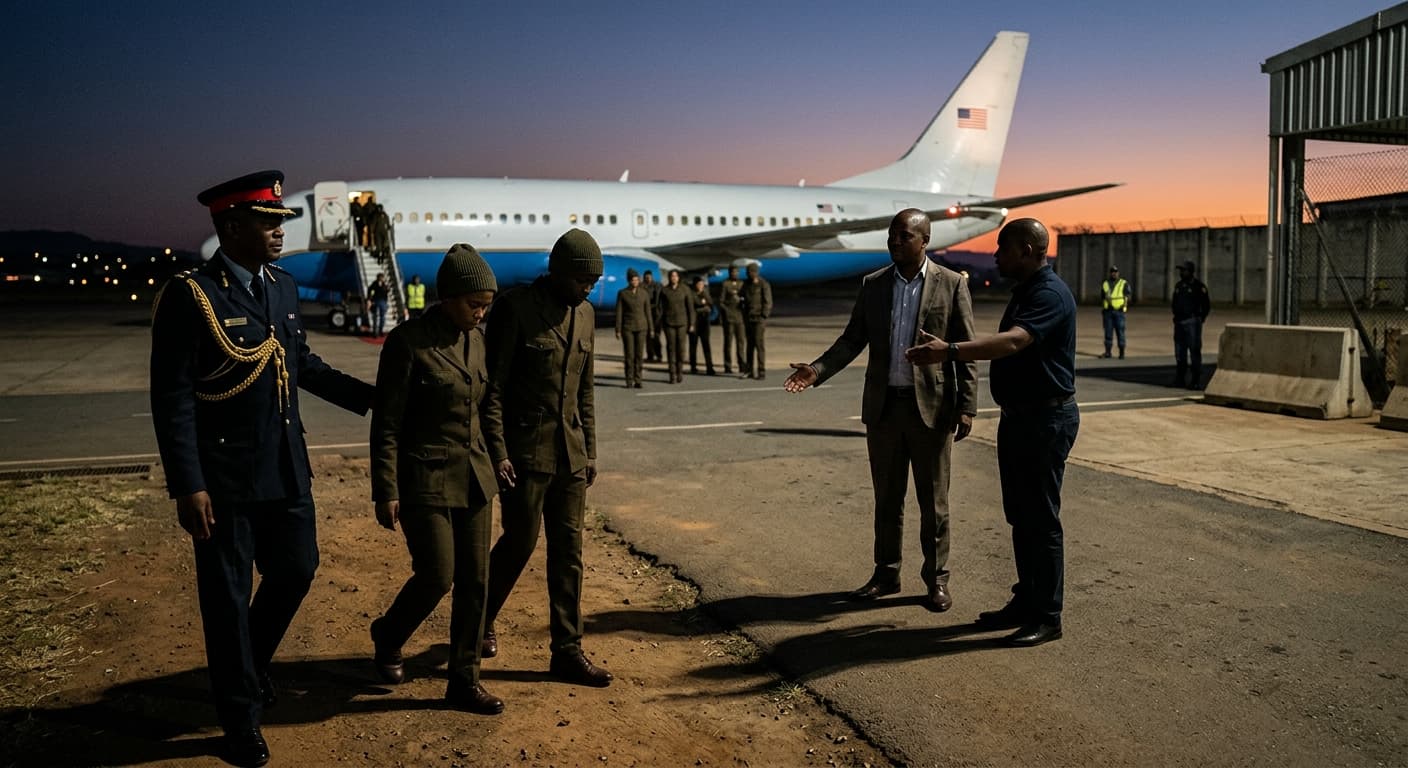
Eswatini's Fourth US Deportee Flight Turns a Prison Into Foreign Policy
Eswatini took 11 more US deportees on July 8, 2026, bringing the total to 29 held at Matsapha prison — a $5.1m deal that is reshaping regional human-rights politics.
Eswatini received an eleventh, tenth and now a further batch of 11 people deported from the United States on July 8, 2026, bringing to 29 the number of foreign nationals warehoused in Africa's last absolute monarchy under a secretive $5.1 million bilateral deal — and turning a maximum-security prison outside Manzini into the operational hub of the Trump administration's third-country deportation policy. The story is no longer the flights; it is that a rights-restrictive kingdom has discovered that hosting other countries' unwanted migrants is now a diplomatic asset — one that immunises King Mswati III's government from Western pressure at the exact moment its own courts and citizens are trying to constrain it.
The new arrivals were "predominantly from other African countries," according to Eswatini government spokesperson Thabile Mdluli, quoted by News24. They will be housed at the Matsapha Correctional Complex, the same maximum-security facility where earlier deportees have been held in near-solitary conditions for up to a year. A US immigration lawyer tracking the case told
Africanews that at least two of the new arrivals had US legal protections that advocates say should have shielded them from removal.
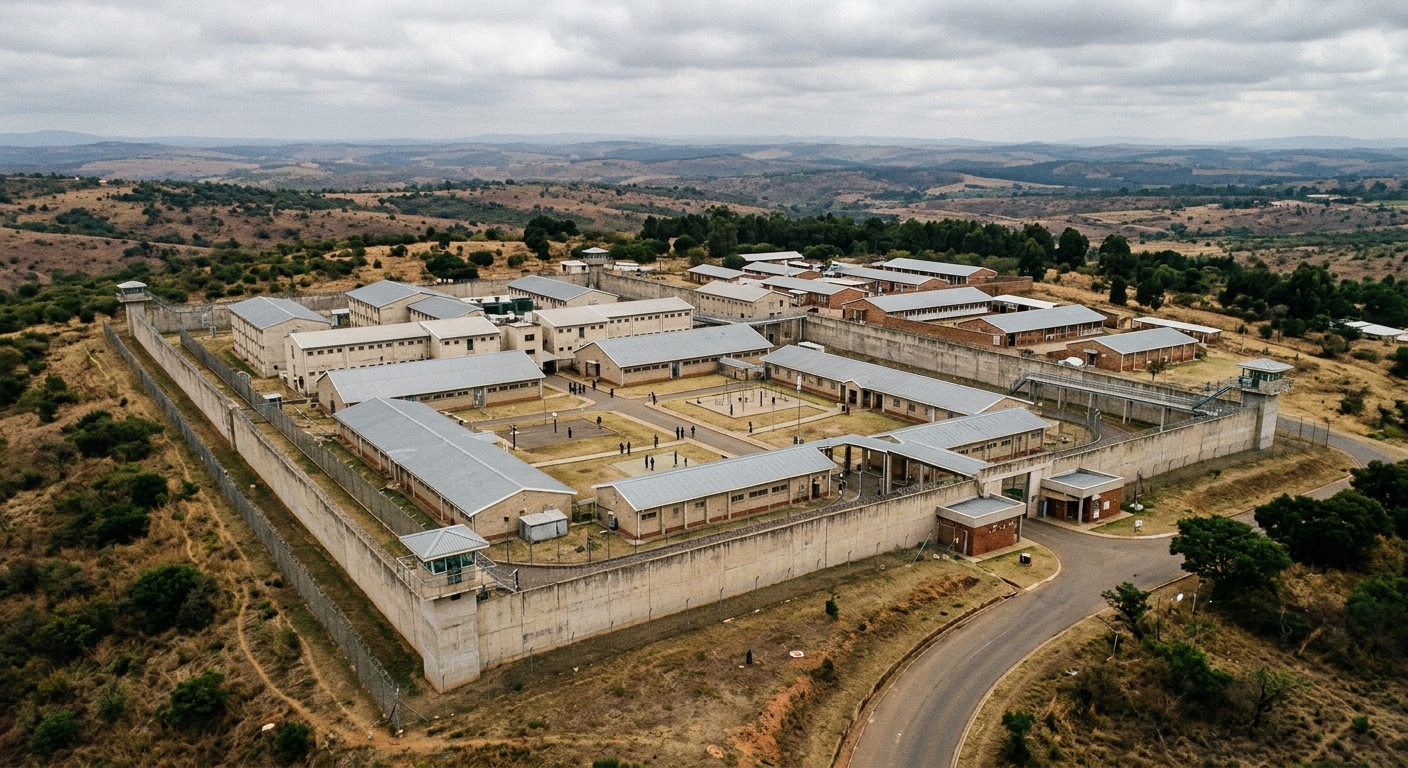
The deal, the money, and the missing paper trail
The arrangement is now documented, if not transparent. Under a Memorandum of Understanding signed on May 14, 2025 and later released in the United States through a Freedom of Information Act request, Eswatini agreed to accept up to 160 third-country nationals removed by US Immigration and Customs Enforcement in exchange for $5.1 million to "build its border and migration management capacity," according to Amnesty International.
Human Rights Watch has viewed the same text.
The money itself is a scandal inside Eswatini. Finance Minister Neal Rijkenberg, pressed in parliament, confirmed the $5.1 million had been deposited into the account of the National Disaster Management Agency without cabinet allocation, telling MPs the ministry "had been kept in the dark throughout the process," according to BBC News. Prime Minister Russell Dlamini told parliament the deal had been handled at "top clearance level" — meaning the palace.
That places the deportation programme squarely inside Eswatini's constitutional fight. The Southern African Litigation Centre and other civil-society plaintiffs argue Section 238 of the 2005 constitution required parliamentary approval for an international agreement of this kind, and that its absence amounts to "executive over-reach." The government is defending the case on the ground that the executive retained residual foreign-affairs powers.
The domestic courts are moving — slowly
In April 2026, Eswatini's Supreme Court unanimously upheld a High Court order granting lawyers access to the detainees at Matsapha, according to Amnesty International. Amnesty's Deputy Regional Director for East and Southern Africa, Vongai Chikwanda, called the ruling "an important step" that nonetheless "fails to resolve the deeper human rights violations at the heart of this abusive practice." Access is not release; the men remain in detention without charge.
Three of the earlier deportees have filed a complaint before the African Commission on Human and Peoples' Rights, alleging that their prolonged detention violates Articles 6 and 7 of the African Charter — the guarantees against arbitrary detention and to a fair trial to which Eswatini is a state party. The African Commission's special rapporteur on refugees warned in August 2025 that bilateral deportation agreements "cannot override governments' human rights obligations."
The record of onward transit is also thin. Of the 29 people sent to Eswatini across four flights, only two have left the country — Jamaican national Orville Etoria, repatriated in September 2025 after being held incommunicado for more than two months, and a Cambodian national repatriated more recently. That gives Eswatini a repatriation rate of roughly 7% — a data point that undercuts the government's central claim that Matsapha is a way station.
Why Eswatini said yes — and why it matters
The domestic logic of the deal is easier to read than the strategic one. Eswatini's economy is small, its treasury tight, and its monarchy has been under continuous political pressure since the 2021 pro-democracy uprising in which security forces killed dozens of protesters — Amnesty International documented at least 80 deaths by that October, while the government put the toll at 37. The 2021 crackdown left the kingdom short of Western partners willing to be seen alongside King Mswati III.
The Trump administration's third-country programme reversed that isolation. It offered cash, a bilateral relationship with Washington, and — crucially — a strategic alibi. As long as Eswatini is useful to US immigration policy, it becomes politically expensive for the State Department to press hard on the monarchy's human-rights record. That is the second-order effect that matters: the deportation deal is functioning as a de facto human-rights waiver for one of Africa's most repressive governments.
The comparative regional picture underlines the point. Human Rights Watch has documented parallel deals with Rwanda (reported cap of 250, roughly $7.5 million), South Sudan and Ghana, with Uganda later confirming a "temporary bilateral cooperation agreement." In each case, the governments accepting deportees are ones with active or recent human-rights concerns on file with US and UN bodies. The pattern is not coincidence; it is a market.
The US legal architecture behind the flights
The flights are only possible because the US Supreme Court cleared them. In DHS v. D.V.D., the Court on June 23, 2025 stayed a District of Massachusetts injunction that had required at least 15 days' notice, a "credible fear" interview and a meaningful opportunity to raise Convention Against Torture claims before removal to a third country.
In dissent, Justice Sonia Sotomayor wrote for herself, Justice Kagan and Justice Jackson:
"The United States may not deport noncitizens to a country where they are likely to be tortured or killed. International and domestic law guarantee that basic human right. In this case, the Government seeks to nullify it by deporting noncitizens to potentially dangerous countries without notice or the opportunity to assert a fear of torture."
Judge Brian Murphy of the US District Court for the District of Massachusetts then entered a partial summary judgment on February 25, 2026, declaring the DHS March 30, 2025 "Guidance Regarding Third Country Removals" and the ICE July 9, 2025 implementing memorandum unlawful and setting them aside — according to the court's order filed in D.V.D. v. DHS. The judgment was stayed pending appeal to the First Circuit. That stay is why the July 8 flight was legally possible.
The July 9, 2025 ICE memo, obtained via court filings, states that ICE may remove non-citizens to third countries without diplomatic assurances against torture "in exigent circumstances" and on as little as six hours' notice. The document, published on CourtListener, also instructs officers not to affirmatively ask deportees whether they fear return.
The regional shockwave
South Africa, which surrounds Eswatini on three sides across a porous 430-kilometre border, has objected repeatedly to the arrangement, warning that deportees could cross into its territory. That concern is not abstract: several of the men held at Matsapha have relatives in South Africa, and any onward "voluntary" departure without full asylum screening could push the caseload into Pretoria's already-strained Home Affairs system.
For the Southern African Development Community, the deal is a governance problem. SADC's own protocols on the movement of persons assume orderly, consent-based migration among member states. A US-financed pipeline dropping non-African nationals into a SADC country without regional consultation punctures that framework. The African Union has been notably quiet — a silence that itself is a signal.
The winners of the arrangement are narrow and identifiable. The Trump administration gets removal numbers and a visible deterrent. King Mswati III's government gets cash and a diplomatic patron. Matsapha's operators gain a new revenue stream. The losers are the 27 people still held without charge, Eswatini's parliament, the country's civil-society plaintiffs whose Supreme Court victory has produced access but not release, and — over the medium term — the regional norm that African states do not warehouse other countries' migrants for a fee.
What to watch
- The First Circuit appeal in D.V.D. v. DHS. A ruling upholding Judge Murphy's February 25, 2026 summary judgment would force DHS to restore pre-removal screening for third-country transfers. A reversal would entrench the current system.
- The African Commission on Human and Peoples' Rights. The complaint filed by three previously deported men is the first regional test of the third-country model under the African Charter. A finding of arbitrary detention would apply beyond Eswatini to Rwanda, Ghana, South Sudan and Uganda.
- The Eswatini constitutional challenge. The Southern African Litigation Centre case on parliamentary consent is the domestic mechanism most likely to end the flights. A ruling against the government would put the MoU itself in jeopardy.
- The next flight. With 131 of the 160 contracted slots unfilled and the ICE guidance still operative, another arrival is a matter of scheduling, not policy.
The Bottom Line
Eswatini's fourth deportation flight is not a migration story; it is a governance story. For $5.1 million, the United States has purchased the use of a maximum-security prison in Africa's last absolute monarchy, and in doing so has given King Mswati III the one thing his government most needed after 2021: a Western partner whose interests require looking away. Until either the First Circuit, the African Commission, or Eswatini's own courts intervene, Matsapha is now an instrument of US foreign policy — and the precedent it sets is the one that will outlast the flights themselves. *
Discover more
US Politics
House Ethics Committee Pushes Sexual Miscond.
The House Ethics Committee has shifted responsibility for sexual harassment settlement records to the Office of Congressional Workplace Rights, complicating disclosure efforts.

US Politics
SNAP Food Assistance Faces Legal Challenges
In 2026, SNAP faces stricter eligibility rules and mounting legal challenges, threatening food assistance for the millions of Americans who rely on the program.
Global Politics
Trump's Conflicting Messages on Iran War
Trump's mixed messages on Iran reflect a strategy of audience management, benefiting Tehran amid a complex geopolitical landscape.

Conflict & Security
Drone Warfare Killing Aid Workers at Unprec
Over 1,000 humanitarian workers killed in three years as cheap armed drones collapse legal protections. Gaza, Sudan, Ukraine, and DRC see deliberate targeting of aid convoys and hospitals with zero prosecutions.

