Algeria's July 2 Vote: A New Political Era
First parliamentary election under new rules
Model Diplomat3 min readafrica
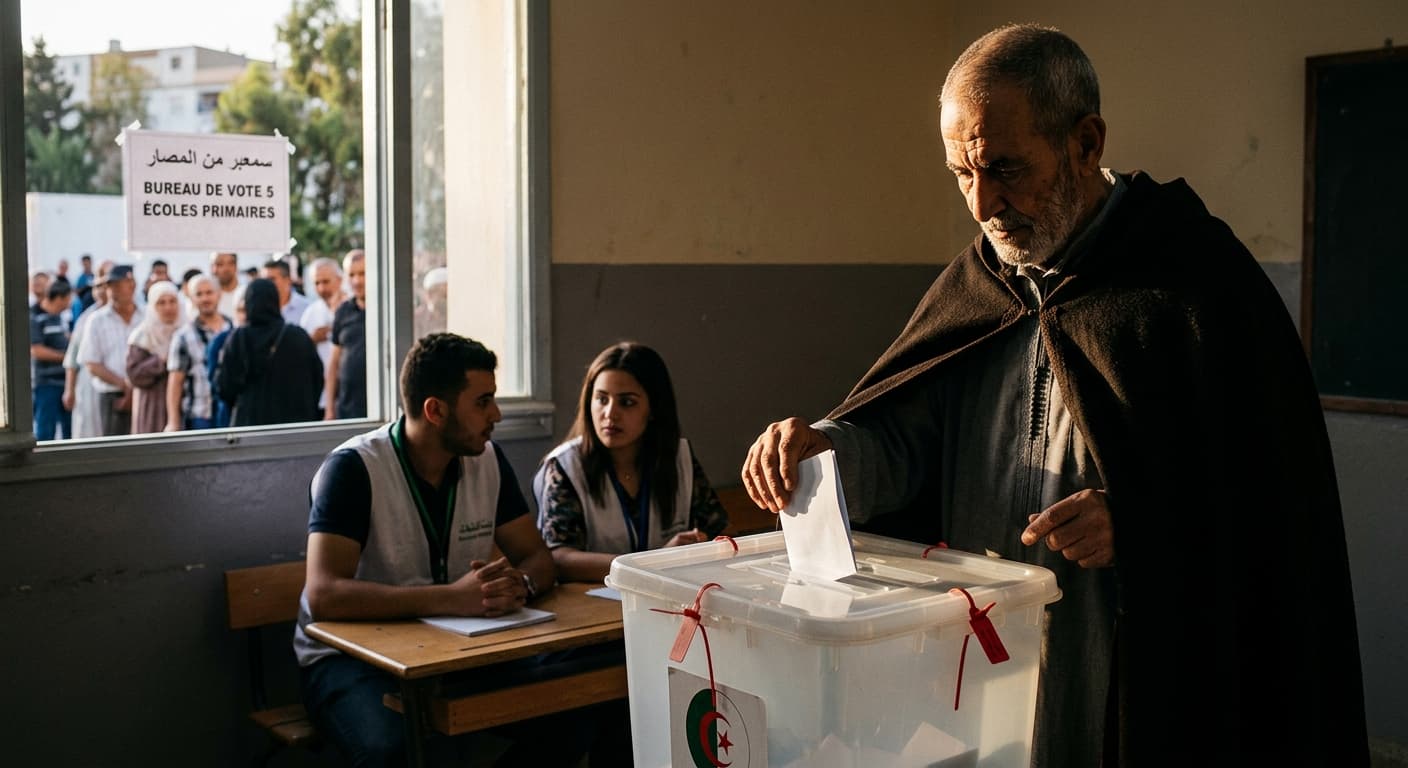
Algeria Sets July 2 Legislative Vote — First Under Tebboune's New Political Rules
President Tebboune signed the decree convening the electorate for July 2, 2026, in what will be Algeria's first parliamentary election under a sweeping constitutional and legal overhaul that reshapes who can compete — and who can opt out.
Algeria President Abdelmadjid Tebboune signed Presidential Decree No. 26-145 on April 4, formally convening the electorate for July 2, 2026, to elect the 407 members of the People's National Assembly, according to the state-run
Algérie Presse Service. An exceptional revision of electoral rolls runs April 12–26, confirmed by both
Fana News and the Algerian daily
Horizons, which characterized the vote as "snap elections."
The procedural announcement is thin. The political context is not.
The first vote under a new rulebook
This is the first legislative election since Algeria adopted a constitutional amendment in March 2026, followed by an amended electoral law and a new organic law on political parties, as detailed by BBC Arabic. Taken together, the reforms represent the most significant restructuring of electoral politics since the 2019 Hirak protests forced longtime President Abdelaziz Bouteflika from power.
The new rules cut in two directions. Officially, they modernize party life and tighten candidate eligibility to curb the corruption that defined the Bouteflika-era parliament. But the parties law contains a provision with immediate strategic effect: parties that skip two consecutive elections can be dissolved. That directly targets the former boycott camp — the Socialist Forces Front (FFS), the Workers' Party (PT), and the Rally for Culture and Democracy (RCD), all of which sat out the 2021 legislative vote.
The result: after years of rejecting elections as a legitimizing exercise for a military-dominated system, these opposition parties are now participating, as Al Jazeera reported. The regime has not lifted restrictions so much as made abstention legally untenable.
Who gains, who loses
Tebboune is the immediate beneficiary. By compelling participation, he can claim a competitive field while ensuring the governing coalition — the National Liberation Front (FLN) and its ally the National Democratic Rally (RND) — faces opposition that is present but structurally constrained. The FLN held 105 of 407 seats in the outgoing assembly. The Islamist Movement of Society for Peace (MSP) won 64 seats in 2021 and is competing again.
The Independent National Authority of Elections (ANIE) will oversee the vote, with more than 24.7 million registered voters eligible, including roughly 854,000 abroad. The open-list proportional system allows voters to express preferences for individual candidates within party lists — a reform designed to signal responsiveness to Hirak-era demands for greater accountability.
The military, led by Army Chief of Staff General Saïd Chengriha, remains the decisive background actor. No party is expected to form a government against the military's preferences — a structural reality unchanged by the reform package. Al Jazeera noted that hundreds of candidate lists were already rejected during the nomination review phase, with authorities citing eligibility rules and legal compliance.
Opposition parties now face an uncomfortable calculus. Participate and risk validating a process they have long denounced as hollow. Stay out and risk dissolution — a choice the FFS, PT, and RCD appear to have resolved in favor of engagement.
Turnout is the real verdict
The 2021 legislative elections drew just 23% turnout — the lowest for a parliamentary vote in at least two decades. Tebboune himself won the presidency in 2019 with under 40% participation. The 2020 constitutional referendum hit a record-low 24%.
For Algiers, the July 2 vote is less about who wins seats than whether enough Algerians show up to confer a baseline of legitimacy on the post-Hirak political order. Hydrocarbon revenues have funded spending programs, but inflationary pressures and youth unemployment persist, particularly outside the public sector — dynamics that Al Jazeera identified as shaping voter sentiment.
What to watch
April 12–26: The exceptional electoral roll revision. Who registers — and who is excluded — will signal the administrative scope of the vote.
Candidate list finalization: How many opposition lists survive the eligibility review, and whether prominent Hirak-linked figures like Karim Tabbou face further legal obstacles.
Turnout on July 2: If participation sinks toward 2021 levels, Tebboune's "new Algeria" framing will face the same credibility gap that undermined his previous electoral mandates.
Discover more
Global Politics
U.S. Naval Blockade Heightens Iran Tensions
The U.S. naval blockade of Iran collapsed oil exports, creating a new maritime regime in Hormuz that favors Tehran.
Global Politics
Xi Jinping Calls China-Russia Ties 'Precious'
Xi Jinping's description of China-Russia ties as 'precious' reflects a strategic imbalance, with Beijing dictating terms in the partnership.
India
Women’s Reservation in India
India's 33% women's reservation law is enacted but won't take effect until after 2029 due to political setbacks and census delays.

Economics
Fed's Amex AML order puts correspondent banking on notice
Federal Reserve's Amex AML order requires board-level controls and a 90-day plan; OCC fined the bank $350 million over enterprise-wide deficiencies.