Duterte's ICC Trial Opens 30 November 2026
A landmark case for international justice in The Hague
Model Diplomat8 min readGlobal
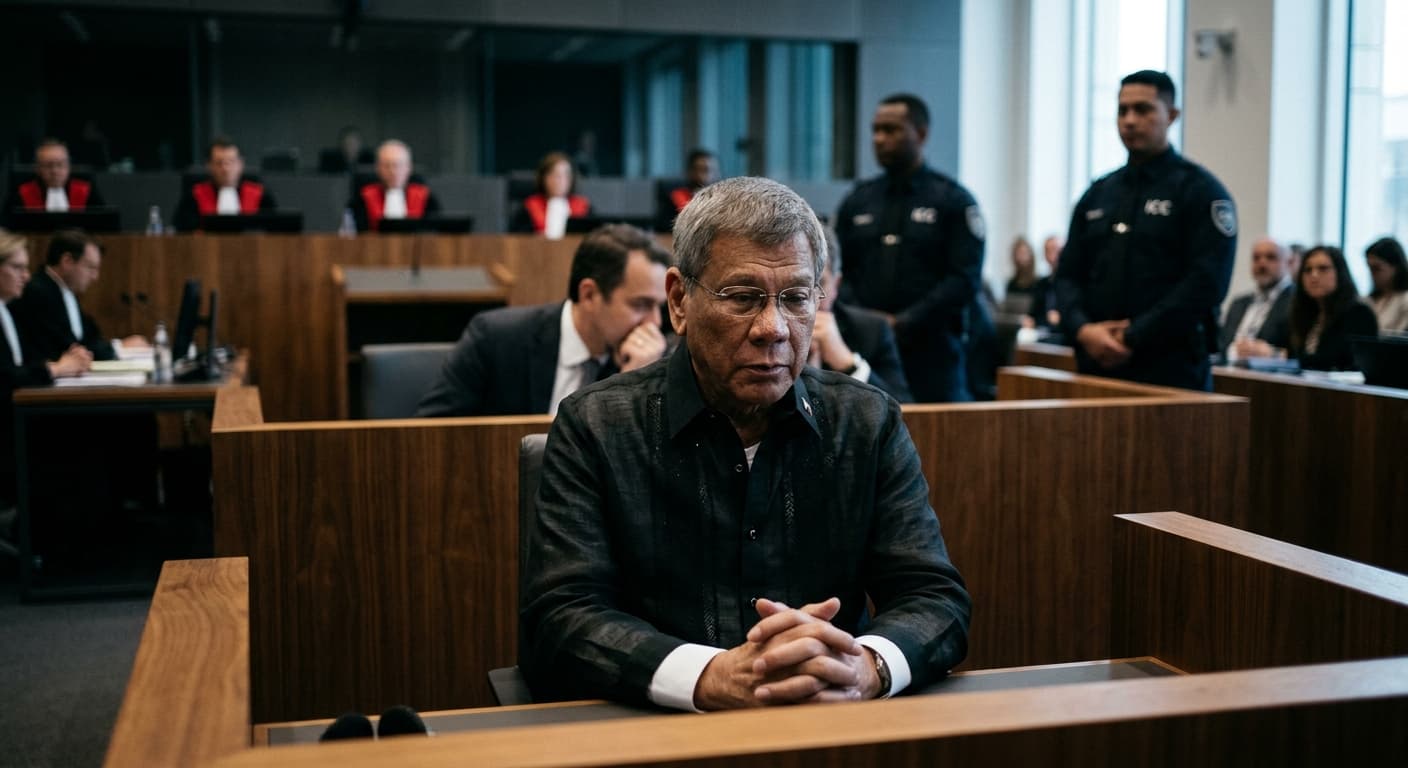
Duterte's ICC Trial Opens 30 November 2026: Test Case for International Justice
The Hague set 30 November 2026 as the trial date for former Philippine President Rodrigo Duterte on three counts of crimes against humanity — the ICC's first Asian head-of-state prosecution and a stress test for the court itself.
The International Criminal Court's Trial Chamber III on 27 May 2026 scheduled the opening of The Prosecutor v. Rodrigo Roa Duterte for 30 November 2026, according to the ICC's official announcement. The trial's significance is threefold: it is the first ICC prosecution of a former Asian head of state, it will test a landmark jurisdictional ruling that a state cannot escape the court simply by withdrawing from its founding treaty, and it arrives while the court's prosecutor and eight of its judges are under US and Russian sanctions. The Duterte docket will decide, in concrete terms, whether the ICC can still deliver a full trial of a former president when the world's most powerful governments are actively trying to break it.
A trial the court needs as much as the victims do
Duterte, 81, has been in the ICC detention unit at Scheveningen since 12 March 2025, the day after Philippine police arrested him at Manila's airport on a warrant issued five days earlier. Pre-Trial Chamber I unanimously confirmed all three counts against him on 23 April 2026, finding "substantial grounds" that he was an "indirect co-perpetrator" of murder as a crime against humanity between 1 November 2011 and 16 March 2019, according to the ICC press release on the confirmation decision. The
redacted decision itself grounds those charges in a "common plan" to "neutralise" alleged criminals, executed by police units and non-state gunmen operating under a policy prosecutors trace from Davao City Hall to Malacañang Palace.
The chamber accepted the Office of the Prosecutor's non-exhaustive framing: 49 specific incidents involving 78 victims, presented as illustrative of a wider pattern, per Human Rights Watch's detailed readout. Philippine police reported at least 6,000 killings during Duterte's presidency; domestic and international rights monitors put the toll as high as 30,000. Al Jazeera's
February 2026 reporting breaks the three counts into (1) 19 murders in Davao City (2013–2016), (2) 14 killings of so-called "high-value targets" in 2016–2017, and (3) 43 murders during nationwide "clearance" operations in 2016–2018.
The court reached this point in an unusually fast 20 months from arrest to trial opening, an interval Al Jazeera notes is at the short end of ICC practice. The pace matters. Duterte is 81, in contested health, and his lead defence counsel Nicholas Kaufman spent 2025 arguing — unsuccessfully — that his client's cognitive state made him unfit to proceed. Judges rejected the challenge on 26 January 2026, citing a panel of geriatric neurology and psychiatry experts, per the BBC.
The jurisdictional ruling that outlives the case
The most consequential legal product of the pretrial phase may not be the confirmation decision at all. It is the Appeals Chamber's 22 April 2026 judgment holding that the Philippines' 2019 withdrawal from the Rome Statute does not deprive the ICC of jurisdiction over crimes committed while Manila was still a state party.
The Appeals Chamber's reasoning, laid out in its 61-page ruling, reads Articles 12, 13 and 127 of the Rome Statute together, distinguishing the existence of jurisdiction from its exercise:
"It would be incompatible with [the Statute's] object and purpose to enable a State Party to evade its responsibilities under the Statute by depositing a written notice of withdrawal once it discovers that alleged crimes committed on its territory or by its nationals are being examined by the Prosecution."
That passage, echoed in the ICC's summary of the ruling, is now binding precedent. Any future head of state considering withdrawal as an insurance policy — Burundi tried it in 2017, and the option has been floated in South Africa, Kenya and elsewhere — will read Duterte as the case that closed the door. Brookings scholar Kelebogile Zvobgo, writing shortly after the arrest, called Manila's cooperation the moment that showed
no one, "not even a head of state," is beyond the Statute's reach.
Who is on trial with Duterte
Prosecutors have named eight alleged co-perpetrators. The most legally exposed is Senator Ronald "Bato" Dela Rosa, Duterte's former national police chief and architect of Operation Double Barrel. The Office of the Prosecutor unsealed a warrant against Dela Rosa after the Pre-Trial Chamber's original sealed order of 6 November 2025, citing "reasonable grounds" that he is jointly responsible with Duterte for murders between July 2016 and April 2018. Dela Rosa is in hiding in the Philippines; the BBC reported he briefly sheltered in the Senate building in May 2026 before fleeing after a shooting incident.
Senator Christopher "Bong" Go, Duterte's longtime aide, and former justice secretary Vitaliano Aguirre II are among the other individuals identified in a 13 February 2026 prosecution filing, according to Al Jazeera. The court has also admitted more than 500 Filipino victims as authorised participants,
Rappler reported, a figure that grew after judges in February permitted the addition of 500 further complainants.
The domestic backdrop: two dynasties, one docket
Duterte's transfer to The Hague was made possible by the collapse of the "UniTeam" alliance that put Ferdinand Marcos Jr. and Vice-President Sara Duterte, Rodrigo's daughter, in power in 2022. Marcos initially refused to cooperate with the ICC. He reversed course as the feud with the Dutertes intensified, allowing the March 2025 arrest to proceed.
The domestic power struggle is now escalating alongside the trial calendar. Sara Duterte's impeachment trial in the Philippine Senate opened on 6 July 2026 on charges of mishandling funds and threatening Marcos, Al Jazeera reported. A conviction would bar her from the 2028 presidential race for which she is currently a leading candidate. The Hague trial and the Manila impeachment thus sit inside the same political contest for succession after Marcos, who is constitutionally barred from running again.
Human Rights Watch notes that Marcos himself "has never repudiated the 'war on drugs' as a government policy," and that his government has not rescinded the operational orders Duterte issued. Whether Marcos moves to rejoin the Rome Statute — the step Amnesty International Philippines and HRW have publicly requested — will indicate whether Manila's cooperation with the ICC survives the domestic election cycle.
What the trial has to prove
Trial Chamber III — Judge Joanna Korner (presiding, UK), Judge Keebong Paek (South Korea) and Judge Nicolas Guillou (France) — was constituted on 24 April 2026, per the Presidency's press release. Deputy Prosecutor Mame Mandiaye Niang, who signed the charge sheet, told the
status conference that his office expects to complete its case-in-chief within the schedule the chamber has now adopted. According to
MindaNews, hearings will run five days a week until the Christmas judicial recess.
The prosecution's central legal challenge is not the killings themselves — those are documented in police records, coroners' reports, and Duterte's own public statements — but the "widespread and systematic attack" element required under Rome Statute Article 7(1)(a). It must connect specific incidents in Davao and Manila to an organisational policy attributable to Duterte personally. The Philippine police's official position that officers "killed only in self-defence" is the defence's fallback if the cognitive-impairment argument fails again at trial.
Historical comparators are unhelpful to the defence. Laurent Gbagbo, the former Ivorian president, was ultimately acquitted after a lengthy trial. Uhuru Kenyatta's case collapsed when Kenya obstructed witness access. Jean-Pierre Bemba's conviction was overturned on appeal. But none of those cases turned on the volume of documented deaths and public statements attributable to the accused that prosecutors have assembled against Duterte, whose own recorded remarks — including a promise to be "happy to slaughter" millions — are already in the record.
The court's second audience: Washington and Moscow
The Duterte trial opens against unprecedented pressure on the institution running it. In February 2025, US President Donald Trump issued an executive order authorising sanctions on ICC officials, and the US Treasury has since designated the prosecutor, both deputy prosecutors, and eight judges — measures aimed at shielding US and Israeli officials from the court's separate proceedings. In December 2025, a Russian court convicted the same prosecutor and judges in absentia over the Putin warrant.
Against that backdrop, a completed trial of a former head of state — surrendered by his own government, tried on a full evidentiary record, with victims participating — is precisely the deliverable the court needs to demonstrate operational capacity. The BBC's Anna Holligan, reporting on Duterte's first night in The Hague, quoted then-prosecutor Karim Khan telling colleagues that "international law is not as weak as some may think". The Duterte trial is where that claim gets tested.
What to watch
- Second status conference outputs: Trial Chamber III's
18 June 2026 agenda order set a further conference on 23 June to fix deadlines for the Prosecution's Trial Brief, protocols on confidential information, and expert-panel report observations. Further status conferences are expected before the November opening.
- Dela Rosa: Whether the Philippine government executes the ICC warrant against the sitting senator, or whether he remains at large through the trial's opening, will signal Marcos's political calculus on ICC cooperation.
- Sara Duterte impeachment verdict: A Senate two-thirds vote (16 of 24 senators) is needed to convict; the outcome will reshape the domestic environment in which the ICC trial is received.
- Rome Statute re-accession: Any move by Manila to rejoin the treaty — a step Human Rights Watch has publicly requested — would mark a formal end to Duterte-era policy.
- Attendance: Duterte can no longer waive presence for trial proceedings under Article 63(1) of the Rome Statute; whether he appears in the courtroom on 30 November, and in what condition, will shape the trial's public perception from day one.
The Bottom Line
The Duterte trial is not primarily about one 81-year-old former president. It is the case that will settle whether Rome Statute withdrawal can be used as an escape hatch, whether the ICC can complete a full head-of-state trial under active US and Russian sanctions, and whether a domestic political shift can convert an "untouchable" leader into a defendant within 20 months. If the court delivers a judgment on the merits, the Duterte precedent will define international criminal law for the next decade; if it does not, the ceiling on ICC enforcement will have been set in The Hague by a Philippine defendant.
Discover more
India
Rajnath Singh's Durga Squad for 2026 Polls
Rajnath Singh's Durga Squad promised women's safety in Bengal but has since disappeared from the agenda, revealing BJP's true priorities.
US Politics
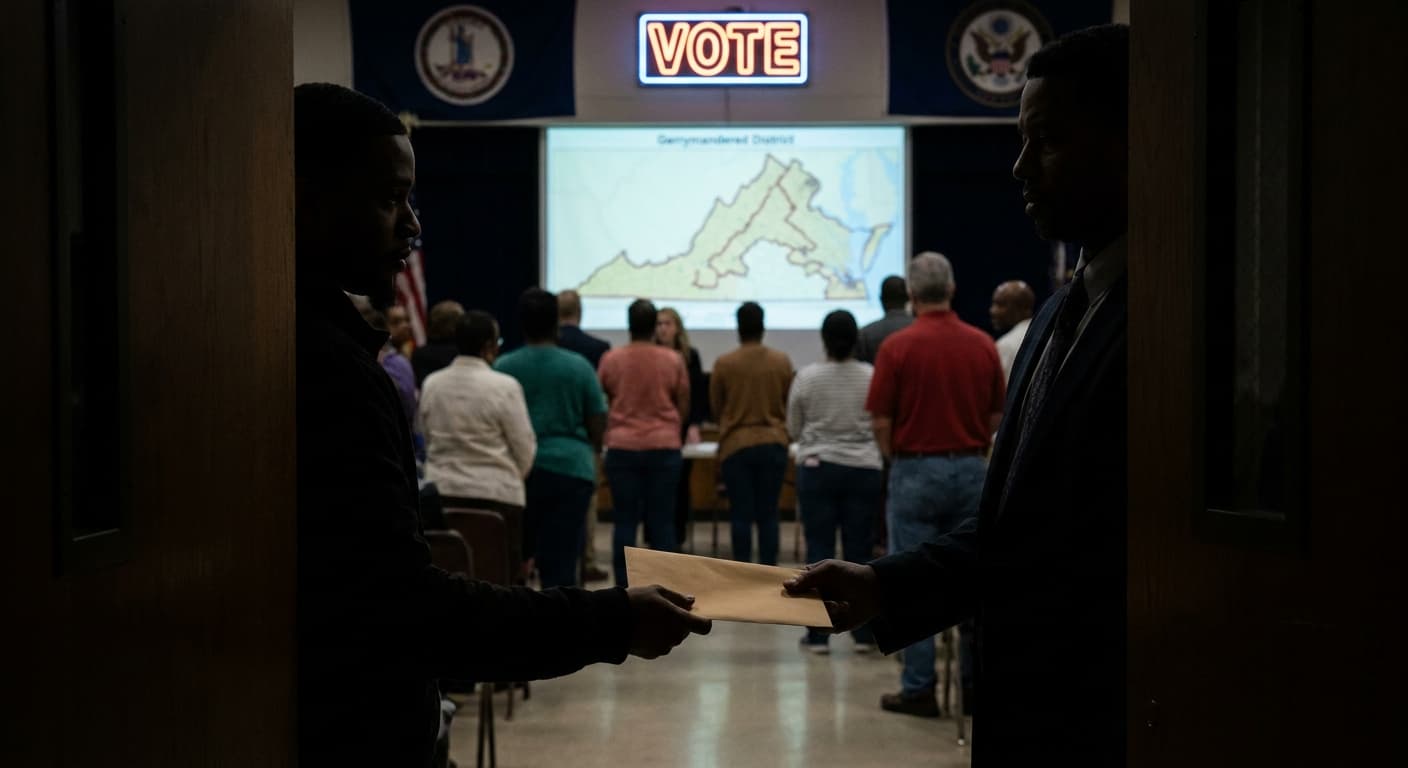
Virginia's Redistricting Referendum
Virginia's redistricting referendum is drawing a flood of dark money, shaping future elections and the fight for congressional control amid party stakes.
India
700 Activists Accuse PM Modi of MCC Breach
Over 700 activists allege PM Modi breached election code with a televised address attacking opposition parties just before state elections.

Economics
Fed's Amex AML order puts correspondent banking on notice
Federal Reserve's Amex AML order requires board-level controls and a 90-day plan; OCC fined the bank $350 million over enterprise-wide deficiencies.