DR Congo’s Ebola Surge Exposes State Weakness
Ebola cases exceed 900 amid attacks and shortages in Congo.
Model Diplomat3 min readAfrica
DR Congo’s Ebola Surge Exposes the State’s Thin Reach
Suspected Ebola cases top 900 in eastern Congo as attacks, shortages and weak access let the outbreak outrun containment.
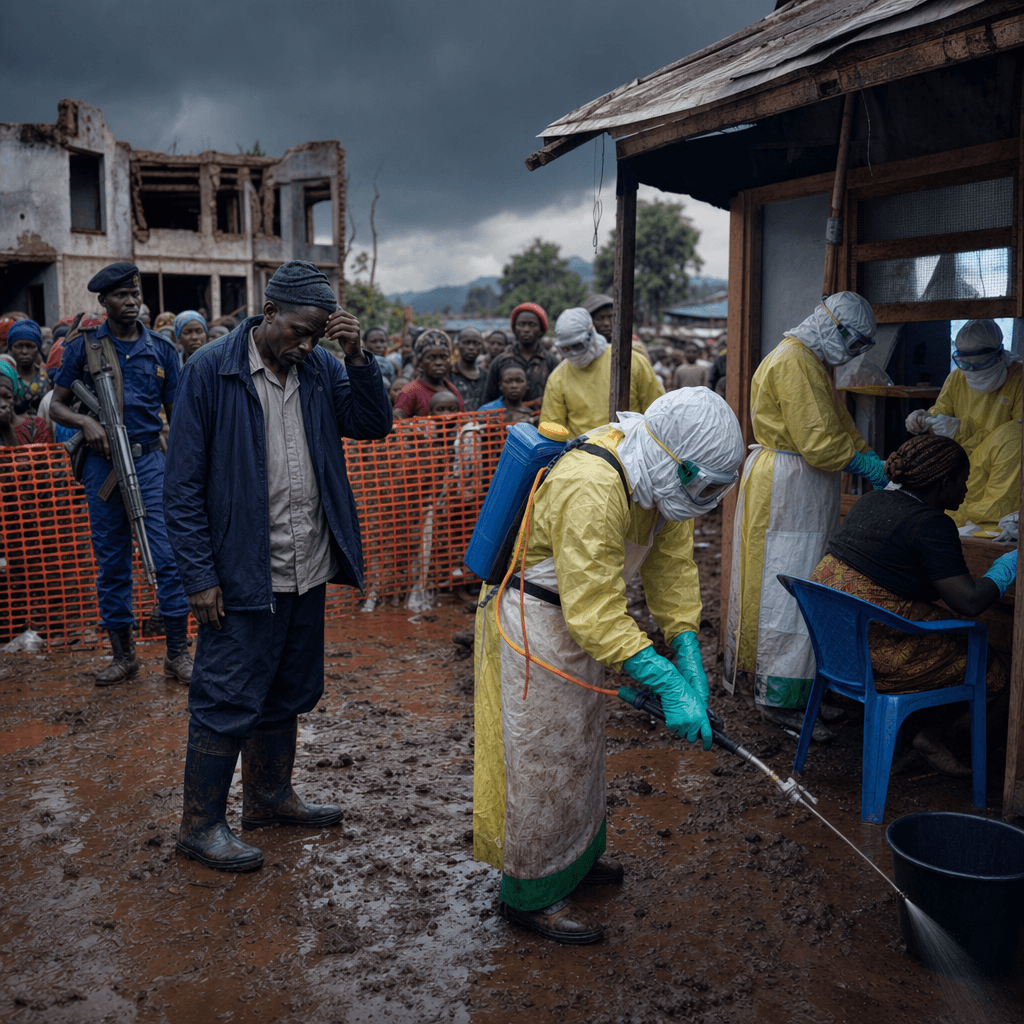
The power dynamic is clear: health responders do not control the terrain. In eastern Democratic Republic of the Congo, Ebola teams are trying to isolate patients, trace contacts and move samples while facing attacks on health workers, shortages of protective gear and treatment capacity, and insecurity that limits access to affected communities, according to The Guardian. That is why the suspected caseload has now passed 900: the outbreak is moving faster than the institutions meant to stop it.
Why this outbreak is harder to contain
This is not just a medical crisis; it is a governance problem. The latest response is unfolding in Ituri and North Kivu, where the outbreak has spread into areas already strained by conflict and displacement, and where the World Health Organization has raised the risk level to a public health emergency of international concern because of the “scale and speed” of transmission, according to Ghana News Agency. The strain now circulating is the Bundibugyo variant, for which there is no specific approved vaccine or treatment, which means the response depends even more on speed: early detection, isolation, safe burials and community trust, GNA reported.
That is exactly where the system is weakest. ACP reported that the Mongbwalu treatment center in Ituri is saturated, forcing some suspected patients to remain in the community while tests are processed. Slow lab turnaround is not a technical footnote; it widens the window in which infections can spread and puts more pressure on already frightened families to resist isolation.
Who gains leverage when clinics are attacked
The immediate losers are health workers and local civilians. But the real beneficiary is the environment of fear that makes containment voluntary when it needs to be enforced. Ebola response depends on access, and access depends on local consent, security and logistics. When those break down, the state cedes practical control to whoever can block roads, intimidate teams or spread mistrust.
That is why this outbreak has regional implications beyond Congo itself. GNA reported that confirmed cases have also appeared in North Kivu, and that Uganda has already recorded imported cases, which turns a local containment failure into a cross-border management problem. Once Ebola reaches transport corridors and border cities, the cost of delay rises sharply for neighboring governments as well as for Kinshasa. For readers following wider Conflict dynamics, the lesson is simple: disease control follows the same map as state authority.
What to watch next
The next decision point is whether Congo and its partners can expand treatment and isolation capacity fast enough to keep suspected cases out of the community, especially in Mongbwalu and other Ituri hotspots, ACP reported. Watch for three signals: whether attacks on health teams ease, whether supplies of PPE and lab materials arrive in volume, and whether new confirmed cases start moving west toward more connected urban nodes in North Kivu. If that happens, the outbreak stops being a provincial emergency and becomes a much wider regional containment problem.
Discover more
India
Romanian Coalition Party Demands PM Resign
Romania's Social Democrats withdrew from coalition, joining far-right AUR to topple PM Bolojan, risking €10 billion in EU funds by August 2026.

Conflict & Security
Drone Warfare Killing Aid Workers at Unprec
Over 1,000 humanitarian workers killed in three years as cheap armed drones collapse legal protections. Gaza, Sudan, Ukraine, and DRC see deliberate targeting of aid convoys and hospitals with zero prosecutions.

Global
World Normalises Taliban as Afghan Women Eras
UN data shows Afghan women erased from public life as Russia recognises the Taliban, EU hosts officials in Brussels, and ICC warrants for gender persecution go unenforced.
Conflict & Security
West Africa Food Crisis: Three Shocks in 2026
Conflict, climate extremes, and the Strait of Hormuz closure drive a severe food crisis in West and Central Africa, with fertilizer prices surging 80% and millions displaced.