DOJ Clears $111bn Paramount–Warner Deal
Antitrust review shifts to political alignment under Trump.
Model Diplomat7 min readNorth America
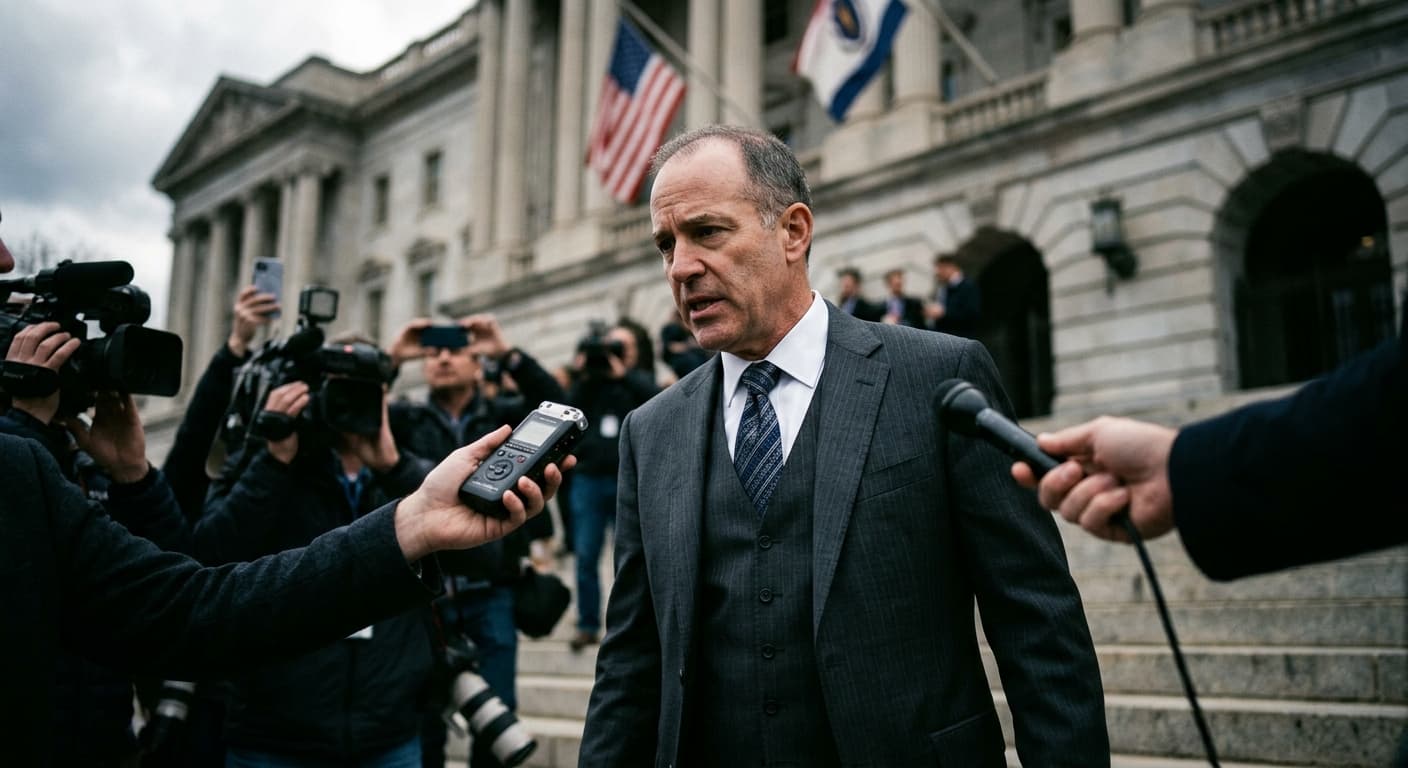
DOJ Clears $111bn Paramount–Warner Deal Without Full Antitrust Review
The Justice Department cleared Paramount Skydance's $111 billion takeover of Warner Bros. Discovery on June 13, 2026 — over its own antitrust staff. Here is what that signals for future merger enforcement.
The US Department of Justice's decision to close its investigation of Paramount Skydance's $111 billion acquisition of Warner Bros. Discovery on June 13, 2026 — reportedly before career antitrust lawyers finished a staff recommendation to challenge it — is not primarily a media story. It is the clearest signal yet that under the second Trump administration, US merger enforcement has shifted from a legal test to a political one: if the bidder is politically aligned, the deal moves; if it is not, it dies at the White House gate. That reframing, not the Ellison family's new hold over CNN and HBO, is what will shape the next decade of dealmaking in tech, media and every regulated sector where the White House has an opinion.
According to the BBC, the DOJ said in its June 13 statement that it had conducted a "rigorous" investigation and found the deal was "not likely to result in harm to competition or American consumers" — and would, in fact, "increase competition across the media and entertainment ecosystem." The Wall Street Journal, whose reporting anchors the industry accounts of the review, described senior DOJ officials moving to close the file before career staff completed a memo that leaned toward challenging the transaction. That account tracks a broader pattern documented in sworn congressional testimony this year by Roger Alford, the former Principal Deputy Assistant Attorney General for Antitrust, who told the House Judiciary antitrust subcommittee on December 16, 2025 that "corporate lobbyists now boast about their ability to overrule both the professional antitrust experts and President Trump's own hand-picked leadership at the antitrust division." His full
statement is on file with Congress.
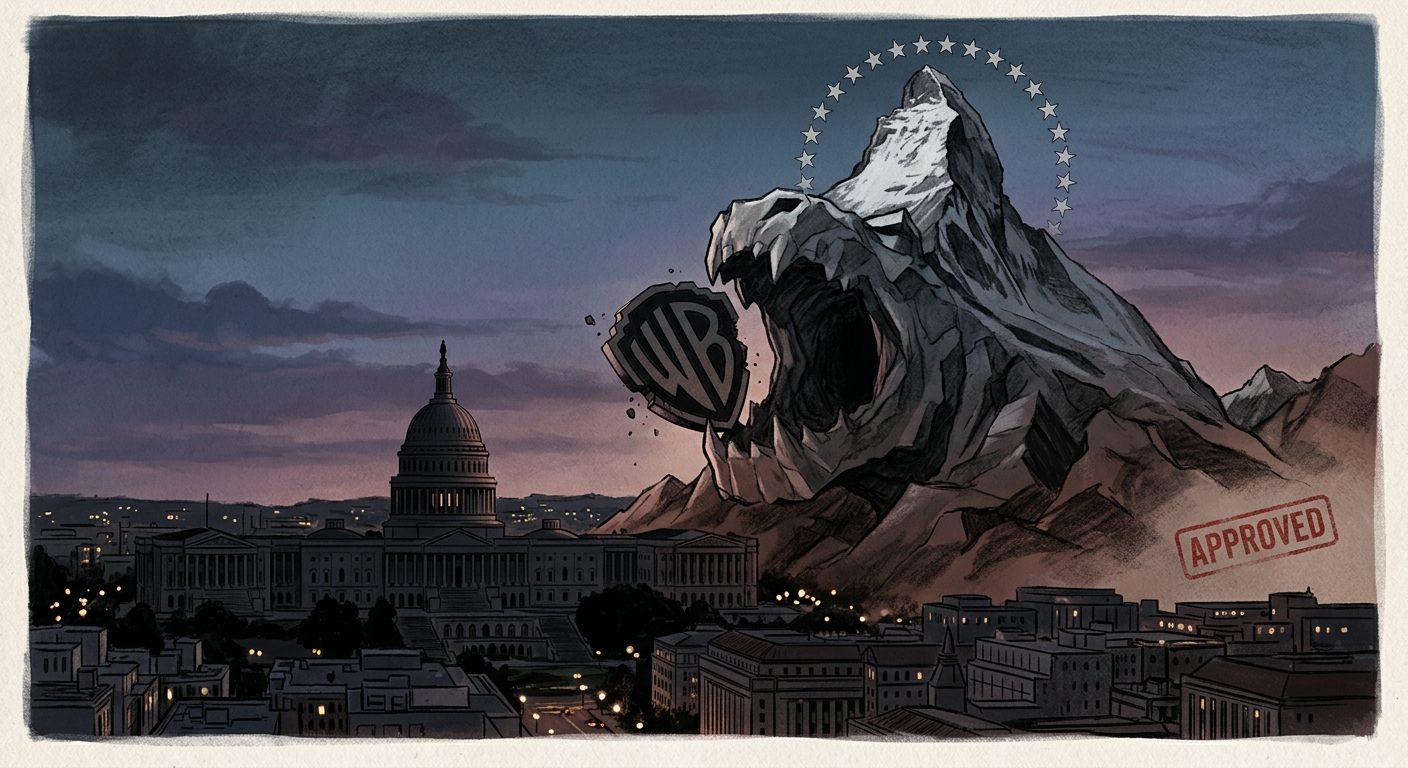
What the DOJ actually did — and did not — do
Paramount Skydance's takeover of Warner Bros. Discovery is the largest US media combination since AT&T–Time Warner in 2018. It will fold together two of Hollywood's five major studios; the second- and third-largest US general-entertainment streamers, Paramount+ and HBO Max; two of the top three cable news brands, CBS News and CNN; and the parent libraries of Harry Potter, DC Comics, Star Trek and Mission: Impossible. Warner Bros. Discovery entered the process worth roughly five times Paramount by market capitalisation, NPR reported — "the minnow will have swallowed the whale."
The 2023 DOJ/FTC Merger Guidelines, still formally in force under Assistant Attorney General Abigail Slater before her February 2026 resignation, presume illegality when a merger significantly increases concentration in an already concentrated market — precisely the fact pattern the Center for American Progress laid out in its April 28, 2026 coalition letter to state attorneys general, which argued the deal "clearly violates several" of those guidelines and would reduce major film studios from five to four. Prof. Tim Wu, the Columbia antitrust scholar, told
NPR in March that the transaction "reduces competition too much in too many markets in violation of federal law." Herbert Hovenkamp of Penn Carey Law, quoted in a Bloomberg piece
entered into the House Judiciary hearing record, said the president's intervention in the sale illustrated that "the president is interfering with antitrust policy… for reasons that have nothing to do with antitrust."
None of that stopped the closure. Slater's exit came in February, following what the BBC called "a series of leadership shake-ups at the antitrust division" that also removed her top deputies after Associate Attorney General Stanley Woodward and Chief of Staff Chad Mizelle overrode the Antitrust Division to settle the earlier Hewlett Packard Enterprise–Juniper Networks case. By June, when the Paramount file landed on senior desks, the guardrails Alford named were gone.
Who benefits — and who is left holding the bag
David Ellison, Paramount's chairman and CEO, is the direct winner. His two documented White House meetings during the bidding war, at which he told administration officials he would make "sweeping changes" to CNN, were first reported by the Wall Street Journal and are recounted by Al Jazeera. His father Larry Ellison — Oracle co-founder, lead investor in TikTok US, sixth-richest person on earth — personally guaranteed $40 billion of equity to lift the bid above Netflix's. Netflix CEO Ted Sarandos was reportedly the last suitor into the West Wing on February 26, meeting Attorney General Pam Bondi's team; Netflix withdrew hours later. As BBC's Katie Razzall noted, many observers had expected DOJ to block a Netflix bid on antitrust grounds; instead,
Netflix never had to be blocked, because it was outbid by a rival with better political credit.
The losers are more diffuse but named. Writers, directors and craft workers signed two open letters — over 4,000 signatories by mid-April, per NPR — warning of "fewer opportunities for creators, fewer jobs across the production ecosystem, higher costs, and less choice for audiences." Paramount already cut roughly 10% of its workforce after the Skydance merger last year and is taking on substantial debt to buy Warner. As Ben Barringer of Quilter Cheviot told the
BBC, "having more debt means you've got more burden, and that means you've got less to spend on content." CNN's newsroom is the most exposed institution: it becomes the fourth corporate parent in under a decade, now controlled by an owner who has told the president he will overhaul it.
The angle: how this reshapes the merger playbook
The precedent set on June 13 is not that big media deals will now sail through. It is narrower and more corrosive: the antitrust review has become a bilateral negotiation between the White House and the bidder, with career staff functionally sidelined. Firms have already noticed. Alford's testimony describes MAGA-aligned lobbyists pitching regulated clients at "$225,000 a month" and openly promising to route around the Antitrust Division. A CEPR-published survey of the second Trump administration's competition policy by antitrust scholar Jonathan Baker,
published April 2026, warns that the HPE/Juniper affair is "encouraging wasteful rent-seeking" and that firms facing investigation are "looking to hire politically connected consultants to lobby the White House and the enforcement agencies."
The result is a two-tier system. Politically aligned acquirers — Paramount Skydance, Nexstar in its Tegna deal, HPE — receive expedited or negotiated outcomes. Politically disfavoured acquirers, whether Netflix or targets accused by the president of hostile editorial coverage, face regulatory friction that no professional-staff analysis fully explains. That is the reverse of the neutral competition standard codified in the Clayton Act and the 2023 guidelines, and it is the reason 11 state attorneys general have already written to DOJ, and why California's Rob Bonta has told NPR he sees "picking winners and losers based on friends or how they might benefit."
The escape hatch: Europe, London and Sacramento
The federal green light is not the last word. The European Commission received formal notification of Case M.12278 – PARAMOUNT SKYDANCE / WARNER BROS DISCOVERY on June 2, 2026, under Article 4 of Council Regulation (EC) No 139/2004. In London, the
Competition and Markets Authority opened its Phase 1 merger inquiry on June 9, with a decision deadline of August 7. On June 30, the UK Secretary of State for Culture, Media and Sport went further, announcing she was "minded to" issue a public interest intervention notice on media plurality grounds — a rarely used power the DCMS confirmed in a letter
published on gov.uk. Bonta, in Sacramento, retains the authority to file a state antitrust action to enjoin closing, following the model Washington state used against Kroger–Albertsons in 2024.
Historical parallel: the 1968 attempt by ITT to acquire ABC collapsed under DOJ objection after intense White House interest; the 2018 AT&T–Time Warner case went to trial and produced a judicial ruling that vertical media mergers do not automatically flunk Section 7. What is unusual in 2026 is that neither of those checks — a career-driven DOJ or a court test — has yet been triggered on the merits. The check is being pushed offshore, to Brussels, London and state houses.
Diplomat View
The DOJ's June 13 clearance is best read as a stress test, and the US antitrust apparatus failed it. The load-bearing claim is falsifiable: if, by the end of 2026, no state attorney general files to enjoin the deal, the EU and CMA clear with only cosmetic remedies, and the merged Paramount closes at or near its September 30 target, then the "political-alignment premium" documented here is durable — and the next wave of Trump-friendly bidders (Oracle in cloud contracts, Nexstar in broadcast, potential AI-chip roll-ups) will price it in. The forecast revises only if one of three things happens: (1) Bonta files and wins a preliminary injunction in California; (2) the CMA imposes structural divestitures on HBO Max or CNN International; or (3) the House Judiciary antitrust subcommittee, which has already taken Alford's testimony, subpoenas the internal DOJ memo said to recommend a challenge. Absent any of those, career antitrust enforcement in the United States has been quietly demoted from gatekeeper to consultant.
What to watch
- August 7, 2026 — UK CMA Phase 1 decision deadline on the Paramount/WBD merger.
- By end of July 2026 — California AG Rob Bonta's decision on filing a state antitrust action or seeking a temporary restraining order; Paramount aims to close by September 30.
- European Commission timeline — Phase 1 decision on Case M.12278 due within 25 working days of the June 2 notification, with possible extension to Phase 2 if remedies are contested.
The Bottom Line
The Paramount clearance is not a media story; it is the moment US antitrust review became a two-tier system in which political alignment with the White House substitutes for a competitive-effects analysis. If California, Brussels or London does not force structural remedies on the deal, career antitrust enforcement has been effectively demoted for the remainder of this administration — and every future acquirer, in tech, energy and defence, will build that premium into its bid.
Discover more
US Politics
SNAP Food Assistance Faces Legal Challenges
In 2026, SNAP faces stricter eligibility rules and mounting legal challenges, threatening food assistance for the millions of Americans who rely on the program.
India
Rajnath Singh's Durga Squad for 2026 Polls
Rajnath Singh's Durga Squad promised women's safety in Bengal but has since disappeared from the agenda, revealing BJP's true priorities.
Global Politics
Trump's Conflicting Messages on Iran War
Trump's mixed messages on Iran reflect a strategy of audience management, benefiting Tehran amid a complex geopolitical landscape.

Economics
Fed's Amex AML order puts correspondent banking on notice
Federal Reserve's Amex AML order requires board-level controls and a 90-day plan; OCC fined the bank $350 million over enterprise-wide deficiencies.