Democrats' Impeachment Risks Midterm Gains
Impeachment discussions may undermine Democrats' midterm strategy.
Model Diplomat3 min readUnited States

Democrats' Impeachment Debate Is Eating Their Best Midterm Argument
With Trump at 35% approval and the economy as a winning issue, Democrats are risking their strongest hand by relitigating removal.
Jamie Raskin and Sen. Andy Kim are the loudest voices pushing impeachment and 25th Amendment proceedings against Trump — energized by his Iran war conduct and threats in early April. Sen. Ed Markey has gone further, calling Trump's actions "war crimes" and demanding Congress convene to stop the conflict. The removal talk is real, coordinated among progressives, and accelerating. The problem: it may be the worst possible midterm message Democrats could choose.
The Numbers Say Economy, Not Impeachment
Trump's approval on the economy has collapsed to 31% — a career low. Overall approval sits at 35%. Gas is averaging $4.16/gallon. Sixty-five percent of voters say Trump's policies have worsened the economy. Crucially, 28% of Republicans now say Trump has hurt the economy, up from 13% in January — a 15-point erosion inside his own coalition in under four months.
Democrats lead on the generic congressional ballot by 6 points, tracking closely to their pre-wave position in 2018. The structural tailwinds are as strong as they've been in years. The war with Iran — disapproved by 66% of the public — adds a second front of vulnerability for Republicans.
That's the hand. Impeachment talk risks folding it.
The Strategic Trap
The centrist faction's concern is straightforward: impeachment is not just mathematically impossible — it requires a House majority Democrats don't hold plus a two-thirds Senate conviction vote — it actively reframes the midterm from a referendum on Trump's governance into a culture-war battle over Democratic "overreach." In 2020 and 2021, post-impeachment polling consistently showed the proceedings animated Republican base turnout more than they damaged Trump's standing with persuadable voters.
The progressive counter-argument has merit too: with Trump's party favorability deeply underwater, silence on accountability looks like weakness to a Democratic base that needs turnout motivation. Democrats are 28 points underwater on party favorability — the enthusiasm gap is a real problem, and performative fights against Trump have historically moved base voters.
The Reuters reporting makes clear there's no resolution to this tension yet. The party is functionally running two parallel messages into an election year, and the loudest one — removal — is the one that energizes the opposition.
Who Holds the Leverage
Raskin and the progressive bloc hold the media megaphone. Centrists hold the math: the Democrats most likely to flip competitive seats — in Ohio, North Carolina, Michigan, Georgia, and New Hampshire, where the Senate Majority PAC is already underfunded vs. the $342M Senate Leadership Fund — are running in districts where impeachment messaging is a liability, not an asset. Those candidates will have to explicitly distance themselves from Raskin's line, creating visible intra-party fractures Republicans will amplify in ad buys.
For deeper context on how US Politics shapes strategic incentives for both parties heading into November, the structural dynamics are well-established: parties that make midterms a personality referendum on the incumbent tend to win; parties that make it about themselves tend not to.
What to Watch Next
The May primary calendar is the first real test. If progressive candidates running on removal language win primaries in swing districts, the centrist argument collapses internally. Watch also for Senate Majority PAC's first major ad buys — if they lead on the economy rather than accountability, that's the institutional party telling the Raskin wing to stand down. The decision window is narrow: general-election messaging solidifies by late June.
Discover more

US Politics
Next Generation Republicans
A leaked survey shows 39% of Republicans under 30 do not identify as MAGA, revealing a split in the GOP's future leadership.

Conflict & Security
Drone Warfare Killing Aid Workers at Unprec
Over 1,000 humanitarian workers killed in three years as cheap armed drones collapse legal protections. Gaza, Sudan, Ukraine, and DRC see deliberate targeting of aid convoys and hospitals with zero prosecutions.

Global
World Normalises Taliban as Afghan Women Eras
UN data shows Afghan women erased from public life as Russia recognises the Taliban, EU hosts officials in Brussels, and ICC warrants for gender persecution go unenforced.
Conflict & Security
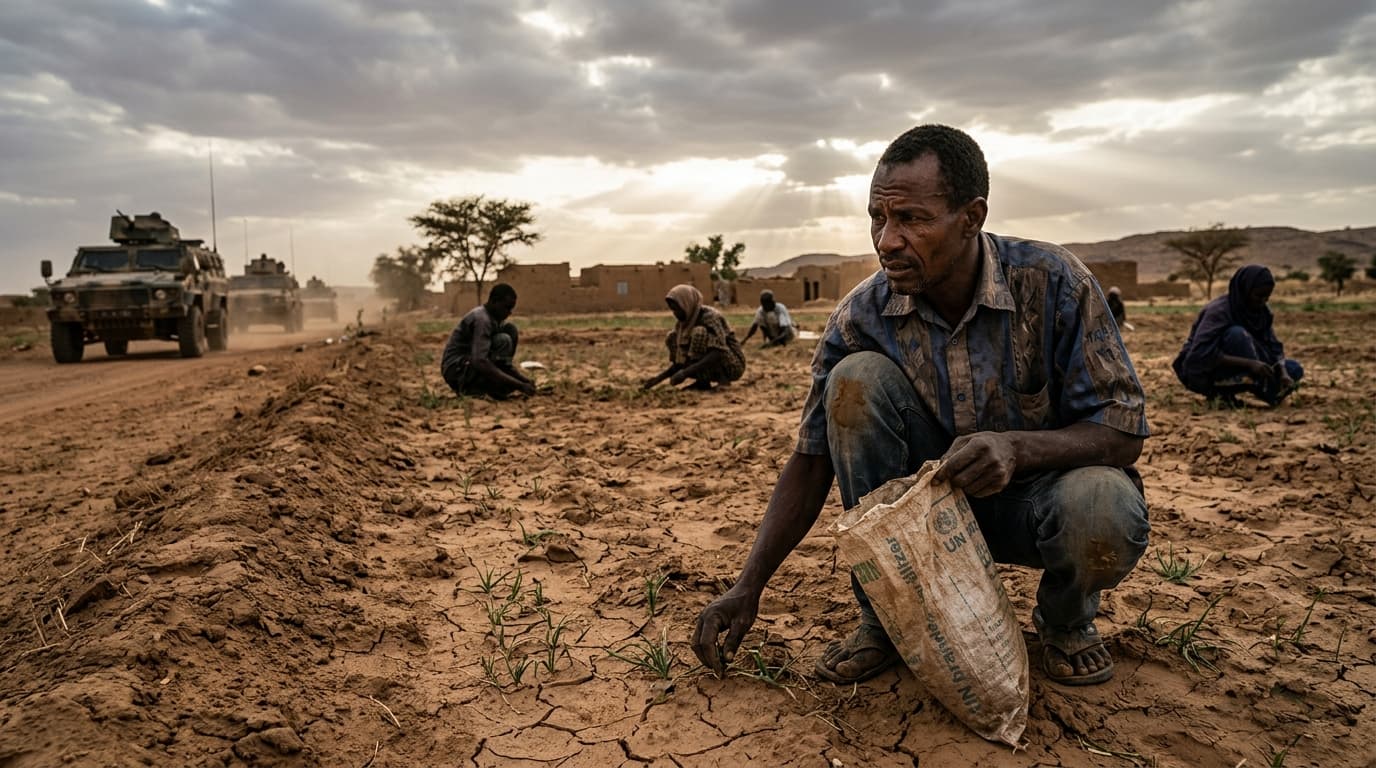
West Africa Food Crisis: Three Shocks in 2026
Conflict, climate extremes, and the Strait of Hormuz closure drive a severe food crisis in West and Central Africa, with fertilizer prices surging 80% and millions displaced.