Delhi’s 28.4°C Minimum Signals a Longer Heat Crisis
Delhi’s warm night, poor air, and 44°C daytime forecast show the capital’s heat is now a public-health and work-schedule problem.
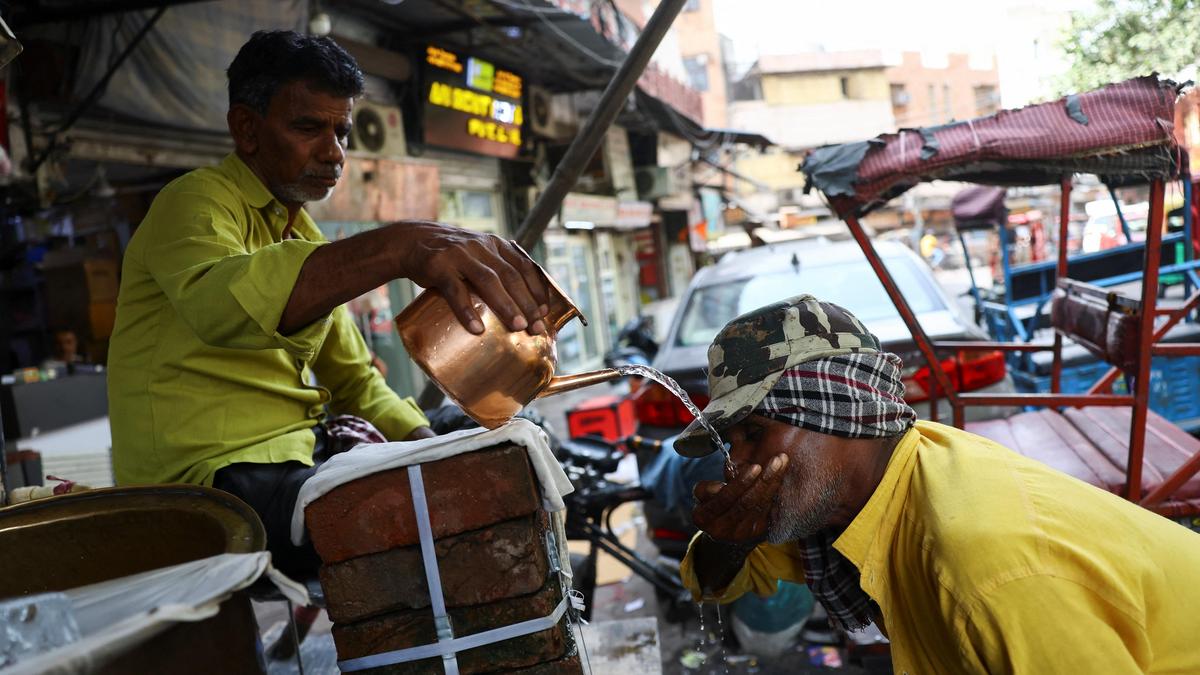
Delhi started Sunday with a minimum temperature of 28.4°C, two degrees above the seasonal average, and the India Meteorological Department said the city was headed for a maximum near 44°C under a yellow alert for strong surface winds and heat in the afternoon, according to  The Hindu. That matters because a hot night removes the body’s chance to recover: the day starts behind, and the city spends more hours in stress rather than relief. Delhi’s Air Quality Index was 210 at 9 a.m., in the “poor” range, adding another layer of burden to a heat event that is already stretching people who work outdoors, especially delivery riders, street vendors and construction workers.
Heat is becoming a governance problem
The leverage here sits with the weather system, not the government. The IMD can only warn; it cannot cool the city. What it can do is force institutions to adjust behavior, and the signal is already spreading beyond Delhi.  CNBC TV18 reported that Delhi-NCR was likely to see 43-45°C temperatures with dusty winds, while heatwave to severe heatwave conditions were expected to persist across Uttar Pradesh, Madhya Pradesh, Vidarbha and Rajasthan through the coming week. It also noted red and orange alerts across multiple states, with the IMD warning of a “very high likelihood” of heat illnesses and heatstroke.
That is the real policy story: once the forecast reaches repeated days above 44°C, heat stops being a weather item and becomes an operational constraint. Schools, offices, hospitals, transit systems and municipal water supply all come under pressure at the same time. Punjab has already moved its government and school hours earlier, to 7:30 a.m. to 1:30 p.m., from May 25, according to  NewKerala/ANI. Delhi has not announced a comparable shift yet, but the precedent is now on the table in the broader north Indian belt. For a city tracked on
  India, this is not a one-day spike; it is a management problem.
The hotter risk is the warm night
The more important metric may be the minimum temperature, not the afternoon peak. A 28.4°C night means the city never truly cools, which increases cumulative fatigue and raises risks for the elderly, outdoor workers and people without reliable cooling. The Hindu also reported humidity at 37% and a poor AQI, a combination that can make the same temperature feel more punishing and more dangerous.
The wider weather pattern suggests this is not a short-lived anomaly. NewKerala/ANI said IMD expects severe heatwave conditions to continue for 5-7 days across northwest, central and east India, while CNBC TV18 warned Delhi could remain in the 44-46°C range for nearly a week.
What to watch next is simple: whether Delhi follows Punjab into altered hours, and whether the IMD upgrades from yellow to orange if temperatures hold. If the next bulletin keeps nighttime lows elevated, the pressure will shift from discomfort to disruption.