Delhi Gymkhana Club Takeover Tests State Lease Power
The Centre has ordered the 113-year-old club to vacate by June 5, and members are preparing a court fight over a prized Lutyens’ Delhi plot.
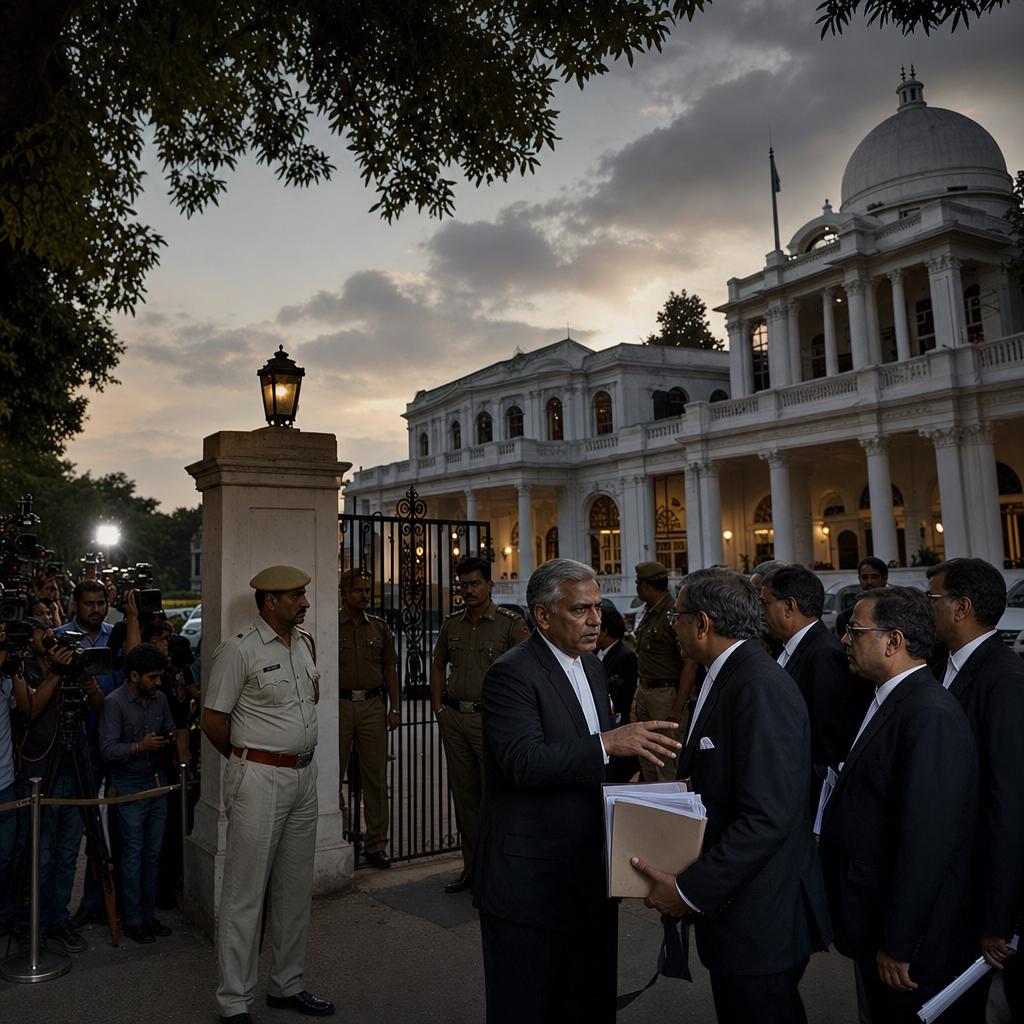
The government is moving from management control to physical control. The Land & Development Office has told Delhi Gymkhana Club to hand over its Safdarjung Road premises by 5 June 2026, saying the 27.3-acre site is needed for “defence infrastructure,” “urgent institutional needs” and other public-interest projects ( LiveMint;
  ABP Live). Members say they will challenge the order in court and seek interim relief to stop immediate dispossession (LiveMint;
  IANS via NewKerala).
What the Centre is really taking
This is not just about a club. It is about a prime state asset in one of Delhi’s most sensitive corridors, next to the Prime Minister’s official residence and close to key government installations (ABP Live;  Asianet Newsable). That geography matters because it gives the Centre a straightforward argument: national security and administrative planning outweigh the club’s traditional use.
The government is also relying on the lease itself. ABP reports the order invokes Clause 4 of the lease deed to terminate the arrangement and vest the land, buildings and structures in the President of India (ABP Live). That gives the state its strongest leverage: legal title and the ability to enforce possession. The club’s main counter is procedural — that the termination is abrupt, that the justification is vague, and that the courts should preserve the status quo while the case is heard (LiveMint).
Why members are fighting
The Delhi Gymkhana Club is not defending some abstract social tradition. It is defending a valuable institution embedded in elite Delhi networks — a place where senior bureaucrats, diplomats, politicians and business figures have long mixed (IANS via NewKerala). That makes the fight politically sensitive: a shutdown would be read not only as an eviction, but as a signal that even old-line private institutions are vulnerable when they sit on public land in strategic locations.
There is also a governance history behind this move. ABP notes the club has already faced government supervision over allegations of financial irregularities and mismanagement, which weakens the members’ moral position even if they still have legal arguments (ABP Live). In plain terms: the Centre has a security rationale, a lease instrument, and a record of prior intervention. The club has nostalgia, constituency, and litigation.
What to watch next
The key date is June 5. If the club files promptly and secures a stay, the dispute shifts from eviction to a longer legal battle over whether the Centre’s security rationale and lease powers can survive judicial scrutiny (LiveMint; ABP Live). If not, the government will have shown that it can reclaim high-value land in Lutyens’ Delhi with little more than an administrative order and a lease clause.
For  India, the bigger signal is institutional: when the state wants land in a strategic zone, private legacy rarely beats sovereign leverage.