Delhi Gymkhana Fight Is Really About Prime Land
The club wants a relocation cushion; the Centre wants a clean handover of 27.3 acres in Lutyens’ Delhi. The deadline now forces both sides to test leverage.
The Centre holds the stronger hand
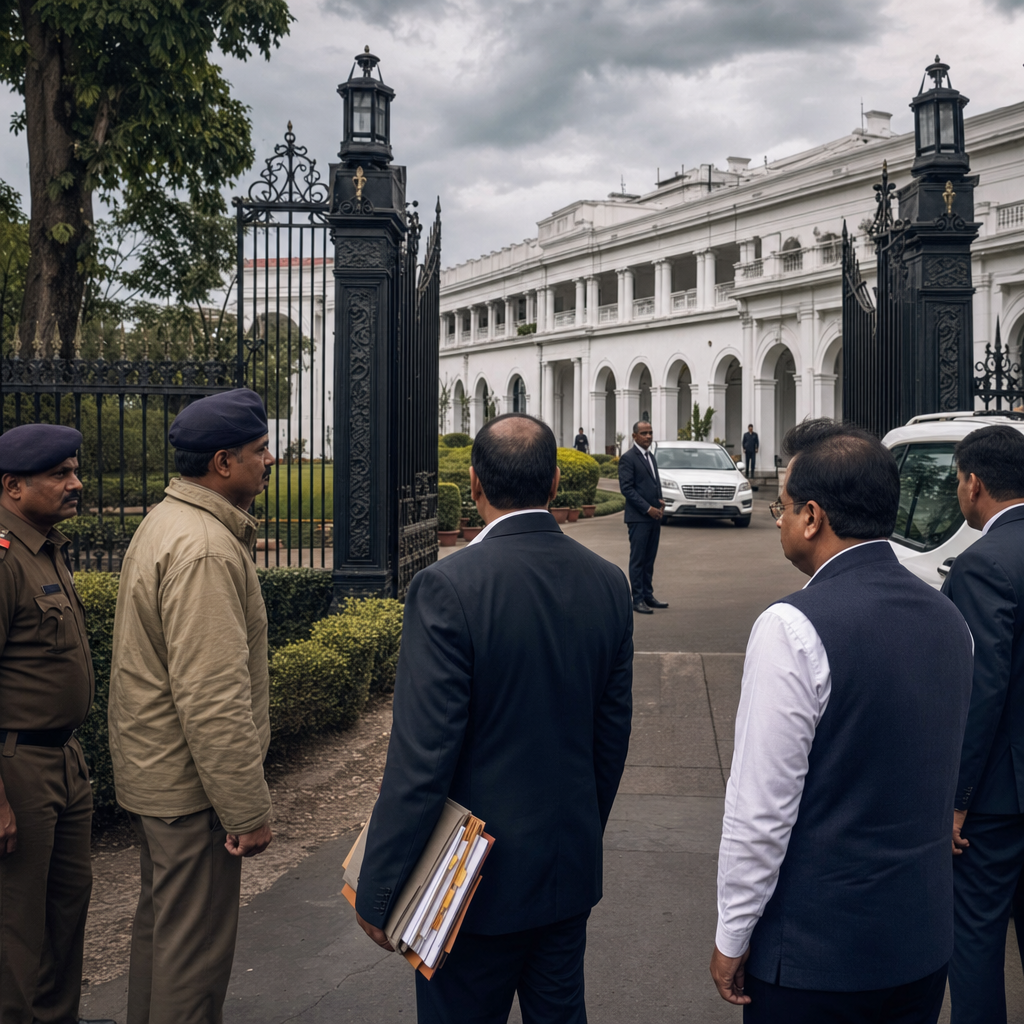
The immediate power dynamic is simple: the government controls the lease and has already fixed a handover date. In a May 22 order, the Land and Development Office under the Ministry of Housing and Urban Affairs said the Delhi Gymkhana Club property at 2, Safdarjung Road is in a “highly sensitive and strategic zone” and is needed for “strengthening and securing defence infrastructure,” with possession to be taken on June 5 ( NDTV;
NDTV;  The Patriot).
That gives the Centre the stronger legal and administrative position. The club can ask for talks; it cannot, on the reported facts, stop the state from asserting title and re-entry if the lease terms are terminated. The real question is no longer whether the site can be reclaimed, but how much disruption the government is willing to absorb to do it.
The club is asking for a relocation bargain
The club’s letter is not a plea to keep the land forever. It is a request for an exit ramp. According to NDTV, the General Committee asked whether the government has any plan for an “appropriately located alternate plot of land” and asked for a meeting with the Land and Development Office (NDTV). ANI’s reporting, carried by  India’s News, says the club wants operations to continue “without dislocation” and has framed the issue around members and employees.
That is the club’s best argument: not sentiment, but costs. NDTV says the club has about 14,000 members and users and employs 500 people, while a move would require rebuilding facilities at high cost (NDTV). In political terms, that turns a property dispute into a workforce and patronage issue. In  India, elite institutions often survive by converting legal defeat into negotiated transition; that appears to be what the club is trying to do here.
Why this matters beyond one club
The land itself explains the urgency. The 27.3-acre parcel is on one of the most valuable strips of the capital, adjacent to the Prime Minister’s residence, in a zone the government says is tied to security and governance needs (NDTV; The Patriot). The club’s social status matters less than the state’s ability to reassign land in the heart of the capital to a higher-priority use.
This also fits a broader pattern: the Modi government has repeatedly shown it is willing to challenge old elite spaces when it can wrap the move in public-interest language. That is the political benefit for the Centre — not just the land, but the signal. On Global Politics, this is the familiar contest between legacy privilege and state consolidation, played out over urban real estate.
What to watch next
The next decision point is June 5. If the club gets a meeting with the Housing Ministry or L&DO before then, watch for one issue only: whether the Centre offers any alternate site, phased transition, or compensation framework. If it does not, the government is signaling that it wants possession first and negotiations later.