Cuba's 176 Reforms: A Coerced Opening
Cuba liberalizes under pressure from the U.S. and economic collapse.
Model Diplomat9 min readAmericas
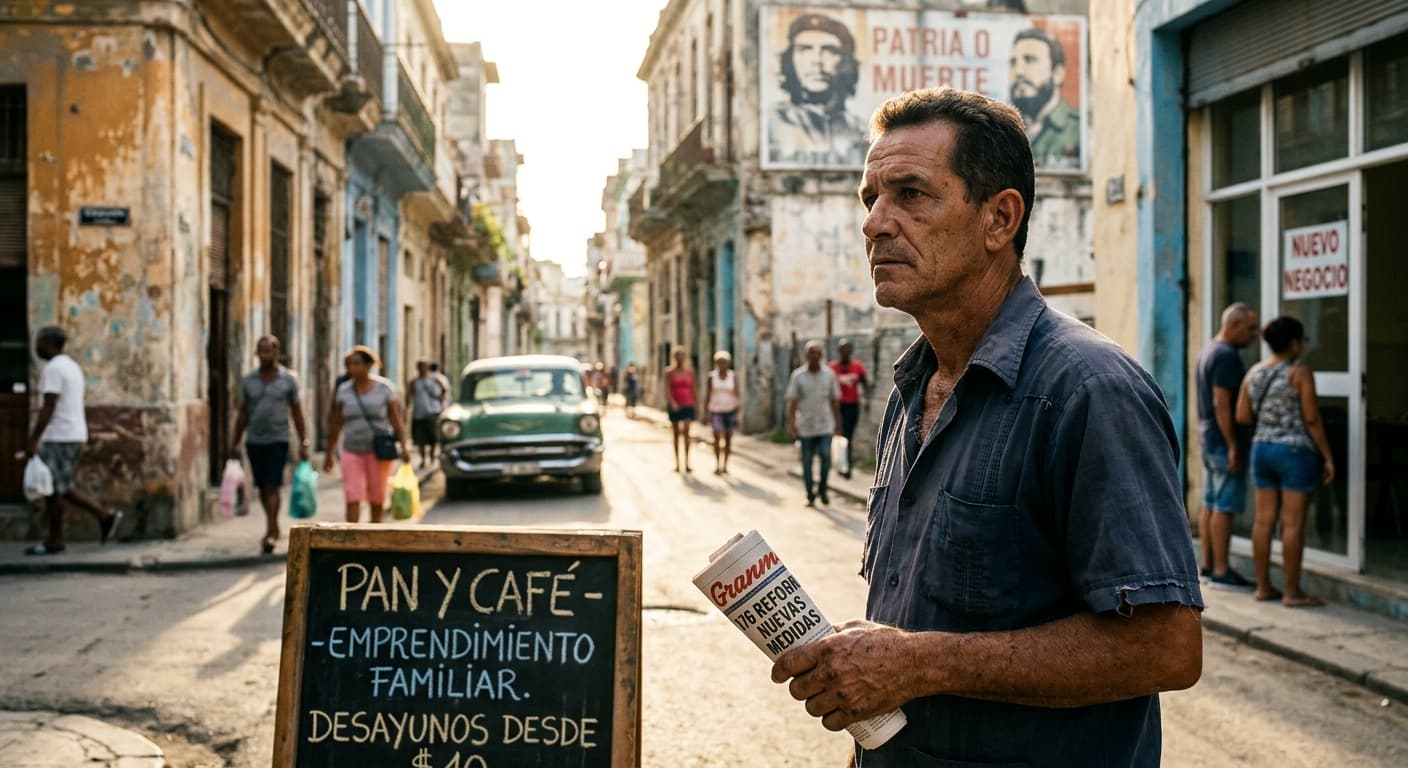
Cuba's 176 Reforms: A Coerced Opening With No Winner in Havana
After a 7% GDP contraction, US secondary sanctions and a Supreme Court ruling stripping state firms of immunity, Cuba is liberalising under duress — reshaping who gets to invest.
Cuba's National Assembly rubber-stamped 176 free-market measures on June 18, 2026, ending state monopolies over banking, foreign exchange and much of retail — but the reforms are less a Vietnamese-style opening than a coerced ledger-clearing that reshuffles who holds leverage over the island. The immediate beneficiaries are not European hoteliers or Havana's Communist Party, which is losing its economic monopoly, but the Cuban-American diaspora and a narrow class of reform-minded technocrats Washington is now positioning as its preferred interlocutors. Moscow and Beijing, meanwhile, are quietly being asked to underwrite less, not more.
The package landed after the sharpest economic collapse since the Special Period of the 1990s. Cuba is on track for a 7% GDP contraction in 2026, according to Global Finance Magazine's reading of official projections, on top of the 11% cumulative decline since 2020 documented in Foreign Affairs. The island has suffered three nationwide blackouts in six months, foreign tourist arrivals fell 58.4% year-on-year in the first five months, and jet fuel ran dry in February — figures the
BBC drew from Cuba's national statistics office, Onei.
The trigger: Maduro's capture and the oil noose
The reforms are unimaginable without January 3, 2026, the day U.S. special forces captured Venezuelan President Nicolás Maduro. Within weeks, Donald Trump had declared Cuba an "unusual and extraordinary threat" in an executive order authorising secondary tariffs on any country supplying it with oil. Venezuela, which had provided roughly a third of Cuba's crude, went to zero. Mexico, previously supplying 44% of imports, buckled under U.S. pressure, Al Jazeera reported.
By early March, President Miguel Díaz-Canel publicly acknowledged Cuba had not received an oil shipment in three months. On May 22, Energy Minister Vicente de la O Levy admitted the island had exhausted its reserves entirely. U.S. Secretary of State Marco Rubio told reporters on March 17 that Cuba "has an economy that doesn't work… they have to change dramatically" — the Council on Foreign Relations calls the resulting squeeze a "maximum pressure" campaign explicitly designed to force liberalisation, per the CFR briefing.
That is the context in which Díaz-Canel finally conceded, on June 18, that Cuba's economic strife was not only external. Speaking to the Communist Party's Central Committee, he pointed to "slowness, bureaucracy and norms that impede those who want to produce" and "decisions that we have put off," Al Jazeera reported. Some reforms, he warned, "will not have absolute consensus, but cannot be postponed." Raúl Castro — indicted by a U.S. federal grand jury in May over the 1996 shootdown of two Brothers to the Rescue planes — backed the plan.
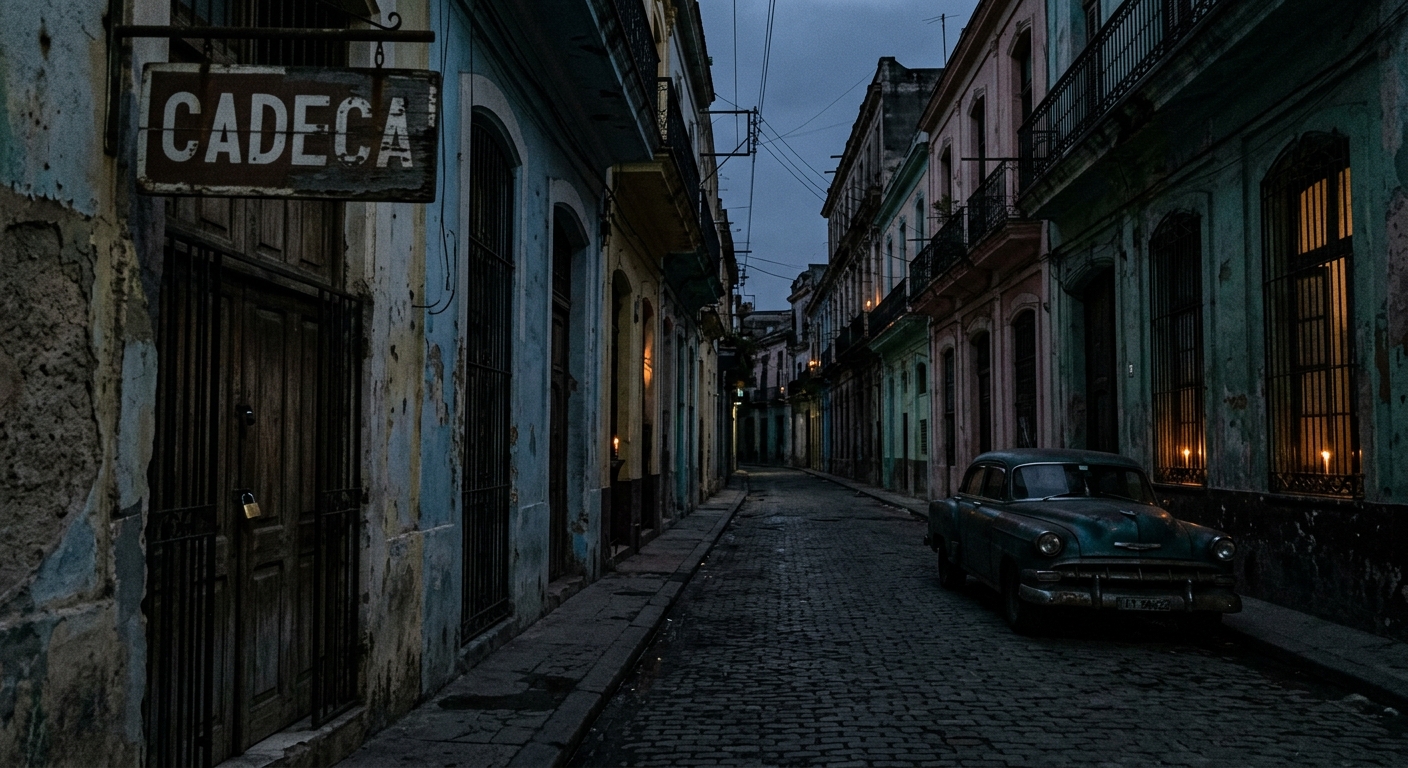
What the 176 measures actually do
The plan, organised into 23 pillars, is genuinely a break with the 1959 model. It legalises private commercial banks, opens an official foreign-exchange market, allows state-owned enterprises to convert to joint-stock companies with equity stakes, removes the 100-employee cap on private firms, permits direct foreign investment in the domestic private sector, and phases out universal state subsidies. The International Crisis Group, in a June 2026 briefing, calls the package "selective, not sweeping" — expanding markets on paper while preserving the socialist frame Díaz-Canel invoked when presenting it to the National Assembly.
Two provisions carry outsized geopolitical weight. The first is the explicit invitation to Cubans living abroad — more than a million of whom have left since 2021 — to own businesses on the island, including in what Deputy Prime Minister Óscar Pérez-Oliva Fraga called "larger projects." Havana is especially targeting agriculture, citing the Vietnamese model of usufructuary rice production, Al Jazeera reported. The second is the partial dollarization of retail and the launch of a floating peso rate at roughly 410 CUP to the dollar — an attempt, per Foreign Affairs, "to bring more transactions back into the formal financial system" after the informal market swallowed the currency.
The Supreme Court just changed the math for foreign investors
On June 23, 2026 — five days after the Cuban Communist Party approved the reforms — the U.S. Supreme Court handed Havana its worst legal news in a generation. In Exxon Mobil Corp. v. Corporación CIMEX, S.A., Justice Brett Kavanaugh, writing for a 7-2 majority, held that Title III of the 1996 Helms-Burton Act strips Cuban state-owned entities of sovereign immunity in U.S. courts. The Foreign Sovereign Immunities Act, the Court ruled, does not apply to trafficking claims against Cuban agencies and instrumentalities.
"The Helms-Burton Act authorizes private suits against Cuban agencies and instrumentalities — suits that would largely be nonstarters if subjected to the FSIA's requirements." — Justice Kavanaugh, Exxon v. CIMEX, June 23, 2026
The decision was the second in two months from the Roberts Court expanding Title III's reach. Combined with the U.S. Treasury's May 1 secondary-sanctions order targeting foreign firms doing business with the Cuban military conglomerate GAESA, any European, Canadian or Chinese company entering Havana's newly liberalised sectors now faces two overlapping legal risks: OFAC secondary sanctions, and private U.S. litigation over pre-1959 expropriated properties. Spanish hotel chains Meliá and Iberostar had already been withdrawing from GAESA-linked properties ahead of a June 5 U.S. deadline, per the BBC.
That is the paradox at the centre of Cuba's opening. Havana has legalised foreign investment at the precise moment the U.S. legal system has made investing in Cuba more dangerous than at any point in three decades.
Who benefits — and who quietly loses
The winners are visible if you look past the headline. Cuban-American investors are the only foreign capital pool with both an appetite for the country and — via specific OFAC licenses being drafted — a possible legal pathway in. In a mid-May visit to Havana described by Foreign Affairs, CIA Director John Ratcliffe reportedly delivered an ultimatum: reform the economy, release political prisoners, sever intelligence ties with Russia and China, and Washington could authorise U.S. firms back into tourism, mining, energy and agriculture. Paolo Spadoni of Augusta University, quoted by Reuters, called the diaspora provision "pragmatic" but warned it should have been done "years ago on its own, rather than now, under maximum pressure."
The second beneficiary is a narrow bench of Cuban technocrats: Pérez-Oliva Fraga, who runs the Ministry of Foreign Trade and Foreign Investment, and figures acceptable to Raúl Castro but also to Trump, who now have a mandate to negotiate. The Council on Foreign Relations reports that U.S. officials have already held talks with Raúl Guillermo Rodríguez Castro, Raúl Castro's grandson and a figure connected to GAESA succession. That is not a democratic transition. It is elite substitution.
The losers are more numerous. GAESA itself, which controls an estimated 70% of strategic sectors and holds up to $18 billion in dollar-denominated assets according to a 2025 Miami Herald investigation cited by CFR, faces the first serious challenge to its monopoly since it was built. The European Parliament, in a resolution passed 283-199-85 on June 18, called for EU sanctions on GAESA leadership and Díaz-Canel personally, stating that Cuba's humanitarian emergency — 89% of families in extreme poverty, 1,281 political prisoners — is "not the result of any external embargo, but the direct consequence of the regime's own model."
Russia and China lose leverage without losing exposure. Moscow has sent only one sanctioned tanker (the Anatoly Kolodkin, ~700,000 barrels) through the U.S. blockade, per Al Jazeera. Beijing donated 60,000 tonnes of rice and roughly $80 million in aid in early 2026 but, per Foreign Affairs, has "urged Cuba to lessen subsidies for unprofitable state companies and reduce restrictions on foreign investment" — the same message Washington is delivering with warships. Cuba owes China several billion dollars and routinely asks to reschedule. If the reforms attract Cuban-American capital, the strategic case for Beijing to keep bankrolling an inefficient client thins further.
The historical parallel that reframes this
Cuba has done this before, and that is the analytical warning. In 2011, Raúl Castro's Sixth Party Congress approved 313 "guidelines" for updating the socialist model. By the Seventh Congress in 2016, only 21% had been fully implemented, CIDOB documented. The 2014 foreign investment law slashed profit taxes to 15% and offered eight-year tax exemptions; inflows never materialised at scale. In 2021, the government legalised SMEs and eventually approved more than 10,000 — but by late 2024 was already imposing new price controls, and in November 2025 barred foreign businesses from repatriating peso earnings.
The 176 measures are more radical than any of those precedents. But the same bureaucratic reflex that killed prior openings — GAESA's institutional interest in controlling foreign currency, the party's ideological aversion to a genuinely independent bourgeoisie — remains in place. The Crisis Group's judgment is worth quoting: reforms need to be "embedded within a coherent long-term strategy for state reform if they are to restore confidence." Absent that, "many Cubans, who have lived through similar decrees in the past, are in fact taking them with a grain of salt."
What to watch
- July 2026: National Assembly ordinary session. Enabling regulations for private banks and the FX market must be drafted. Watch which sectors are excluded — telecoms, energy and defence-adjacent industries were carved out of past reforms.
- U.S. OFAC general license for diaspora investment. Trump administration officials have privately signalled this is possible in exchange for political-prisoner releases. If it appears, Cuban-American capital moves fast; if it doesn't, the "doors are open" invitation is theatrical.
- First Title III post-Exxon filings. With sovereign immunity gone, foreign firms partnering with Cuban state entities face U.S. jury trials. Spanish and Canadian companies are the most exposed; a single nine-figure judgment reprices the whole opening.
- Hurricane season and the grid. Cuba suffered its third nationwide blackout in six months on July 6. Another Melissa-scale storm — the October 2025 hurricane that destroyed 90,000 homes — would overwhelm any reform timeline.
Diplomat View
The 176 reforms will not save the Cuban revolution — they are the receipt for its exhaustion. Our call: within twelve months, Havana faces a binary. Either Díaz-Canel is replaced by a Raúl-blessed, Washington-tolerated successor who trades security ties with Moscow and Beijing for calibrated sanctions relief, permitting a Vietnam-lite reopening dominated by diaspora capital; or the reforms are strangled by GAESA's institutional resistance, foreign investors stay away because of the Exxon ruling and secondary sanctions, and the economy grinds toward the "failed state" language the European Parliament used in June. A middle path — reforms fully implemented while the Communist Party holds power and keeps its Russian-Chinese security architecture — is the least likely outcome, because it is the outcome neither Washington nor GAESA's internal rivals will tolerate.
The forecast changes if any of three things happens: Trump loses interest in Cuba and reverts to Obama-era engagement (unlikely while Rubio runs State); Beijing decides that propping up Havana is worth a full oil-for-debt swap (unlikely while it is telling Cuba to liberalise); or a domestic protest wave outstrips the security services' capacity, forcing an unmanaged transition. The last scenario is the one nobody in Havana, Miami or Washington actually wants — but it is the one the nationwide blackouts and pot-banging protests of the past six months make most plausible.
Cuba is now the second domino in the Western Hemisphere, not the first — and the first one was Venezuela, which Washington already caught. The question is whether Havana lands softly or shatters on the floor.
The Bottom Line
Cuba's 176 reforms are the most sweeping economic opening since 1959, but they are being executed under U.S. coercion, without the legal cover foreign investors need after the Supreme Court's Exxon v. CIMEX ruling, and against the interests of the military conglomerate that still runs the country. The reforms will decide who succeeds Díaz-Canel, not whether Cuban socialism survives — and the winner will be whoever the Cuban-American diaspora and Washington can agree to bank.
Discover more
India
Women’s Reservation in India
India's 33% women's reservation law is enacted but won't take effect until after 2029 due to political setbacks and census delays.

US Politics
White House Pressures Congress for Crypto Leg
The Trump administration's push for the CLARITY Act aims to reshape crypto regulation, impacting trillions in market value and the Trump family's wealth.
Global Politics
Xi Jinping Calls China-Russia Ties 'Precious'
Xi Jinping's description of China-Russia ties as 'precious' reflects a strategic imbalance, with Beijing dictating terms in the partnership.

Economics
Fed's Amex AML order puts correspondent banking on notice
Federal Reserve's Amex AML order requires board-level controls and a 90-day plan; OCC fined the bank $350 million over enterprise-wide deficiencies.