Copper supply gap threatens electrification
Demand soars as supply falters, creating a bottleneck for clean energy
Model Diplomat5 min readGlobal
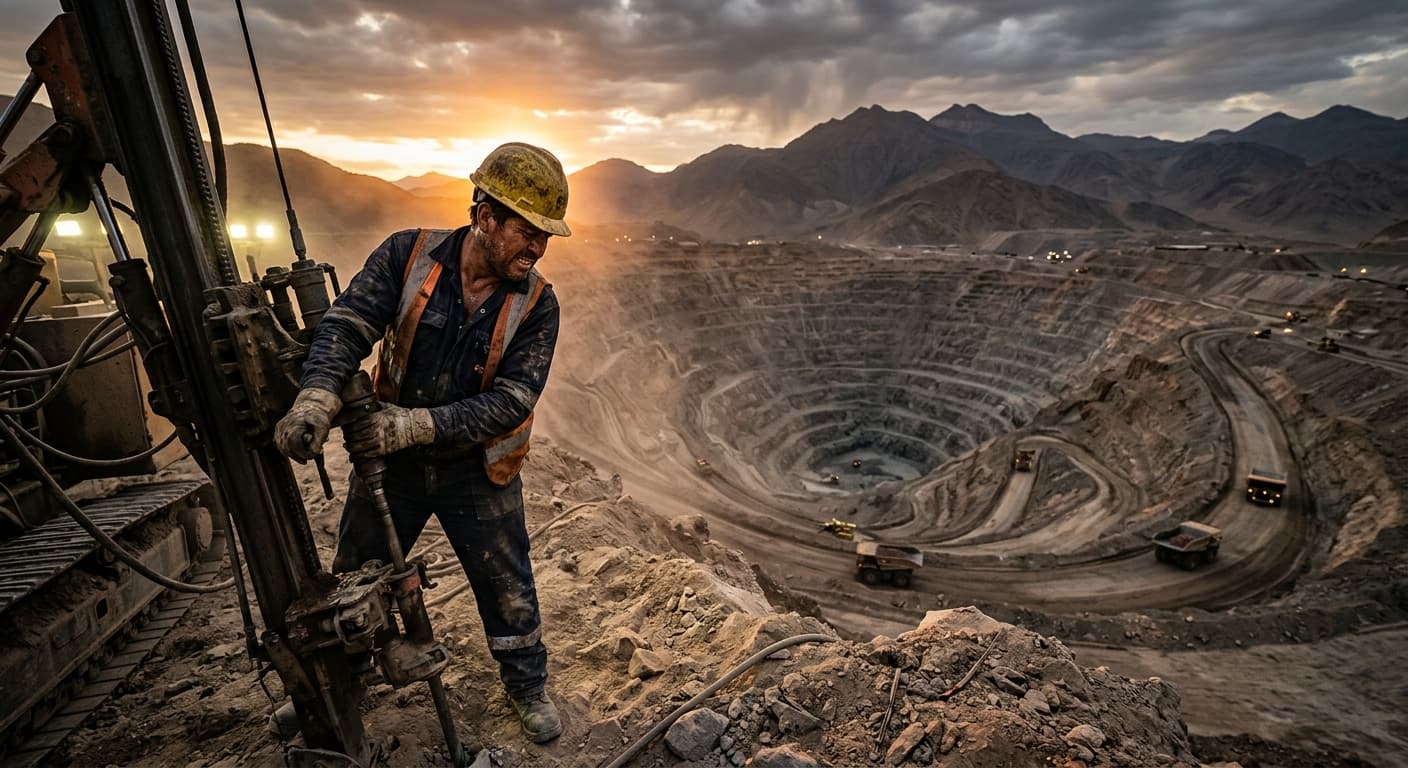
Copper: the metal of electrification, running out of time
If grids are the gate, copper is the lock. An electric vehicle requires at least two and a half times more copper than a conventional car; a medium-sized truck, four times as much, according to the Financial Times. A battery-powered car needs roughly four times the copper of a gas-powered one, and the charging infrastructure and grid upgrades to support them multiply that demand further, as
NPR reported. The World Bank classifies copper as a "cross-cutting" mineral used in more than eight clean-energy technologies, with demand projected to rise at an average annual rate of 1.6% through 2050 — accelerating faster under net-zero scenarios until 2035 before leveling off.
Supply is moving in the opposite direction. BHP estimates that existing mines will produce around 15% less copper in 2035 than in 2024, as ore grades have diminished roughly 40% since 1991, according to NPR. Bank of America predicts a copper supply shortfall of about 5 million tonnes — 15% of demand — by 2030, driven by annual demand growth doubling to 4% as renewables, grid spending, and EVs expand, the
Financial Times reported. The IEA estimates that it takes at least 16 years from discovery to first production at a new mine. Mines begun in 2026 will not produce until the early 2040s — well past the 2035 window Turkey's proposal targets.
The geopolitical geography of copper compounds the problem. Just two countries — Chile and Peru — account for 38% of mined copper, a concentration higher than oil production, the Financial Times notes. China occupies a central role in the entire copper value chain. The United States produced 1.2 million metric tons of mined copper in 2024 but has only 585,000 tons of domestic smelting capacity — half of what it mines — meaning the majority of U.S. ore must be exported for processing, according to the
Center for Strategic and International Studies. When President Trump announced tariffs on imported copper in July 2025 under the Trade Expansion Act, the move highlighted a gap that tariffs cannot close: the U.S. has two operating copper smelters, both running at capacity, and no new smelters coming online in the near term.
The World Bank's mineral-intensity report frames this as a structural shift from "a fuel-intensive to a mineral-intensive energy system." The copper production increase needed — roughly 230% by 2050 in net-zero scenarios — goes "well beyond current and planned production capacity," the World Bank found. Recycling is necessary but insufficient. Only about one-third of U.S. copper supply comes from recycled material, and the cable manufacturer Nexans aims to boost recycling from 5% to 30% of its supply — still leaving the bulk to primary extraction.
Who wins and who loses
The electrification bottleneck creates winners and losers that climate diplomacy has not fully reckoned with. Resource-rich developing countries with copper endowments — Chile, Peru, the Democratic Republic of Congo — stand to gain from surging demand, but only if they can build mines faster than the current 16-year cycle allows. The World Bank notes that installed renewable capacity in developing countries stands at just 40 watts per capita, versus over 1,100 watts in developed economies. The investment gap in emerging markets and developing economies (EMDEs) is staggering: annual clean-energy investment must more than triple from $770 billion in 2022 to $2.2–2.8 trillion by the early 2030s. Excluding China, that is a seven-fold increase.
Copper-producing countries with smelting capacity — India's Kutch Copper facility in Mundra, set to become the world's largest single-site smelter at 500,000 metric tons annual capacity — are quietly becoming strategic nodes in the electrification supply chain. The CSIS analysis recommends that the U.S. create favorable tariff regimes with non-adversarial countries that have smelting capacity, naming India explicitly.
The losers are the countries whose renewable build-out outruns their grid. Britain's consumer bills, already absorbing constraint payments, will rise further. The EU's €4 billion annual congestion cost will grow unless the Grids Package delivers. And Turkey itself, which still imports coal, gas, and oil, faces a version of the same bind: it can build solar and wind, but its grid — and the copper to wire it — may not keep pace with a 2053 net-zero target that requires deep power-sector decarbonization by 2040.
The IMF's June 2026 working paper on the EU's energy transition offers a narrow window of optimism: a policy mix combining expanded carbon pricing with partial recycling of revenues into green subsidies could meet EU climate and energy-security objectives "at little to no net fiscal cost," with electricity prices rising only modestly — about 5% by 2035. But the IMF's own authors flag an open question: whether their analysis "fully captures the additional grid capacity and inter-connectors required for the electricity sector to accommodate the simulated rise in renewables." The European Grids Package and Energy Highways initiative were proposed partly in response to exactly this gap.
Diplomat View
Turkey's 35% electrification proposal is the right metric at the right moment, but it exposes the flaw at the center of global climate diplomacy: the world measures renewable capacity and emissions targets, not the boring infrastructure — grids, smelters, mines, and workforce — that determines whether electricity can actually flow. The 1,700 GW of European renewables stuck in connection queues is not a paperwork problem; it is the leading indicator of a global electrification system whose supply chain cannot keep pace with its ambition. If COP31 produces a communiqué that names the electrification target but not the grid and mineral bottlenecks beneath it, the 35% figure will join the long list of climate numbers that sounded bold and changed nothing.
The forecast turns on three things. First, whether the EU's Grids Package reaches a negotiated agreement by early 2027 with real permitting acceleration, not just guidance documents. Second, whether copper smelting capacity — in India, in new U.S. facilities, in expanded Chilean operations — scales fast enough to close the projected 5-million-tonne shortfall by 2030. Third, whether the World Bank and multilateral development banks can mobilize the $2.2–2.8 trillion annual EMDE clean-energy investment that the IEA calculates is necessary — a seven-fold increase outside China. If any one of these falters, the electrification gap widens, and the 1.5°C pathway becomes a paper exercise. If all three hold, Turkey's presidency will have reframed climate diplomacy around the constraint that actually matters.
What to watch
- November 9–20, 2026: COP31 in Antalya — watch whether the final communiqué includes binding electrification-rate targets alongside the usual capacity pledges, and whether it names grid infrastructure and mineral supply as explicit priorities.
- Late 2026–early 2027: Negotiated agreement on the EU Grids Package — the first test of whether Europe can legally accelerate permitting and cross-border grid planning, or whether environmental-impact-assessment exemptions get stripped out by member-state resistance.
- 2026–2027: World Bank ECARES program expansion — the $2.96 billion increase in the regional renewable-energy envelope is a down payment; whether it leverages the private capital needed for the $1.2 trillion annual electrification investment IRENA projects will signal whether multilateral finance can scale fast enough.
Discover more
US Politics
House Ethics Committee Pushes Sexual Miscond.
The House Ethics Committee has shifted responsibility for sexual harassment settlement records to the Office of Congressional Workplace Rights, complicating disclosure efforts.

India
Delhi CM Rekha Gupta Blasts Opposition's Delm
Delhi CM Rekha Gupta's remarks on women's quota defeat reveal BJP's strategy for the 2029 Lok Sabha elections, focusing on delimitation.
India
700 Activists Accuse PM Modi of MCC Breach
Over 700 activists allege PM Modi breached election code with a televised address attacking opposition parties just before state elections.

Conflict & Security
Drone Warfare Killing Aid Workers at Unprec
Over 1,000 humanitarian workers killed in three years as cheap armed drones collapse legal protections. Gaza, Sudan, Ukraine, and DRC see deliberate targeting of aid convoys and hospitals with zero prosecutions.