Congress Protests BJP for Women's Reservation
Congress demands women's reservation on current Lok Sabha seats.
Model Diplomat8 min readIndia
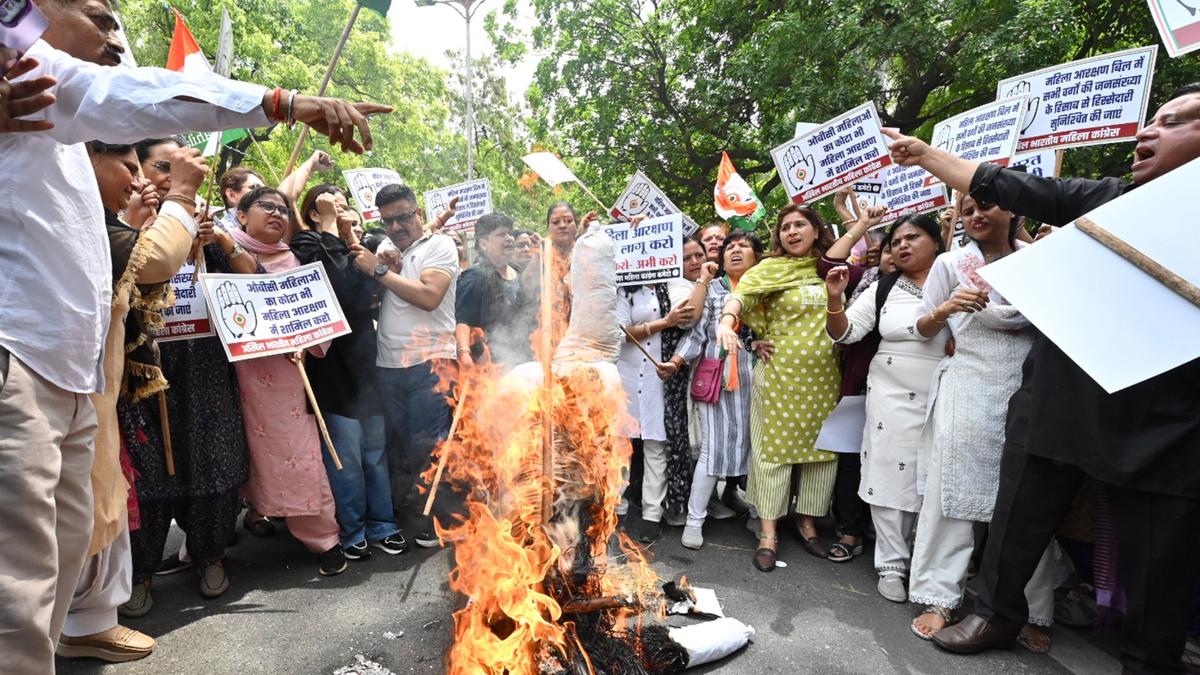
Congress marches on BJP office as women's quota fight turns into seat-map war
Congress demanded the 33% women's reservation be implemented on the existing 543 Lok Sabha seats after the BJP's delimitation bill failed 298-230 on April 17, 2026.
On April 19, 2026, hundreds of Congress workers led by Delhi unit president Devender Yadav marched on the BJP's Deen Dayal Upadhyay Marg headquarters demanding the immediate implementation of women's reservation on the current 543-seat Lok Sabha. The protest, coming 48 hours after the ruling NDA lost a constitutional amendment vote 298 to 230, is not what it looks like. The fight is no longer about whether one-third of Parliament goes to women — it is about which Parliament. Congress wants the quota inside the 543-seat house the opposition can compete in; the BJP wants it inside an 850-seat house redrawn on the 2011 census that would tilt the map toward its northern strongholds. The women's quota has become the vehicle. Delimitation is the cargo.
The Hindu reported that Yadav's cadres raised slogans outside the BJP office demanding the Nari Shakti Vandan Adhiniyam be enforced without waiting for the ongoing census or a fresh delimitation exercise. Congress general secretary Jairam Ramesh, quoted by
The Hindu, framed the government's defeat in blunt terms: "The issue was not women's reservation but Modi preservation." Rahul Gandhi, in a statement carried by
Al Jazeera, had already called the exercise "an attempt to seize power through delimitation and gerrymandering."
What the BJP tried to do — and why it lost
The trigger was a three-day special session called on April 16, 2026. The government tabled three bills together: an amendment to the 2023 women's reservation law, a Union Territories Laws (Amendment) Bill, and — critically — the Constitution (131st Amendment) Bill, 2026. As BBC News reported, the 131st Amendment would raise the constitutional ceiling on the Lok Sabha from 550 to 850 seats — 815 from the states and 35 from Union Territories — and re-anchor the women's quota to the 2011 census rather than the ongoing 2026 count.
On April 17, that bill was defeated. According to BBC Hindi's coverage of the division, the bill received 298 ayes and 230 noes. A constitutional amendment requires a two-thirds majority of those present and voting; the government needed roughly 352 votes and fell short by more than 50. Modi's National Democratic Alliance holds 293 seats in the 543-member lower house, per
Al Jazeera, and the June 2024 general election result — where the BJP itself won only 240 seats, down from 303 in 2019 — is exactly why this reform was always going to be a numbers problem.
The defeat matters because everything downstream flows from it. The 2023 Act — officially the Constitution (106th Amendment) Act, passed 454-2 in the Lok Sabha and 214-0 in the Rajya Sabha — reserves one-third of seats for women in the Lok Sabha, state assemblies and the Delhi assembly, but as
PRS Legislative Research summarises, it "will be effective once the census conducted after the commencement of this Bill has been published" and "based on the census, delimitation will be undertaken." Without a new census-plus-delimitation, or a fresh amendment to strip that condition out, the quota does not commence. The BJP's April 2026 bill was that fresh amendment. It failed.
The northern seat grab hiding inside a gender reform
The BJP's expansion plan reads on paper like proportional representation catching up with population growth. In practice, it reshapes the country's political geometry. India last redrew parliamentary seats on the 1971 census; successive governments froze the exercise, as the BBC notes, precisely because Hindi-belt states had higher fertility rates than the south, and delimitation would have punished states that ran successful family-planning programmes.
The Modi government's proposal breaks that four-decade truce. Al Jazeera documented that Tamil Nadu chief minister M.K. Stalin burned a copy of the delimitation bill on the floor of the assembly, calling it a "massive historic injustice." Members from southern states arrived in Parliament dressed in black. Arghya Sengupta of the Vidhi Centre for Legal Policy,
quoted by the BBC, noted that the government's chosen ceiling of 850 seats has no transparent basis in either the 1971 or 2011 census — a technical way of saying: the number was picked politically.
That is where the Congress protest gets its edge. If the quota is implemented today on 543 seats, roughly 181 seats become reserved for women within the existing state-by-state distribution — Uttar Pradesh keeps its 80, Tamil Nadu keeps its 39. If it is implemented after an 850-seat delimitation on 2011 census data, most of the 307 new seats accrue to Uttar Pradesh, Bihar, Madhya Pradesh and Rajasthan, where the BJP is dominant. The women's quota is the trojan horse. The seat expansion is the payload.
Who benefits — and who loses — under each scenario
The politically unexpected beneficiary of the Congress position is not Congress. It is the DMK, the Trinamool Congress and the Left — southern and eastern regional parties whose seat share is fixed if delimitation is decoupled from the quota. That is why John Brittas, CPI(M) member of the Rajya Sabha, told the BBC: "We support reserving 33% seats for women based on the current strength of parliament. We also want a further freeze on expanding overall seats in the parliament until population trends stabilise."
The unexpected loser is the BJP's own gender playbook. As BBC Hindi analysis noted, senior political journalist Sharad Gupta argued that the government tabled the bills during ongoing state elections — including West Bengal — knowing it lacked the numbers, in order to blame the opposition for blocking women's rights. That narrative has now collapsed on itself: the BJP moved the bill, the BJP lost the bill, and the opposition is on the streets demanding the version the government could have delivered by ordinary majority — a simple amendment removing the census-and-delimitation trigger from Section 334A.
Home Minister Amit Shah, per BBC Hindi, accused the opposition of committing "sin" (paap) against women; Modi himself said opposition MPs would face "punishment" at the polls. But Priyanka Gandhi Vadra countered in Parliament that the government was "attacking the Constitution" and targeting southern, north-eastern and smaller states. In the fortnight since, that framing has stuck.
The bureaucratic clock the government does not control
Even if the BJP re-tabled a stripped-down version tomorrow, the census timeline works against it. The Asia Pacific Foundation of Canada warned in 2023 that "the combined census and delimitation processes may take years to implement." The BBC's
reporting on Census 2027 confirms the calendar: house listing began in April 2026, population enumeration is scheduled for February 2027, and caste enumeration — added in 2025 under opposition and civil-society pressure, per
Al Jazeera — will follow. The last delimitation commission took five years to file its final report. Do the arithmetic and the earliest realistic implementation on 2026 census data is 2032 — a full parliamentary term after 2029.
That timeline is what makes the Congress demand operationally meaningful, not just rhetorical. Ronojoy Sen of the National University of Singapore's ISAS wrote when the 2023 Act was passed that the government "has waited till the end of Prime Minister Narendra Modi's second term to do so. Since the women's quota will not be implemented before 2029 or even later, this was most likely done with an eye on its impact on women voters." Two years and a bruising 2024 election later, that political calculation has curdled. The quota was supposed to buy the women's vote in 2024; it did not stop the BJP from losing 63 seats. Now the delay is a liability.
What the numbers say about the underlying problem
India ranks 141st out of 185 countries on women's parliamentary representation, per the Asia Pacific Foundation. PRS Legislative Research senior analyst Tushar Chakrabarty, cited by the BBC, calculated that the first Lok Sabha in 1952 had 5% women; the figure crossed 15% only after the 2019 election and sits at around 14% today. In state assemblies, the average is roughly 9%. The 2023 Act would nearly triple that overnight — but only when it takes effect.
The Observer Research Foundation notes that the 1992 amendments reserving one-third of local-body seats have already made India one of the top-performing countries globally on women's political representation at village and municipal level. That is the domestic proof of concept the BJP itself invokes. It is also the argument Congress is now using to strip the delay clause: if it works at the panchayat level without waiting for a census, why not at the Lok Sabha level?
Diplomat View
The Congress protest at BJP headquarters is best read as the opening move in a two-year campaign to make delimitation, not women's quota, the ballot question of 2027-29. The party's operational demand — a simple-majority amendment repealing the "commencement upon census and delimitation" clause of Section 334A — is deliberately achievable: it does not need two-thirds, only a floor majority. That puts the BJP in a fork. Accept it, and the party's northern seat expansion — the actual prize — dies for a decade. Refuse it, and Congress owns the "Modi preservation, not women's reservation" line through the Bihar, West Bengal and Tamil Nadu campaigns.
Our call: the government does not table a fresh delimitation bill before the 2027 census data is published, and instead tries to defer the political cost by extending the special-session pattern — floor votes it knows will fail, blaming the opposition. The forecast changes if two things happen. First, if a southern regional party breaks ranks — Andhra Pradesh's TDP is the plausible defector, given its NDA partnership — the two-thirds arithmetic becomes reachable and delimitation returns. Second, if the Supreme Court entertains a PIL forcing implementation on existing seats under Article 14 (equal protection) grounds, Parliament loses control of the timeline entirely.
What to watch:
- Monsoon Session, July–August 2026: whether Congress introduces a Private Member's Bill to strike the census-delimitation trigger from the 2023 Act. A government whip against it is the tell.
- February 2027: population enumeration and caste enumeration phase of Census 16. The caste question determines whether an OBC sub-quota within women's reservation becomes politically inevitable.
- State polls in Bihar (late 2026) and West Bengal (2026): the first electoral test of whether "Modi preservation" as an attack line lands with women voters — the same bloc the BJP built the 2023 Act to court.
The bottom line: Congress is not protesting for women's reservation — it is protesting to lock the 33% quota inside the current 543-seat Lok Sabha before the BJP can redraw the map. After the April 17 defeat, the opposition holds the veto on delimitation, and the ruling party holds the veto on immediate implementation. Whoever blinks first loses the next election's gender narrative. On today's numbers, India's women wait either way._
Discover more

India
INDIA Bloc's Delimitation Strategy
The INDIA bloc is using delimitation and women's reservation to challenge the BJP's federalism narrative, setting up a high-stakes fight over representation.
India
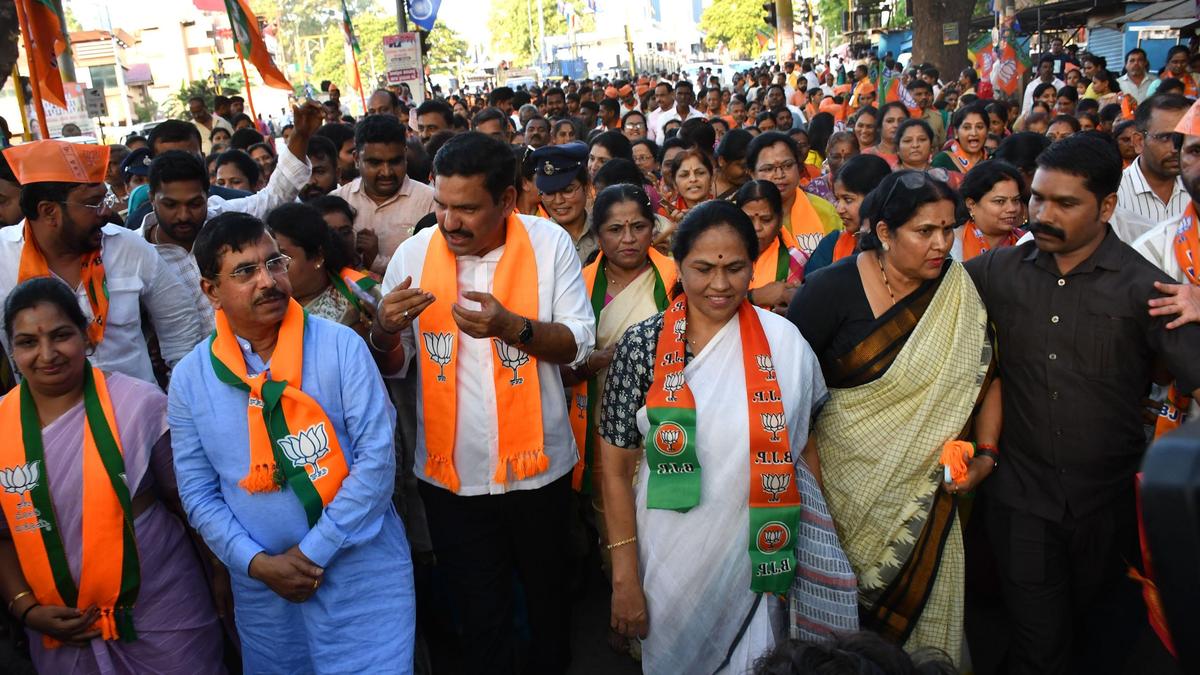
BJP Uses Hubballi Protests for Women's Quota
The BJP is using Hubballi protests to pin blame for delays on women's reservation onto Congress in Karnataka, sharpening its women's quota political offensive.
India
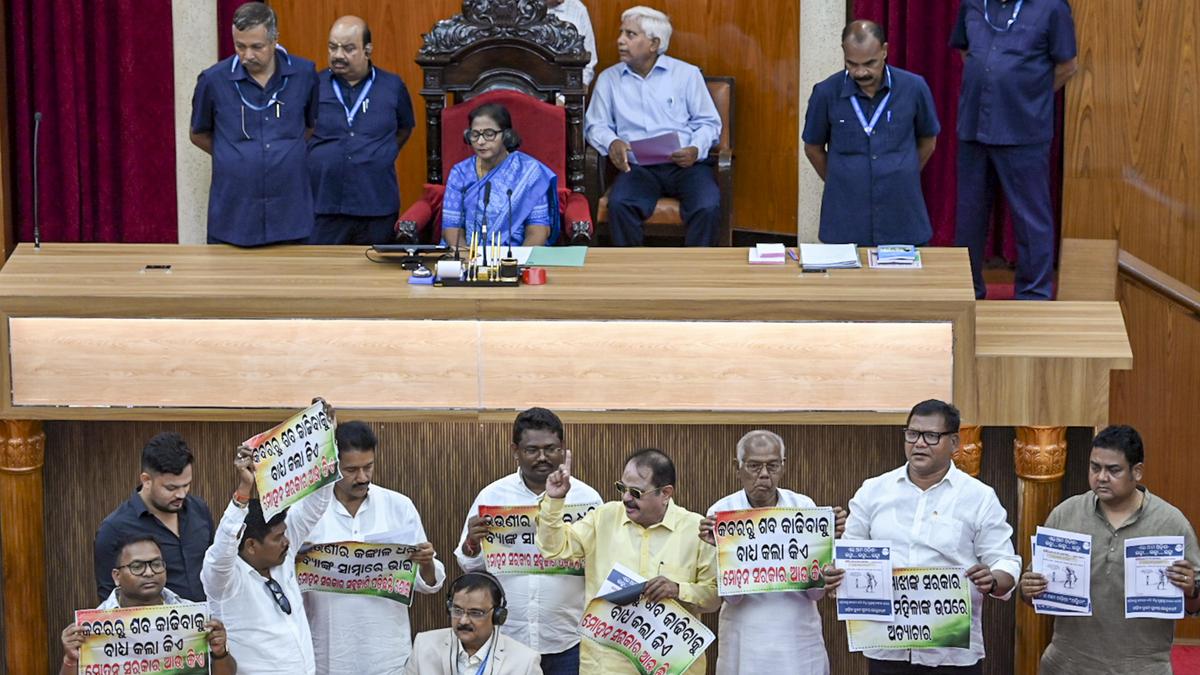
Odisha's Women's Reservation Debate
The fight over women's reservation in Odisha is shaping up as a calculated BJP and BJD strategy aimed squarely at gaining ground before the 2029 elections.
India
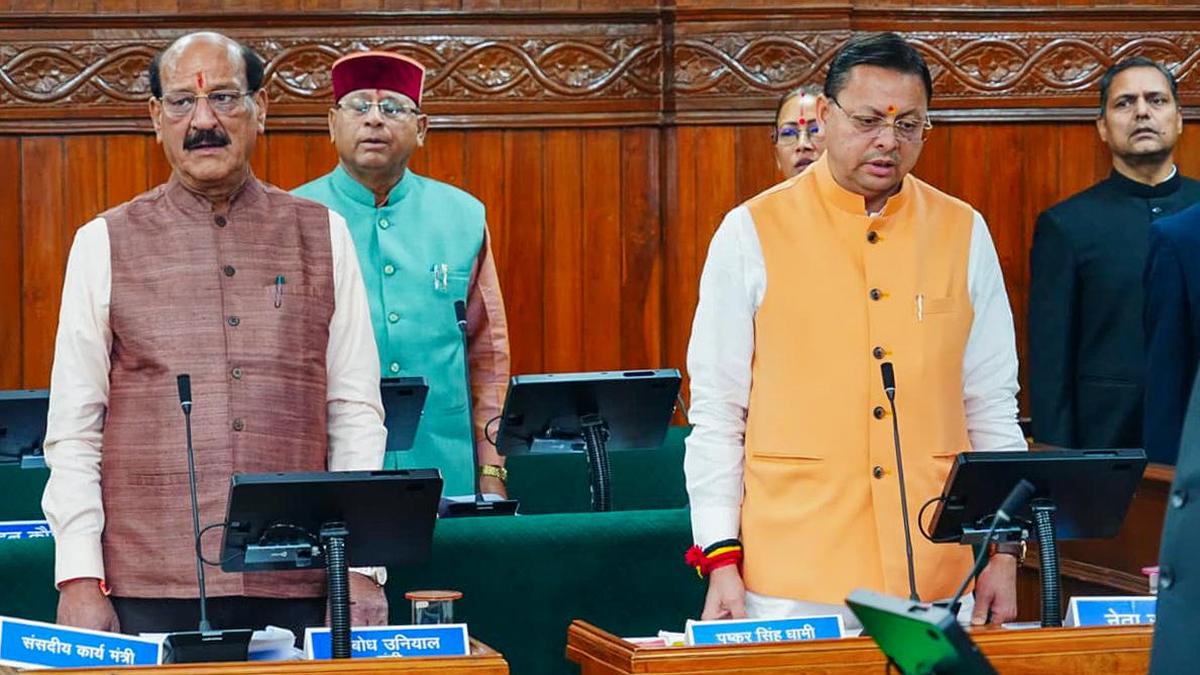
Uttarakhand's Push for Women's Reservation
Uttarakhand CM Dhami's push for women's reservation is a strategic political move that follows national defeat and aims to reclaim momentum for the BJP.