Congress MP Privilege Notice Against PM Modi
Congress challenges Modi's remarks on MPs' votes.
Model Diplomat8 min readIndia
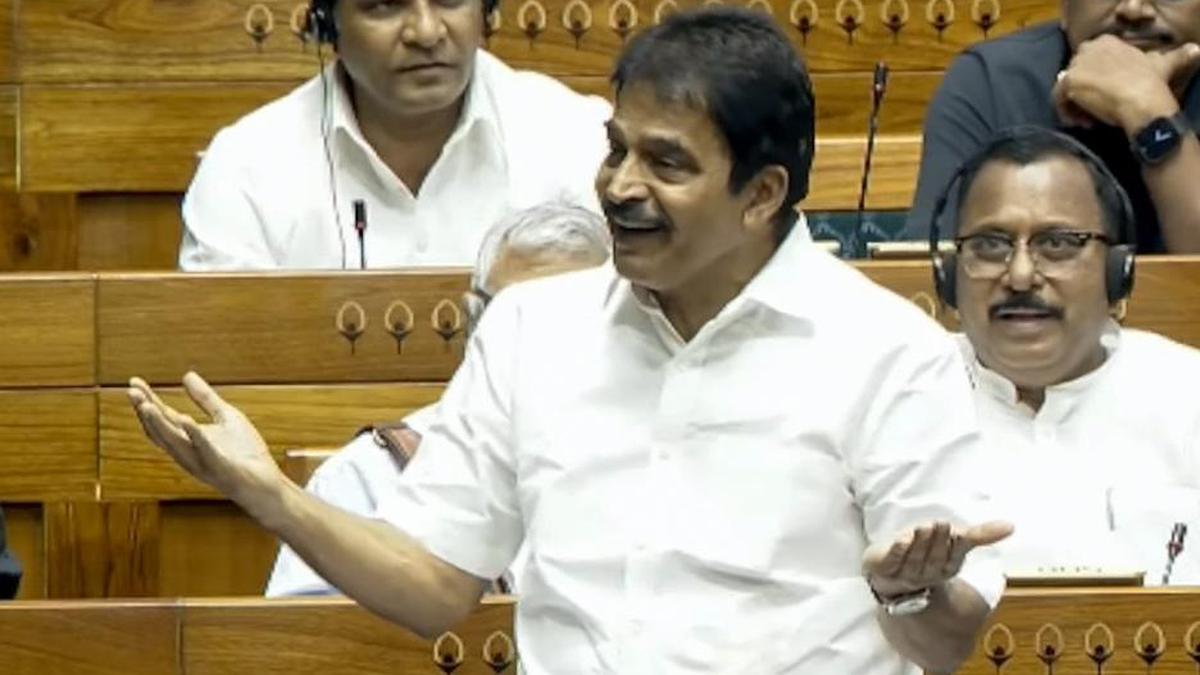
Congress Files Privilege Notice Against PM Modi Over 'Foeticide' Speech
Congress MP K.C. Venugopal's April 21, 2026 breach-of-privilege notice against PM Modi turns a lost bill into a fight over how prime ministers can talk about MPs who vote against them.
On April 21, 2026, Congress general secretary K.C. Venugopal walked a five-page letter into Lok Sabha Speaker Om Birla's office and turned an ordinary political grievance into a constitutional test: can a prime minister address the nation on television and accuse the opposition of "sin" and "foeticide" for voting a constitutional amendment down, without breaching the privileges of the House itself? The notice is unlikely to be admitted — the Speaker is from Modi's own party — but that is precisely why it matters. Congress is not trying to punish the prime minister. It is trying to force a paper trail that reframes the delimitation defeat as executive contempt of Parliament, and it is doing so on the eve of a fight over the 2027 census that will decide who governs India for the next generation.
What actually happened
The chain begins on April 17, 2026, when the Constitution (One Hundred and Thirty-First Amendment) Bill, 2026 failed on the floor of the Lok Sabha by 298 votes to 230 — sixty-two short of the two-thirds majority a constitutional amendment requires, according to the NUS Institute of South Asian Studies. It was the first constitutional amendment ever defeated during Narendra Modi's premiership. The bill would have expanded the Lok Sabha from 550 seats to 850 and operationalised the 2023 women's reservation by tying it to a delimitation based on the 2011 census — a package the
Carnegie Endowment for International Peace described as using the women's quota "as a vehicle to push through a broader reengineering of India's electoral design."
The next day, April 18, 2026, Modi delivered a 29-minute address to the nation. The NUS ISAS quotes him verbatim: "[The] opposition has committed a sin by opposing women reservation and they will be surely punished for this." He accused the Congress, DMK, TMC and Samajwadi Party of "foeticide" — killing the reservation legislation — and, per the
BBC Hindi service's transcript, apologised to the "mothers and sisters" of India for the failure and warned that "those who opposed [women's reservation] will pay the price for a long time."
Three days later, Venugopal submitted his notice. According to The Hindu, he wrote that "a prime minister criticising members of Parliament for exercising their constitutional voting rights on the floor of the House amounts to a breach of the privileges of every member."
News18 quoted the operative sentence from the letter itself:
"Such statements by the highest executive functionary of the country constitute a serious breach of privilege and contempt of the House."
The Times of India reported Venugopal's parallel charge of "blatant abuse of power" — that the prime minister had used Doordarshan's national broadcast infrastructure to attack legislators for a legally cast parliamentary vote.
Scroll added that Congress framed the address itself, not merely its content, as the offence: a televised rebuke of MPs delivered outside the House, over which the House has no right of reply.
Why this is not really about the speech
Under the Lok Sabha's Rules of Procedure, a privilege notice must be filed with the Speaker before the day's sitting begins; the Speaker then decides, at his sole discretion, whether to admit it, refer it to the Committee of Privileges, or reject it outright. In practice, admissions are rare. The Vivekananda International Foundation notes that neither House even publicly maintains a list of privilege complaints — a silence that itself suggests how few travel the full distance. Speaker Om Birla, re-elected in a rare contested vote in June 2024 as
Al Jazeera reported, is a BJP MP from Kota; he has not yet publicly ruled on the notice, and the seventh session of the 18th Lok Sabha in which Modi spoke has since concluded, per the
Press Information Bureau.
Congress managers know this. Which is why the notice is best read not as a legal instrument but as a documentary one. Scholar Arghya Sengupta and colleagues, writing in an SSRN paper on legislative privilege, observe that in India privilege has drifted from a shield for legislators into "a method of disciplinary control" wielded by whichever side controls the chair. Congress is inverting that logic: filing a notice it expects to lose, so that the record shows the prime minister was accused, in writing, of contempt of the House for the exact speech that framed the BJP's April–May state-election campaign.
The real audience: the 2027 census and the delimitation fight
The angle the wires missed is what comes next. The Carnegie Endowment's Milan Vaishnav makes the underlying arithmetic clear: had the 131st Amendment passed, Uttar Pradesh would have gained roughly 40 Lok Sabha seats, Bihar 20 and Maharashtra 24, while Tamil Nadu would have moved from 39 to 59 and Kerala's share would have shrunk in relative terms. The next census, which began April 1, 2026, is due to yield data by 2028; a fresh delimitation on those figures would produce a sharper northward redistribution still, unless Parliament amends the Constitution first — the same amendment that just failed.
That is the fight Congress is preparing the ground for. By putting on record that the prime minister used a national address to accuse MPs of "foeticide" for a vote the BBC noted was cast within their constitutional rights, Congress builds a template for the next round: any future Modi speech attacking legislators who oppose delimitation can be tagged, cited and re-filed against the same doctrine. The notice is a seed, not a weapon.
Who won the actual fight — and who quietly lost
The state elections that followed complicate every simple reading of the address's effect. The BBC's results coverage shows the BJP breached West Bengal for the first time, winning 207 of 294 seats and ending Mamata Banerjee's fifteen-year run. In Assam it returned for a third term. In Tamil Nadu, however, actor-turned-politician Joseph Vijay's Tamilaga Vettri Kazhagam took 108 seats — collapsing both the DMK and the AIADMK — while Kerala went to the Congress-led UDF, per the
NUS ISAS post-poll analysis.
Two conclusions follow. First, Modi's "foeticide" framing plainly worked in Bengal, where the BJP's own post-poll survey data suggests women shifted decisively away from the TMC on welfare and law-and-order grounds. Second, it did not work in the south: Tamil Nadu voters punished the DMK, but they replaced it with a party that campaigned openly against delimitation, not with the BJP. The southern veto on redrawing India's political map is now, if anything, stronger.
That is the awkward result for the government. It won the biggest prize on the board, West Bengal, but the constitutional pathway to translating northern victories into more northern seats — the 131st Amendment — remains blocked, and every future attempt will now be litigated inside the House with Venugopal's April 21 notice cited as precedent.
The historical parallel Congress is invoking
There is a reason the party chose a privilege notice rather than a censure motion or a Supreme Court petition. India's most consequential post-independence privilege inquiry was the 2005 "cash-for-questions" case, in which the Lok Sabha expelled ten members after a probe panel found their conduct "unethical," as Al Jazeera reported at the time. More recent invocations include the Congress-led privilege demand against IT Minister Ashwini Vaishnaw over Pegasus in 2022, covered by the
BBC, and the Ethics Committee expulsion of TMC MP Mahua Moitra in December 2023, also reported by the
BBC. All three involved backbenchers or ministers. None targeted a sitting prime minister on the record of a nationwide address.
That is the constitutional novelty here. Article 105 grants MPs freedom of speech "in Parliament" — the same immunity, per India-focused analysis at the European Parliament's research service, that mirrors Article 9 of the English Bill of Rights, 1689. Congress's argument is that the prime minister's speech from outside Parliament interfered with that immunity by publicly punishing MPs for its exercise. It is a novel claim in Indian practice, and even sympathetic scholars, including in the
SSRN survey of Indian legislative privilege, concede the jurisprudence is thin and the Speaker's discretion nearly absolute.
Diplomat View
The privilege notice will almost certainly die in Speaker Birla's in-tray, and Congress managers know it. Their play is longer. By anchoring the record with a formal, itemised charge that a prime minister committed contempt of the House for a televised speech, Congress is pre-positioning a doctrinal marker for the delimitation fight that will define Indian politics from the moment the 2027 census data lands. Expect Venugopal's April 21 letter to be cited verbatim in every future opposition intervention on redistribution, and expect the BJP — which now controls West Bengal but has plainly lost the south — to press ahead with a re-tabled 131st Amendment during a future session, banking on incremental defections from smaller parties.
The forecast becomes falsifiable in three places. If Speaker Birla admits the notice to the Privileges Committee, the BJP has miscalculated on optics and the ruling deserves rewriting. If the government re-tables the constitutional amendment before the 2027 census results — a genuine possibility given its Rajya Sabha arithmetic improves after upcoming state-nominated retirements — Congress's incremental documentary strategy has failed and it will need a floor-fight strategy instead. And if the Election Commission's next round of electoral-roll revisions expands to more states in the manner alleged in West Bengal by Al Jazeera, the privilege framework itself becomes secondary to a bigger institutional fight.
What to watch next:
- Monsoon session opening (expected late-July 2026): the first sitting at which Speaker Birla could publicly rule on, refer, or reject the notice.
- Draft census schedule (Q4 2026): the Registrar General's publication of enumeration timelines will determine when delimitation legally becomes actionable.
- Any re-tabling of the 131st Amendment: the government has signalled it will return to the seat-expansion package; the vote count on second attempt is the single cleanest test of whether the April 17 defeat was a floor-management accident or a durable opposition consensus.
The Bottom Line
Congress's privilege notice against Narendra Modi is not a bid to punish the prime minister — it is a documentary marker being laid down for the delimitation war that will follow the 2027 census. The party is trading a near-certain procedural loss now for a cited precedent it can weaponise every time a future government address attacks MPs for defending the seat share of the south. If Speaker Birla admits the notice, Congress has scored an accidental win; if he buries it, the letter still becomes the opening brief in a much larger fight over who redraws India's political map.
Discover more
India
Congress Accuses Modi of Stalling Women's Law
Congress accuses Modi of stalling women's reservation law by linking it to delimitation, revealing a deeper electoral strategy.
India
CPI MP Accuses PM Modi of MCC Violations
CPI MP P Sandosh Kumar alleges PM Modi breached the Model Code of Conduct in Tamil Nadu, raising election integrity concerns before the 2026 Assembly polls.
India
BJP Congress Clash Over MP Bill Defeat
The BJP's defeat of the women's quota amendment sparks a political narrative war with Congress, impacting future elections.

Conflict & Security
Drone Warfare Killing Aid Workers at Unprec
Over 1,000 humanitarian workers killed in three years as cheap armed drones collapse legal protections. Gaza, Sudan, Ukraine, and DRC see deliberate targeting of aid convoys and hospitals with zero prosecutions.