Comoros Secures $43M IMF Support
First IMF financing in a decade for Comoros
Model Diplomat3 min readafrica
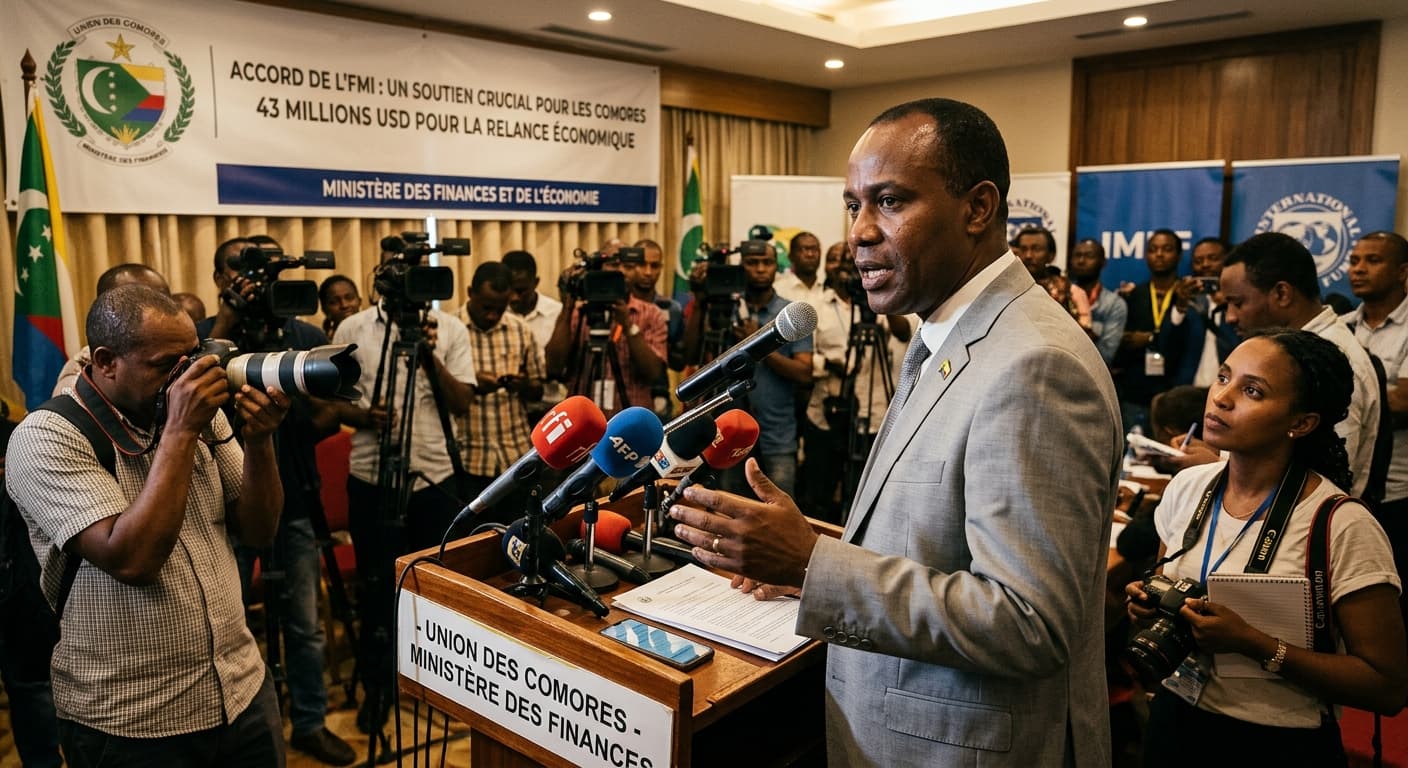
Comoros Locks In $43 Million IMF Lifeline — Its First in a Decade
A four-year ECF arrangement breaks a 10-year financing drought for the fragile island state, but every dollar comes with reform conditions that will test President Assoumani's political resilience ahead of 2024 elections.
On June 1, 2023, the IMF Executive Board approved a four-year Extended Credit Facility (ECF) arrangement for the Union of the Comoros with access to SDR 32.04 million — approximately $43 million — marking the country's first financing engagement with the Fund in a decade. The staff report, published in full in IMF Staff Country Reports Volume 2023 Issue 215, lays bare the calculations behind what is simultaneously a bailout, a reform straitjacket, and a catalytic signal to other donors.
The power dynamic is straightforward. Comoros faces what the IMF terms a "high risk of debt distress," with fiscal revenue averaging barely 10% of GDP and poverty hovering around 38% under the PPP $3.20/day threshold.
IMF Press Release No. 23/194 frames the program around reducing fragility and building resilience, but the underlying message is that Moroni has no viable alternative — without the ECF, international reserves would draw down to "well-below adequate levels," as the
IMF eLibrary staff report states explicitly. The Fund holds the leverage, and it is extracting three structural concessions in return.
What the Money Buys — and Costs
The ECF is structured around three reform pillars. First, domestic revenue mobilization: phasing out tax exemptions, strengthening customs and tax administration, and widening the taxpayer base. Tax revenue, stuck at around 8.6% of GDP, is targeted to rise progressively. Second, financial sector stabilization: completing the long-delayed restructuring of the state-owned postal bank SNPSF and enhancing the Central Bank's supervisory capacity. Third, governance: operationalizing a new anti-corruption law, including the creation of an autonomous Anti-Corruption Chamber, and improving public financial management.
The immediate beneficiary is the Assoumani government, which gains budget support liquidity and the IMF's implicit endorsement. That endorsement proved catalytic: in September 2023, the World Bank approved a $20 million Development Policy Financing (DPF) grant — the first in a programmatic series — explicitly aligned with ECF reforms on debt management, SOE transparency, and social resilience. France's AFD and the African Development Bank are also providing parallel budget support, according to the
IMF's first review documentation.
The losers are the entrenched beneficiaries of the status quo: tax-exempt importers of construction materials, ghost workers on the civil-service payroll, and interests tied to the state-owned postal bank whose restructuring threatens to surface non-performing loans. The anti-corruption chamber, once operational, could also threaten politically connected figures — which is precisely why its creation has been repeatedly delayed through multiple IMF program iterations.
Political Calculus: Reforms vs. Re-Election
The timing is fraught. President Azali Assoumani, in office since 2016, faced re-election in January 2024. The ECF staff report, finalized in mid-2023, noted the election timeline explicitly and flagged that "if re-elected, President Azali Assoumani would remain in power until 2029." The program's structural benchmarks — fiscal consolidation, tax code reforms, and anti-corruption measures — could generate domestic friction precisely when Assoumani needed political capital.
Early program performance was mixed. By the first review in December 2023, Moroni had met four of six quantitative performance criteria but missed targets on external arrears accumulation and domestic arrears — weaknesses the IMF attributed to "liquidity management capacity." Seven of eight structural benchmarks were met, but the SNPSF restructuring and anti-corruption chamber remained the perennial laggards.
What to Watch
The anti-corruption chamber's operational launch — selection of members was completed only on May 23, 2024, nearly a year after the program began. Whether the chamber investigates politically sensitive cases or remains a paper institution will signal whether governance reform is genuine or performative.
The SNPSF postal bank restructuring, which has dragged across multiple IMF programs and now involves the French development agency AFD, the World Bank, and the Fund itself. A delayed launch of the successor bank (BPC) pushed supervisory benchmarks into 2025.
Assoumani's re-election mandate, secured in January 2024, gives him political cover to pursue reforms — but post-election social tensions and a July 2024 cabinet reshuffle introduced new faces whose commitment to the ECF reform agenda remains untested against domestic patronage pressures. The third review, published December 2024, noted that "tax revenue administration efforts were hampered by post-elections unrest, the cholera epidemic, and severe weather events."
Discover more
International Relations
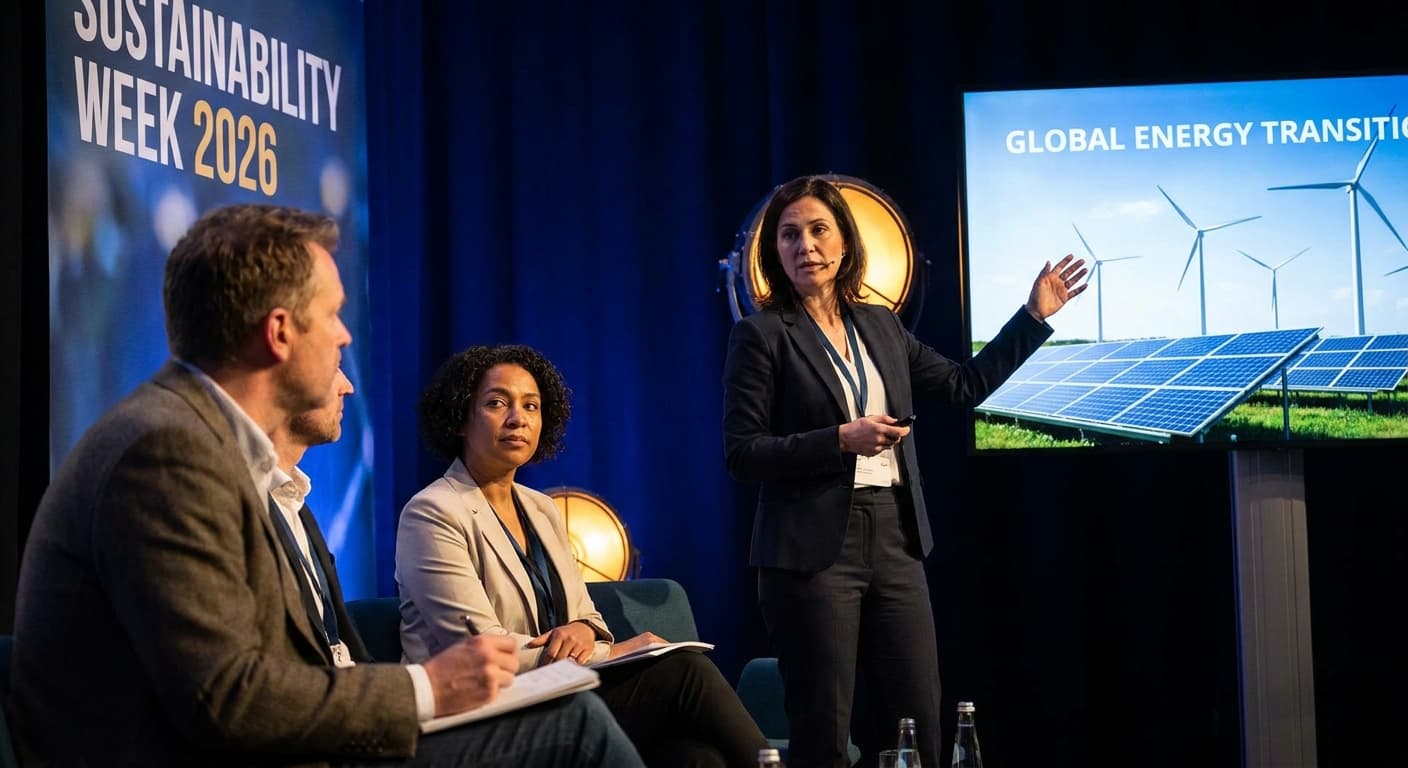
Economist Impact Sustainability Week 2026
Economist Impact Sustainability Week 2026 spotlights the energy transition, AI in clean technology, and supply chain resilience as themes for global leaders.
India
Rajnath Singh's Durga Squad for 2026 Polls
Rajnath Singh's Durga Squad promised women's safety in Bengal but has since disappeared from the agenda, revealing BJP's true priorities.

US Politics
US Military Funding Request for Iran Looms
The White House Budget Director signals a formal funding request for military operations against Iran, foreshadowing rising tensions and congressional clashes.

Economics
Fed's Amex AML order puts correspondent banking on notice
Federal Reserve's Amex AML order requires board-level controls and a 90-day plan; OCC fined the bank $350 million over enterprise-wide deficiencies.