Colombia's Urban Defense Blocs: A Revival
Decree to create urban security blocs raises concerns.
Model Diplomat7 min readLatin America
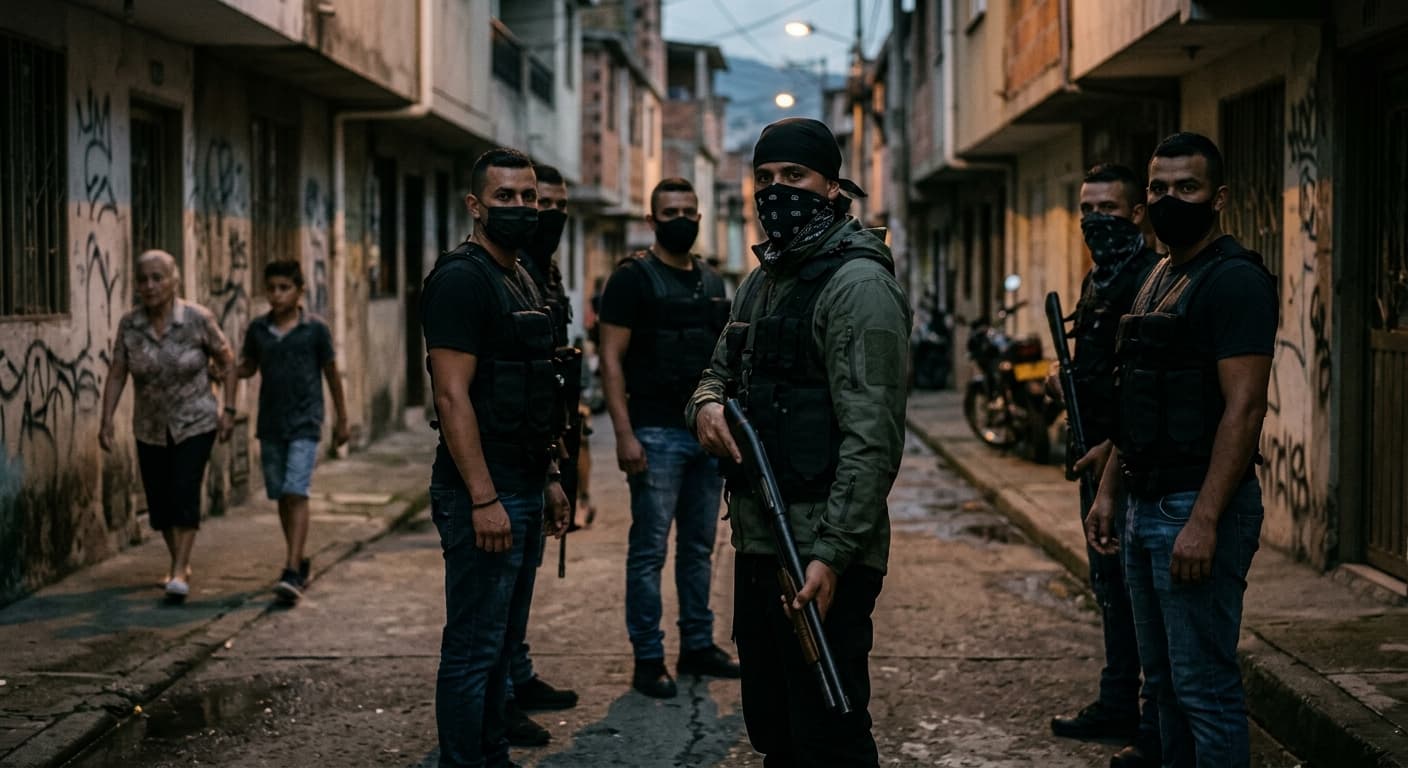
Colombia's Urban 'Defense Blocs': The Convivir Ghost Returns
President-elect Abelardo de la Espriella will sign a decree on August 7, 2026 creating urban security blocs in five cities. Critics warn it revives the 1994 Convivir architecture that seeded the AUC paramilitaries.
Colombia's president-elect, Abelardo de la Espriella, announced on July 5, 2026 that his first act after taking office on August 7 will be a decree creating Bloques de Defensa para la Seguridad Urbana in Bogotá, Medellín, Cali, Barranquilla and Bucaramanga — a promise that within 48 hours drew accusations from the outgoing left and civil-society researchers that the incoming government is rebuilding, almost line-for-line, the presidential-decree architecture that produced the Convivir vigilante network in 1994 and, within three years, was declared partially unconstitutional after having incubated the United Self-Defence Forces of Colombia (AUC). The wager of this piece: the decree will almost certainly be signed, will almost certainly be litigated inside its first month, and — because the president signing it is himself a former defence lawyer for paramilitary bosses — the political cost of the analogy has already been priced into his mandate. What is at stake is not whether Colombia gets a new security policy. It is whether the 1991 constitutional settlement on the state's monopoly of force holds under a president who ran, and won, on breaking with it.
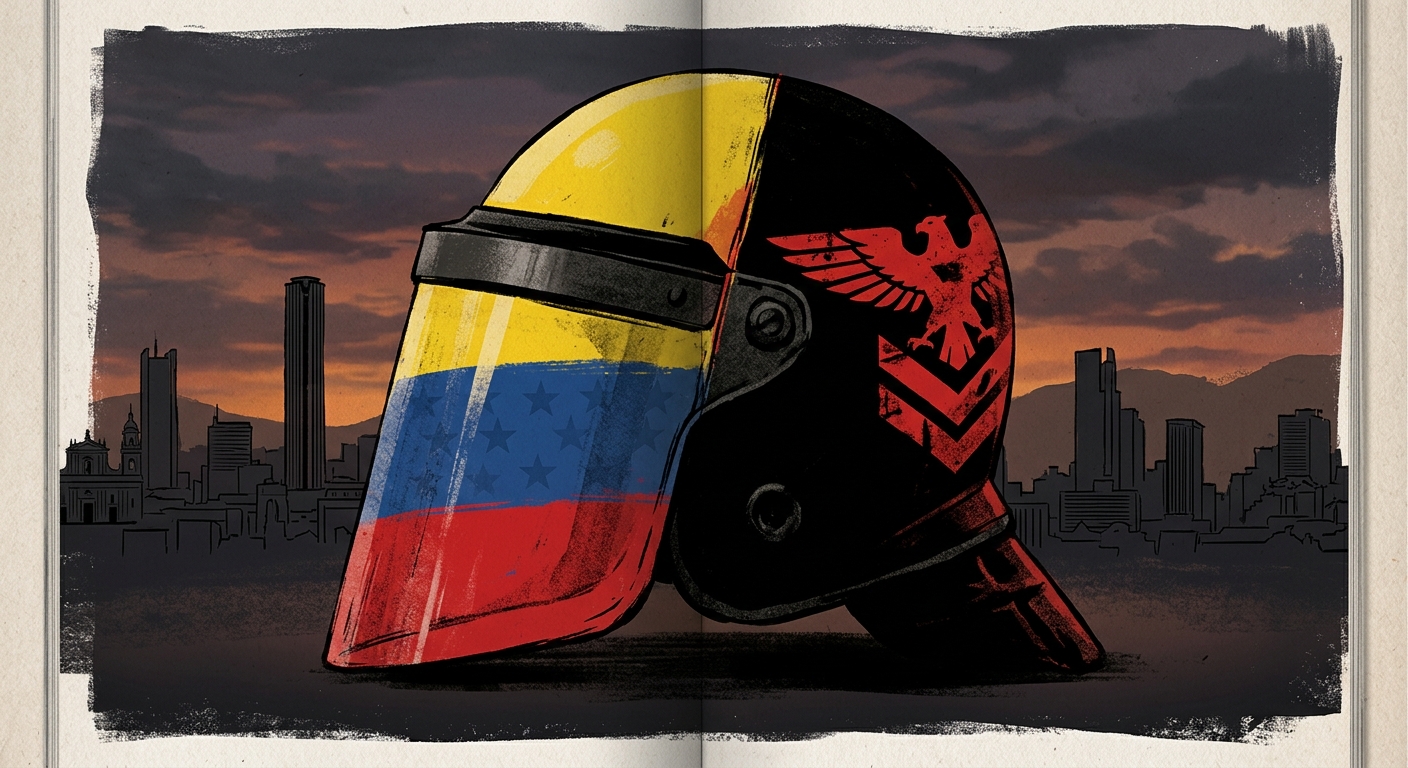
What De la Espriella actually proposed
De la Espriella, a 47-year-old criminal-defence lawyer who beat leftist senator Iván Cepeda by roughly 250,000 votes — 49.66% to 48.70% — in the June 21 runoff with a record 63.6% turnout, unveiled the plan on X the afternoon of July 5. According to EL PAÍS América Colombia, the decree will be signed on inauguration day and will convene the mayors of the five largest metropolitan areas into a permanent joint operation against homicide, extortion and street robbery. Detail is scarce; the political frame is not. The president-elect used campaign appearances,
according to BBC Mundo, to say military veterans would form a "primera línea" of urban security alongside police and soldiers, without specifying legal figure, chain of command or use-of-force protocol.
Local reactions split along the country's now-familiar cleavage. Bogotá mayor Carlos Fernando Galán told EL PAÍS he was "ready to work in a coordinated way" with the new government. Cali's Alejandro Eder — a centrist who has spent his term asking Bogotá for more counter-narcotics muscle — welcomed the initiative and said he had long demanded "more capacities for cities." Medellín's Federico Gutiérrez, one of the president-elect's most visible urban backers, treated the decree as vindication. The city vote confirms the alignment: in the runoff, De la Espriella carried Medellín with 64.5%, while Cepeda won Bogotá (52.5%), Cali (59.6%), Barranquilla (54.2%) and Cartagena (65.2%), according to figures compiled by BBC Mundo's live coverage.
The opposition read the same text differently. Outgoing president Gustavo Petro called the plan an "anacronismo" and argued that violence in the country "does not grow, it stays stable" and is driven by turf disputes between narco-trafficking groups, not by an absence of urban firepower. Pacto Histórico congresswoman María Fernanda Carrascal was blunter, telling Infobae the decree was "the same recipe as the Convivir, the legalisation of paramilitarism." Senator Alejandro Ocampo asked whether Colombians should expect "paramilitarismo 2.0." A follow-up
Infobae report documented an escalating "alerta máxima" from human-rights groups and Congressional opposition within 24 hours of the announcement.
The technical objection, put by Fundación Ideas para la Paz–linked analyst Jorge Mantilla to EL PAÍS, is more precise than the political one: there is "a kind of superposition of two functions that have traditionally been kept separate" — seguridad ciudadana, which corresponds to the National Police, and seguridad pública, which corresponds to the Army. Mantilla warned that without explicit institutional delimitation, the initiative risks reproducing "a scenario like the Convivir or the bloques de búsqueda of the eighties."
The Convivir parallel is not rhetorical — it's structural
The reason the paramilitary charge stuck within hours is that Colombians of a certain age recognise the mechanism. In February 1994, the Gaviria government issued Decree 356, creating the Servicios Especiales de Vigilancia y Seguridad Privada, licensed under the Ministry of Defence's Superintendencia de Vigilancia. Álvaro Uribe, then governor of Antioquia, championed them under the popular name "Convivir." A widely-cited Amnesty International report documents that Decree 2535 of 1993 had already authorised civilian use of weapons previously restricted to the armed forces; Decree 356 then routed those weapons into community-level security cooperatives operating in "zonas de alto riesgo." Amnesty concludes that the CONVIVIR project "sought to create legal paramilitary structures to maintain control over areas from which the guerrilla had been expelled," and that many groups "assumed the CONVIVIR name" while operating in coordination with the paramilitaries and armed forces.
By 1997 the Constitutional Court, in Sentencia C-572/97, ruled that the state could delegate the public service of security to private actors — but that "en ningún caso y por ningún motivo puede autorizarse la tenencia y porte de armas de guerra, o de uso exclusivo de la Fuerza Pública, a los particulares." A parallel ruling stripped Convivir of restricted armament. Between the two decisions, according to a peer-reviewed
Journal of Politics in Latin America study, most Convivir cells migrated directly into the Autodefensas Unidas de Colombia — a confederation later found by Justice and Peace tribunals to have committed thousands of massacres and homicides. The same study cites the 2015 Medellín High Court ruling in which Judge Rubén Darío Pinilla called for further inquiries into Uribe's role in creating and bolstering paramilitary groups through those very Convivir policies.
That is the historical clock the opposition is starting. It is worth naming a second one. In December 1993 the Policía Nacional's Bloque de Búsqueda killed Pablo Escobar in Medellín — the operative brand De la Espriella's language now echoes. But as BBC Mundo documented, Major Hugo Aguilar, the officer credited with the kill, was later convicted for links to the Bloque Central Bolívar paramilitary group, sentenced to nine years, and fined the equivalent of US$2.2 million for reparations. The task force that killed Escobar had coordinated in the field with Los Pepes — an alliance built by Fidel and Carlos Castaño that mutated into the AUC. Don Berna, one of Los Pepes' founders, later claimed his brother fired the fatal shot, not the police. When De la Espriella recycles the word "bloque," he draws on both memories at once: heroic in national mythology, indicted in national jurisprudence.
The biographical layer sharpens the parallel. A BBC Mundo profile records that De la Espriella built his legal career defending clients linked to paramilitarism — entering, in the words of researcher Reyes, "the paramilitary world through an anthropologist from Montería who taught geopolitics, manners and history to Carlos Castaño, the AUC leader." Eleven US House Democrats wrote to the State Department, DOJ and Treasury on June 17, 2026 asking for investigation of the origin of his US investments. The president-elect's team frames the client list as ordinary defence work; his critics frame it as the CV that makes the Bloque de Defensa alarming rather than reassuring.
The security case for the decree — and why it is weaker than it looks
De la Espriella's political capital rests on a real crisis. Colombia's homicide rate in 2025 was the highest since 2021, with 14,000 homicide victims — 93% male — concentrated in Valle del Cauca, Guaviare and San Andrés, BBC Mundo reported using Ministry of Defence data. The
Council on Foreign Relations documents that the national homicide rate has stayed between 24 and 26.8 per 100,000 since 2017 — four times the global average — while massacres reached 78 with 256 victims in 2025 and displacement grew from 139,000 in 2017 to 388,000 in 2024. Kidnappings hit roughly 330 in 2023. Child recruitment by armed groups reached 450 in 2024 alone, a fourfold increase since 2020.
But the urban-crime layer the Bloque de Defensa is nominally designed to address is not a paramilitary-response problem. As BBC Mundo reported on the eve of the election, the CERAC think tank estimates that roughly 70% of homicides in Colombia stem from clashes between criminal actors, while extortion has quintupled and kidnapping has tripled during the Petro term. Analysts including Gustavo Duncan and María Victoria Llorente describe the phenomenon as a "mexicanización" of Colombia: fragmented, apolitical, city-level criminal governance. The Fundación Ideas para la Paz estimates the total number of armed-group combatants doubled from about 13,000 in 2022 to roughly 27,000 by end-2025, a finding cited by Al Jazeera. The Clan del Golfo alone grew from 4,000 members in 2022 to nearly 10,000 in 2025, despite military strikes.
That diagnosis matters legally. Colombia's National Police is a civilian force under the Ministry of Defence; the Army is not constitutionally tasked with seguridad ciudadana. Article 315 of the 1991 Constitution, as the Fundación Ideas para la Paz has documented, makes elected mayors the "máxima autoridad de Policía" in their cities, while Article 218 places the police under the president via the defence minister. A presidential decree that creates a joint national-municipal command sits at the friction point between those two articles, and any deployment of retired soldiers as a "primera línea" runs directly into the C-572/97 doctrine on the state's monopoly on force. Three of the five mayors involved — Galán, Eder and Barranquilla — belong to political traditions that lost the presidential race; if the decree crowds their statutory authority, the constitutional collision is not only left-versus-right, but mayors-versus-Nariño.
Discover more
US Politics
Virginia's Redistricting Referendum
Virginia's redistricting referendum is drawing a flood of dark money, shaping future elections and the fight for congressional control amid party stakes.
Global Politics
Trump's Conflicting Messages on Iran War
Trump's mixed messages on Iran reflect a strategy of audience management, benefiting Tehran amid a complex geopolitical landscape.

US Politics
Virginia GOP Rallies Rural Voters Against Red
Virginia Republicans are mobilizing rural voters against a Democratic-led redistricting referendum, a fight seen as pivotal to control in the 2026 midterms.

Economics
Fed's Amex AML order puts correspondent banking on notice
Federal Reserve's Amex AML order requires board-level controls and a 90-day plan; OCC fined the bank $350 million over enterprise-wide deficiencies.