Colombia's Contraloría Opens 22 Technical HMT
A pivotal handover amid fiscal challenges in Colombia
Model Diplomat8 min readLatin America

Colombia's Contraloría opens 22-table handover as fiscal shock looms
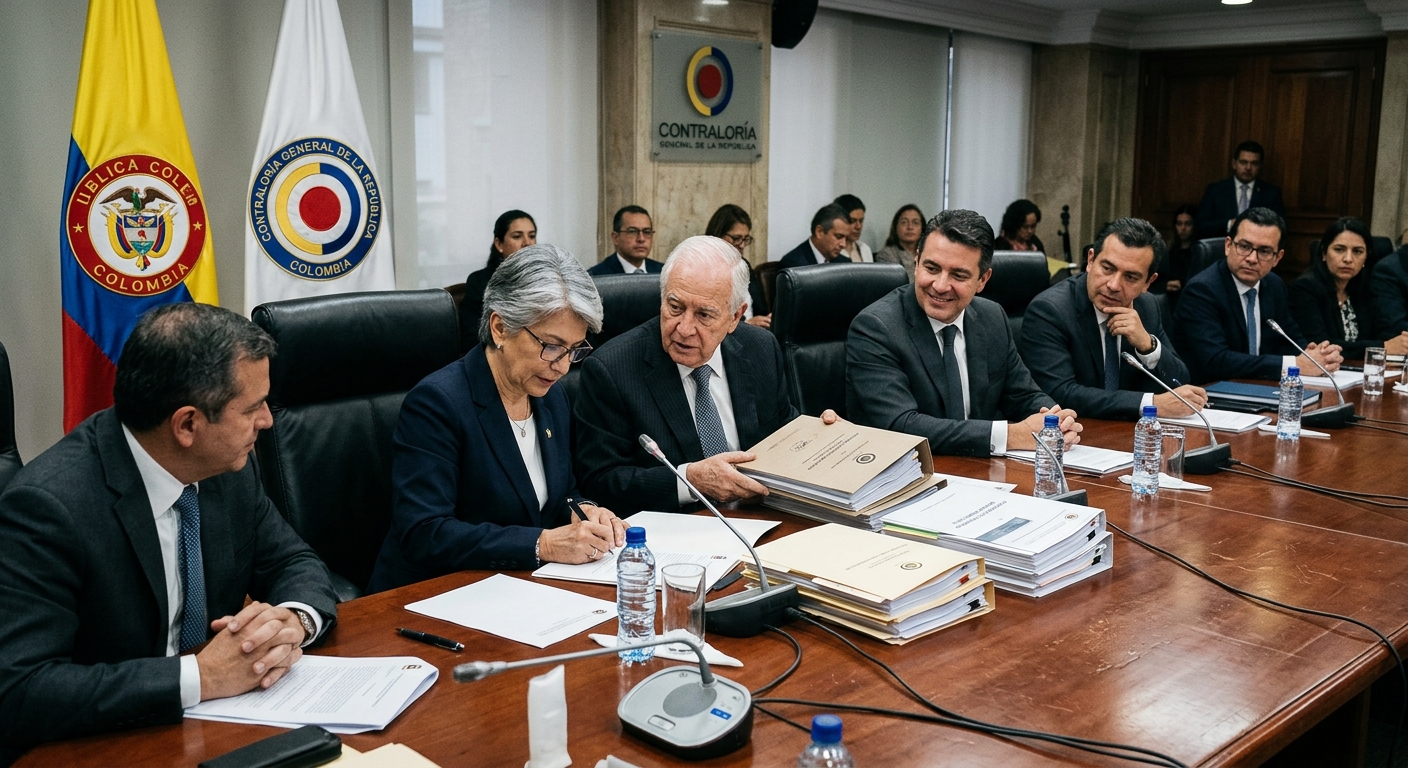
Colombia's Contraloría installed 22 technical tables on July 8, 2026 with President-elect De La Espriella's team — a democratic firewall over a 2.6%-of-GDP fiscal hole.
Colombia's fiscal watchdog opened 22 sectoral working tables with the incoming government of Abelardo De La Espriella on July 8, 2026 — an institutional handshake that matters far beyond its bureaucratic label because it is the single formal channel keeping a bitterly contested transition from becoming a rupture. The Contraloría General de la República (CGR) is walking the Bukele-admiring president-elect through the fiscal state of a country where the primary deficit hit 2.6% of GDP in 2025, the escape clause of the fiscal rule was activated, and public debt reached 66.5% of GDP, according to the World Bank Macro Poverty Outlook. In a region where the last three left-to-right rotations — Peru, Bolivia, Argentina — produced legal wars, prosecutions, or a shock therapy that skipped the empalme, Colombia is quietly doing the opposite. That is the story.
What was installed, and by whom
The meeting was chaired by acting Contralor General Carlos Enrique Silgado and Vice President-elect José Manuel Restrepo, the former Duque-era finance minister who now runs the transition. According to Caracol Radio, 18 sectoral delegate-contralores will feed diagnostics on fiscal risk, procurement, contingent liabilities and program execution into the president-elect's designated ministers over roughly one month. Restrepo called it a "hecho histórico" — a first of its kind in Colombia — telling
Infobae the country could be "absolutamente tranquila" that the handover was "sólido, transparente, veraz."
Silgado's language was careful and worth quoting verbatim, because it draws the constitutional line the CGR needs to hold:
"No constituye una valoración política, no representa una calificación sobre una administración determinada, ni implica un pronunciamiento definitivo de la entidad."
Translation: this is not a political audit of Gustavo Petro's government, and nothing said in these tables can be used as a fiscal finding (hallazgo fiscal) later. That distinction matters. The CGR is a constitutional body — its powers to declare fiscal responsibility flow from Article 267 of the 1991 Constitution and Decree-Law 267 of 2000, whose sectoral architecture is codified in the ministry of foreign affairs' normogram of the CGR. Turning the empalme into a discovery process for the incoming government's future criminal cases would breach that mandate; Silgado's framing is designed to make that impossible even as ministers from the incoming team, notably empalme committee member Carlos Alonso Lucio, publicly promise to hunt for "hallazgos de corrupción, por montones."
The angle the wires missed
Two paragraphs into the story, this looks like ceremony. It is not. It is the load-bearing wall of Colombia's democratic transition, and it holds up three separate weights the region has recently dropped.
First, the political weight. De La Espriella won by roughly 0.95 points and 250,000 votes in the June 21 second round, according to BBC Mundo. Iván Cepeda conceded on June 24 but simultaneously denounced "abierta e indebida injerencia extranjera" by Donald Trump and floated "desobediencia y resistencia civil pacífica" against any rollback of Petro-era reforms. President Petro impugned more than 33,000 mesas de votación before results were confirmed, per the BBC's
live coverage. In that atmosphere, an empalme conducted through the Contraloría — a constitutionally autonomous body, not the executive — is one of the few venues both sides can plausibly accept as apolitical.
Second, the fiscal weight. The IMF's Article IV concluding statement for 2025 warned that Colombia's policy framework had "deteriorated significantly" versus the standard required for the Flexible Credit Line, after the escape clause was invoked in June 2025 to suspend the fiscal rule through 2027. The World Bank flags sovereign downgrades and Emerging Markets Bond Index Global spreads stuck near 310 basis points. The CGR sits on top of a data lake — auditorías, seguimientos, budget rezagos of about 2.8% of GDP flagged by the
IMF staff in April 2025 — that a new finance team would otherwise spend months reconstructing. Handing that over in July, not October, is what makes the August 7 transition operational rather than symbolic.
Third, the regional weight. Colombia is doing what Peru, Bolivia and Argentina did not. In Peru, the 2021 Castillo–Fujimori transition produced parallel legal challenges and a prosecutorial war that ended with a president in prison. Argentina's 2023 handover to Javier Milei skipped a substantive empalme entirely; the shock therapy that followed was designed without inputs from the outgoing team. Bolivia's 2019–20 transition became a legal saga over the "coup vs. resignation" framing. Colombia, by contrast, has an eighteen-month-old constitutional-court-blessed handover ritual embedded in Ley 951 of 2005 and Resolution 34 of 2017 of the CGR — codified in the resolution updating sectoral competencies of the CGR — that is being invoked here in its most ambitious form.
Who benefits, who loses
The immediate winner is Restrepo, not De La Espriella. The vice president-elect — a Bogotá-educated economist with an LSE master's and a Duque-era Ministry of Finance record — becomes the empalme's operational face, gathering the data that will constrain the president's more radical instincts. De La Espriella has pledged to shrink the state by 40%, restart oil and mining, cut taxes, and build Bukele-style megacárceles, according to BBC Mundo. Restrepo's file, once received, will show him the math of why that program cannot be executed with a fiscal rule due to bind again in 2028, an EMBIG spread already at 310 bps, and rezagos of 2.8% of GDP competing for the 2026 budget.
The loser is not Petro — the outgoing president has already denounced the process's political framing and moved on to disputing De La Espriella's U.S. citizenship. The loser is the maximalist wing of the incoming government, which had campaigned on the premise that everything Petro touched was corrupt. When Lucio pledged to find "hallazgos de corrupción por montones," he was pre-committing to a narrative the CGR's own diagnostic — bound by Silgado's disclaimer — cannot supply. If the empalme delivers a technically boring balance sheet rather than a scandal file, the political oxygen for a Milei-style ruptura shrinks fast.
The quiet winner is the multilateral system. The IMF's Flexible Credit Line renewal, the World Bank's disbursement pipeline and the rating agencies all reward institutional continuity. A Contraloría-led empalme is exactly the signal Washington-based creditors want to see before the fiscal rule bites in 2028.
The historical parallel that reframes it
Colombia's last comparable transition was August 7, 2022 — Petro's own inauguration. His incoming team ran a well-documented empalme with the outgoing Duque administration and, one day into government, radicated a tributary reform that raised roughly 20 trillion pesos, or 1.2% of GDP, per BBC Mundo. That handover held even though Petro was Colombia's first-ever leftist president. It held because the technical bureaucracy — Hacienda, DNP, and yes, the Contraloría — insulated the transfer of files from the political knife-fight around it.
The 2026 empalme is being asked to do more. Petro's government activated the escape clause on the fiscal rule in June 2025 — a decision the IMF's board treated as evidence of framework weakening — meaning the incoming team inherits fewer institutional guardrails than Petro did. That is why the CGR's decision to install 22 tables rather than the customary handful is not window-dressing; it is a compensating mechanism. If the fiscal rule cannot bind the president, the diagnostic can at least bind his cabinet's expectations.
There is a caveat. The CGR is currently led by an acting contralor, Silgado, after the departure of Carlos Hernán Rodríguez, who signed the CGR's most recent financial audit reports on the health ministry, as visible in World Bank document repositories. An "encargado" contralor has less political ballast than a fully elected one. De La Espriella's Congress, fragmented but broadly hostile to Petro's legacy, will elect a permanent contralor in the coming months — and the terms of that election will tell you whether the empalme's non-political framing survives its own success.
What Washington and the markets are watching
Restrepo's role has an external dimension De La Espriella has advertised: the president-elect told supporters his VP would be "una especie de Marco Rubio," a nod to Trump's secretary of state and to the incoming government's plan for a "Plan Colombia 2.0" financed by the United States and Israel, according to BBC Mundo. The empalme's data flow — particularly on security, coca eradication and territorial control after the collapse of Petro's paz total — will feed directly into a bilateral reset. Eleven U.S. congressional Democrats have already asked the State Department, Justice and Treasury to investigate De La Espriella's U.S. financial footprint, a preemptive shot the incoming team knows about.
For markets, the signal to watch is not the July diagnostic itself but the first Marco Fiscal de Mediano Plazo the De La Espriella government publishes after August 7. If it credibly maps a return to the fiscal rule by 2028 — the deadline flagged by both the IMF and the
World Bank — spreads compress. If it doesn't, Colombia enters the 2028 rule-reinstatement year with a debt-to-GDP ratio at or above 66.6% and a currency vulnerable to a fresh downgrade. The empalme's job is to make the first outcome slightly more likely.
What to watch next
- August 7, 2026 — De La Espriella's inauguration. Watch for a same-day executive order on state restructuring; a maximalist decree would signal the empalme's technical outputs are being ignored.
- First MFMP under new government (September–October 2026). The document that will price Colombian risk through 2028.
- Selection of a permanent Contralor General — a fragmented Congress vote that will test whether the CGR's neutral posture in July survives politically.
- First CGR fiscal opinion on Petro's 2025 accounts (expected late 2026). This is where the "not a political audit" line meets legal reality.
- U.S. congressional inquiry on De La Espriella's finances, opened by 11 Democrats per
BBC Mundo. Any subpoenas would complicate the "Plan Colombia 2.0" pitch.
Diplomat View
Colombia's empalme is doing the work the region's institutions failed to do in Lima, La Paz and Buenos Aires: absorbing a hard ideological rotation without letting the archives, the audits or the diagnostic memory be weaponised. That is a defensible thesis about institutional resilience, not about who is right. The forecast: the CGR's 22 tables will make De La Espriella's first budget more orthodox than his campaign — closer to Restrepo's 2021 tributary reform than to Milei's chainsaw — precisely because the fiscal file makes any other path expensive within twelve months. Revise the call if two conditions arrive together: a rushed executive decree on state downsizing in August, and a politicised election of the permanent Contralor by Congress before year-end. Either alone is manageable; both together mean the empalme was theatre, and the rupture is coming.
Discover more

Global
Chile's Congress Hands Kast His Biggest Win
Chile's Congress approves Kast's corporate tax cut from 27% to 23%, but the IMF, World Bank, and fiscal council warn revenue losses outpace spending cuts, risking fiscal sustainability.
Global
Cameroon's $3.1B Mining Gap
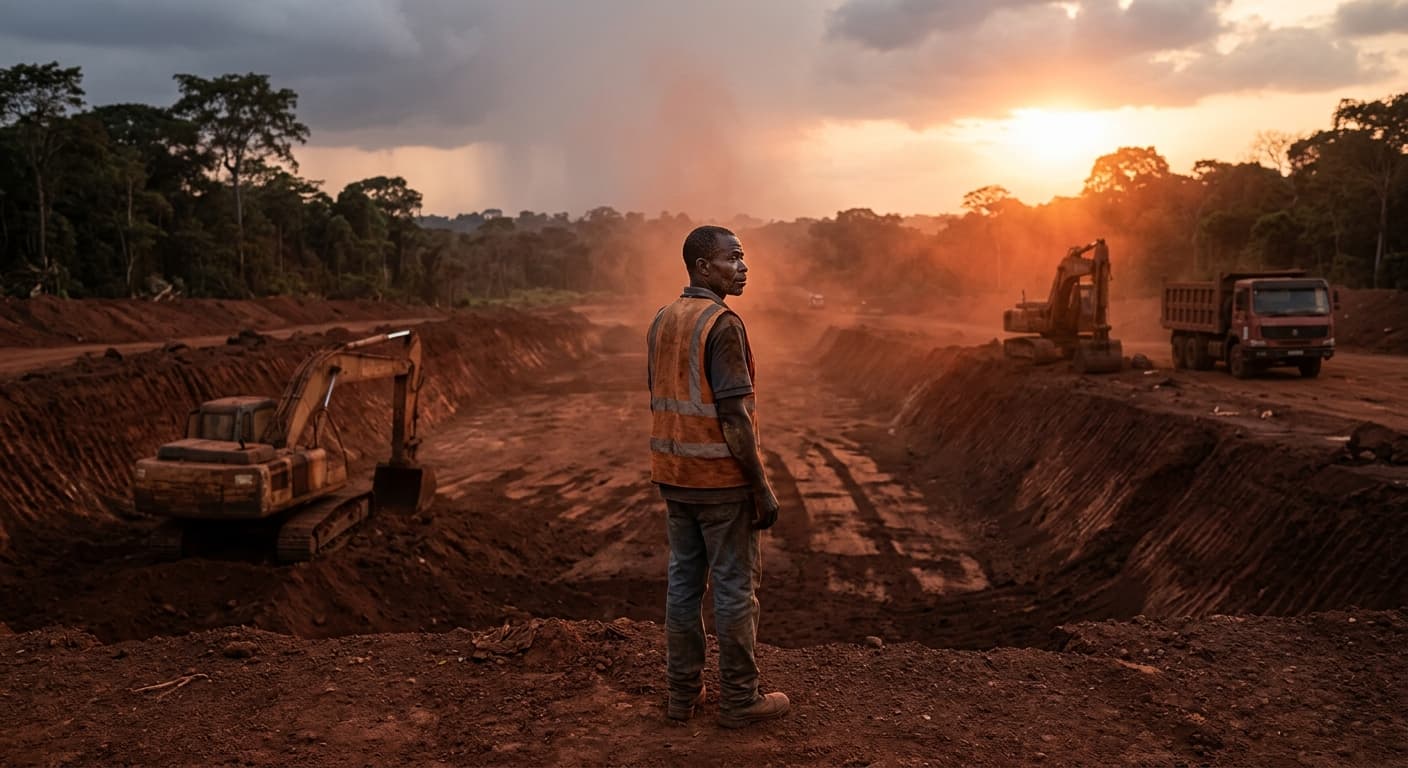
Cameroon's $3.1 billion mining pivot from oil to iron ore faces a funding gap: only the Minim Martap bauxite project has financing, while three iron ore projects lack construction capital.
Economics
Japan's $2.3 Trillion Bond Market Stress Test
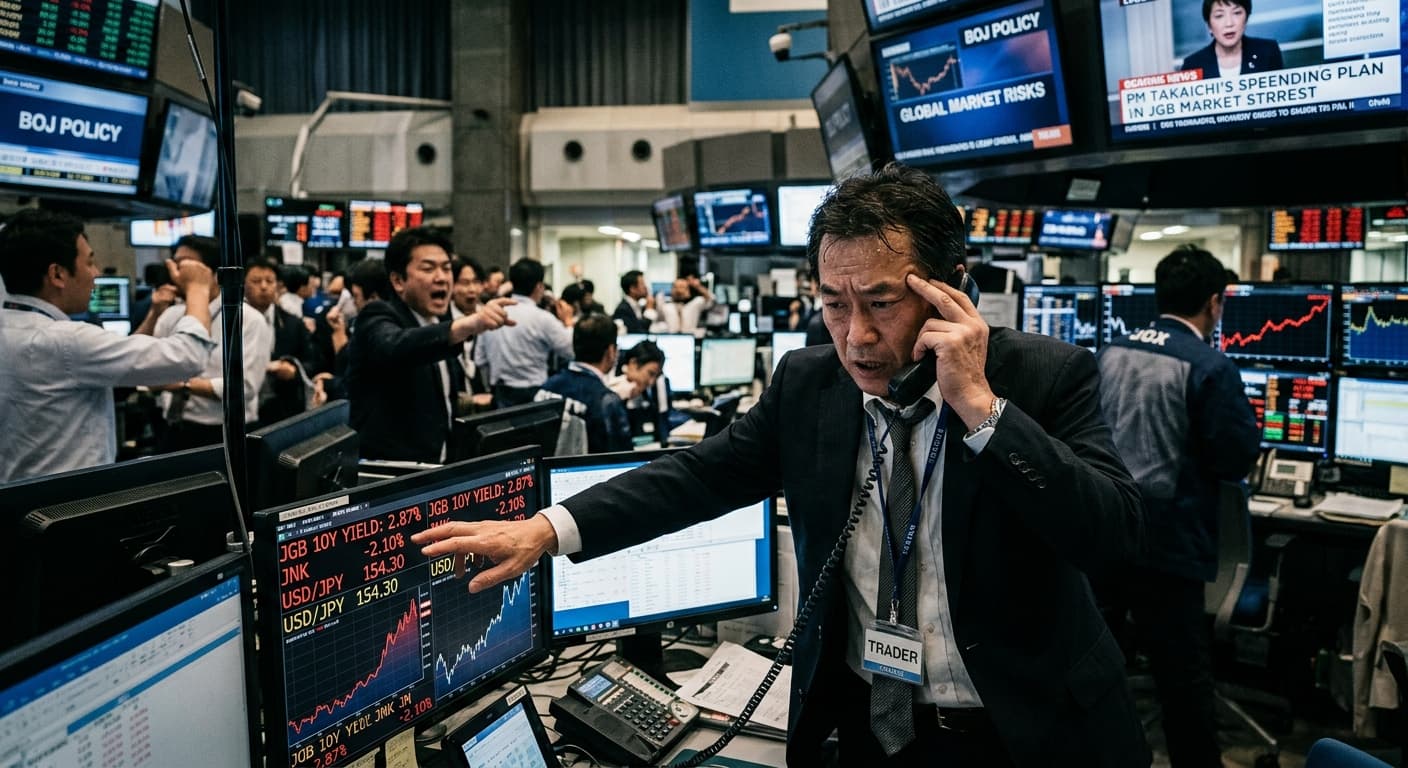
Japan's 10-year bond yield hits 2.87% as PM Takaichi's $2.3 trillion spending plan breaks the yen-JGB inverse, threatening global markets via $1.2 trillion in Japanese-held US Treasuries.
Economics
Japan's $2.3 Trillion Bond Market Revolt
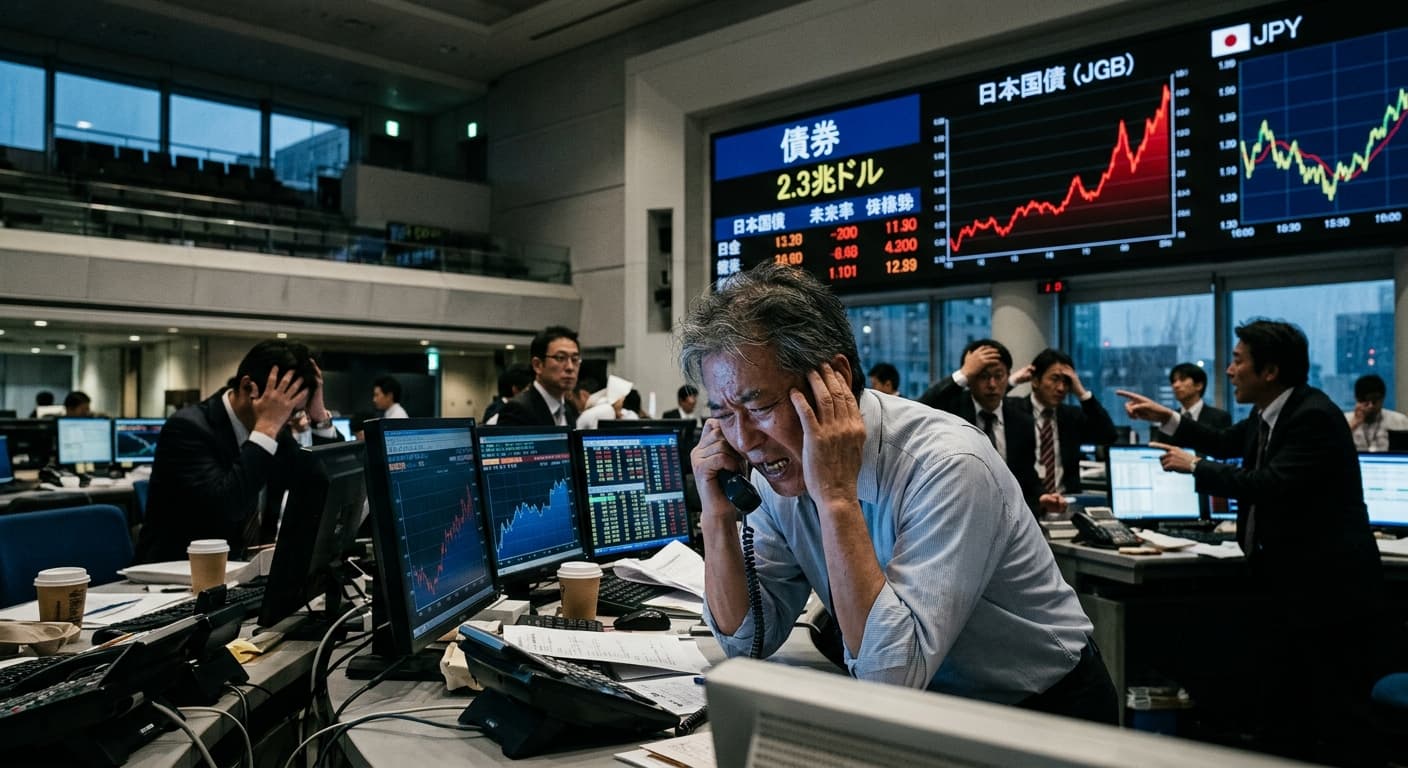
Japan's 10-year JGB yield hits 2.87% as PM Takaichi's $2.3 trillion fiscal plan triggers bond sell-off, with spillovers to US Treasuries and yen carry trade.