China's SLBM Overflew the Philippines
Manila leverages missile test for security arguments
Model Diplomat7 min readAsia
China's SLBM Overflew the Philippines. Manila Turned That Into Leverage.
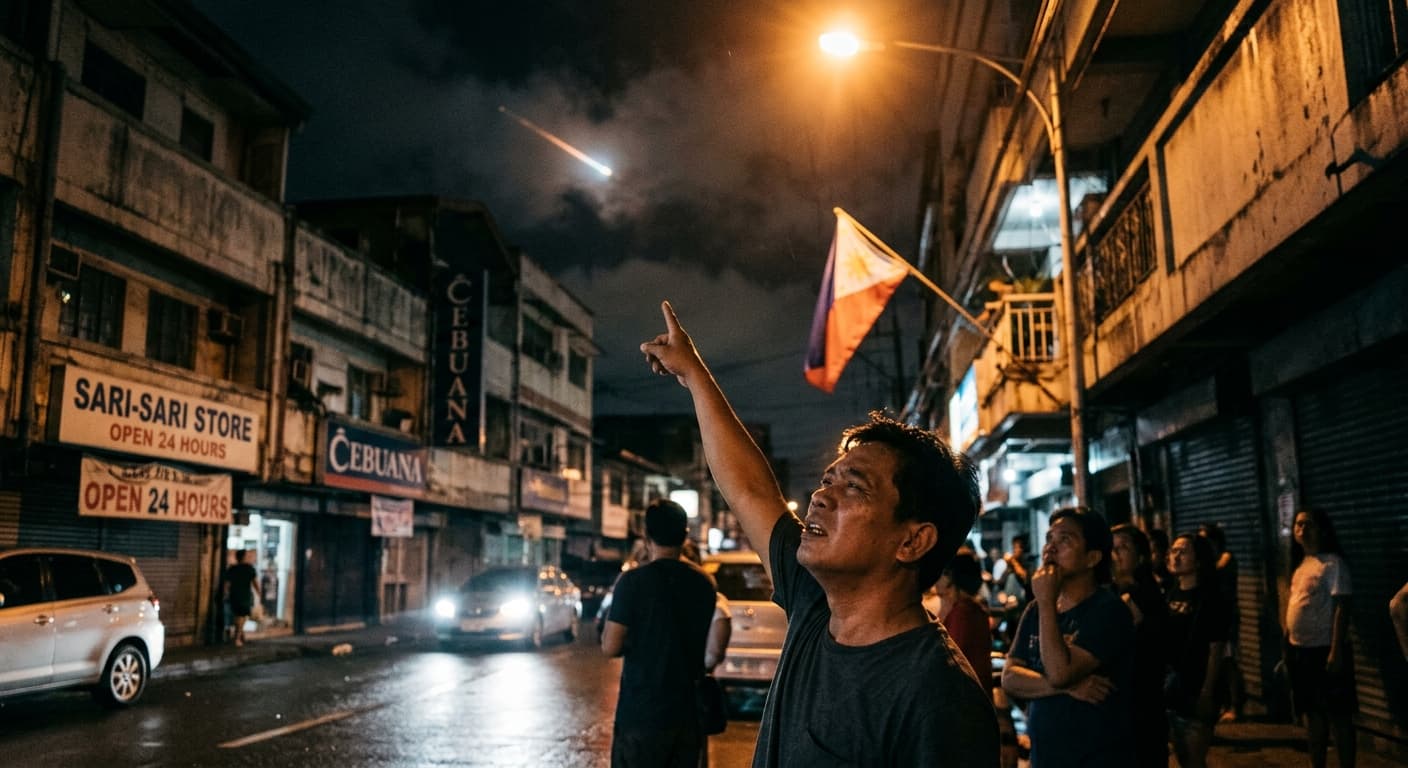
Beijing's July 6, 2026 submarine-launched missile crossed the Philippines and landed in the South Pacific — handing Manila and Canberra the argument they've been making about Indo-Pacific security.
The Chinese ballistic missile that flew roughly 7,300 kilometres from the South China Sea into the South Pacific Nuclear Free Zone on July 6, 2026 did more damage to Beijing's regional narrative than to any target: it turned the Philippines' quiet campaign for missile-test transparency into an "I told you so" moment, and it gave Australia the cleanest possible justification for the three Pacific security pacts it signed the same week. Manila's carefully phrased protest — "notes with concern," urges "restraint" and "transparency" — is not the reflexive language of a small-state complainant. It is the same language the Department of Foreign Affairs has been building a coalition around since January 2025, when it hosted the region's first ballistic missile transparency seminar under the Hague Code of Conduct. Beijing just validated the pitch.
What actually happened, in precise detail
At 04:01 UTC on July 6, a People's Liberation Army Navy submarine fired an unarmed intercontinental-range ballistic missile — a JL-2 or the newer JL-3 — from the South China Sea. The flight path ran roughly 7,300 km and "likely overflew parts of the Philippines" before splashing down in the South Pacific Nuclear Free Zone, according to a CSIS analysis published two days later. It is the first time China has ever fired a submarine-launched ballistic missile (SLBM) into international open waters, and only the second time since 1980 that Beijing has publicly launched a ballistic missile into the Pacific rather than into its Xinjiang desert ranges.
Xinhua described the launch as "a routine part of China's annual military training program" and said "relevant countries had been notified in advance." That claim is technically accurate and diplomatically hollow. CSIS documents that Washington and Tokyo received "mere hours" of advance notice, Australia about 23 hours, and other landing-zone states similarly little. None of it complies with the Hague Code of Conduct against Ballistic Missile Proliferation, which requires at least 24 hours' notice to all 140 subscribing states. China is the only major space-faring nation with ballistic missiles that has not subscribed.
Manila's turn came a day earlier. DFA spokesperson Analyn Ratonel told reporters that "relevant Philippine authorities received prior notification of the launch on July 5," and the department issued its formal reaction on July 8, per Philstar:
"The Philippines notes with concern China's launch of an unarmed ballistic missile from a submarine into the Pacific Ocean as part of its military exercise… Actions that erode confidence are unhelpful in advancing dialogue, diplomacy and cooperation."
The Department of National Defense went harder, calling the test a "reckless display of military power" that "shows little regard for smaller countries and the fragile ecological systems that sustain their people," according to BusinessWorld. Washington reaffirmed its Mutual Defense Treaty commitments to Manila within 24 hours, per
Politiko.
The angle Beijing missed
The launch did not happen in a diplomatic vacuum. On the same day, Australian Prime Minister Anthony Albanese was in Suva signing the Vuvale Union treaty with Fiji and, alongside it, the Ocean of Peace Alliance. Earlier in the week, Canberra had inked the Nakamal Agreement with Vanuatu. All three include the same architectural feature: a "consultation clause" giving Australia a say when a Pacific partner considers letting a third party — read: China — into sensitive infrastructure or security cooperation, as CSIS has documented.
China's Foreign Ministry warned Australia and Fiji hours before the launch not to use the treaty to "target third parties." Then the PLA sent an SLBM into the Treaty of Rarotonga zone, to which Beijing itself is a protocol signatory pledging not to test nuclear weapons in the South Pacific. The Lowy Institute's Oliver Nobetau called it "Beijing's own goal in the Pacific": a demonstration meant to intimidate that instead ratified every argument Canberra has made since Solomon Islands signed its 2022 security pact with China. Solomons Prime Minister Matthew Wale — of all leaders — publicly said the test was "not something a friend does."
For Manila, the coincidence is even more pointed. The Philippine Coast Guard sent its largest-ever contingent to RIMPAC 2026, the US-led multinational Pacific exercise, and CSIS analysts note that this is likely one reason the missile trajectory was routed over the Philippines rather than over Japan — a second option China's navigation warnings had reserved but did not execute.
Why Manila's response reads different
The DFA statement is measured on purpose. That measure is strategy, not timidity. In January 2025, Manila hosted an HCoC regional seminar — the first ASEAN state to have subscribed to the code, and one that has chaired the Subscribing States for two consecutive terms. Foreign Affairs Undersecretary Charles Jose used that seminar to make a specific argument: that Asia's ballistic missile risk is a transparency problem best solved through pre-launch notifications and confidence-building measures.
Eighteen months later, China's launch fits Manila's framing exactly. Beijing did give the Philippines about 24 hours' notice — more than it gave Japan. But it did so bilaterally and ad hoc, not through the multilateral system Manila has been championing. So when Ratonel calls on "relevant parties" to "conduct their activities in accordance with international norms," that phrase is aimed at a specific gap: China's refusal to subscribe to the HCoC while insisting its unilateral notifications count as "transparency."
The Philippines is not alone in that argument. During the 2026 Nuclear Non-Proliferation Treaty Review Conference, Chinese diplomats cited their 2024 DF-31 launch advance notice as evidence of "strategic risk reduction." Every non-nuclear state in the Indo-Pacific now has grounds to reject that framing.
The military balance underneath
Beijing's test lands in a South China Sea already saturated with counter-signals. Since April 2024, the US Army has kept a Typhon Mid-Range Capability battery on Luzon — a system that fires Tomahawk cruise missiles and SM-6s out to roughly 1,000 miles, per a Congressional Research Service brief. On May 6, 2026, a Tomahawk was fired for the first time in Philippine territory, flying 600 km from Tacloban to Nueva Ecija during Balikatan,
Al Jazeera reported. President Ferdinand Marcos Jr has committed to buying the Typhon system outright,
Al Jazeera reported in December 2024 — a purchase Beijing called a "provocative and dangerous move" that would trigger an "arms race."
The IISS assesses that China has now launched seven and eight Type-094 (Jin-class) ballistic missile submarines, which are being progressively armed with the longer-range JL-3 SLBM. The JL-3, from a South China Sea "bastion," can range the western continental United States. That is the strategic point of the July 6 launch, according to IISS: validating a sea-based nuclear strike capability from waters Beijing considers its own inner lake.
Which is precisely what makes Manila's overflight problem load-bearing. A Chinese SSBN firing from the South China Sea toward the Pacific must, on most azimuths, cross Philippine territory. That is not a training peculiarity — it is a geography that China's nuclear posture now writes into every future patrol.
The regional realignment nobody has priced in
Read together, three developments this quarter mark a phase change in the Indo-Pacific security order.
First, Manila has stopped treating the South China Sea and the Taiwan Strait as separate files. Defense Secretary Gilberto Teodoro told the Shangri-La Dialogue that the Philippines is cooperating with Taiwan in "non-taboo areas," according to the Manohar Parrikar Institute for Defence Studies and Analyses. Marcos told Indian broadcaster Firstpost in August 2025 that "if there is an all-out war, then we will be drawn into it," per
Al Jazeera. Manila and Tokyo have opened negotiations to delimit their overlapping EEZs east of Taiwan.
Second, Australia has built, in eighteen months, a bespoke Pacific security architecture — Tuvalu (2023), Nauru (2024), PNG (2025), Vanuatu and Fiji (2026), plus a statement of intent with Tonga — each with the same anti-third-party consultation architecture. The IISS notes that Manila is increasingly building "its own set of minilateral arrangements with countries such as Australia, France and Japan" as a hedge against ASEAN's paralysis on the South China Sea.
Third, Beijing has now demonstrated that its nuclear reach is deployable from the same waters it uses coast guard water cannons in. That is a specific strategic message: escalation dominance runs from grey-zone harassment to strategic strike, from a single geography. It is intended to induce caution. On the evidence of the past week, it is inducing coalition-building.
What to watch next
- July 12, 2026: The tenth anniversary of the Philippines v. China South China Sea arbitral award. Expect a joint US-Philippines-Japan-Australia statement anchored to the ruling — and a DFA push to link maritime and missile transparency in the same document.
- September 2026: The UN General Assembly. Watch whether Manila, as an HCoC chair state, tables language on ballistic missile launch notifications naming ocean testing without prior multilateral notice.
- Pacific Islands Forum leaders' meeting (September 2026): The first test of whether Solomon Islands PM Matthew Wale's public criticism of Beijing hardens into a regional statement, and whether Albanese converts the Vuvale Union into a broader regional security treaty.
- US 2027 defence budget cycle: Whether the Army's third Typhon battery, currently slated for Hawaii by end-2025, ends up permanently forward in the Philippines. Manila's Senate has opened inquiries; Beijing is watching for the answer.
Diplomat View
China's July 6 test was designed to signal reach and resolve. On the evidence, it did the opposite: it validated the Philippines' 18-month transparency campaign, gave Australia the moral high ground for the Vuvale Union, and turned Solomon Islands — Beijing's 2022 win — into a public critic. The forecast: expect a joint DFA-DFAT-MOFA statement by end-August 2026 explicitly linking maritime coercion in the South China Sea with ballistic missile transparency, and an ASEAN-adjacent minilateral (Philippines–Japan–Australia, possibly plus France and Canada) tabling HCoC-aligned notification language at the UN General Assembly in September. What would falsify this call: a substantive Xi–Marcos bilateral before October that pauses the West Philippine Sea confrontations, or a US pullback of the Typhon system under domestic political pressure. Absent either, the missile test will be remembered as the moment the Pacific stopped hedging and started aligning — not because Washington pushed harder, but because Beijing overshot.
Discover more

US Politics
US Launches $166B Tariff Refund Portal
The US is launching a $166 billion tariff refund portal to aid importers hit by Trump-era tariffs, with major implications for trade and supply costs.
India
700 Activists Accuse PM Modi of MCC Breach
Over 700 activists allege PM Modi breached election code with a televised address attacking opposition parties just before state elections.

India
India-South Korea $50B Trade Expansion Plan
India and South Korea target $50 billion in bilateral trade by 2030, focusing on industrial cooperation and strategic alignment amid US pressures.

Economics
Fed's Amex AML order puts correspondent banking on notice
Federal Reserve's Amex AML order requires board-level controls and a 90-day plan; OCC fined the bank $350 million over enterprise-wide deficiencies.