China's PBOC Keeps Policy Moderately Loose
PBOC's monetary policy faces new constraints from the yuan.
Model Diplomat9 min readAsia
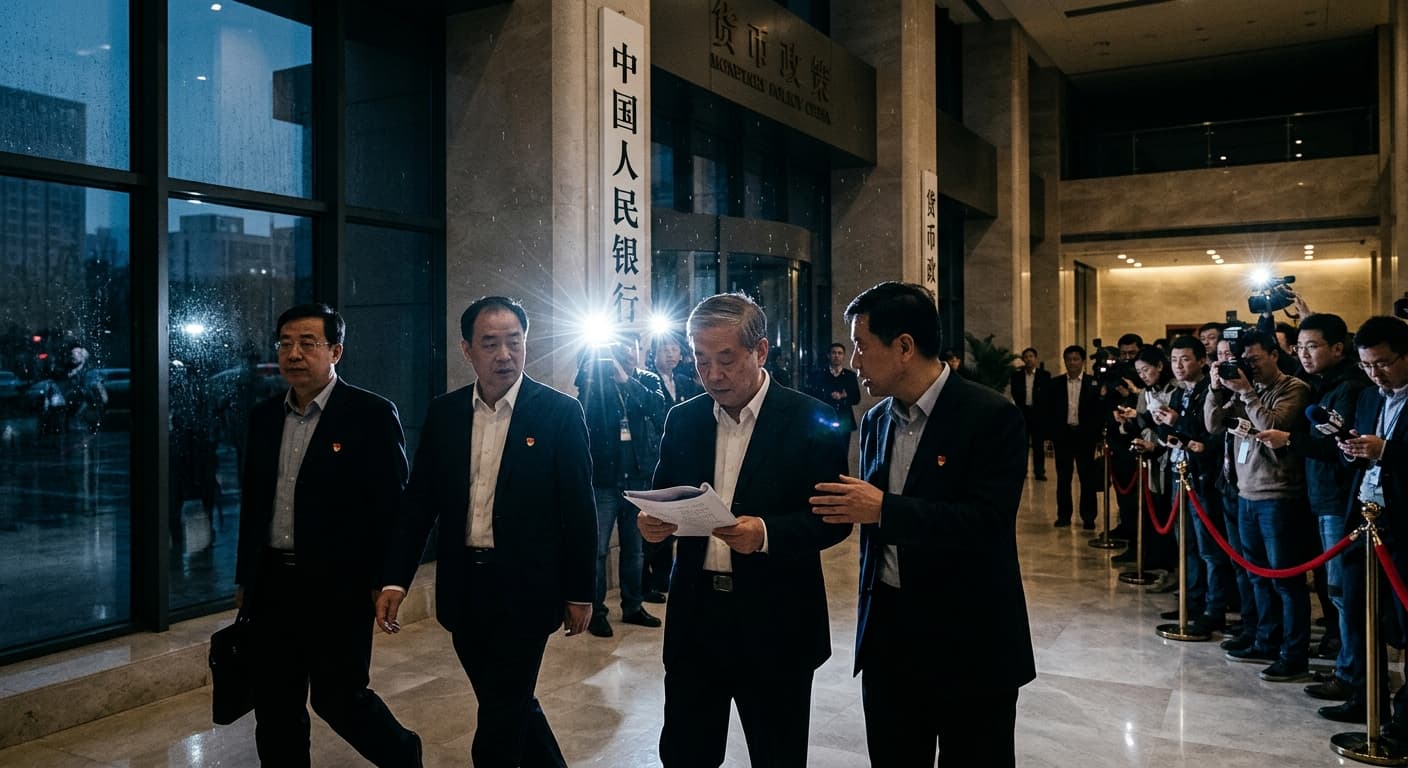
China's PBOC keeps policy "moderately loose" — the yuan is now the binding constraint
The People's Bank of China pledged on July 8, 2026 to maintain accommodative monetary policy amid weak demand and external shocks — but the language reveals a central bank out of easing room.
The People's Bank of China said on July 8, 2026 that its Monetary Policy Committee had voted on July 4 to keep monetary policy "appropriately loose," extending a rate-and-reserve hold that has now run 14 months — the longest pause since Beijing formally shifted to a "moderately loose" stance in late 2024. Read at face value the communiqué is dovish. Read against the tape it is something more interesting: an admission that the yuan, not the domestic economy, is now setting the ceiling for how far the PBOC can ease — which means the burden of stabilising growth is quietly being pushed to fiscal policy, exporters keep enjoying a managed exchange rate, and the disinflation China is generating gets exported to everyone else. That is the story the wires didn't tell.
What the committee actually said
The 113th meeting of the PBOC's Monetary Policy Committee, chaired by Governor Pan Gongsheng, was held on July 4 and disclosed via the central bank's official WeChat on July 8, according to Singapore's Lianhe Zaobao. The committee repeated the standard formula — "continue to implement an appropriately loose monetary policy" — but added a new phrase to its list of domestic challenges: "structural divergence" (结构分化), alongside the familiar "strong supply, weak demand" and "external shocks," per the record published by
Sina Finance.
That word matters. In PBOC drafting convention, tracked in the IMF's 2018 study of PBOC communication, additions to the "challenges" list telegraph where officials plan to concentrate structural, rather than aggregate, tools. Translation: expect more targeted refinancing facilities for tech, small business and consumer trade-ins — not another broad rate cut. The committee also reiterated it will "guard against the risk of exchange rate overshooting" and keep the yuan "basically stable at an adaptive and equilibrium level," language lifted almost verbatim from the
PBOC's Q2 2025 statement. That continuity is the tell.
The committee also proposed to "grasp well the intensity, pace and timing of policy implementation" and to "give full play to the combined effect of stock and incremental policies," per the Sina Finance record. That is not the vocabulary of a bank preparing another cut. It is the vocabulary of one preserving optionality.
The yuan is the binding constraint, not the economy
The PBOC has not cut the seven-day reverse repo rate or the reserve requirement ratio since May 2025. The one-year loan prime rate has been held for 13 straight monthly fixings. That is not the behaviour of a central bank comfortable with its stance; it is the behaviour of one boxed in.
Two constraints explain the freeze. First, the interest-rate differential with the United States. The Federal Reserve has held its policy rate well above the PBOC's seven-day repo throughout the cycle, and a Chinese cut widens the gap, pressuring the yuan lower and provoking outflows. Second, and more novel, the PBOC is fighting appreciation pressure on the offshore leg. Council on Foreign Relations analyst Brad Setser documents in a note on backdoor intervention that state-bank FX settlement surged in late 2025 as Chinese exporters, sitting on record trade-surplus dollars, tried to repatriate — forcing state commercial banks to absorb the unwanted greenbacks to prevent a sharper yuan rally.
Setser's parallel analysis of China's new intervention rule argues that the daily central parity fix now effectively serves as the upper limit on the yuan's appreciation, not the midpoint of its trading band — a de facto tightening of the currency regime that half the market's official width sits unused. In Setser's blunt summary, "the yuan trades like a fixed or heavily-managed currency, yet there is no movement in the PBOC's reported foreign currency balance sheet, which is strange."
The US Treasury has noticed. Its January 2026 semi-annual FX report declined to name China a manipulator but warned that "this relative lack of transparency will not preclude Treasury from designating China if available evidence suggests that it is intervening through formal or informal channels to resist RMB appreciation in the future." The next report, due in autumn 2026, is the pressure point.
On July 8 the yuan traded at 6.7965 per dollar, per IMF representative exchange rates — a level essentially unchanged from the start of the year and well inside the tolerance band the PBOC has signalled to state banks. In an interest-rate world where the euro trades near 1.14 and the yen sits above 162, that stability is a policy choice, not a market outcome.
Deflation is the real tell — and it is being exported
Beneath the calm exchange rate, prices are the problem. The IMF's January 2026 Article IV Consultation projects 2026 growth at 4.5% "reflecting the prolonged effects of tariffs and trade policy uncertainty" and states plainly that "deflationary pressures are expected to persist, with core inflation projected to rise only gradually amid continued economic slack." Fund staff urged Beijing to combine additional fiscal stimulus with "further monetary easing" and "greater exchange rate flexibility" — a triad Beijing has so far refused to deliver.
The IMF's own February 2026 policy note went further, calculating that granting urban household-registration status to 200 million rural migrants could lift the consumption-to-GDP ratio by 0.6 percentage points, and that doubling rural social spending could add a cumulative 2.4 points of GDP to consumption over five years. Those are the reforms the July 4 communiqué did not endorse.
Instead, China is running a mercantilist workaround: keep the currency stable, keep supply expanding, let exports carry growth. The strategy produced a record trade surplus of almost $1.2 trillion in 2025, per customs data reported by NPR, even as US-bound shipments fell 20%. Exports to Africa surged 26%; to Southeast Asia, 13%; to the EU, 8%.
The corollary is disinflation flowing outward. The Financial Times has argued the pass-through to advanced-economy consumer prices is modest — margins in the retail supply chain absorb most of it — but the pressure on European and emerging-market producers is real, and it is what animates the anti-dumping actions Brussels, Ottawa and Delhi have taken on Chinese EVs, solar cells and steel. The PBOC's insistence on a stable yuan is, in effect, a subsidy for Chinese manufacturers competing against foreign rivals whose currencies are floating.
The historical parallel worth watching is 1990s Japan. FT commentators noted that China's collapsing sovereign yields — one-year paper briefly fell below 1% for the first time since 2009, per
Financial Times reporting — echo the early phase of Japan's deflationary spiral, when firms responded to falling prices by suppressing wages. Governor Pan has publicly told banks that yields between 2.5% and 3% would be "ideal," and PBOC has resorted to borrowing and selling long-dated bonds into the market to try to enforce a floor — a mirror-image quantitative easing that
the FT described as "yield curve control in reverse."

The World Bank downgrade — and the fiscal handoff
On July 7, one day before the PBOC statement, the World Bank published its Rebalancing Growth: China Economic Update, cutting China's 2026 growth forecast to 4.4% and 2027 to 4.3%. The report is blunt: "policy support, high-tech investment, and buffers against global energy supply disruptions partly offset weaker domestic demand in the second quarter."
That "policy support" is doing the heavy lifting, and it is fiscal, not monetary. At March's National People's Congress, Beijing lifted the on-budget fiscal deficit to 4% of GDP, the highest in decades, and authorised Rmb1.3 trillion in special treasury bonds plus higher local-government borrowing, per the BBC's coverage of the Two Sessions. The 15th Five-Year Plan, approved on March 12, formally elevates domestic consumption alongside industrial self-reliance in AI, semiconductors and biomedicine, according to
Al Jazeera's Two Sessions coverage.
But the fiscal transfer to households the IMF has been urging — direct cash support, expanded pensions, hukou reform — remains politically off-limits. As the Asia Society's Neil Thomas told NPR at the NPC in March, "Beijing continues to prioritize strengthening industrial self-reliance over boosting household consumption." That is why the PBOC's July 4 statement stressed "coordination between monetary and fiscal policy" — code for the central bank accepting a supporting, not leading, role.
The tariff picture explains why fiscal is doing the work. The October 30, 2025 Trump-Xi truce, detailed in the IMF Article IV report, lowered bilateral tariffs and suspended threatened 100% escalations for one year — but the effective US tariff on Chinese exports still sits about 23 percentage points above 2024 levels, and Chinese effective tariffs on US goods 11 points higher. The truce runs to November 2026. Every stimulus decision in Beijing this year is priced against the risk that it does not renew.
Who benefits, who pays
Winners. Chinese exporters, first and foremost: a stable yuan preserves the margin advantages that April 2025's tariff escalation threatened to erase. State-owned banks, which earn a spread as they intermediate the FX-settlement flow that Setser has documented at CFR. And Chinese sovereign-bond holders, riding the world's most powerful bull market — 10-year yields have been hovering near record lows through 2025, per the FT.
Losers. Chinese households, whose real deposit yields sit at multi-year lows despite deflation eating into nominal wages, and who have watched roughly 60% of their wealth — housing — devalue for four straight years. Foreign producers competing with Chinese manufactured exports — the political driver of the EU's carbon-adjustment mechanism and India's anti-dumping toolkit. And, more subtly, the PBOC itself: CSIS analysis notes the central bank remains institutionally subordinate to the State Council, meaning every "moderately loose" pledge is really a statement about what the Politburo will let it do. CSIS's
"China's Economy: How Bad Is It?" frames the trap plainly: "persistent deflation, excess capacity in industry, declining profits, a weak job market, and a property market" that resists incremental fixes.
Diplomat View
The PBOC's July 4 language is a holding pattern, and the holding pattern has a shelf life. Our call: Beijing will not deliver a rate cut before the Politburo's late-July meeting, but a 25–50bp reserve-requirement cut becomes probable in September if Q2 GDP prints below 4.8% or if July CPI stays flat-to-negative. A rate cut on the seven-day repo is unlikely before the Fed eases materially or before the November 2026 tariff-truce cliff clarifies — whichever comes first. The forecast changes if two things move together: the US Treasury designates China a currency manipulator in its autumn FX report, and Q3 property data show a fresh leg down. In that scenario, Beijing will have to choose between defending the yuan and defending growth, and the historical pattern — 2015, 2018, 2023 — is that it chooses the yuan first and pivots to fiscal only after the damage is visible. Investors should price the peg, not the pledge.
What to watch
- July 15, 2026: Q2 GDP release. Consensus below Q1's 5.0%; a print under 4.8% triggers a fiscal top-up debate at the July Politburo.
- Late July 2026: Politburo economic meeting. First formal signal on second-half stimulus posture and any incremental RRR guidance.
- Autumn 2026: US Treasury semi-annual FX report. Currency-manipulator designation risk explicitly flagged in the January 2026 edition.
- November 10, 2026: Trump-Xi tariff truce expiry. Non-renewal reverts effective US tariffs on Chinese goods toward the April 2025 peak.
The Bottom Line
The bottom line: the PBOC's pledge to stay "moderately loose" is a communication about constraints, not intentions — the yuan peg, the trade truce and the Fed differential leave Beijing's central bank with structural tools only, and the real stimulus lever now sits with the Ministry of Finance. If the tariff truce collapses in November or Treasury names China a manipulator in the autumn FX report, the entire "stable yuan, export-led growth" architecture is forced into a decision Beijing has spent three years avoiding.
Discover more
Economics
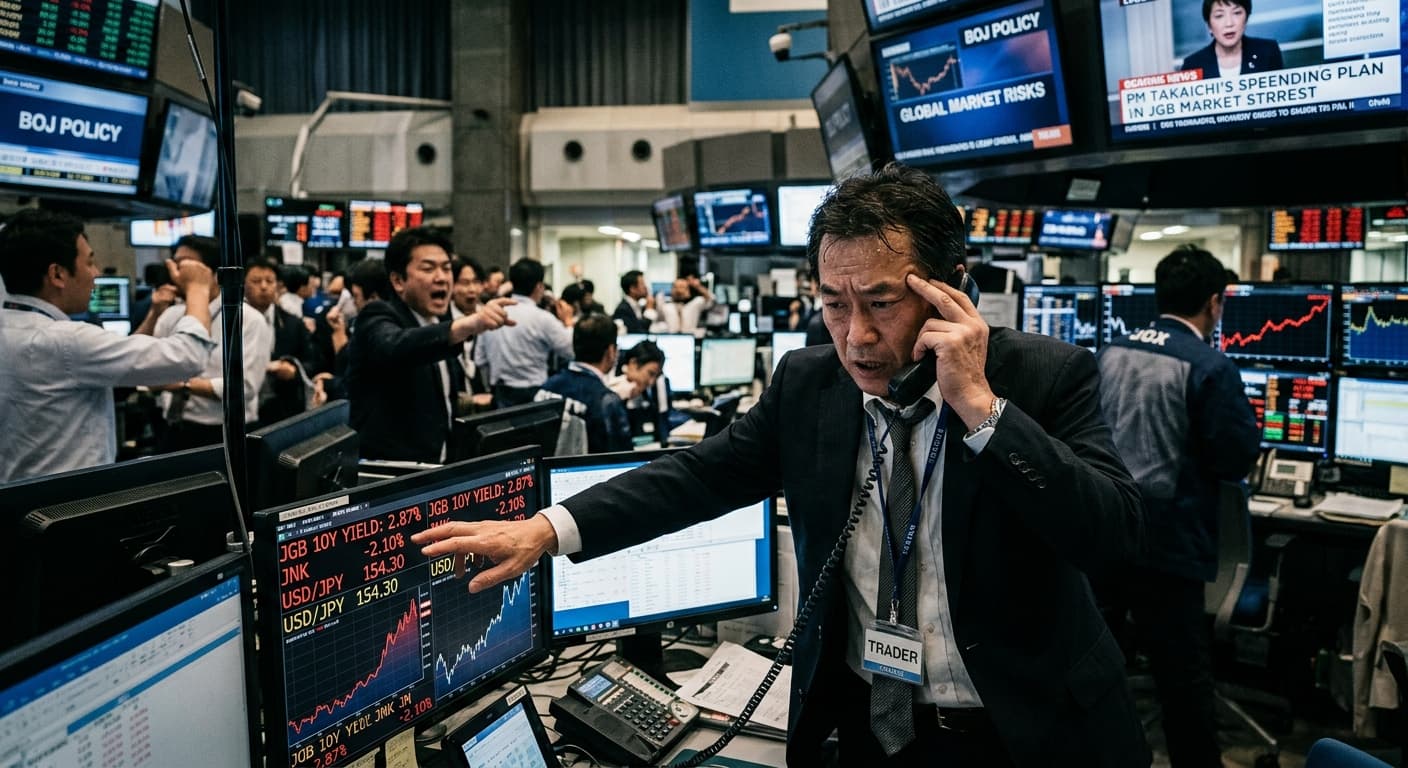
Japan's $2.3 Trillion Bond Market Stress Test
Japan's 10-year bond yield hits 2.87% as PM Takaichi's $2.3 trillion spending plan breaks the yen-JGB inverse, threatening global markets via $1.2 trillion in Japanese-held US Treasuries.
Economics
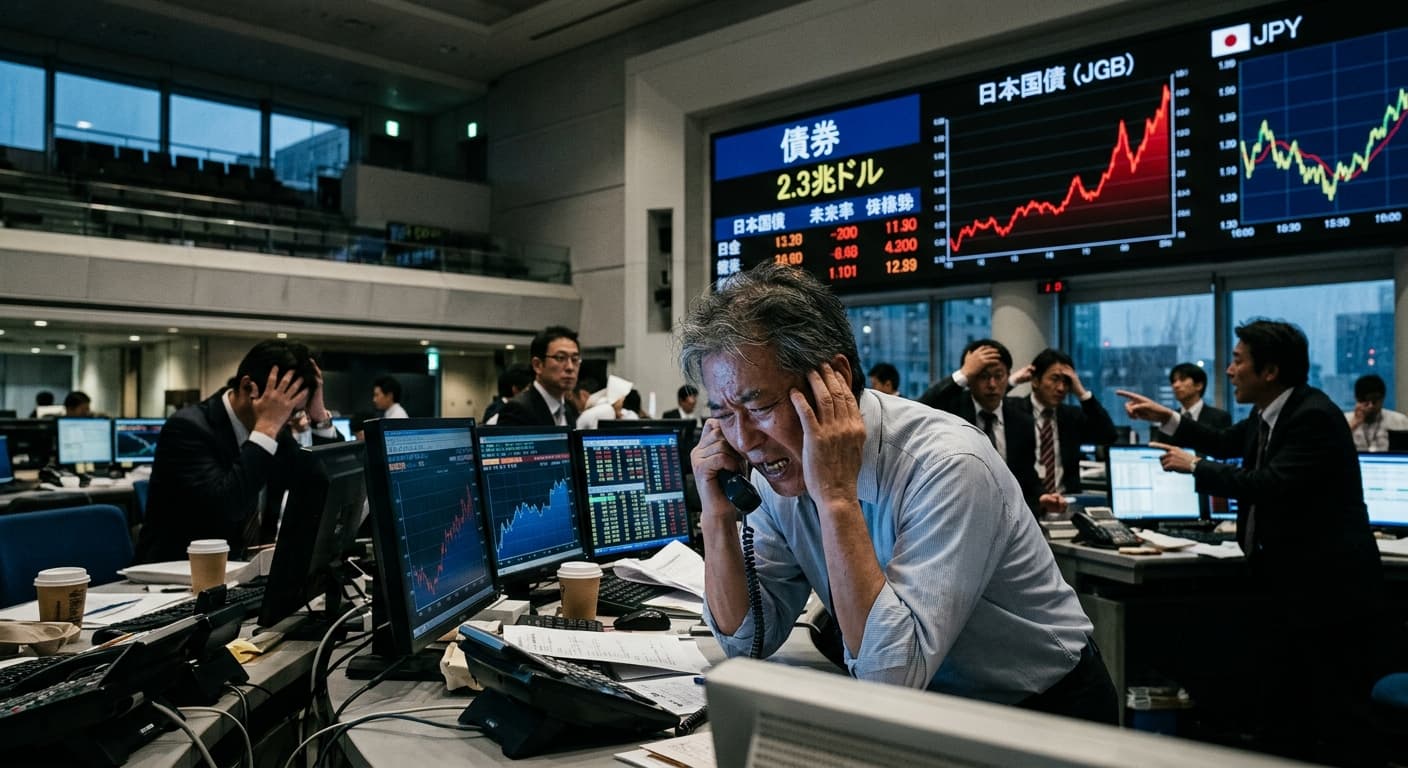
Japan's $2.3 Trillion Bond Market Revolt
Japan's 10-year JGB yield hits 2.87% as PM Takaichi's $2.3 trillion fiscal plan triggers bond sell-off, with spillovers to US Treasuries and yen carry trade.
Economics
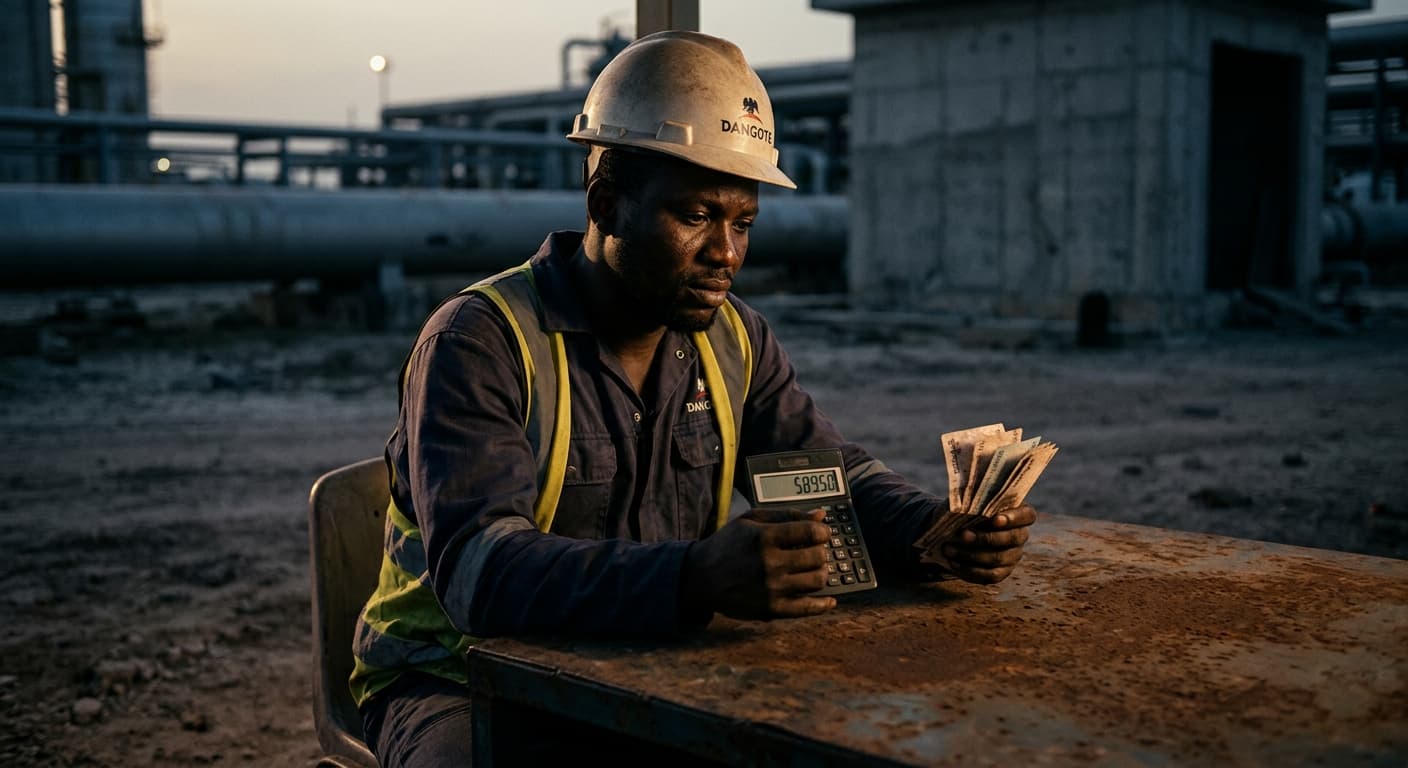
Dangote's Dollar Pricing Exposes Nigeria's Cr
Dangote Refinery switched fuel pricing from naira to dollars on July 13, 2026, exposing a structural crude supply gap that undermines Nigeria's naira-for-crude framework and threatens currency stability.
Economics
Dangote Dollar Pivot Breaks Nigeria's Naira-C
Dangote refinery ends naira pricing for fuel, exposing Nigeria's crude supply gap. The shift breaks Tinubu's currency stability policy and threatens inflation as NNPC fails to deliver enough domestic crude.