China's Missile Test Strengthens Alliances
Beijing's actions backfire, uniting Pacific nations against it.
Model Diplomat8 min readPacific
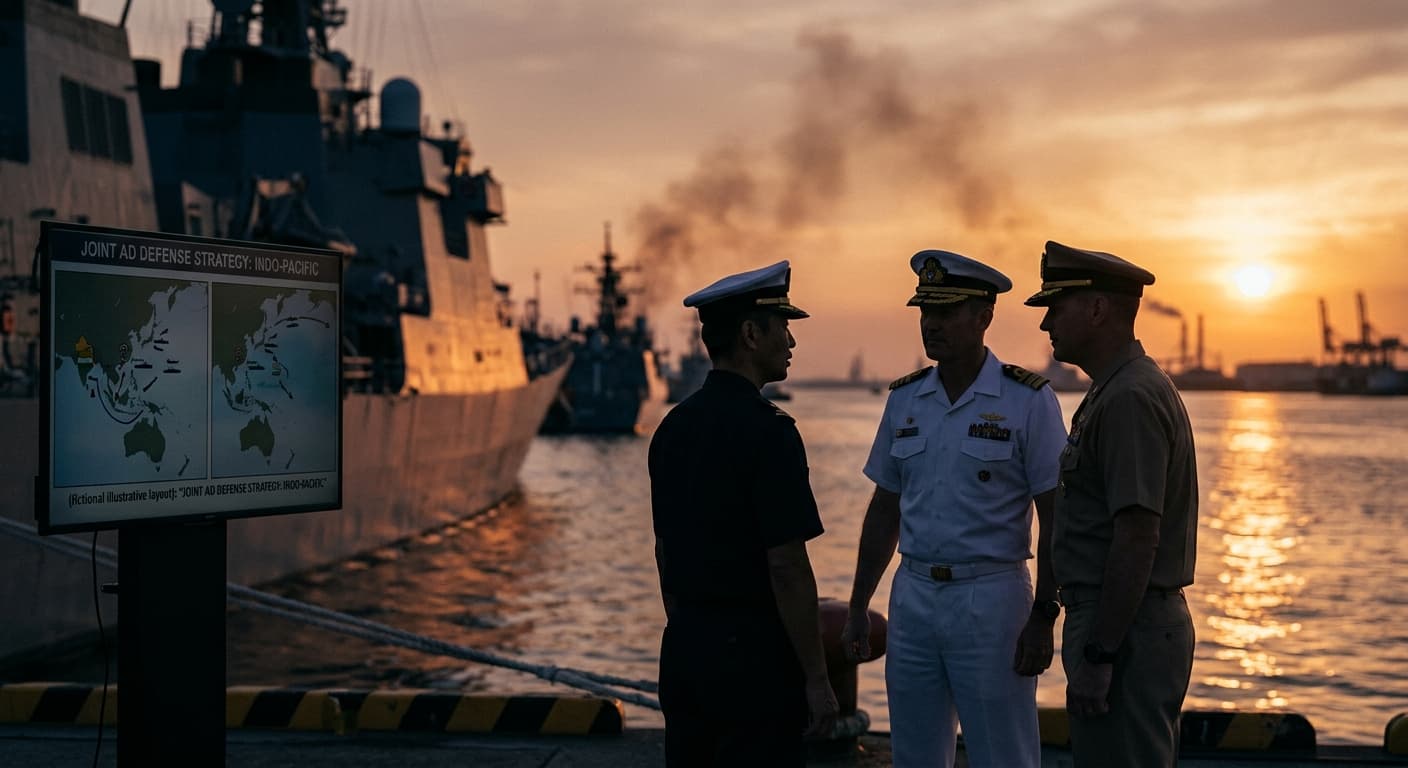
China's Pacific Missile Test Hardens Indo-Pacific Alliance Wall
Beijing's July 6 submarine-launched ballistic missile into the South Pacific — hours after Australia signed a defence pact with Fiji — has accelerated the very Indo-Pacific alignment it aimed to intimidate.
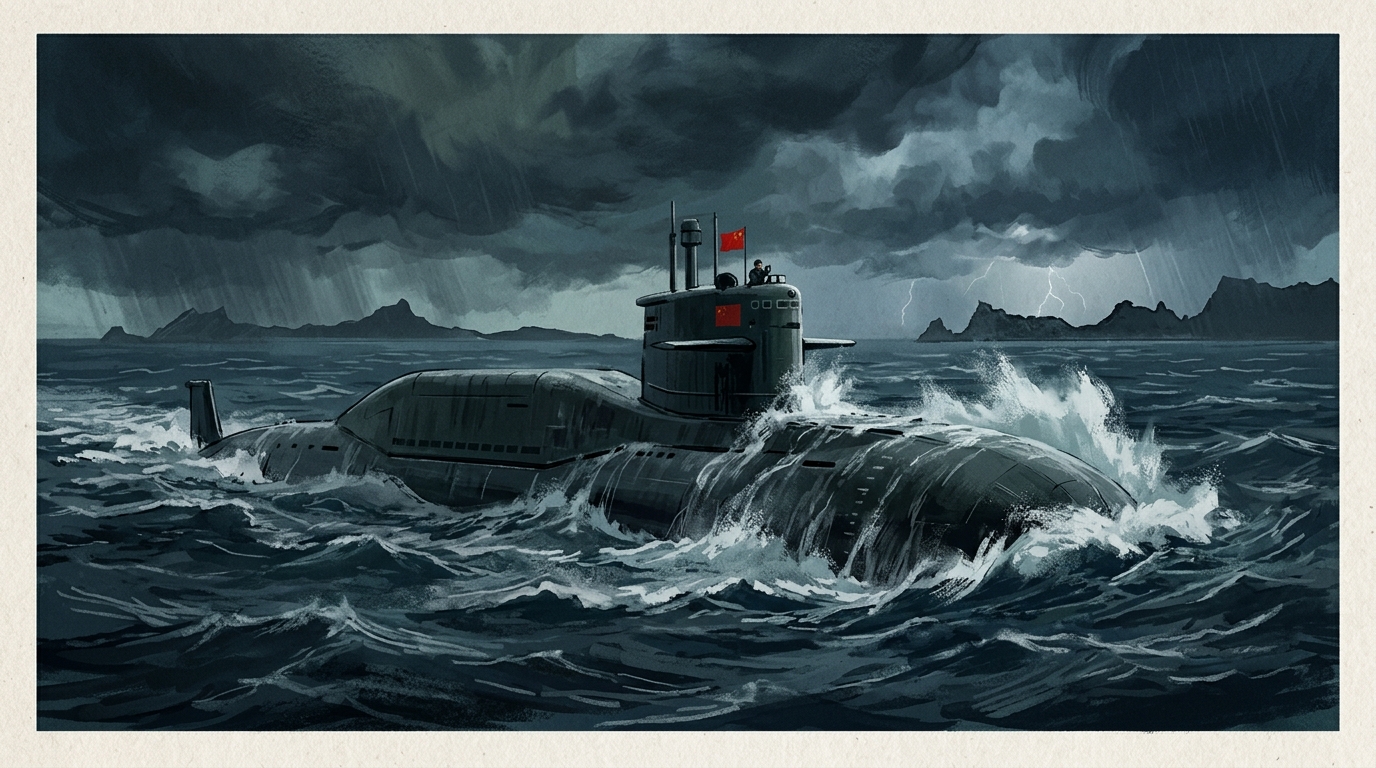
China's July 6 firing of a nuclear-capable submarine-launched ballistic missile across the South Pacific — three hours' notice to Canberra, ninety minutes to Tokyo, none to Suva — was staged to warn Pacific micro-states that Australia's alliance spree carries a cost. It has done the opposite. Within 48 hours, Fiji, Papua New Guinea, the Solomon Islands and Australia had converged on language calling the test "reckless" and "destabilising," and the Pacific Islands Forum chair had publicly rebuked Beijing. The test was a signalling failure that has hardened the Indo-Pacific security perimeter Beijing has spent a decade trying to prise open.
According to the BBC, the missile — a Julang-class weapon fired from a submerged platform and topped with a dummy warhead — splashed down inside the South Pacific Nuclear Free Zone hours after Australian Prime Minister Anthony Albanese and Fijian counterpart Sitiveni Rabuka signed the "Ocean of Peace" alliance in Suva. Beijing insists the launch was "routine" annual training, in the words of Foreign Ministry spokeswoman Mao Ning. Australian Defence Minister Richard Marles told reporters Canberra was "very concerned about any actions which undermine the stability, the peace, and security of the Pacific." New Zealand's Foreign Minister Winston Peters called it "unwelcome and concerning," per the same BBC account.
The signalling failure
Beijing had a diplomatic message to send and picked the loudest possible way to send it. Read the choreography backwards. On May 8, 2026, Australia and Fiji finalised the Vuvale Union, elevating Fiji to Canberra's fourth treaty-level ally after the US, New Zealand and Papua New Guinea, per the Center for Strategic and International Studies. In late May, the Quad announced a Ports of the Future partnership with Suva and Lautoka as pilot sites, described by
Al Jazeera as the group's most concrete Pacific infrastructure commitment to date. On July 6, Albanese and Rabuka signed the follow-on defence text. Hours later a JL-class SLBM arced across airspace above Nauru and Tuvalu.
The missile was Beijing's rebuttal — and it landed inside the Treaty of Rarotonga zone, which the Chinese government itself signed and ratified. Under Protocol 2 of the 1985 South Pacific Nuclear Free Zone Treaty, China undertook "not to use or threaten to use any nuclear explosive device" against parties to the treaty; under Protocol 3, not to test any nuclear explosive device anywhere within the zone. A dummy warhead is not a nuclear detonation, so Beijing has legal cover. It has no political cover. Solomon Islands Prime Minister Matthew Wale, who chairs the Pacific Islands Forum, urged China not to threaten neighbours; PNG's James Marape reiterated the region's demand for a nuclear-free Pacific, per
ABC News.
That reaction is the news. In 2022, Wale's predecessor Manasseh Sogavare signed a secret security pact with Beijing that Australia treated as a strategic emergency. Wale, a "former China hawk" elected in May 2026, chose his first major PIF statement to condemn a Chinese military action. As Lowy Institute analyst Connor Graham told the BBC after Wale's election, "what changes under Wale is tone, transparency and openness to traditional partners." The missile test just tested that shift — and moved it in Canberra's direction.
The nuclear numbers behind the launch
The test is not an isolated event; it is the outward-facing evidence of a build-up that has doubled China's warhead count in four years. The Pentagon's 2024 China Military Power Report, summarised by Air & Space Forces Magazine, puts the People's Liberation Army stockpile at more than 600 operational warheads as of mid-2024 — 100 more than the previous year, and 200 more than in 2022 — with a Pentagon projection of over 1,000 warheads by 2030. The 2025 update, reported by
Breaking Defense, added that the PLA has "likely loaded more than 100 solid-propellant ICBM missile silos… with DF-31 class ICBMs" in support of early-warning counterstrike doctrine. SIPRI's 2025 yearbook, flagged by
Breaking Defense, recorded a 20% year-on-year jump — the fastest rate among the nine nuclear-armed states.
The submarine leg matters more than the numbers alone suggest. CSIS analysts note that China's four Type 094 Jin-class SSBNs each carry up to 12 JL-2 missiles, but the platform is famously noisy and doctrinally constrained: Beijing has historically declined to keep warheads mated to delivery systems in peacetime, according to CSIS. A public SLBM launch from beneath the surface into the deep South Pacific is therefore a demonstration of two things simultaneously: that the JL-3 successor missile is nearing operational reality, and that China now intends its sea-based deterrent to be visible — the opposite of the classic bastion doctrine.
Leif-Eric Easley of Ewha Women's University framed the 2024 precursor test in language that fits this one too: "to Washington, the message is that direct intervention in a conflict across the Taiwan Strait would involve the American homeland being vulnerable to attack," he told the BBC. The audience for the July 6 launch, however, was smaller and closer: Pacific capitals watching Canberra harvest a run of defence agreements while Chinese infrastructure loans mature. Beijing chose deterrence-by-spectacle. Pacific leaders read it as a threat to sovereignty.
Who wins, who loses
Fiji is the immediate beneficiary. Rabuka now leads an alliance with Australia signed in the shadow of a Chinese missile — a political windfall that lets him bank Quad port investment, Australian security guarantees and domestic legitimacy at once. In May 2026 the Suva port agency had already discussed $181 million in upgrades and a potential $1.82 billion relocation plan with US officials, according to Al Jazeera. Rabuka's calculation — that the Ocean of Peace treaty "does not threaten Fiji's relationship with China" — is now easier to sell at home because Beijing supplied the counterexample.
Australia is the strategic winner. Since October 2025, when Canberra and Port Moresby signed the Pukpuk mutual defence treaty documented by Al Jazeera, Albanese's government has stitched together four Pacific security instruments in nine months: Pukpuk, Vuvale, the Vanuatu comprehensive strategic pact and Ocean of Peace. Each contains, in CSIS's phrasing, "specific security components obliquely limiting China's reach." The missile test has retrospectively validated every one of them. Foreign Minister Penny Wong told reporters in Suva the launch came "in the context of a rapid military build-up by China" — a line the
BBC suggests will now anchor Australian messaging to hesitant Pacific partners like Vanuatu, where an earlier draft agreement had stalled over sovereignty concerns.
The clear loser is Beijing's Pacific diplomacy. China spent 2022–2025 building leverage through the Solomon Islands security pact, infrastructure lending, and a bid for a ten-nation regional trade-and-security deal that was ultimately shelved after Pacific leaders balked, as Al Jazeera documented at the time. The 2024 ICBM test into waters near French Polynesia — the first such launch in 44 years, per the
Economist — was tolerated with muted criticism. Twenty-one months later, the same act with a submarine platform draws a coordinated denunciation from the PIF chair, Australia, New Zealand, Japan, and Philippine military brass. That is the diplomatic price of a second act.
A quieter loser: the Pacific "non-alignment" script that Vanuatu, Kiribati and pre-Wale Solomon Islands used to extract concessions from both Canberra and Beijing. Wale's public rebuke, alongside Marape's, signals that the space for hedging is contracting when Chinese hardware flies overhead uninvited.
The historical parallel Beijing should have studied
Compare 1996. In March that year, the PLA fired missiles into waters near Taiwan to intimidate voters ahead of the island's first direct presidential election. The result was a decisive win for Lee Teng-hui, the deployment of two US carrier battle groups, and a generational hardening of Taiwanese identity against Beijing. The 2026 South Pacific launch rhymes: a coercive signal, timed to a democratic-diplomatic event Beijing dislikes, that produces the opposite of the intended chilling effect.
The Rarotonga Treaty framework compounds Beijing's problem. As the Australian Institute of International Affairs notes, Russia and China ratified Protocols 2 and 3 in 1986 — meaning China is the only major nuclear power that has both ratified the protocols and fired missiles into the zone twice in 22 months. The United States, ironically, has never ratified. That gap gives Pacific states an easy line: China signed the pledge and broke it in spirit; the US never signed at all. Both major powers now owe the region something on nuclear restraint before the September PIF summit in Rarotonga — the treaty's birthplace.
There is a second-order consequence for AUKUS. Pacific opposition to Australia's planned nuclear-powered submarines has rested partly on Rarotonga sensibilities. A Carnegie Endowment analysis this year argued that AUKUS remains compatible with the treaty because propulsion is not weapons. Beijing's own missile test just made that argument politically easier for Canberra to sell in Suva, Port Moresby and Honiara. Rabuka has already publicly said the AUKUS submarines do not "break" the treaty.
What to watch next
The next decision points cluster tightly:
- September 2026, Rarotonga: the Pacific Islands Forum leaders' meeting convenes at the treaty's birthplace. Watch whether the communiqué names China — the
2024 Tonga communiqué did not — and whether Wale, as chair, tables a formal complaint under Annex 4 of the Rarotonga Treaty.
- Vanuatu's next move: the stalled Australia–Vanuatu draft, delayed in 2025 over Chinese-lending concerns per the
CSIS analysis, was signed in late June 2026. Watch whether Port Vila enforces the foreign-military-base bar or drifts back toward Beijing.
- US Senate action on Protocols 1–3: with China visibly stress-testing Rarotonga, pressure will rebuild on Washington to ratify the protocols it signed in 1996. A Senate move would let the Albanese government fold nuclear non-proliferation back into the Pacific alliance narrative.
- The next JL-3 flight test: analysts at the
IISS have tracked JL-3 development for nearly a decade. A third public Pacific launch would confirm the pattern — deterrence-by-spectacle as PLA doctrine — and force Pacific micro-states to choose sides more explicitly than any of them want.
Diplomat View
Beijing's July 6 launch will be remembered as the moment the "Pacific hedge" — the diplomatic space small island states used to extract concessions from both blocs — began to close. The forecast: within twelve months, at least two more Pacific states (likely Tonga and Nauru) sign Australia-led security texts containing base-exclusion clauses, and the September PIF communiqué explicitly names China's missile activity — a first. What would falsify this call: a Wale reversal under domestic economic pressure from Chinese creditors, or a Trump administration signal that Washington will trade Pacific presence for cross-Strait concessions. Neither is priced in today, but both are live. The load-bearing variable is not what Beijing does next — it is whether Canberra can convert its alliance sweep into visible infrastructure delivery before Chinese lending finds a new Pacific customer.
The Bottom Line
The bottom line: China's Pacific missile test was engineered to intimidate the smallest states in the region and instead handed Australia the political cover to lock in a security perimeter that had been stuck for a year. If the September Rarotonga summit names Beijing in its communiqué, the Indo-Pacific will have crossed a threshold — from strategic competition Pacific leaders described in the abstract to one they are willing to describe by name.
Discover more

India
India-South Korea $50B Trade Expansion Plan
India and South Korea target $50 billion in bilateral trade by 2030, focusing on industrial cooperation and strategic alignment amid US pressures.
Global Politics
Trump's Conflicting Messages on Iran War
Trump's mixed messages on Iran reflect a strategy of audience management, benefiting Tehran amid a complex geopolitical landscape.

US Politics
SNAP Food Assistance Faces Legal Challenges
In 2026, SNAP faces stricter eligibility rules and mounting legal challenges, threatening food assistance for the millions of Americans who rely on the program.

Conflict & Security
Drone Warfare Killing Aid Workers at Unprec
Over 1,000 humanitarian workers killed in three years as cheap armed drones collapse legal protections. Gaza, Sudan, Ukraine, and DRC see deliberate targeting of aid convoys and hospitals with zero prosecutions.