Tamil Nadu Elections 2026: Naidu's Last-Minute Push for BJP
Naidu's efforts yield just one seat for BJP in Tamil Nadu elections.
Model Diplomat8 min readTamil Nadu
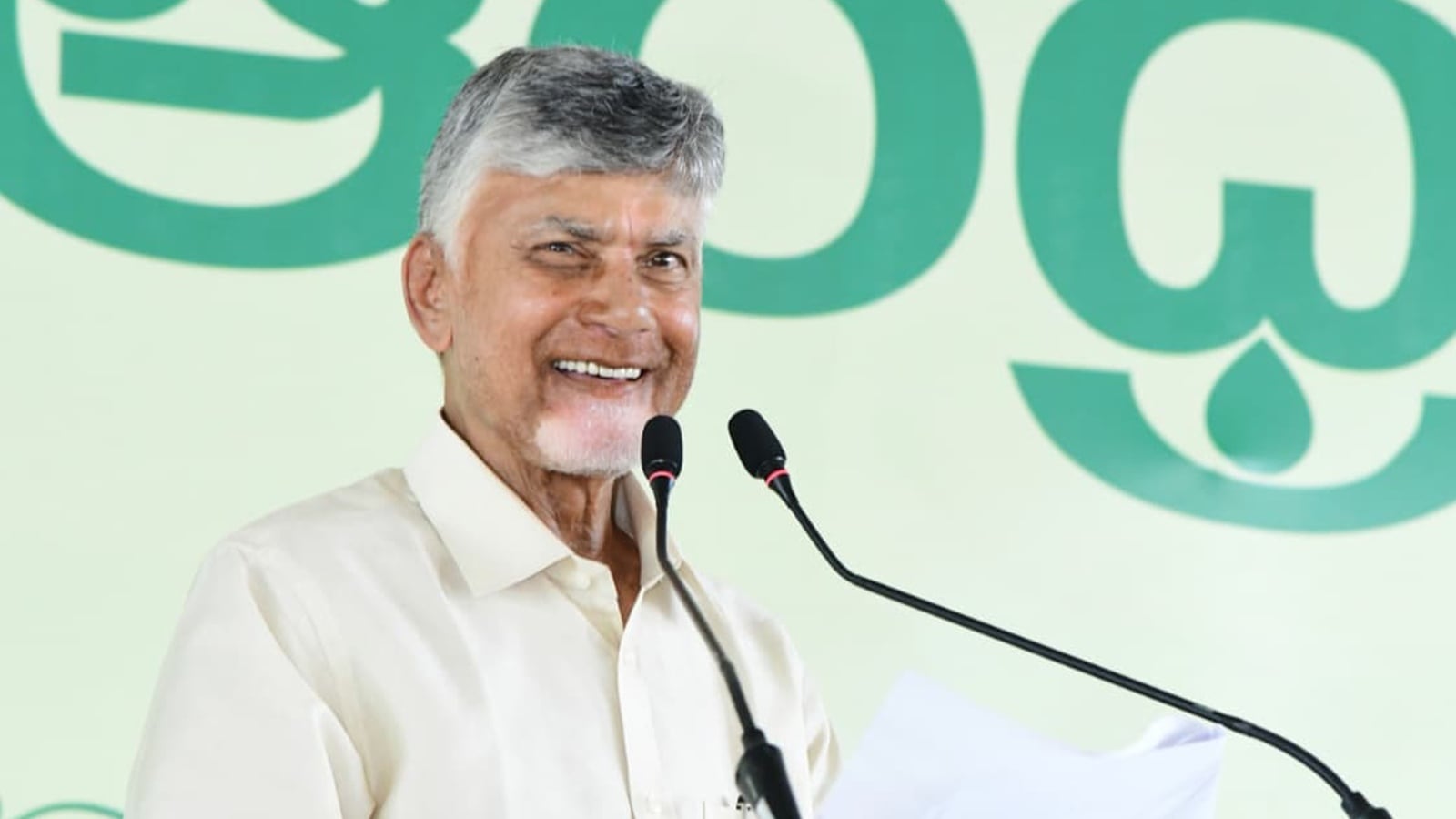
Chandrababu Naidu's Last Push in Tamil Nadu Fails at the Ballot
Andhra CM Chandrababu Naidu's whirlwind pre-poll campaign for the NDA in Tamil Nadu delivered the BJP just one seat — and reset his leverage over Modi.
Chandrababu Naidu spent the last week of April 2026 barnstorming Coimbatore and Chennai for the BJP-AIADMK alliance. When the votes were counted on May 4, 2026, the National Democratic Alliance he had lent his name to won 48 of Tamil Nadu's 234 seats — the BJP taking exactly one — while film star Joseph Vijay's two-year-old Tamilaga Vettri Kazhagam swept in with 108, according to the NUS Institute of South Asian Studies. The rout doesn't diminish the 76-year-old Andhra chief minister; it sharpens his leverage over Narendra Modi, because it proves what Delhi already feared: without regional anchors like Naidu, the BJP has no southern route to a majority in the delimitation fight now due to begin.
The campaign that landed one seat
Naidu's Tamil Nadu deployment in April was framed as a favour to the alliance. The Telugu Desam Party leader ran roadshows across Coimbatore and Chennai, courted Tamil Nadu's Telugu-speaking voters, and attacked the DMK-Congress bloc over the stalled women's reservation Bill, according to The Times of India. "The Congress-led DMK has defeated women's empowerment," Naidu told a Coimbatore gathering, linking representation to political intent. His pitch was the "double-engine" formula — that a state aligned with Delhi grows faster — which
The Hindu reported he sold by unfavourably comparing Chennai's airport with those of Hyderabad and Bengaluru — a jab clearly aimed at younger urban voters in the DMK's heartland.
The Andhra chief minister's role was not incidental. The Hindu's pre-poll dispatch reported that Naidu was tasked with "energising party cadre, strengthening voter engagement, and reinforcing the NDA's development-oriented narrative" — in other words, doing the work the BJP's own Tamil Nadu unit could not do after the resignation of K. Annamalai, whose replacement by Nainar Nagenthran the NUS ISAS had flagged as a demoralising signal for the party's grassroots in its
pre-poll paper.
It was a hard sell. The BJP contested 27 seats and the AIADMK the rest of the NDA's share, Al Jazeera reported. Turnout on April 23 was heavy — the Election Commission's
Press Information Bureau release had recorded Tamil Nadu's 2024 general-election participation at 84.69%, an all-India record since Independence, and 2026 mobilisation tracked that ceiling with 56 million electors voting across the state. The result: the DMK collapsed from 133 seats in 2021 to 59; AIADMK slipped from 66 to 47; the BJP shrank from four seats to one; and Vijay's TVK, contesting its first election, took 108 with 34.92% of the vote share, per the
BBC's Tamil-language results tracker. Chief Minister M.K. Stalin lost his own Kolathur seat, a stronghold the DMK had never surrendered.
Why Naidu bothered — and why it was always going to fail
Naidu did not fly into Tamil Nadu to win it. He went to make himself unmissable to Modi. The TDP holds 16 Lok Sabha seats — combined with Nitish Kumar's Janata Dal (United)'s 12, they are the difference between a functioning BJP government and its collapse in a no-confidence vote, as the Sasakawa Peace Foundation's analysis of the 2024 verdict documented. That mathematics has not changed. What has changed is that the AIADMK, Modi's other southern hope, is now visibly broken, and the BJP itself won a single Tamil Nadu seat despite Naidu's roadshows.
The ground was hostile from the outset. The NUS ISAS noted before the vote that the DMK had built its campaign around a North-South divide narrative — federal fund devolution and the imposition of Hindi through the three-language formula — that made the BJP "still seen as a North Indian party" a millstone for any ally. Stalin explicitly framed the election as "a contest between Tamil Nadu and New Delhi," Al Jazeera reported, a framing designed to punish the AIADMK for its NDA embrace. Naidu, a Telugu-speaking chief minister of the neighbouring state, was the softest face the NDA could send into that terrain — softer than any Hindi-belt BJP campaigner and less toxic than the parachuted-in Sangh Parivar figures the DMK routinely caricatures.
It still wasn't enough. Vijay's TVK absorbed the anti-DMK wave that would ordinarily have flowed to Edappadi Palaniswami's AIADMK, drawing "younger voters and women" in overwhelming numbers, the NUS ISAS found. First-time voters aged 18-39, roughly 42% of the electorate, backed Vijay in numbers no exit poll captured, according to
the BBC's post-poll analysis. The BJP-AIADMK arithmetic had assumed a bipolar contest; TVK converted it into a triangular one and shattered both older brands simultaneously.
Analysts had flagged the trap. Political commentator R. Kannan described Vijay to Al Jazeera as "both a blessing and a curse" for the two Dravidian coalitions — a description that also fit the BJP-AIADMK tie-up.
The Indian Express noted in its pre-poll piece on Naidu's whirlwind campaign that his Tamil Nadu deployment came right after he had publicly defended the alliance's failed Constitution (131st Amendment) Bill in Parliament. Naidu was already burning political capital in Delhi before he burned it in Chennai.
The paradox: losing raised his price
Here is the counter-intuitive result. The BJP itself won West Bengal — taking 207 of 294 seats against Mamata Banerjee's TMC, per NUS ISAS — and retained Assam for a third consecutive term. The map now shows the NDA governing or in coalition in 21 of India's 28 states, covering nearly 80% of the country's 1.4 billion people,
Al Jazeera reported — a national dominance the paper compared to Congress at its 1960s peak. The one glaring exception, along with Kerala, is Tamil Nadu.
That exception is precisely why Naidu now matters more, not less. The BJP has demonstrated it cannot break the south on its own. Tamil Nadu's 39 Lok Sabha seats and Andhra Pradesh's 25 are the two substantial southern pools where the party has any pathway, and both run through regional patrons. Foreign Affairs' assessment of Modi's coalition constraints warned that alliance partners could not let the BJP get "too successful" without endangering their own base; the Tamil Nadu result is the mirror image — the BJP cannot expand southward without them.
The Carnegie Endowment's dissection of the 2024 verdict pinned the numbers on this. In four of five southern states, the BJP saw its vote share rise sharply: 10.3 points in Andhra Pradesh, 7.6 points in Tamil Nadu, 15.4 points in Telangana. But votes stopped converting to seats under first-past-the-post. Naidu understands the arithmetic; his pitch in Chennai was that only alliance geometry converts votes to seats. His failure to convert them in April underlines that Modi cannot dispense with regional geometry either.
The BBC's election-day results feed recorded the moment the state's political architecture cracked: "for the first time since 1967, when a Dravidian party, the DMK, rose to power," Tamil Nadu would be governed by a non-Dravidian outfit. That rupture might, in theory, have created a permeable electorate the BJP could exploit later. But Vijay has cast the BJP as his ideological adversary,
the BBC reported, and the coalition he assembled to reach the 118-seat majority — Congress, CPI, CPI-M, VCK and IUML — comprises five parties openly opposed to the NDA,
the BBC confirmed after his May 10 swearing-in at Chennai's Jawaharlal Nehru Stadium. The party that ended Dravidian bipolarity has locked the BJP out of the new state government by choice.
The delimitation timebomb Naidu is really watching
The southern parties' real fight begins in 2026-2027, when Parliament must redraw Lok Sabha constituencies based on the latest census. Southern states, with lower fertility and slower population growth, stand to lose seats to the Hindi belt. The BBC's analysis of Modi's coalition constraints flagged this as the single most sensitive issue on the NDA's docket, noting that "the wealthier, less populated southern states fear that Mr Modi will expand parliament, with the seat count favouring the poorer, more populous Hindi heartland states — a traditional BJP stronghold." Both the TDP and JD(U) had already demanded special status for their states and larger federal transfers within days of the 2024 verdict,
Al Jazeera reported.
Naidu has consistently framed Andhra Pradesh's interests through federalist demands — Special Category Status, higher fiscal devolution — that survive only if the TDP can credibly threaten to walk. The Tamil Nadu result gives him a fresh argument: the BJP failed to break the south on its own even with his help; therefore, he is entitled to more, not less. That is why the "last push" framing bears scrutiny. At 76, Naidu is unlikely to campaign in another neighbouring state's assembly election. His Andhra term runs to 2029, coinciding with the next Lok Sabha vote. The Tamil Nadu roadshows were less a serious attempt to elect Palaniswami than a public performance for Modi — proof that he is willing to expend political capital for the alliance, invoiced against future demands.
There is a historical parallel he will not miss. Vijayakanth's DMDK broke through as a third force in 2011 with a similar bipolar-shattering pitch, Al Jazeera recalled, only to fade back into being an appendage of one of the majors. If Vijay's TVK proves durable rather than a Vijayakanth-style flash, southern politics enters a genuinely tripolar phase and the BJP's slow-vote-share build gets structurally blocked. If TVK fades, the BJP's arithmetic reopens — but only through an AIADMK that has just been humiliated with 47 seats. Either scenario reinforces Naidu's utility as the one southern NDA leader still in office with a functioning machine.
What to watch
Three concrete catalysts will decide whether Naidu's April gambit paid off.
- Delimitation Commission notification, expected in the second half of 2026. If Naidu extracts a seat-preservation formula for southern states, the Tamil Nadu campaign will retroactively look like a down payment.
- Andhra Pradesh's Special Category Status demand. The TDP has been pressing this openly since 2024. Any concrete package announced in the monsoon session would signal Naidu's leverage has grown, not shrunk.
- AIADMK-BJP alliance future. Palaniswami won 47 seats but lost the state and his second-place status; if the AIADMK exits the NDA to rebuild independently against TVK, Naidu becomes Modi's sole southern anchor — a monopolist's position.
Diplomat View
The reading in Delhi is that Naidu's Tamil Nadu foray failed. The reading it should be getting is subtler: it failed in the way that most benefits him. By expending capital publicly for an alliance the BJP could not win, Naidu bound Modi tighter to the TDP without giving the BJP any independent southern foothold to bargain with. The forecast: expect Naidu to extract a concrete concession — Special Category Status for Andhra, or a delimitation formula that caps southern seat loss — before the 2026 monsoon session ends. This forecast is falsifiable. If, by December 2026, the BJP has instead moved to poach TDP legislators (its usual playbook, per Foreign Affairs), or if Andhra receives no additional fiscal package, the read is wrong and Naidu has been outmanoeuvred — reduced from kingmaker to campaigner-for-hire. But the arithmetic still favours him: 16 Lok Sabha seats and a broken southern flank are a hard combination for Modi to walk past.
The Bottom Line
Chandrababu Naidu campaigned in Tamil Nadu to hand the BJP a foothold and delivered exactly one seat. That failure, paradoxically, is his best insurance: it proves the BJP cannot substitute for regional patrons in the south, and it lands just as the delimitation fight opens in Delhi. Watch what Naidu extracts by the end of 2026 — that is the invoice for the April roadshows.
For fuller context on the broader dynamics, see our India coverage.
Discover more
India
Naidu Secures South Coast Railway Zone
Andhra Pradesh's South Coast Railway zone, HQ in Visakhapatnam, is operational after a seven-year wait, highlighting coalition politics in India.

India
Naidu Defends Delimitation, Ensures Fairness
Chandrababu Naidu argues for delimitation, claiming no state will lose seats, as he becomes pivotal for the 2029 political map.
India
Chandrababu Naidu's 'Double Engine' Growth in
Chandrababu Naidu's 'double engine' growth model falters as Tamil Nadu voters choose a different path, exposing its political rather than economic nature.

Conflict & Security
Drone Warfare Killing Aid Workers at Unprec
Over 1,000 humanitarian workers killed in three years as cheap armed drones collapse legal protections. Gaza, Sudan, Ukraine, and DRC see deliberate targeting of aid convoys and hospitals with zero prosecutions.